
Executive Overview
By all conventional metrics of American political science, the recent midterm congressional elections should have played out as a standard, predictable rebuke of the sitting executive administration. Historically, the party in the White House absorbs the frustration of a restless electorate at the two-year mark, serving as a political lightning rod for economic anxieties, legislative gridlock, and voter fatigue.
Yet, beneath the surface of expected parliamentary shifts, a much deeper, more volatile tectonic movement occurred. This election cycle was not merely a routine swing of the pendulum between the two major political parties. Instead, it exposed a profound, structural disillusionment coursing through the American electorate—a systemic exhaustion with the political norms, institutional machinery, and governing philosophies of the twentieth century that have proven utterly inadequate for the demands of the twenty-first.
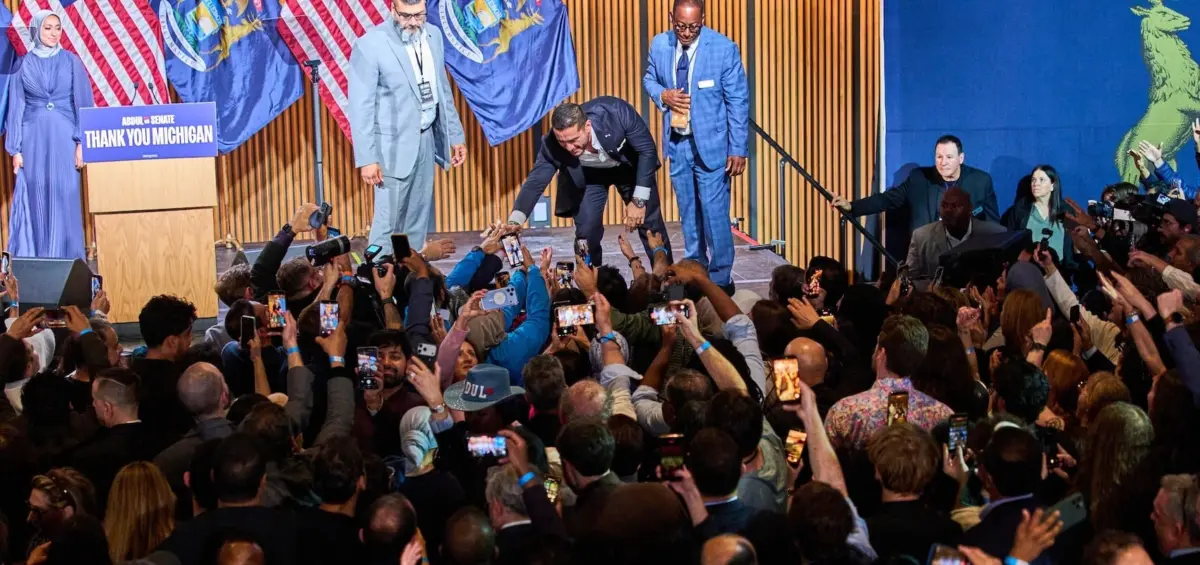
In several key states—including regions that decisively backed Donald Trump in the 2024 presidential election—voters threw conventional strategy to the wind by electing hardcore progressive Democrats. Republican strategists had long operated on the comforting assumption that mainstream and swing voters would instinctively recoil from the specter of democratic socialism or progressive radicalism.
Read Also
That calculation proved disastrously wrong. Rather than fleeing from ideological extremism, swing voters either minimized its risks or, more accurately, were simply willing to take a high-stakes flyer on an alternative.
This willingness to "throw caution to the wind" has defined the overarching character of American elections over the past decade. In 2016, voters were repeatedly warned that Donald Trump was entirely beyond the pale of acceptable democratic governance; he won the presidency anyway. Cast out of power in 2020 amidst a torrent of establishment denunciations branding him a fascist, an authoritarian, and an existential threat to democracy, Trump returned with an even more decisive mandate in 2024.
Voters deliberately chose to tune out "responsible" elite opinion, opting instead to roll the dice on the populist billionaire once more. They did so despite a litany of valid, pressing grievances: persistent inflation, crushing costs of living, escalating conflicts in the Middle East, the blatant self-enrichment of the broader Trump orbit, and a governing style defined by exhausting braggadocio and erratic contradictions.
Yet, this behavior points to an underlying truth that extends far beyond one man or one administration: Americans know that the country’s foundational systems are fundamentally broken. Public education is failing; the social fabric and traditional dynamics between men and women are fraying; the housing market remains completely hostile to younger generations; and traditional career paths have dissolved into precarious economic insecurity.
Meanwhile, federal spending careens out of control, plagued by multi-billion-dollar administrative waste and systemic fraud. Voters are utterly fed up. They are searching for radical, systemic change, and the current political establishment—immobilized by outdated dogmas—seems entirely incapable of delivering it.
Detailed Chronology: The Anatomy of a Broken Electoral Promise
To understand why the electorate is currently engaged in such erratic, high-risk political behavior, one must trace the trajectory of the populist movement that promised a clean break from the past, only to replicate its most frustrating pathologies.
The Rise of the MAGA Mandate (2024)
When the Make America Great Again (MAGA) movement swept back into executive power in 2024, it did so on the back of a bold, uncompromising populist rhetoric. The movement diagnosed the maladies of the nation with striking clarity, identifying four foundational pillars required to save the republic:
- Stopping the rapid demographic and cultural shifts driven by unmanaged mass immigration.
- Aggressively reindustrializing the American heartland through protective economic policies.
- "Draining the swamp" of entrenched bureaucratic corruption and Washington cronyism.
- Reorienting American foreign policy away from endless, fruitless foreign interventions and protracted overseas conflicts.
For millions of working-class Americans, this platform was not just a political agenda; it was a survival strategy. The rhetoric promised seismic structural transformations that would finally put the interests of ordinary citizens ahead of globalist corporate entities and self-serving political elites.
The Honeymoon and the Stall (Early to Mid-Term)
The opening months of the administration crackled with an undeniable, volatile energy. The public watched expectantly for the hammer to drop on institutional corruption and border insecurity. However, the momentum quickly stalled.
High-profile administrative initiatives, such as the Department of Government Efficiency (DOGE) efforts championed by billionaire surrogates like Elon Musk, initially captured the public imagination but ultimately delivered negligible structural savings or bureaucratic reductions. Musk’s attention waned, and the promised fiscal revolution sputtered out in committee rooms and backroom negotiations.
Similarly, immigration enforcement devolved into high-profile spectacle rather than systemic overhaul. While the southern border saw increased physical security measures, the administration conspicuously avoided confronting the primary magnet drawing illegal labor into the country: the corporate employers who willingly hire undocumented workers for cheap labor.
On trade, the long-overdue promise of reindustrialization through tariffs was executed with chaotic, mercurial inconsistencies, leaving manufacturers unable to plan for the long term.
The Legislative Vacuum and the Return of Business-As-Usual
Rather than draining the swamp, the administration expanded it, fostering an environment of crony capitalism that made past political scandals look quaint by comparison.
Meanwhile, a Republican-controlled Congress proved even more toothless. Aside from rolling back selective green energy subsidies, the much-touted "Big Beautiful Bill" amounted to little more than a pale, aging photocopy of late-twentieth-century Reaganomics. Crucial legislative initiatives designed to secure election integrity and mandate voter eligibility stalled out completely, dying in legislative limbo.
By the time the midterm elections arrived, the disconnect between grandiose populist rhetoric and lackluster administrative reality was glaringly obvious. Voters realized that the systemic reforms they had demanded—and voted for—had been quietly traded for photo ops, empty gestures, and the preservation of elite comfort.
Supporting Context & Metrics: The Mechanics of Structural Dysfunction
The political volatility observed in recent cycles is symptoms of deep-seated institutional and economic failures. The American experiment is creaking under the weight of twentieth-century governance models trying to navigate twenty-first-century crises.
+--------------------------------------------------------------------------+
                    THE CRISIS OF 21ST-CENTURY GOVERNANCE
+----------------------------+---------------------------------------------+
| Systemic Challenge         | Reality on the Ground                       |
+----------------------------+---------------------------------------------+
| Mass Migration             | Porous borders, unchecked labor demand,     |
|                            | and strained public municipal resources.    |
+----------------------------+---------------------------------------------+
| Globalized Economy         | Hollowed-out manufacturing sectors,         |
|                            | stagnant wages, and housing unresponsiveness|
+----------------------------+---------------------------------------------+
| Fiscal Irresponsibility    | Trillion-dollar national deficits, billions |
|                            | in administrative fraud, and unchecked debt.|
+----------------------------+---------------------------------------------+
| Cultural Disintegration    | Eroding social trust, failing educational   |
|                            | institutions, and institutional cynicism.   |
+----------------------------+---------------------------------------------+
The Economic Squeeze on the Next Generation
Economic metrics tell a stark story of divergence between Wall Street and Main Street. While asset holders benefited from fluctuating trade policies and corporate subsidies, young Americans faced a hostile housing market characterized by soaring interest rates and artificially inflated home values. Real wages for entry-level workers failed to keep pace with the compounding costs of healthcare, higher education, and basic consumer staples.
Institutional Decay and Administrative Bloat
The federal government has ballooned into an opaque leviathan detached from constitutional accountability. Billions of taxpayer dollars vanish annually into administrative oversight black holes and fraudulent contracting schemes.
When citizens look to the judicial, executive, and legislative branches, they no longer see arbiters of the public good; they see a self-perpetuating managerial class adept at protecting its own prerogatives. This reality explains why the traditional checks and balances—such as Senate filibusters and judicial injunctions—are no longer viewed by the public as wise limitations on power, but rather as obstructionist shields protecting a failed status quo.
Official Statements and Insider Perspectives
As the political fallout from the midterms continues to reverberate across Washington, analysts and political insiders are openly reassessing the viability of traditional party orthodoxy.
Privately, seasoned legislative strategists on both sides of the aisle concede that the public’s patience with incrementalism has officially run out.
"We are no longer operating in an environment where voters care about institutional decorum or procedural norms," noted a veteran Republican congressional aide who spoke on condition of anonymity. "When people cannot afford a home, when their local schools are graduating functionally illiterate students, and when Washington is writing multi-billion-dollar checks to overseas conflicts while domestic infrastructure crumbles, they stop believing in the system. They don’t want a manager; they want a wrecking ball."
Democratic strategists are drawing similarly radical conclusions, albeit from a different ideological vantage point. Recognizing the deep public yearning for systemic disruption, progressive leaders are actively shedding their traditional hesitations about institutional overhaul.
Prominent figures within the Democratic coalition have begun championing structural constitutional reforms that would have been unthinkable a generation ago—such as expanding the federal judiciary, eliminating the Senate filibuster, abolishing the Electoral College, and fundamentally rewriting campaign finance laws.
"The old guard believes that if we just return to pre-2016 norms, the electorate will heave a sigh of relief and reward us," said a senior Democratic policy researcher. "They are profoundly mistaken. The American people know the engine is seized up. If conservatives won’t fix it, progressives are more than ready to take the wrench out of their hands and rebuild the engine from scratch—whether the establishment likes it or not."
Future Outlook: The Battle for "Regime Change"
As the dust settles on the midterms, the political landscape is bracing for a profound ideological realignment. The failure of the current administration to deliver on its foundational promises of deep structural transformation has left a massive vacuum at the center of American politics.
Historically, the Democratic Party has functioned as the primary historical engine of systemic regime change in America, with the Republican Party playing the vital, balancing role of moderating excesses and conserving institutional continuity. However, the current depth of public dissatisfaction suggests that this dynamic is shifting.
Voters are so desperate for profound, structural change that they are increasingly willing to empower whichever political coalition promises to deliver it first—regardless of ideological labels.
We are likely to see the emergence of a new brand of "moderate-radical fusion" politics. Figures like Kentucky Governor Andy Beshear are already testing this blueprint on the national stage. By blending conventional executive competence with radical institutional reforms—such as calling for constitutional amendments to abolish the Electoral College, ban partisan gerrymandering, and overturn Citizens United—these modern Democrats are positioning themselves as the true champions of anti-establishment reform.
For the Republican Party, the temptation to retreat into the defensive crouch of defending the fading status quo of the late-twentieth-century American order will be immense. GOP institutionalists will likely argue for a return to safe, predictable conservatism, hoping that public fatigue with progressive radicalism will naturally restore them to power.
That would be a fatal miscalculation.
The events of 2024 and the surprising resilience of progressive factions in the midterms prove beyond a shadow of a doubt that the American electorate has moved past the era of incrementalism. Voters know the country faces existential challenges that require bold, uncompromising solutions.
If conservatism wishes to remain a viable political force in the twenty-first century, it must abandon the defense of a broken status quo and reinvent itself around a credible, actionable program of conservative-led regime change. Donald Trump proved in 2024 that the rhetoric of major structural disruption can capture the imagination of a frustrated nation. The lesson of the midterms is equally clear: rhetoric without execution is a dead end.
The future belongs not to those who manage the decline of a decaying system, but to the political movement—left or right—that possesses the courage, competence, and vision to build a new one.



Comments
Facebook App ID not configured. Please add it in the Customizer.