
Executive Overview
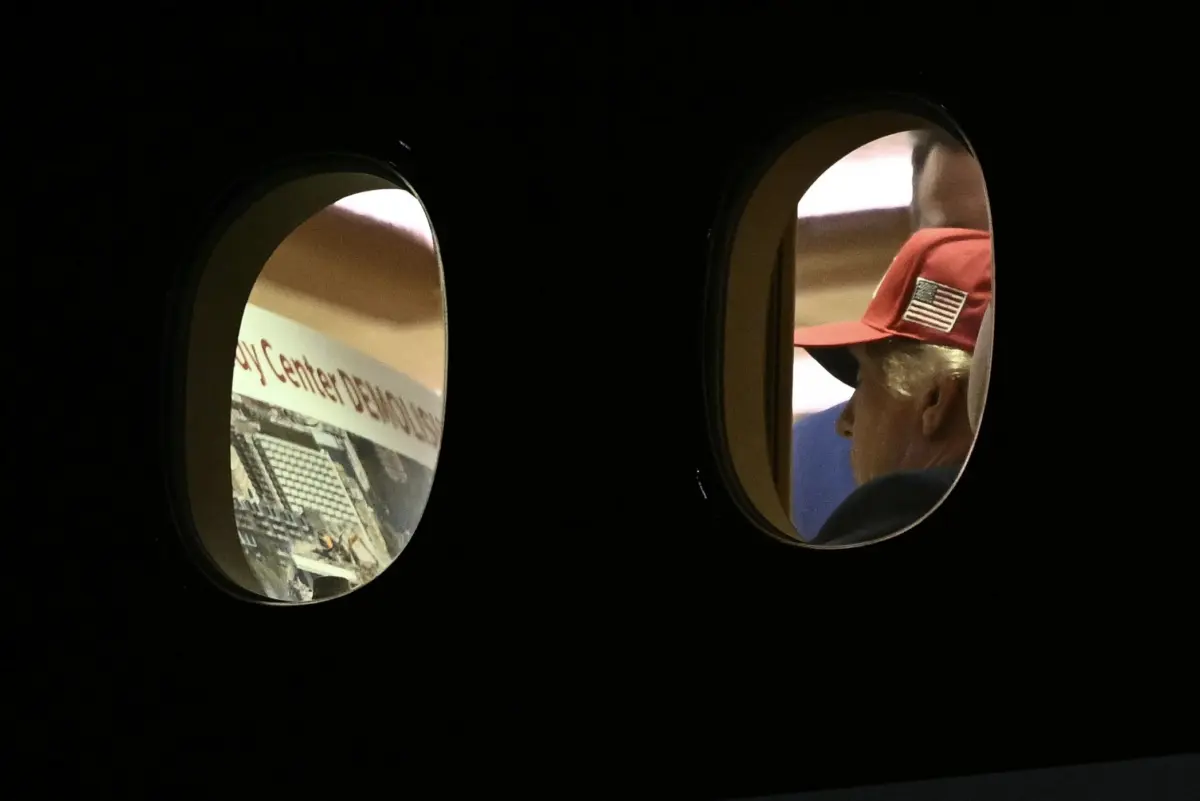
The long-standing cultural and legal tug-of-war between federal authorities and the administration reached a dramatic flashpoint this week, transforming a routine presidential arrival into a constitutional and preservationist crisis. At the center of the controversy is a photograph captured by Getty Images photographer Brendan Smialowski late Wednesday evening at Joint Base Andrews outside Washington, D.C. The image showed President Donald Trump stepping off Air Force One wearing his signature red baseball cap, casually holding a placard that appeared to read, "Kennedy Center DEMOLISHED."
The photograph instantly ignited alarm bells across preservationist networks, legal teams, and congressional offices. Within hours, Democratic U.S. Representative Joyce Beatty of Ohio’s Third Congressional District—acting in her official capacity as an ex officio trustee of the John F. Kennedy Center for the Performing Arts—filed an emergency motion in federal court. The filing demands that the presiding federal judge issue an explicit, crystal-clear clarification that existing judicial orders strictly prohibit the physical destruction of the iconic landmark.
This latest escalation arrives amid an increasingly volatile atmosphere surrounding the nation’s premier performing arts institution. For months, the Center has been ground zero for a high-stakes conflict involving executive overreach, contested naming rights, political appointments, and fierce opposition from arts advocates and preservationist groups. With management shuttering the facility under disputed pretexts, federal judges issuing injunctions against administrative modifications, and a coalition of heritage organizations calling for emergency receivership, the Kennedy Center stands as a fractured monument caught in the crossfire of political theater and cultural preservation.
Read Also
Detailed Chronology: From Renovation Debates to Emergency Filings
To understand the gravity of this week’s events, one must trace the rapid deterioration of governance and administrative trust at the Kennedy Center over the past year.
The August Board Vote and Naming Disputes
The current legal battles stem from maneuvers initiated by the Center’s board of trustees, which has been steadily repopulated with loyalists and appointees of the Trump administration. In August, this board voted to officially alter the venue’s designation to “The John F. Kennedy Center for the Performing Arts, Restored and Renovated by President Donald J. Trump.” Proponents of the name change argued it was a necessary and fitting tribute to the president’s philanthropic and financial interventions in the facility’s upkeep.
However, opponents and independent board members viewed the move as an aggressive politicization of a federal cultural institution built as a living memorial to the slain 35th president. Legal challenges were promptly mounted to halt the rebranding effort, arguing that such wholesale alterations violated the spirit and statutory mandates governing national memorials.
The September 14 Federal Ruling
The conflict intensified on Monday, September 14, when a federal judge delivered a decisive setback to the administration’s branding campaign. The court ruled that the Trump administration could not legally proceed with plans to inscribe “renovated and restored by President Donald J. Trump” across the venue’s prominent architectural facade. The ruling appeared to draw a firm line regarding how far executive influence could extend over the physical and historical identity of the federal property.
The Sudden Tuesday Closure
Mere hours after the judicial ruling, operations at the Kennedy Center ground to an abrupt halt. Management ordered the sudden closure of the massive cultural complex on Tuesday.
Initially, on-site personnel and public relations channels attributed the abrupt shutdown to a tripped fire alarm. However, as public scrutiny mounted and lawmakers demanded definitive answers, the narrative shifted. Management subsequently issued revised statements claiming that the building was being closed to address "imminent life-safety risks."
This sudden pivot provoked immediate skepticism. Critics noted the suspicious timing, pointing out that the closure conveniently materialized on the exact day the administration lost its legal bid to modify the building’s exterior signage.
Wednesday’s Photographic Flashpoint
The tension boiled over on Wednesday, September 16, when President Trump addressed the media regarding the financial realities of the Center. In unvarnished remarks, the president stated:
"For me to go and fix it and subsidize it, I think the Trump administration should have recognition. If we don’t do that, it’s going to close and get ripped down."
Hours later, Smialowski captured the now-infamous photograph at Joint Base Andrews. The image of the president inspecting the "DEMOLISHED" placard served as a visual catalyst, confirming the worst fears of preservationists who suspected that long-term closure was merely a smokescreen for eventual structural demolition or radical redesign.
Thursday’s Emergency Legal Response
Reacting to the photographic evidence and the President’s public remarks, Representative Joyce Beatty filed an emergency motion on Thursday in the ongoing federal court case.
The filing pulls no punches:
"It goes without saying that demolishing the Kennedy Center’s main building would violate the Court’s preliminary injunction: Closure is both a prelude to and the necessary consequence of demolition. But out of an abundance of caution, Plaintiff also respectfully requests the Court to make crystal clear that its order prohibits demolishing the structure."
The legal document underscores that the court has previously enjoined the administration from shuttering the facility without explicit board approval and without prior modification or dissolution of the court’s earlier protective orders. Beatty’s legal team argued that a swift hearing is imperative "to clarify what Defendants are doing" before irreversible physical damage can be inflicted upon the modernist masterpiece.
Supporting Context & Metrics: Distrust, Disrepair, and Propaganda
The battle over the Kennedy Center is underpinned by a profound crisis of institutional trust. Every operational decision made by management is now viewed through a lens of extreme suspicion by lawmakers, patrons, and cultural watchdogs.
The "Propaganda" Ceiling Controversy
Earlier this month, the fault lines widened when management released promotional and internal documentation—including video footage—purportedly showing severe rain-related roof damage and water leakage inside the facility. The administration pointed to these clips as undeniable proof that the building required drastic intervention, emergency closures, and extensive structural overhauls.
However, the response from the arts community was swift and hostile. Hands Off the Arts, an activist coalition explicitly formed to resist the administration’s footprint on cultural institutions, publicly denounced the released media. The group formally categorized the footage as "propaganda," alleging that the administration manufactured or exaggerated maintenance issues to manufacture a crisis, thereby justifying unauthorized closures, circumventing federal oversight, and paving the way for sweeping structural overhauls bearing the president’s name.
Preservationist Mobilization and Receivership Calls
The crisis has galvanized the broader architectural and historical preservation community. Recognizing that existing legal injunctions may not be enough to shield the Brutalist masterpiece designed by architect Edward Durell Stone, a coalition of eight national preservationist organizations took unprecedented action this week.
In a joint public announcement, the eight groups declared that they have formally called for the Kennedy Center’s current administrative leadership to step aside immediately. More radically, the coalition announced they are petitioning the federal court to take the extraordinary step of placing the cultural organization into judicial receivership.
Placing a federal cultural institution into receivership is a rare, drastic legal remedy typically reserved for bankrupt or profoundly corrupt corporate entities. Under receivership, control of the institution would be stripped entirely from the politically appointed board and handed over to a court-appointed, neutral trustee tasked with managing daily operations, ensuring structural integrity, and insulating the performing arts center from partisan political agendas.
Official Statements and Legal Posturing
As the fallout from the Joint Base Andrews photograph reverberates through Washington, representatives from all sides of the aisle and various stakeholder groups have staked out definitive positions.
- Representative Joyce Beatty (D-OH): Emphasizing her role as an ex officio trustee, Beatty’s office maintains that the administration’s actions represent a direct, bad-faith end-run around the judiciary. Her legal filing insists that preserving the structural and operational integrity of the Center is paramount, warning that closure without judicial consent sets a dangerous precedent for all federal properties.
- The Trump Administration & Appointed Board: Supporters of the administration frame the interventions as acts of necessary rescue and patriotic benevolence. Citing years of deferred maintenance, escalating operational costs, and infrastructural vulnerabilities, allies argue that private philanthropic investment—specifically tied to the current executive—is the only viable mechanism keeping the institution solvent. From this perspective, resistance from congressional Democrats and activist groups is characterized as politically motivated obstructionism that jeopardizes public safety.
- Preservationist Coalitions: Through their joint statements this week, heritage advocates maintain that the architectural heritage of Washington, D.C., is under direct threat. They argue that weaponizing maintenance issues to force closures is a calculated strategy designed to demoralize patrons, sideline independent artists, and forcibly stamp a partisan identity onto a bipartisan national memorial.
Future Outlook: What Lies Ahead for the Cultural Landmark?
The immediate future of the John F. Kennedy Center for the Performing Arts now rests heavily in the hands of the federal judiciary. The emergency hearing requested by Representative Beatty is expected to be prioritized given the escalating rhetoric and photographic evidence emerging this week.
Several critical questions remain unresolved as the legal battles unfold:
- Judicial Clarification: Will the federal judge issue a supplemental injunction explicitly forbidding any demolition, structural alteration, or permanent decommissioning of the main building?
- The Receivership Petition: Will the court entertain the preservationist coalition’s demand for receivership, effectively stripping executive appointees of their administrative powers?
- Operational Reopening: When—and under what conditions—will the doors of the Kennedy Center reopen to the public, and will independent safety inspectors be permitted to independently verify the true condition of the facility?
- The Battle Over Legacy: As the 2026 political cycle accelerates, the cultural capital finds itself locked in a deeper existential struggle over who dictates the historical narrative and physical appearance of America’s federally funded monuments.
What began as a dispute over exterior signage has metastasized into a full-scale constitutional test of checks and balances regarding federal property, executive power, and the preservation of national culture. As the legal briefs pile up and the public watches closely, the fate of the Kennedy Center hangs in a delicate, highly contentious balance.





Comments
Facebook App ID not configured. Please add it in the Customizer.