
Executive Overview
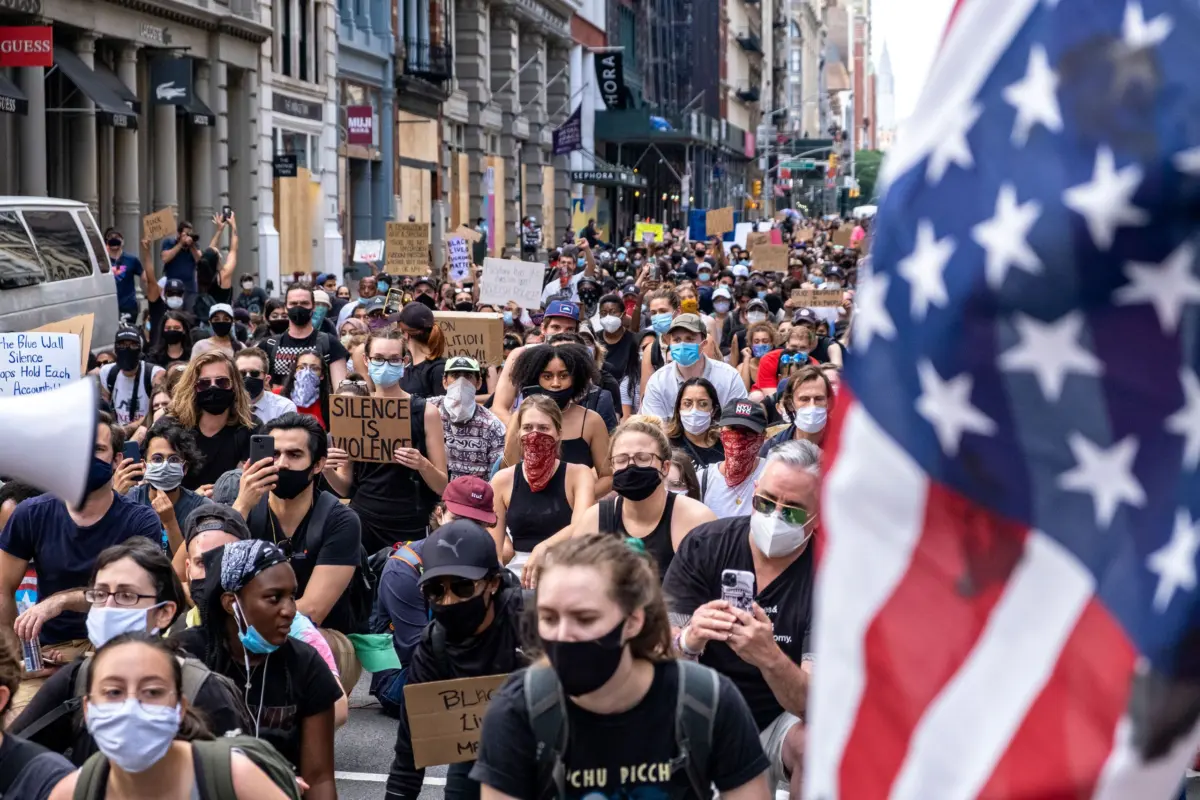
More than six years after the summer of 2020—a watershed moment characterized by the largest mass protests in modern American history amidst the height of a global pandemic—the political landscape surrounding criminal justice reform has undergone a profound transformation. What began as an unyielding grassroots movement to reallocate municipal budgets away from law enforcement and toward public safety nets, encapsulated by the provocative slogan "Defund the police," has transformed into one of the most toxic rhetorical positions in contemporary American politics.
Today, the political establishment—stretching from centrist Democrats to prominent figures on the progressive left—actively distance themselves from the terminology. Yet, beneath this visible retreat lies a compelling paradox. While the phrase "Defund the police" has been rendered political kryptonite, the foundational policy goals of the 2020 movement remain remarkably resilient. Public support for redistributive economic measures, non-carceral crisis response, and universal social provisions has reached historic highs.
As the Democratic Party prepares for critical midterm elections in an effort to break the Republican Party’s legislative grip, an intense internal debate continues over the causes of past electoral setbacks, such as the 2024 presidential election. Centrists argue that identity politics and radical rhetoric alienated working-class voters, prompting corporate-backed initiatives to re-anchor the party in traditional capitalist values. Conversely, the progressive flank maintains that electoral success hinges on addressing the systemic crisis of affordability through robust social spending. This investigative analysis explores the decade-long arc of the criminal justice reform movement, the electoral mechanics driving the party’s ideological divide, and the policy adaptations shaping the future of American governance.
Read Also
Detailed Chronology: The Arc of Criminal Justice Reform (2000–2026)
The call to overhaul the American carceral state did not emerge overnight in 2020. It represents the culmination of a quarter-century of shifting political consensus, grassroots activism, and policy experimentation.
[2000–2011] Early Bipartisan Shift
 ├── 2000: Gov. George Ryan declares moratorium on Illinois death penalty.
 ├── 2010: Publication of Michelle Alexander's "The New Jim Crow."
 └── 2011: Conservative "Right on Crime" launched; Illinois abolishes capital punishment.

[2014–2017] Federal Interventions & Emerging Reform
 ├── 2014–2015: Ferguson Uprisings follow the death of Michael Brown Jr.
 ├── May 2015: Obama's Task Force on 21st Century Policing releases report.
 ├── July 2015: Bill Clinton publicly apologizes for the 1994 Crime Bill.
 └── 2017: DOJ secures voluntary reform agreements across 16 major jurisdictions.

[2020–2021] The 2020 Crucible & Policy Divergence
 ├── Summer 2020: Killing of George Floyd sparks national protests; "Defund" slogan gains traction.
 ├── July 2020: BREATHE Act proposed by activists; George Floyd Justice in Policing Act stalls.
 └── March 2021: Biden signs $1.9 Trillion American Rescue Plan.

[2024–2026] The Re-alignment & Midterm Battles
 ├── 2024: Alternative response models implemented in 44 of 50 major U.S. cities.
 ├── Late 2025: Progressive leaders publicly recalibrate rhetoric on policing.
 └── June 2026: Centrists launch "Promise to America"; insurgent DSA candidates win key primaries.
The Early Bipartisan Realignment (2000–2011)
The 21st century opened with unprecedented cracks in the traditional "tough-on-crime" consensus. In 2000, Illinois Governor George Ryan, a Republican, declared a moratorium on capital punishment after thirteen death-row inmates were exonerated over a thirteen-year period. By 2003, Ryan commuted all standing death sentences in the state to life without parole, laying the groundwork for Illinois to fully abolish the death penalty in 2011.
During this same period, public awareness of mass incarceration intensified following the publication of Michelle Alexander’s groundbreaking book, The New Jim Crow (2010). Simultaneously, fiscal conservative leaders began re-evaluating the financial burden of state prison systems. In 2011, former Republican Speaker of the House Newt Gingrich co-authored a landmark op-ed promoting the "Right on Crime" campaign, emphasizing that state corrections spending had surged to $68 billion annually—growing thirteen times faster than the general population.
The Rise of Black Lives Matter and Federal Oversight (2014–2017)
The killing of Michael Brown Jr. in Ferguson, Missouri, in August 2014 catalyzed the modern Black Lives Matter movement, shifting national attention directly toward police accountability. In response, President Barack Obama created the Task Force on 21st Century Policing in May 2015, which issued fifty-nine recommendations targeting systemic social inequities such as poverty, education, and healthcare access.
By 2015, political figures across the spectrum acknowledged past errors; former President Bill Clinton publicly apologized at an NAACP convention for his administration’s 1994 Violent Crime Control and Law Enforcement Act, admitting it had exacerbated mass incarceration. By early 2017, the Department of Justice had entered into voluntary oversight agreements with law enforcement agencies in sixteen major jurisdictions, including Philadelphia, Memphis, Milwaukee, and San Francisco. However, these initiatives often lacked dedicated federal funding or binding enforcement mechanisms, leaving baseline rates of police-involved violence largely unchecked.
The 2020 Uprisings and Rhetorical Escalation
The murder of George Floyd in May 2020 triggered nationwide protests amidst widespread economic disruption caused by the COVID-19 pandemic. Grassroots coalitions demanded systemic divestment from police departments, advocating for a reallocation of municipal resources into poverty-mitigation services under the slogan "Defund the police."
Grassroots networks drafted sweeping federal reform measures, such as the BREATHE Act, which sought to channel federal dollars away from incarceration toward community investment. However, mainstream political leadership favored traditional reform packages, such as the George Floyd Justice in Policing Act. As national leadership failed to pass structural federal legislation, municipal activism fragmented, setting the stage for the political re-alignment seen today.
Supporting Context & Metrics: The Policy and Opinion Divide
Despite the public repudiation of "Defund the police" by political figures, quantitative research indicates that public opinion on state spending, crime prevention, and economic redistribution has fundamentally aligned with the structural goals that activists originally championed.
Public Perceptions on Crime Prevention
A 2025 survey conducted by Gallup reveals a decisive public preference for addressing the underlying socioeconomic causes of crime over increasing traditional law enforcement budgets.
Public Preference for Crime Reduction Strategies (Gallup, 2025)

  [==================================================] 69% Investing in Social/Economic Programs
  [====================] 29% Increasing Law Enforcement Resources
  [==] 2% Undecided / Other
When asked to evaluate different methods for reducing crime, nearly 70% of respondents favored allocating more government funding and effort toward tackling economic hardship and social instability. In contrast, only 29% of respondents advocated for directing additional financial resources directly to police departments.
Public Support for Redistributive Economics
Data gathered by major research institutions underscores a growing public appetite for federal intervention in economic welfare, challenging the assumption that progressive economic policies lack broad appeal.
| Metric / Survey Topic | Source & Year | Percentage in Favor | Key Takeaway |
|---|---|---|---|
| Universal Federal Healthcare | Gallup (Late 2025) | 64% | Highest recorded support for federal healthcare coverage guarantee since 2007. |
| Assistance to the Poor | Pew Research | 55% | Majority believes direct assistance does more public good than harm. |
| Aid Increasing Federal Debt | Pew Research | 52% | Majority supports low-income aid even if it expands national debt. |
| Corporate & High-Income Tax | Pew Research | >50% | Broad support for higher taxes on corporations and households earning >$400,000. |
| Positive View of Socialism | CBS News Poll | 58% (Dem. voters) | Contrast with only 32% of Democrats holding a positive view of capitalism. |
Police Mortality Statistics vs. Municipal Innovation
While overall crime rates dropped to historic lows by the end of 2024—influenced in part by federal funding streams from the $1.9 trillion American Rescue Plan of 2021—fatal encounters between law enforcement and civilians have remained persistent.
- Fatalities Recorded (2025): According to figures published by Campaign Zero, police killed 1,314 individuals in 2025. While this represented the first annual decrease in fatal police encounters since 2019, the figure highlights why community advocates continue to press for non-carceral interventions.
- Municipal Alternative Response Models: By 2024, an assessment of municipal budgets across the fifty largest American cities revealed that 44 cities had implemented formal alternative emergency response frameworks. These models partner mental health professionals and social workers with law enforcement, or dispatch them as primary responders for non-violent crisis calls.
Official Statements & Rhetorical Shifts
As midterms approach, high-profile politicians across the ideological spectrum have recalibrated their messaging, illustrating the tension between campaign strategy and progressive policy goals.
The Progressive Recalibration
"I have a local city councilman that has this saying: 'Woke 1 was crazy.' ... During COVID, the doors were really open in trying to entertain any and every policy that was going to get us to a better place. And I actually think that the discussions that were had in that time were quite fruitful."
— Representative Alexandria Ocasio-Cortez
"Sometimes what you believe can change... I’ve made very clear that I do not believe in defunding the police, that I will not be defunding the police."
— Zohran Mamdani, Mayor of New York City (2025 Campaign)"I don’t support defunding the police. I do support comprehensive criminal-justice reform to make sure we are addressing some of the root causes of people leading into a life of crime."
— Angie Nixon, U.S. Senate Candidate (Florida)The Centrist Counter-Offensive
In June 2026, centrist House Democrats led by Representatives Tom Suozzi (NY) and Adam Gray (CA) launched the "Promise to America" initiative. Designed explicitly to counter the rising influence of the Democratic Socialists of America (DSA) within the party, the initiative urged Democratic candidates to sign an ideological pledge.
"We are capitalist, not socialist... We disagree with MAGA. We disagree with socialists. We don’t want this extremism. We want mainstream."
— Representative Tom Suozzi (NY)
The pledge emphasizes four central pillars:
- Fiscal Discipline: Strict enforcement of balanced budget practices and debt control.
- Border Enforcement: Increased investment in physical and technological border security.
- Public Safety Support: Direct rejection of police budget reductions and explicit support for law enforcement agencies.
- Confident Patriotism: Re-anchoring the Democratic brand in traditional national defense and civic identity.
Despite vigorous promotion, the initiative highlighted internal party fractures; by late August 2026, only six sitting House members and a small group of municipal candidates had signed the pledge.
The Electoral Reality: The Florida Primary Shock
The limits of centrist pushback were demonstrated during the primary election to fill Florida’s open U.S. Senate seat. Representative Angie Nixon, a state legislator who recently joined the DSA, faced off against Alex Vindman, a retired Army lieutenant colonel and former National Security Council staffer backed by traditional party figures.
Florida U.S. Senate Democratic Primary Results

Alex Vindman  [====================] $16.0M Raised | Defeated
Angie Nixon   [=================================================] $1.0M Raised | WON (+12% Margin)
Despite being outspent by a ratio of sixteen to one, Nixon defeated Vindman by 12 percentage points. Her victory demonstrated that progressive candidates who emphasize affordability, healthcare, and systemic reform can win competitive races, provided they decouple their policy agenda from polarizing slogans.
Future Outlook
The evolution of criminal justice reform and economic policy reveals a fundamental shift in how political movements operate within the American electoral system. The explosive rhetoric of 2020 exposed deep institutional vulnerabilities, but its messaging proved difficult to sustain within formal political structures.
               [2020 Rhetorical Peak]
              "Defund & Dismantle"
                       │
        ┌──────────────┴──────────────┐
        ▼                             ▼
 [Slogan Rejection]         [Policy Integration]
  • Electoral Backlash       • 44/50 Cities Adopt Alternative Response
  • Rhetorical Distance      • 70% Support Root-Cause Investment
  • Centrist Counter-Pledges • Expanded Wealth Redistribution Focus
        └──────────────┬──────────────┘
                       ▼
       [Modern Governance Model (2026+)]
"Invest in Root Causes / Retain Public Safety"- Pragmatic Framing Over Rhetorical Purity: Insurgent political candidates are increasingly adopting a pragmatic framework. By championing root-cause investments—such as affordable housing, universal health coverage, and mental health crisis response—without calling for the explicit dismantling of police departments, progressive candidates can build broader electoral coalitions.
- Institutionalization of Alternative Response: The widespread adoption of co-responder and non-police crisis interventions across forty-four major U.S. cities indicates that municipal governments are quietly delivering on the core policy goals of the 2020 movement. These structural changes are likely to expand as cities seek cost-effective ways to manage public health and safety challenges.
- Ongoing Ideological Realignment within the Democratic Party: The battle between the centrist establishment and the democratic socialist movement will continue to shape upcoming election cycles. While centrists warn that progressive rhetoric risks alienating moderate voters, primary outcomes like Angie Nixon’s victory in Florida suggest that working-class voters remain highly receptive to economic reform when framed around daily affordability and public investment.
Ultimately, while the phrase "Defund the police" has retreated from mainstream political speech, the underlying push for structural, social, and economic reform continues to redefine public safety in 21st-century America.




Comments
Facebook App ID not configured. Please add it in the Customizer.