
Executive Overview
A natural disaster can accomplish in a single afternoon what decades of grueling public zoning hearings, neighborhood council disputes, and legal challenges cannot: it can erase entire communities and instantly force thousands of agonizing decisions about what will take their place.
More than a year and a half after catastrophic wildfires reduced large swaths of Southern California to ash in January 2025, that harrowing question still hangs over Altadena, the Pacific Palisades, and other hard-hit Los Angeles-area neighborhoods. Rebuilding has proven painfully slow. All of this is unfolding in a region already grappling with a severe housing deficit, featuring one of the most expensive and exclusionary housing markets in the United States.
Now, California’s state legislature is poised to vote on legislation that bows directly to local anti-density pressures. If passed, the measure could worsen an already acute affordability crisis while setting an ominous precedent for housing reform nationwide. On the surface, this is a regional story about a traumatized community attempting to pick up the pieces and reclaim its identity. Yet, it reflects a much broader national phenomenon: the pervasive, zero-sum politics that casts ordinary, essential homebuilding as a sinister enterprise and elevates hyper-local control above all else. These entrenched instincts explain why it has become exceedingly difficult for the United States to build the infrastructure and housing it desperately needs, and why the fight for abundant, affordable housing remains so fraught in California and across the country.
Read Also
Detailed Chronology: From Catastrophe to Legislative Backlash
The roots of the current crisis extend far beyond the smoke and ash of the 2025 fires. For the better part of a decade, California has struggled to resolve a central contradiction plaguing national housing policy: while nearly everyone agrees that the country needs millions of new homes, almost everyone insists they should be built somewhere else. To combat this paralysis, the state passed landmark laws designed to weaken exclusionary zoning, legalize "missing middle" housing, and strip local governments of veto power when they refuse to permit adequate housing supply.
The Legislative Push for Density
- 2021 (Senate Bill 9): A landmark statewide law that overrode local zoning to enable homeowners to build up to four housing units on a single residential lot.
- Subsequent Expansions (SB 684 & SB 1123): Laws designed to make it possible to subdivide vacant or underutilized single-family-zoned lots, allowing up to ten smaller homes to be constructed on parcels that previously held only one.
The 2025 Wildfires and the Turning Tide
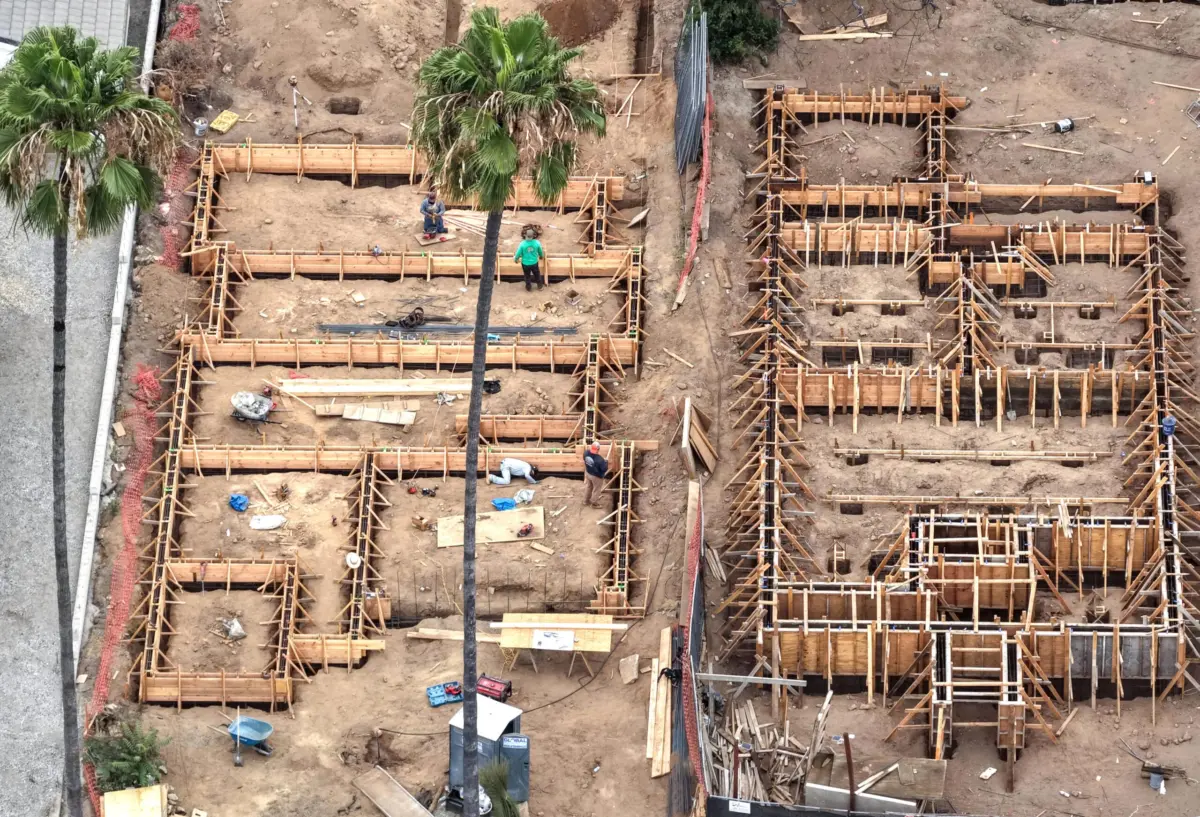
When the Eaton Fire tore through Altadena—an idyllic, unincorporated suburb nestled against the San Gabriel Mountains roughly 14 miles north of downtown Los Angeles—it destroyed between one-third and one-half of the community’s housing stock.

In the immediate aftermath, survivors faced a grim economic reality: meager insurance payouts and skyrocketing construction costs. To make rebuilding financially feasible, some homeowners looked to higher-density provisions, while others opted to sell their scorched parcels to developers and relocate entirely. Initially, the Los Angeles County planning department actively promoted SB 9 and SB 1123 as viable rebuilding options in official guides distributed to fire survivors.
However, as neighborhood anxiety mounted regarding the scale of proposed developments, the political winds shifted abruptly. By early 2026, LA County reversed its stance, voiding applications filed under SB 1123 on the grounds that neighborhoods heavily impacted by fires could no longer be classified as standard "infill" projects.
This local reversal mirrored a similar move last summer, when Governor Gavin Newsom and Los Angeles Mayor Karen Bass suspended SB 9 in the Pacific Palisades after residents had already submitted applications—a midstream rule change that complicated an already grueling recovery process.
The Battle Over SB 1090
With much of Altadena exempt from high-fire-hazard zoning restrictions that triggered the Palisades suspension, residents opposed to high-density rebuilding sought alternative legislative channels. Their efforts culminated in June, when state Senator Sasha Renée Pérez—whose district includes Altadena—rewrote an existing bill, SB 1090, to institute a moratorium on SB 9 and SB 1123 in the community.
Although the SB 9 suspension was ultimately stripped from the measure, the moratorium on SB 1123 remained, scheduled to take effect for applications submitted after October 1. To anxious residents, SB 1123 represents an existential threat: it permits significantly higher density and is more frequently utilized by outside developers rather than returning homeowners.

The ensuing political fight has cast the spotlight on Southern California-based developer Stone West Homes, which acquired seven fire-damaged Altadena lots between mid-2025 and early 2026 with plans to redevelop them into roughly ten small homes per parcel—totaling 70 new units. In March, LA County notified the developer that its applications were canceled, prompting a swift lawsuit from Stone West alleging an illegal regulatory reversal.
Supporting Context & Metrics: Land Economics and Fire Risk
The Economics of Housing Scarcity
The economic principles driving California’s housing crisis are straightforward. When demand outstrips supply, prices skyrocket. Starting in the 1960s, Los Angeles weaponized local zoning laws to drastically restrict housing density. By 1990, the city’s theoretical population capacity had plummeted from roughly 10 million to approximately 4 million residents, even as the regional economy and population demand continued to surge. Today, LA’s population sits just below 4 million, and housing costs are notoriously out of control, with Altadena boasting a median home value of approximately $1.12 million.
Reforming exclusionary zoning serves a dual purpose. Crucially, it provides a vital financial lifeline for fire survivors. As Azeen Khanmalek, executive director of Abundant Housing LA, notes:
"These small-scale density tools could in fact be a financial lifeline that allows some Altadena homeowners to fill what is often a six-figure gap in their financing in order to rebuild their home and provide some housing for some other folks."
Allowing multiple units on a single parcel increases the underlying land value. For example, a vacant single-family lot valued at $500,000 under restrictive zoning might yield modest profits for a builder. However, if zoned for six smaller homes under SB 1123, a developer can justifiably pay more for the land, absorb higher construction costs, and sell individual homes at a much more accessible price point—creating a positive-sum outcome where the original owner receives a higher payout, future buyers secure affordable housing, and developers remain profitable.

Factoring Wildfire Risk Into Density
A central argument levied by opponents of SB 1123 is that high-density rebuilding in fire-prone canyons endangers public safety. However, wildfire and urban planning experts emphasize that the relationship between density and fire risk is nuanced.
Alexandra Syphard, a senior research scientist at the Conservation Biology Institute, and Max Moritz, a wildfire specialist with the University of California Cooperative Extension, argue that macro-level planning favors denser infill development over sprawling outward into the wildland-urban interface.
- The Macro View: Creating residential units within established suburban footprints curtails dangerous sprawl into high-risk brushlands.
- The Micro View: While closely spaced structures can accelerate fire propagation once a blaze breaches a community, low-density lots choked with dense, unmanaged vegetation present an equally volatile fuel load.
Syphard noted that modern fire-resistant building materials, rigorous vegetation management, and well-planned evacuation infrastructure are far more effective risk-mitigation strategies than a blanket ban on multi-unit parcels.
Official Statements and Stakeholder Perspectives
The debate over SB 1090 has deeply polarized Altadena, dividing residents who mourn the loss of their historic neighborhood aesthetic from those who view density as a necessary adaptation to modern economic and environmental realities.
-
Neil Tyler, Altadena Fire Survivor and SB 1090 Supporter:
Tyler voiced the deep-seated anxieties of many returning residents who fear that out-of-town speculators will fundamentally alter the character of their neighborhood:
"It exploded into the community’s fear and opposition and pretty much outrage over someone trying to profit off the backs of all of our pain and suffering… I can’t pour my time and money and resources that are so stretched to now build my home back at this property, where all of a sudden right next to me could be a townhome that blocks my kind of way of life that I just want to recapture."
-
Caroline Paules, Altadena Resident and Mechanical Engineer:
Paules, co-founder of a startup building prefabricated cottages, holds a contrasting view, emphasizing that modern fire-building codes make traditional single-family reconstruction financially prohibitive for many:"I completely resonate with the desire for Altadena to be what it was, because it was beautiful and perfect… But no matter how traumatizing and painful it is, I think we have to release trying to shove Altadena into what it was before the fire."
-
Chris Manasserian, Attorney for Stone West Homes:
Defending the developer against accusations of "disaster capitalism," Manasserian pointed out the double standard applied to commercial housing projects:"It seems like we’ve just been demonized for something that makes perfect sense to do. Developers can just as well buy Altadena lots to build large single-family homes, but I haven’t seen the same anti-developer sentiment leveled against that possibility."

Despite repeated requests for comment, neither Senator Sasha Renée Pérez, LA County Supervisor Kathryn Barger, nor representatives from the Los Angeles County planning department made themselves available for interviews.
Future Outlook: A Critical Test for California’s Housing Mandates
As the August 31 legislative deadline approaches, the fate of SB 1090 hangs in the balance. YIMBY advocates, including Nolan Gray of California YIMBY, warn that if the proposed three-year moratorium on SB 1123 becomes law, it will establish a dangerous legal precedent, encouraging other traumatized or resistant municipalities to seek permanent carve-outs from state housing mandates.
Governor Gavin Newsom has built a reputation for standing firm against local governments attempting to flout state housing laws, recently launching legal actions against non-compliant jurisdictions. Yet, the unprecedented scale of the 20th-century-style climate disasters testing Southern California has placed immense political pressure on his administration.
When SB 1090 reaches his desk, Governor Newsom will face a defining choice: whether to yield to the understandable emotional grief of localized NIMBYism, or to supply the resolute leadership required to safeguard California’s long-term housing abundance.
Southern California remains one of the most culturally vibrant and geographically desirable regions in the world. Freed from the artificial shackles of chronic housing scarcity, it possesses the potential to become more inclusive, economically resilient, and financially accessible. The fires have already stripped the region of enough homes, memories, and lives; they must not be permitted to burn away the legislative reforms vital to securing a prosperous, abundant future.





Comments
Facebook App ID not configured. Please add it in the Customizer.