
Executive Overview
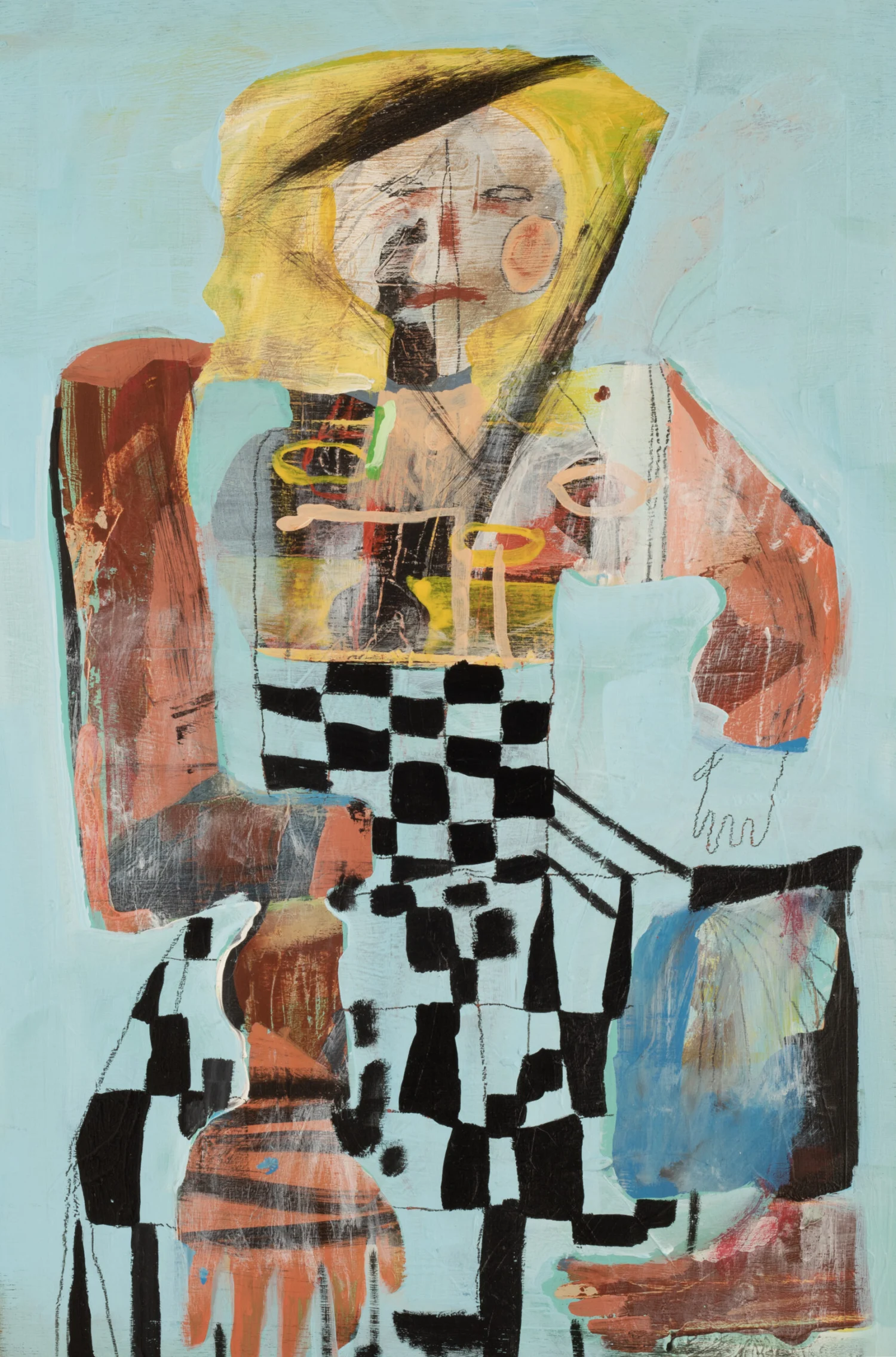
The intersection of literature, psychological trauma, and artistic interpretation often yields works that challenge the boundaries of human empathy. Recently highlighted in literary publication Guernica, a striking poetic piece by acclaimed Hungarian author Anna T. Szabó—translated into English by Ági Bori and paired with the evocative visual art of Melissa Monroe—offers a harrowing window into the mechanics of denial and profound loss.
The text presents a stark, chilling narrative: a man quietly performs mundane morning rituals, meticulously covering the body of his deceased wife before turning his attention to his sleeping daughter. In a disorienting haze of psychological shock, he dresses the child, straps her into a car seat, and drives her to school at seven in the morning, momentarily slipping into the horrific illusion that she, too, is still alive.
This feature examines the structural anatomy of this literary work, the thematic weight of Szabó’s verse, the brilliant translation work of Bori, and the accompanying sculptural and textile artistry of Monroe. Furthermore, it explores the broader psychological phenomena of catastrophic denial, the mechanics of trauma processing in contemporary literature, and the critical reception of trans-European literary collaborations in the modern Anglophone sphere.
Read Also
Detailed Chronology: The Anatomy of a Breakdown
To understand the poetic vignette provided by Szabó, one must closely examine the deliberate, harrowing progression of actions embedded within the stanzas. The narrative moves with a chilling, cinematic precision, capturing the transition from the private world of trauma to the public facade of normalcy.
Phase 1: The Preservation of Muscle Memory
The poem opens with a gesture deeply rooted in the past:
He ties the strap on his left hand, as he had seen his grandfather do it during his childhood…
This invocation of ancestral habit establishes a coping mechanism through physical repetition. When faced with an unbearable present, the human psyche often retreats into generational patterns or mechanical tasks. The straightening of a knocked-down lamp and the fastidious covering of his deceased wife represent futile attempts to restore order to an interior world that has entirely collapsed. By raising the kitchen shutters, he performs the ultimate paradox of trauma: inviting the light of a new day into a domestic space swallowed by tragedy.
Phase 2: The Delusion of Life
Moving into the children’s bedroom, the protagonist confronts the boundary between sleep and death. The act of pulling back the floral curtain allows sunlight to pour into the room, creating an artificial warmth that clashes with the grim reality of the situation.
But she is breathing, he thinks.
This single line marks the apex of psychological dissociation. The mind, rejecting the absolute finality of death, rewrites sensory input to protect itself from a reality too catastrophic to process. The father cradles the child, dresses her with tenderness, buckles her securely into her car seat, and embarks on the morning school run at seven o’clock.
This sequence highlights the terrifying functionality of grief. The routines of modern life—school drop-offs, commutes, clock-watching—continue with mechanical indifference, while internally, the individual is operating within an alternate, fragile reality.
Supporting Context & Metrics: The Creative Forces Behind the Work
The power of this specific literary presentation relies heavily on the synergy between author, translator, and visual artist. Each contributor brings a distinct cultural and thematic weight to the piece.

Anna T. Szabó: A Voice from Transylvania
Born in Transylvania, Romania, in 1972, Anna T. Szabó stands as a towering figure in contemporary Hungarian letters. Her extensive bibliography includes eleven volumes of poetry for adults, eight children’s books, and four short story collections. As an elected member of the Széchenyi Academy of Letters and Arts—part of the Hungarian Academy of Sciences—Szabó’s literary authority is well established.
Her work frequently navigates the complexities of identity, familial bonds, and the subterranean grief that underpins everyday domestic life. By situating her poetry within modern European contexts while maintaining classical structural sensitivities, Szabó bridges the gap between historical displacement and contemporary emotional landscapes.
Ági Bori and the Art of Translatability
Translating poetry of this psychological depth requires more than linguistic fluency; it demands an intimate understanding of emotional cadence. Ági Bori, a Hungarian-born writer who has resided in the United States for over three decades, serves as that vital bridge.
Bori’s translations have enriched prominent literary journals, including The Baffler, Asymptote, Words Without Borders, and The Rumpus. As a translation editor at the Los Angeles Review, she champions the integration of Central European literature into the broader American consciousness. Her translation of Szabó’s verse preserves the stark, unadorned terror of the original Hungarian, ensuring that English-speaking readers experience the unmitigated impact of the protagonist’s psychological break.
Melissa Monroe: Sculpting the Intensity of Existence
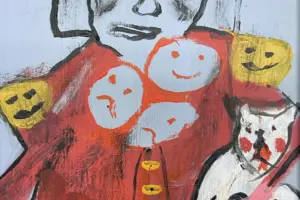
Accompanying the text is the striking visual artistry of Melissa Monroe. Working across textiles, sculpture, and acrylic painting, Monroe explores what she terms "the intensity of being alive." Her creations—often manifesting as spiritual masks and intricate fiber installations—act as physical manifestations of emotional truths.
Monroe notes that her artistic practice serves as a medium where "sadness, love, and joy all exist together." By pairing her textured, visually dense imagery with Szabó’s sparse and haunting narrative, the presentation achieves a multi-sensory resonance. The visual weight of Monroe’s work mirrors the heavy, inescapable atmosphere of the protagonist’s grief.
Official Statements & Critical Reception
Literary critics and academic commentators have increasingly focused on how contemporary writing addresses the unspoken fractures within family structures. While explicit public statements from individual institutions regarding this specific publication remain part of ongoing cultural discourse, the broader critical reception of translated European poetry in digital literary spaces points toward a growing demand for works that prioritize psychological realism.
Cultural analysts emphasize that literature depicting extreme dissociation serves a vital societal function. By exploring the moments where human endurance breaks down, writers like Szabó dismantle the polished perfection often projected in modern media.
Furthermore, editorial perspectives from platforms like Guernica underscore the necessity of cross-cultural artistic dialogues. Bringing Eastern European literary traditions into conversation with American translation and visual art creates a globalized forum for confronting universal human vulnerabilities—chiefly, mortality and the mind’s defense mechanisms against trauma.
Future Outlook: The Evolution of Transnational Literary Art
As digital publishing platforms continue to break down geographic and linguistic barriers, the collaboration between international poets, translators, and visual artists is poised to redefine contemporary literature.
- Increased Demand for Hybrid Art Forms: The integration of poetry, translation, and high-concept visual art (such as Monroe’s textile sculptures) signals a shift away from text-only publishing toward immersive, multi-disciplinary storytelling.
- Expanding Horizons in Translation: Translators like Ági Bori are playing an increasingly prominent role not merely as linguistic intermediaries, but as cultural curators who shape the reception of international literature in the Anglophone world.
- De-stigmatizing Narratives of Grief: Works that unflinchingly examine the darker corners of human psychology—such as denial, dissociation, and catastrophic grief—will continue to find resonance among readers seeking authentic engagements with the human condition.
Ultimately, the collaborative presentation of Anna T. Szabó’s verse stands as a testament to the enduring power of art to articulate the unspeakable. Through precise language, masterful translation, and haunting visual accompaniment, the piece invites readers to bear witness to the fragile architecture of the human mind when confronted with the unimaginable.

Comments
Facebook App ID not configured. Please add it in the Customizer.