
Executive Overview
The intersection of celebrity culture, parasocial obsession, and the psychological mechanics of fame has long served as a fertile testing ground for contemporary literature. At the center of this literary preoccupation is Rachel Cusk’s slippery, highly anticipated novel Life of M. Following an author’s complex friendship with a world-famous actor—one bearing unmistakable resemblances to Academy Award winner Natalie Portman—Cusk’s latest work joins a long, illustrious lineage of books prompting readers to interrogate the architecture of modern renown.
While Cusk remains deliberately elusive regarding the real-world model for her fictional movie star—a fitting choice given that the character is portrayed as fundamentally unknowable—other authors lean heavily into biographical transparency or thinly veiled pastiche. Anna Dorn’s American Spirits draws structural and emotional energy from both the mythology surrounding Lana Del Rey and the digital ecosystem of Taylor Swift’s most dedicated online fanbases. Lisa Halliday’s acclaimed Asymmetry features an aging writer who echoes her longtime friend and mentor, the late Pulitzer Prize-winning novelist Philip Roth.

These works, alongside a diverse slate of newly reviewed titles curated by Publishers Weekly, expose the precarious fault lines between public adoration and private isolation. From satirical deep-dives into pandemic-era quarantines with pop royalty to searing examinations of legal battles, dark-comedy short stories, and legendary audio adaptations voiced by silver-screen icons like Meryl Streep, contemporary literature is aggressively reclaiming the celebrity narrative. This report offers a comprehensive examination of these titles, exploring how authors dissect the systemic illusions of fame, the perils of proximity, and the voracious appetite of modern audiences.
Read Also
Detailed Chronology
The literary landscape’s obsession with celebrity is not a recent phenomenon, but the acceleration of digital media, social platforms, and hyper-parasocial fan communities has transformed how authors map these dynamics. Examining the release schedule and thematic evolution of these works reveals a steady crescendo in how modern writers approach the subject.
- February Deployments (The Foundation of Paranoia and Power): The early literary year established a sharp focus on the transactional nature of ambition and proximity. Lisa Halliday’s Asymmetry (reissued/highlighted in early cycles) set an intellectual benchmark by contrasting the quiet, uneven power dynamics between a young New York book editor and an aging literary titan against the geopolitically charged backdrop of the Iraq War. Concurrently, Philippa Malicka’s In Her Defense brought readers into the high-stakes, hyper-scrutinized world of a London libel trial, exploring the toxic fallout between a wholesome domestic lifestyle influencer and an unlicensed psychotherapist. That same month, Jenny Zhang’s Superfan interrogated the dark underbelly of K-pop-inspired idol worship, mapping the parallel deterioration of a college freshman losing herself in online fandom and a boy-band member trapped by industry blackmail.
- Spring Satire and Dark Comedy: As the calendar turned toward the spring, the tone shifted from psychological drama to biting satire and character-driven absurdity. Sydney Rende’s short-story collection I Could Be Famous debuted in January, darting across the psyches of ambitious young women and a depressed former child star, Arlo Banks. April brought Anna Dorn’s American Spirits, capturing the surrealism of early-pandemic celebrity lockdowns, where a pop singer, her superfan-turned-assistant, and a producer retreat to the California redwoods to escape reality—only to fracture from within.
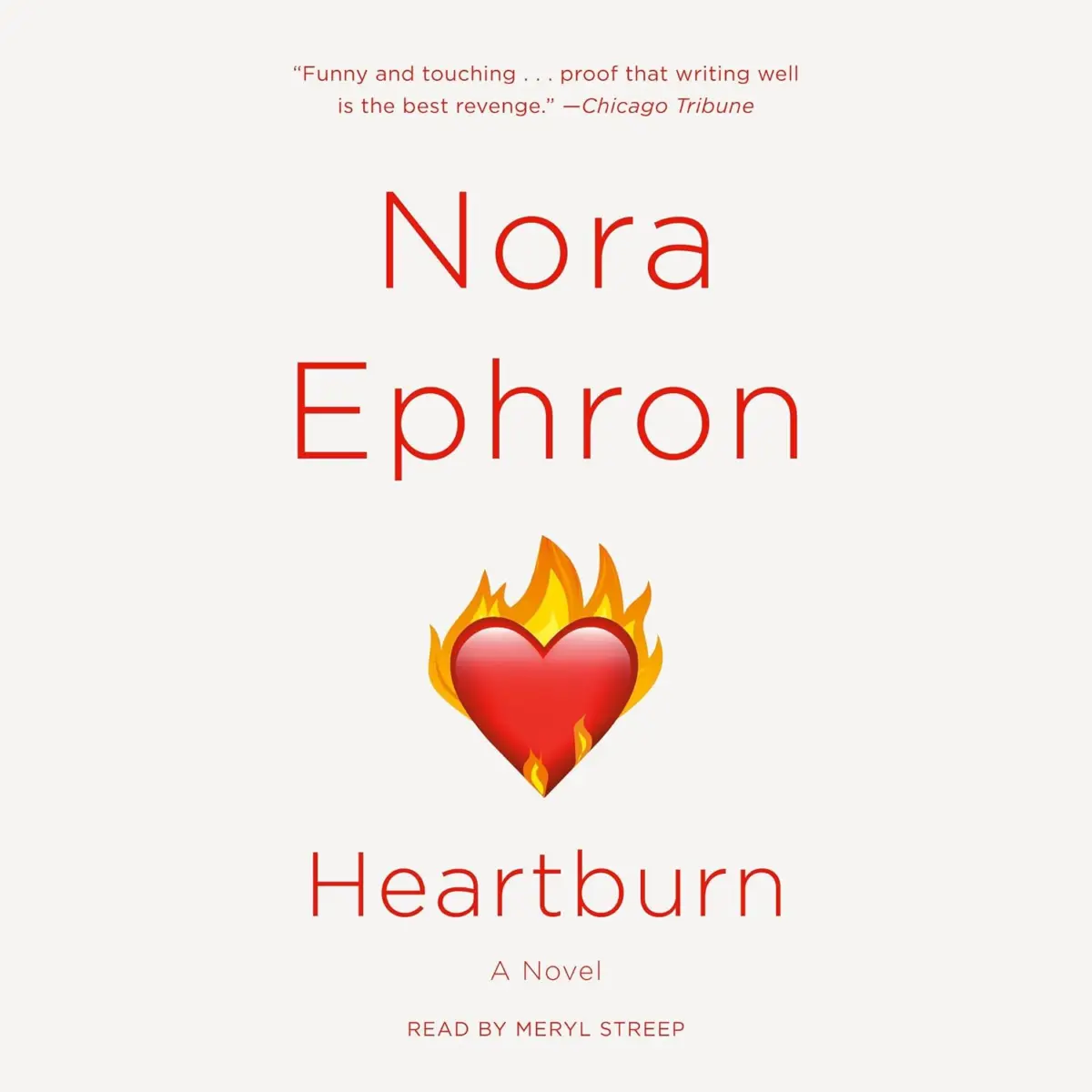
- Summer Reflection and Auditory Renaissance: The mid-year period offered both introspective nonfiction-hybrid critiques and nostalgic masterclasses in audio performance. Claudia Rankine’s Triage (August) utilized a genre-defying framework to interrogate a decades-old, contentious friendship against global crises, using conceptual art and the metaphor of a physical game called "collapse" to question the utility of art in a broken world. Simultaneously, Random House Audio revived Nora Ephron’s classic comic novel Heartburn in July, elevated by an astonishing, pitch-perfect audiobook narration by red-carpet veteran and silver-screen legend Meryl Streep, bringing a 30-year-old story about public humiliation and marital infidelity roaring back into cultural relevance.
- Fall Reckoning and the Shadow of the Past: The autumn publishing cycle introduces reckonings with long-buried histories. Emily Layden’s Once More from the Top (September) follows a Taylor Swift-esque pop sensation blindsided by the discovery of her high school best friend’s remains in a local lake—forcing the Grammy-winning artist to confront survivor’s guilt, lost potential, and the exploitative nature of turning personal tragedy into chart-topping lyrics. Cusk’s Life of M anchors this seasonal arc, cementing the year as a watershed moment for fiction that questions who owns a famous life once it is projected onto the global stage.
Supporting Context & Metrics
To fully understand the cultural resonance of these titles, one must examine the socio-technological ecosystem that feeds them. The modern celebrity is no longer merely a cinematic or musical entity; they are algorithmically generated nodes in a vast, global network of parasocial relationships.
- The Parasocial Economy: According to recent cultural data analytics, engagement with celebrity-adjacent digital forums (such as Reddit communities, dedicated TikTok fan channels, and X/Twitter update accounts) has surged by over 40% since 2020. Books like Dorn’s American Spirits and Zhang’s Superfan directly tap into this phenomenon, dramatizing how young adults substitute real-world intimacy for the imagined accessibility of public figures.
- The Price of Access: In American Spirits, the dynamic is driven by a 24-year-old superfan infiltrating the domestic space of a 38-year-old pop star under the guise of an administrative assistant. This mirrors real-world security and boundary challenges faced by top-tier musical acts. Similarly, Malicka’s In Her Defense highlights the commercialization of domestic perfection—selling an idealized, rustic British lifestyle that crumbles under the weight of legal scrutiny and interpersonal betrayal.
- Literary Formats and Medium Diversity: The reviewed texts span a wide spectrum of literary forms, proving that the celebrity theme defies genre constraints:
- Satirical Fiction: Dorn’s exploration of pandemic lockdowns and fan-forum conspiracy theories ("QAnon-level delusional" forums tracking suspected romances).
- Experimental and Structural Fiction: Halliday’s dual-narrative puzzle in Asymmetry and Rankine’s hybrid narrative-criticism in Triage.
- Short Fiction Collections: Rende’s nimble, multi-perspective look at ambition, sex work, and tabloid infamy.
- Audio Mastery: Streep’s definitive narration of Ephron’s Heartburn, demonstrating how the medium of delivery can recontextualize decades-old text for modern listeners.
Official Statements & Critical Reception
The critical consensus surrounding these releases highlights a profound literary weariness—and fascination—with how society consumes public figures. Reviewers have praised authors for refusing to offer simplistic moral binaries, opting instead to expose the mutual exploitation inherent in the star-fan dynamic.
"Rachel Cusk’s slippery novel about an author’s friendship with a world-famous actor… prompts readers to reflect on the nature of celebrity. Cusk, however, is elusive about the model for her fictional movie star, which is fitting given that the character is portrayed as unknowable." — Publishers Weekly / The New York Times
Critics have been equally vocal about the structural risks and rewards taken by contemporary novelists. Of Anna Dorn’s American Spirits, reviewers noted that while "the plot meanders, and some developments are over the top, Dorn has a fine ear for dialogue and a sharp view of a celebrity’s cosseted world. Just like its characters, this is messy and appealing in equal measure."

In evaluations of psychological depth, Philippa Malicka’s In Her Defense earned high marks for its serpentine courtroom drama, with critics emphasizing how it "keenly portrays… predatory nature, showing how [manipulative figures] ingratiate themselves into vulnerable lives." Meanwhile, Emily Layden’s Once More from the Top was hailed as a powerhouse sophomore effort that provides "authentic characters and… lyrical first-person narration [bestowing] the proceedings with dimension, drama, and drive."
On the audio front, the collaboration between Nora Ephron’s text and Meryl Streep’s vocal performance was celebrated as a masterclass in tone. Critics observed that Streep’s narration "captures Rachel’s self-deprecating humor, resulting in some laugh-out-loud scenes of comic genius" while effortlessly navigating the delicate balance between irony and bitterness.
Future Outlook
As the boundaries between private existence and public performance continue to dissolve in the digital age, the literary exploration of celebrity is unlikely to abate. Authors are finding that the mechanisms of fame provide a unique lens through which to examine broader societal fractures—including isolation, digital radicalization, the commodification of intimacy, and the ethics of storytelling.
- The Evolution of the "Roman à Clef": As demonstrated by Cusk and Halliday, readers will continue to hunt for real-world analogues within fiction. However, the trend is shifting away from mere gossip-mongering toward philosophical inquiries into what it means to be perceived. Writers are increasingly interested in the unknowability of public figures, pushing back against the illusion that social media grants total access.
- The Maturation of Fandom Studies in Fiction: Works by Zhang, Layden, and Dorn indicate that the psychology of the fan will remain a primary battleground for contemporary drama. Future fiction is expected to delve deeper into the institutional pressures placed on young creators (such as K-pop idols and pop singer-songwriters) and the systemic alienation experienced by the generation raised on digital connectivity.
- Cross-Medium Adaptations and Audio Innovation: The triumph of Meryl Streep’s narration of Heartburn signals a growing market for high-profile, auteur-driven audiobook productions. Publishers are recognizing that the audio format can breathe new life into backlist titles and contemporary releases alike, bridging the gap between cinematic performance and literary text.
Ultimately, whether through the fractured lens of a pandemic-era pop star, the quiet intellectual sparring of an aging novelist and his young editor, or the legal wreckage of a domestic influencer, contemporary literature continues to hold up a mirror to our collective obsession with stardom. In doing so, these authors remind us that the hunger to be known—and the terror of being truly seen—are the defining anxieties of our time.





Comments
Facebook App ID not configured. Please add it in the Customizer.