
Executive Overview
The intersection of psychological acuity and high-stakes suspense is fertile ground for modern thriller fiction, and British-Swedish author Ally Zetterberg is planting her flag firmly in this territory. Scheduled for release on September 8, 2026, through Berkley, Zetterberg’s upcoming novel, The Dating Game, introduces readers to an eccentric, socially awkward board game designer who turns modern romance into a literal survival challenge.
In this comprehensive feature, we examine the genesis of The Dating Game, trace Zetterberg’s unconventional journey from a rural Swedish upbringing and international modeling to psychological studies and novel-writing, and explore the meticulous editorial process that brought her latest literary endeavor to life. Represented by Greenstone Literary, Zetterberg’s trajectory highlights the evolving landscape of contemporary thriller publishing—proving that unique character concepts and deeply immersive, unconventional settings can redefine genre expectations.
Detailed Chronology: From Scrabble-Inspired Swipes to a Berkley Publication
The path from an initial creative spark to a major traditional publishing house release is rarely linear. For Zetterberg, The Dating Game represents her longest and most intensive writing and editing journey to date, spanning approximately three years from the conception of the first draft to its impending publication date in the fall of 2026.
Read Also
Phase 1: The Initial Spark and Character Conception
The foundational concept for The Dating Game did not originate from a grand plot outline or a deep-dive investigation into true crime. Instead, it was born from a quirky character quirk. Zetterberg’s protagonist, Tilda—a socially awkward board game designer—initially materialized through a very specific dating app habit.
“The very first idea I had for this book was a board-games-obsessed character who only swiped right on dates if they had a name that would score high in Scrabble,” Zetterberg reveals. “So, a ‘Ben’ would not get a swipe.”
This idiosyncratic rulebook served as the gateway into Tilda’s psyche. Zetterberg envisioned a character who fundamentally struggles to navigate the unwritten social contracts of the modern world, choosing instead to impose her own rigid, game-like parameters onto human interaction. As Tilda begins eliminating bad dates using her own warped criteria, the narrative takes a dark twist: she realizes someone else is playing a game too, transforming her from the orchestrator of the experiment into a targeted player.
Phase 2: Setting the Scene in the South of France
To match Tilda’s eccentric and isolated worldview, Zetterberg required a backdrop that felt equally distinct. At the time she began drafting, Zetterberg had been living in the Monaco area for four years. Having absorbed the nuances, architectural contrasts, and social subcultures of the region, she decided to utilize it as the primary setting for The Dating Game.
For Zetterberg, Monaco offered more than just picturesque coastlines; it provided a thematic playground. “It’s such a mysterious and misunderstood place,” she notes, “and one that fits Tilda perfectly.” The juxtaposition of high-society glamour and hidden, insular communities creates a claustrophobic tension that elevates the psychological stakes of the narrative.
Phase 3: Drafting Versus the Editorial Marathon
While Zetterberg is accustomed to a swift drafting pace—writing the first draft of The Dating Game in approximately six months, which aligns with her standard timeline—the subsequent phases proved entirely uncharted territory.
While many authors dread the revision process, Zetterberg approaches it with cautious enthusiasm. However, the sheer volume of structural adjustments required for this manuscript caught her off guard. Spanning a three-year timeline from start to finish, the vast majority of the development cycle was dedicated to refining the plot, pacing, and psychological depth of the characters alongside her publisher’s editorial team.
Supporting Context & Metrics: Ally Zetterberg’s Literary Profile
To understand the trajectory of The Dating Game, one must understand the author herself. Zetterberg’s background is a mosaic of diverse cultural experiences and academic disciplines that directly inform her approach to fiction.
The Author’s Journey
- Early Life: Raised in rural Sweden, Zetterberg developed an early appreciation for quiet observation and character study—traits that heavily influence her writing today.
- Global Modeling Career: A sudden pivot into international modeling uprooted her from rural Scandinavia, sending her across the globe and exposing her to varied cultures, high-pressure environments, and diverse human interactions.
- Academic Foundation: Holding a formal degree in psychology, Zetterberg brings a clinical yet empathetic lens to her character development. Her stated passion is writing characters who feel palpably real and who wrestle with the messy, complicated realities of the human experience.
- Current Residency: She currently resides in the South of France, balancing her writing career with raising three children, a dog, and a cat.
Bibliography and Publication Details
- Previous Titles: The Happiness Blueprint, The Second Chance Bus Stop
- Upcoming The Dating Game
- Publisher: Berkley
- Literary Agency: Greenstone Literary
- Release Date: September 8, 2026
- Genre: Thriller / Psychological Suspense
Official Statements and Insights from the Author
In our exclusive discussion, Zetterberg opened up about the surprises, creative hurdles, and underlying philosophies that guided her through the creation of The Dating Game.
On Alignment and Cover Art Surprises
In traditional publishing, the distance between an author’s internal vision of their characters and the marketing team’s packaging of those characters can occasionally be a source of friction. However, Zetterberg encountered a delightfully unexpected harmony during the design phase of her upcoming book.
“I think something that stood out and surprised me was seeing the cover designs for the first time and realizing that everyone had just gotten it,” Zetterberg shares. “Tilda was understood. Very few changes were needed, which is rare when you work with a team where people often have different visions. For this book, our visions aligned.”
Navigating Imposter Syndrome During Deep Revisions
The psychological toll of a protracted editing process is a well-documented hazard for novelists. When a manuscript requires months—or years—of surgical tweaks, it is easy for an author to question their foundational competence. Zetterberg candidly addresses the self-doubt that accompanied her extended revision timeline:
“I’d say the lengthy editing process took me by surprise. I just hadn’t experienced it before! The number of times I made tweaks to the plot because something just didn’t feel right was new to me. There were moments where I worried it meant the book wasn’t good enough. But I’ve learnt that the length of time writing a story isn’t a testament to its quality or success.”
Reader Takeaways and Creative Aspirations
When asked about what she hopes audiences will take away from the novel, Zetterberg emphasizes both entertainment and intellectual curiosity.
“I hope Tilda and her moral rulebook fascinates them,” she states. Beyond the suspense, she aims to reintroduce readers to her adopted home: “I hope they learn something new about Monaco, that I challenge their perception of it. Most of all, I hope they enjoy the book and that I can make them smile!”
Future Outlook & Advice for Emerging Writers
As September 2026 approaches, anticipation for The Dating Game continues to build within the thriller community. Berkley’s positioning of the novel signals a strong push into the psychological suspense market, leveraging Zetterberg’s unique blend of dark humor, idiosyncratic character studies, and high-tension plotting. For Zetterberg, the experience has not only solidified her standing as a versatile novelist but has also equipped her with valuable wisdom for those looking to follow in her footsteps.
Offering guidance to aspiring authors, Zetterberg advises against the paralyzing pursuit of stylistic perfection:
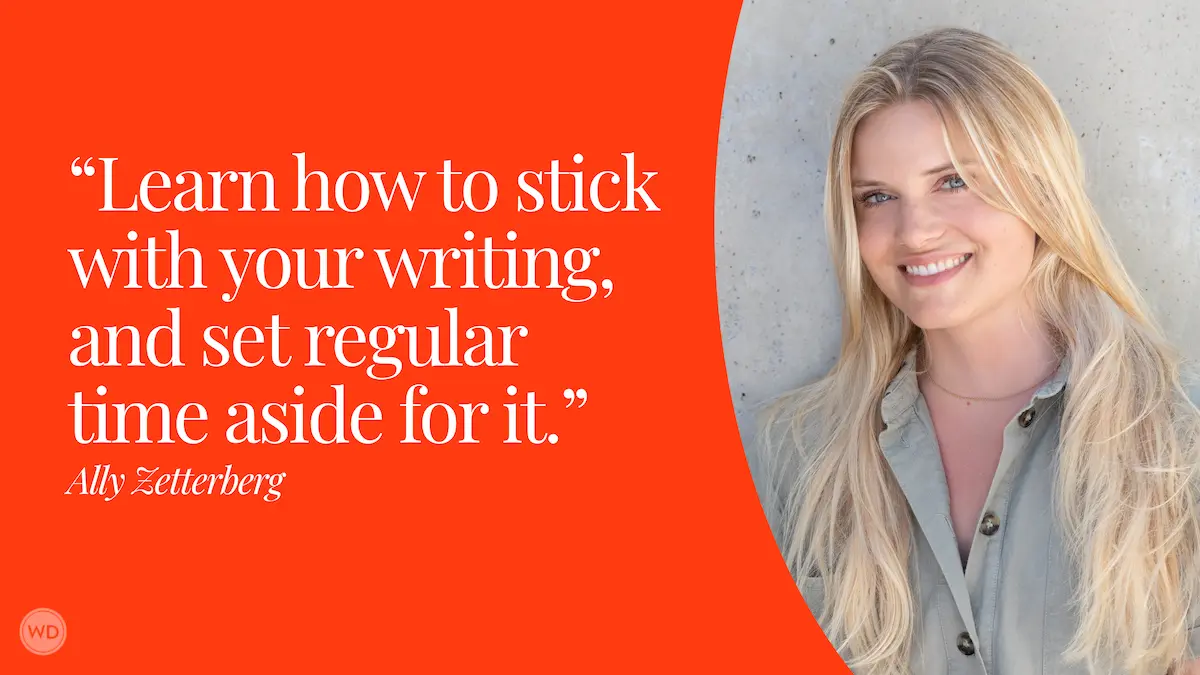
“Don’t worry about being a great writer. Learn how to stick with your writing and set regular time aside for it. And, most importantly, learn how to recognize a unique idea. Remember that writing is storytelling and no one needs you to craft perfect paragraphs; readers want you to tell them a story. If you feel that the hook or character is strong enough, don’t give up writing the book.”
With The Dating Game, Zetterberg proves that embracing an unconventional hook—whether it is calculating a date’s worth via Scrabble tiles or setting a cat-and-mouse game against the misunderstood backdrop of Monaco—is the ultimate key to breaking through the noise of the modern literary marketplace. As readers prepare to meet Tilda in the fall of 2026, it is clear that Ally Zetterberg’s rulebook for thriller writing is one worth following.

Comments
Facebook App ID not configured. Please add it in the Customizer.