For authors and screenwriters alike, the literary marketplace presents a brutal reality: you have less than sixty seconds to convince an agent, editor, or prospective reader that your manuscript is worth their time. In this high-stakes environment, creators are tasked with the seemingly impossible—conveying the bulk of a plot, the overarching theme, and the general tone of a novel while simultaneously injecting enough mystery and potential to pique immediate curiosity.
When sitting down to draft a query letter, synopsis, or back-cover blurb, writers frequently hit a creative brick wall. The mechanical technicalities of a plot rarely align neatly with the elements that genuinely fascinate an audience, especially within the tight constraints of a one-minute pitch.
The root of this challenge lies in a fundamental misunderstanding of structural storytelling: a story’s hook and a story’s heart are not the same thing.
A story’s hook is the sparkling, high-concept element designed to generate instant curiosity and compel a reader to pick up the book. Conversely, a story’s heart is its deeper emotional essence—the core meaning that sustains the reader long after the initial novelty of the premise has faded. Recognizing this distinction transforms how creators approach pitching. More importantly, understanding the interplay between hook and heart alters every single page of a manuscript, serving as an architectural compass from the first draft to the final edit.
Detailed Chronology: The Evolution of Story Packaging
The dilemma of how to successfully present a creative work to the public is as old as publishing itself. Historically, the evolution of how writers conceptualize, structure, and market their narratives has undergone distinct phases of professionalization.
Phase One: The Era of Plot-Driven Summaries
For centuries, literary summaries relied strictly on chronological plot synopses. Writers attempted to condense 80,000 to 100,000 words into a compressed timeline of events: Protagonist A does X, encounters conflict Y, and resolves it through Z.
As the literary marketplace expanded in the 20th century, this method proved increasingly ineffective. With thousands of books published annually, agents and publishers found themselves overwhelmed by generic plot outlines. A chronological list of events failed to communicate why a book stood out from its competitors.
Phase Two: The Birth of the High-Concept Pitch
In response to market saturation, the publishing industry pivoted toward "high-concept" marketing in the late 20th and early 21st centuries. Writers were instructed to master the "elevator pitch"—a single, punchy sentence emphasizing the unique, marketable hook of the novel.
While this solved the immediate problem of catching an agent’s eye, it created a new crisis for authors. Books marketed purely on high-concept hooks frequently fell flat in terms of emotional resonance. Creators discovered that a clever premise could sell a book, but a hollow core guaranteed poor long-term engagement and negative reviews.
Phase Three: The Modern Synthesis of Hook and Heart
Contemporary writing pedagogy—championed by veteran authors, developmental editors, and literary conferences—has recognized that a successful novel requires a dual-engine approach. Writers are now taught to identify their story’s emotional core (the heart) and pair it seamlessly with its market-facing differentiator (the hook) before drafting the first chapter. This holistic framework ensures that commercial viability and artistic integrity work in tandem rather than competing for dominance.
Supporting Context & Metrics: Unpacking the Anatomy of a Novel
To successfully master the craft of pitching, an author must clearly define the two foundational pillars of narrative construction: the Heart and the Hook.
+-----------------------------------------------------------------+
|                       THE DUAL ENGINE OF FICTION                |
|                                                                 |
|  +---------------------------+     +-------------------------+  |
|  |        STORY HEART        |     |       STORY HOOK        |  |
|  |  - The Soul & Theme       |     |  - The Market Differentiator|
|  |  - Why It Matters         |     |  - Creates Curiosity    |  |
|  |  - Answers: "What is this |     |  - Answers: "Why should |  |
|  |    really about?"         |     |    I care right now?"   |  |
|  +---------------------------+     +-------------------------+  |
+-----------------------------------------------------------------+
What Is Your Story’s Heart?
The heart of a story is its soul. It transcends genre tropes—such as romance, thriller, or coming-of-age—to address the deeper point of the narrative. It is the underlying truth that shines through technical execution, providing the reason the story matters after the initial premise has been consumed.
Discerning the heart of a narrative requires an author to interrogate their own creative motivations by answering two fundamental questions:
Why are you writing this story? (Moving beyond surface answers like "I love science fiction" to explore the personal or thematic resonance driving the project).
What is the story really about? (Distilling the narrative down to its core thematic thrust, stripping away extraneous subplots and plot twists).
Case Studies in Story Hearts:
Rikers High by Paul Volponi: A young man lands in the notorious Rikers Island prison, where an on-site school inspires him to fundamentally transform his life. (Heart: Personal redemption and the transformative power of education within a broken system).
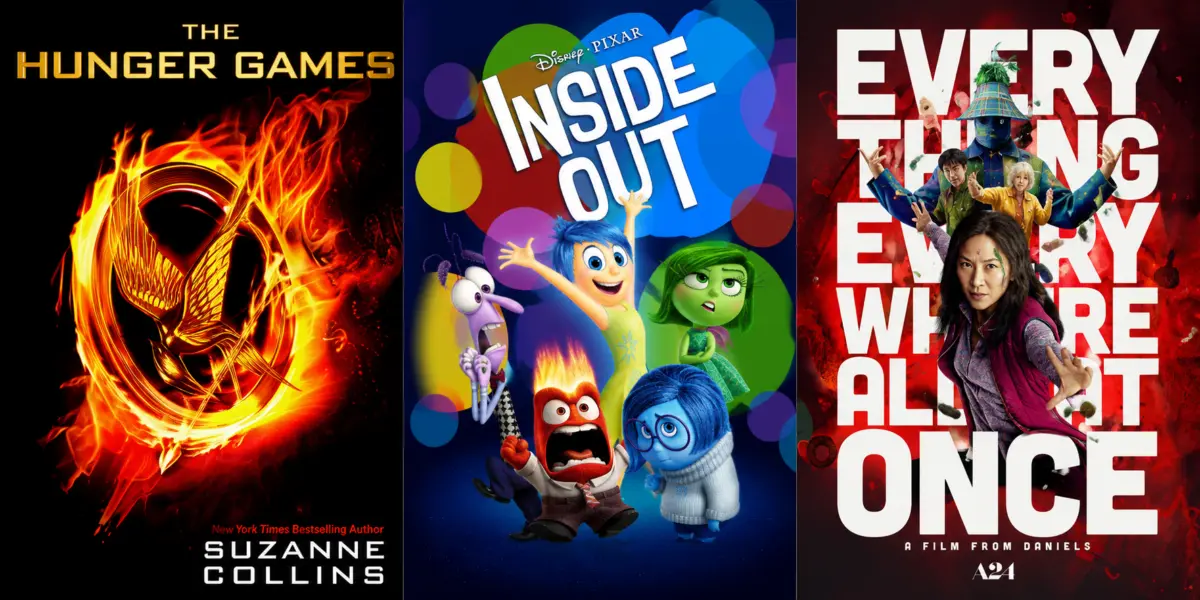
The Hunger Games by Suzanne Collins: A teenage girl is forced into a televised gladiatorial death match, where her refusal to conform challenges a tyrannical political regime. (Heart: The preservation of human dignity and morality under systemic oppression).
Inside Out (Pixar): Anthropomorphized emotions inside a young girl’s mind must learn cooperation when a disruptive cross-country move coincides with the onset of adolescence. (Heart: The vital emotional necessity of processing sadness, not just happiness).
What Is Your Story’s Hook?
While the heart provides meaning, the hook provides momentum. A story hook is the specific, unique element designed to slice through market noise and generate irresistible curiosity.
As literary agent Elizabeth Winick Rubinstein noted in Writer’s Digest, authors must rigorously evaluate their manuscript’s differentiating factors: "Really think about your novel’s hook. What makes it stand out? How is it different from all the other novels in my inbox?"
To isolate a story’s hook, creators must ask:
Why should audiences care about this story right now?
What is the single most unique, high-impact element on display?
Case Studies in Story Hooks:
Reflex by Steven Gould: While teleportation is a familiar sci-fi trope, the hook diverges from standard superhero tropes: instead of a savior stopping crime, it features a terrified young man being hunted, tortured, and forced to use his powers merely to survive.
Wide Sargasso Sea by Jean Rhys: The hook is embedded natively in the premise—functioning as a canonical prequel to Charlotte Brontë’s Jane Eyre, told entirely from the perspective of the "mad wife in the attic."
Everything Everywhere All at Once: An exhausted laundromat owner discovers she can access the martial arts skills and memories of infinite alternate versions of herself across a collapsing multiverse, anchoring bizarre, chaotic set-pieces to a deeply grounded mother-daughter conflict.
Official Statements & Industry Insights
Literary professionals across the publishing spectrum emphasize that failing to distinguish between hook and heart is one of the most common pitfalls facing debut and mid-list authors alike.
"An agent doesn’t acquire your book based on how beautifully you executed chapter twelve; they acquire it because the hook promised an experience they couldn’t find anywhere else, and the heart delivered on that promise once they opened the cover."
— Anonymous Literary Agent, New York Publishing Symposium
Industry workshops, such as the upcoming WorldShift Summit for Speculative Fiction Writers, frequently feature dedicated modules on narrative architecture. Instructors emphasize that mastering these elements early in the outlining phase prevents structural collapses during revisions. Teaching sessions focusing on "The Hidden Architecture of Meaningful Fiction" underscore that thematic resonance and commercial hook-building must be engineered into a story’s DNA before the first draft is ever written.
Future Outlook: The Intersection of Pitching and Modern Publishing
As the publishing landscape continues to evolve through digital discovery platforms, social media book marketing (such as BookTok and Bookstagram), and shifting reader consumption habits, the demand for precise, high-impact pitching has never been higher.
Algorithms and human attention spans alike reward instantaneous clarity. Authors who master the art of leading with a razor-sharp hook while anchoring their pitch in an unshakeable emotional heart will continue to secure representation and build devoted readership bases.
Actionable Takeaways for Writers:
Audit Your Current Manuscript: Write down your story’s heart in a single sentence. Then, write its hook in a single sentence. If they sound identical, you have more structural work to do.
Lead with the Hook in Pitches: When facing an agent or crafting a query letter, always deploy your most unique, curiosity-inducing element first. Save the thematic heart to anchor the premise.
Establish Both Early: Do not wait until the revision stage to discover what your book is about. Defining your hook and heart before writing your first draft acts as an infallible compass, ensuring your narrative never loses its way.








Comments
Facebook App ID not configured. Please add it in the Customizer.