
Executive Overview
For bibliophiles who prefer their stories weighty and their worlds immersive, the arrival of autumn has long signaled a literary renaissance. While cultural consensus often celebrates the season for shifting foliage and spiced confections, industry veterans recognize it as the premier launchpad for the publishing world’s most ambitious titles. Fall 2026 is no exception, delivering a staggering roster of advance reader copies (ARCs) and galleys that balance blockbuster returns from literary titans with boundary-pushing debuts from emerging voices.
This season’s publishing slate reflects a collective cultural preoccupation with displacement, technology, generational inheritance, and survival. From dystopian futures fractured by civil war to intimate domestic thrillers that unravel across multiple continents, the 14 titles slated for release between September and November 2026 offer a panoramic view of contemporary anxieties and enduring human resilience. Whether exploring the hidden mechanics of corporate exploitation, the long shadows of historical trauma, or the quiet ache of second-chance romance, this year’s crop of books promises to command the literary conversation for months to come.
Detailed Chronology: Fall 2026 Release Schedule
September 2026: Shadows, Surveillance, and Satire
-
Before You Were Anne by Emiko Jean (Suspense, Simon & Schuster, Sept. 1)
Following her New York Times bestseller The Return of Ellie Black, Emiko Jean returns with a propulsive domestic suspense novel told in three interwoven voices. When Detective Chelsey Calhoun—navigating a newly stable life, a successful career, and an unexpected pregnancy—investigates a brutal murder and the disappearance of the victim’s 16-year-old daughter, Naomi, she unearths secrets from her own past. The victim, known as Anne Walker, was born Rika Takahashi, leaving a trail of deception spanning a remote Japanese farm, Tokyo’s underworld, an isolated Idaho town, and suburban Seattle. As Chelsey hunts for Naomi, she discovers that generational trauma and carefully constructed lies are often lethal. -
Exit Party by Emily St. John Mandel (Literary Fiction, Knopf, Sept. 15)
The award-winning author of Station Eleven and Sea of Tranquility explores doubles, shadow worlds, and fractured timelines in Los Angeles, 2031. Set during the first spring following the collapse of the United States—as peacekeeping troops withdraw, Jacaranda trees blossom, and curfews lift—an opulent party in Silverlake is disrupted when a bewildered doppelganger stumbles through the crowd and the host vanishes. Protagonist Ari Waker’s search for answers spans a splintered America, a seaside Greek resort for elite weapons dealers, a domed Paris, and a lunar colony, crafting a haunting requiem for a world balancing on the precipice of cataclysmic change. -
Fallow by Sarah Anderson (Satire, Farrar, Straus & Giroux, Sept. 15)
Woundingly funny and disarmingly tender, Fallow introduces Natalie, a burnt-out call center worker drowning in student debt and workplace harassment. Seeking an escape from systemic precarity, she signs up to be the world’s first in-house corporate surrogate via a mysterious flyer found at a plasma clinic. Promoted as a stride toward gender equity, her contract requires her to deliver seven babies in ten years for corporate executives, trading maternity leave for luxury living quarters, round-the-clock healthcare, and restorative "fallow" periods between deliveries. When a sudden staffing decision upends her routine, Natalie is thrust into a new social experiment that challenges her definitions of freedom, purpose, and complicity under late-stage capitalism. -
American Hagwon by Min Jin Lee (Literary Fiction, Cardinal, Sept. 29)
Spanning decades and continents, Min Jin Lee’s panoramic novel traces the Koh family—John, Helen, and their children Bo, DH, and Mido. Once comfortably middle class in Seoul, their lives are upended by a business betrayal and the 1997 Asian financial crisis. Seeking survival, they migrate from South Korea to Sydney before finally settling in Southern California. Amid cramped apartments and gated communities, the Kohs navigate a world where their domestic credentials hold little currency, placing their faith entirely in the transformative power of education for the next generation. (Note: Look for an exclusive feature on Lee’s writing process in the Nov/Dec 2026 issue of Writer’s Digest). -
The Best Short Stories 2026 edited by Tommy Orange (Anthology, Vintage, Sept. 29)
Continuing a century-long tradition of literary excellence, novelist Tommy Orange curates twenty prize-winning stories published in periodicals over the previous year. The anthology features an international roster of literary luminaries and emerging talents, including Colm Tóibín, Louise Erdrich, Weike Wang, Brandon Taylor, Samanta Schweblin, and Catherine Lacey. Accompanied by author reflections and an extensive resource guide for short fiction magazines, the collection underscores the vitality and range of the short-form narrative. -
Ply by Hernan Diaz (Dystopian/Literary, Riverhead Books, Sept. 29)
The Pulitzer Prize–winning author of Trust turns his gaze toward the future in a novel exploring technology and the American experiment. Centuries from now, following the dismantling of the state, an orphan raised amidst loss and found family becomes a "pincher," stealing electricity from the grid to power underground music scenes. Her illicit trade eventually draws her toward a colossal scientific invention capable of rewriting reality. Blending a Dickensian odyssey, family drama, and scientific thriller, Ply examines the fragile boundaries of the self and human connection.
October 2026: Legacies, Memory, and Dystopian Realities
-
The Ferryman’s Daughter by Yasmin Angoe (Thriller, Thomas & Mercer, Oct. 1)
Bestselling author Yasmin Angoe returns with a tense thriller about identity and inherited violence. Forensic science teacher Sanaa Karrem spent eighteen years burying her past after her serial killer father, "the Ferryman," vanished. Having changed her name and built a secure life, her peace shatters when bodies appear bearing her father’s signature: pennies placed upon their eyes. As a sadistic copycat targets her with escalating threats—forcing her to keep secrets even from her fiancé, Detective Marcus Morelli—Sanaa must use her former expertise as a medical examiner to confront the darkness lingering within her own lineage. -
Partita by Barbara Kingsolver (Literary Fiction, Harper, Oct. 6)
Pulitzer Prize winner Barbara Kingsolver crafts an intimate exploration of youthful ambition, class barriers, and the eternal human hunger for art. Livia Cable has made peace with a modest life in farm country until an unexpected phone call from an old lover resurrects her past as Livia Bohusz, a conservatory piano prodigy estranged from her family. Shifting between past and present, Livia must decide whether to confront the memories of a self-immolating passion and a painful rupture that irrevocably altered the trajectory of her life. -
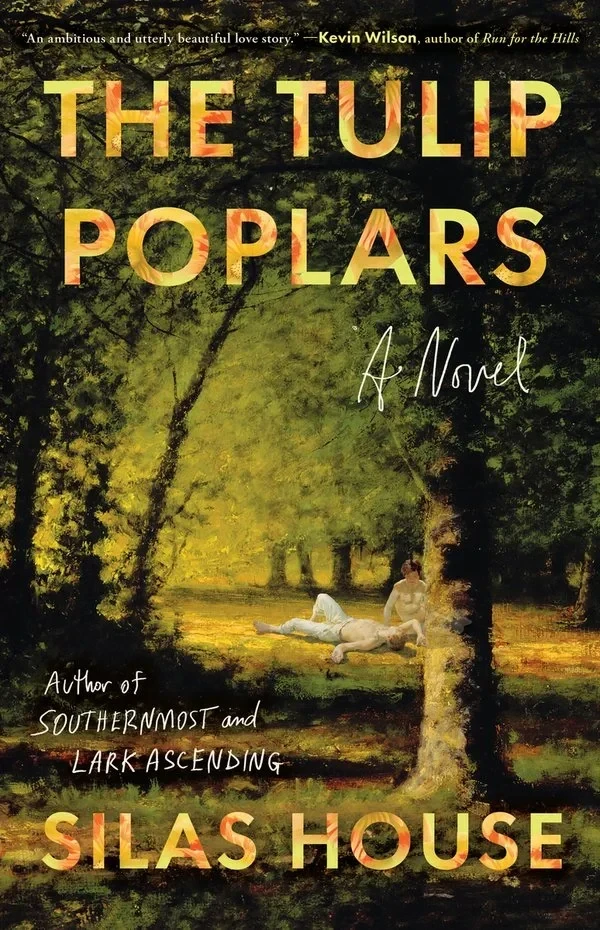
The Tulip Poplars by Silas House (Historical Fiction, Algonquin, Oct. 13)
Spanning the majority of the 20th century, Silas House’s deeply emotional novel traces four individuals navigating societal expectations in a world shaped by rigid racial and religious lines. Set against the backdrop of hot southern summers in tobacco fields and small-town Appalachia, Amos and Tom grapple with forbidden love complicated by strict religious upbringing. Interwoven with the story of Maeve, who pines for a man whose safety is imperiled by local prejudice, the novel offers an intimate look at faith, doubt, and the cost of authenticity. -
Another Name for Red by Amber Blaeser-Wardzala (Contemporary Fiction, Pantheon, Oct. 13)
Following her standout contribution to Never Whistle at Night, Amber Blaeser-Wardzala delivers a haunting debut. Known simply as Middle Sister, the protagonist is haunted by the crisis of missing and murdered Indigenous women, particularly her older sister, whose year-long absence has fractured their family on the reservation. Frustrated by indifferent local authorities, Middle Sister launches her own investigation, tracing clues to a white man named Eric from a neighboring town. To uncover the truth, she must reconcile with her alienated community, even as the obsessive attentions of a local white man loom like a shadow over her quest. -
Dead Batteries by Kate Maupin (Dystopian Fiction, Crown, Oct. 27)
A viral pandemic wipes out 99.9% of the global population in weeks, ending a world that offered little patience to May and her autistic son, high-support-needs Davis. Having mastered self-isolation, they survive in an abandoned library, sustained by routines and an old battery-powered Game Boy that brings Davis comfort. When May encounters a scavenger named Bird who offers intel on a survivor community—on the condition that May and Davis pose as his wife and child to secure his entry—she agrees solely to acquire the precious batteries her son requires. As Bird’s true motives surface, May is pushed to the limits of maternal protection in a harrowing post-apocalyptic landscape. -
Venus, Vanishing by Rebecca Birrell (Historical Fiction, Holt, Oct. 27)
Evoking the atmospheric tension of Portrait of a Lady on Fire, this debut is set in the hedonistic underground art scene of 1928 Berlin. Hannah Sherman, an artist and runaway working as a tailor, finds her voice through a wealthy female patron who commissions a series of nude portraits. When Hannah discovers her acclaimed "Venus" paintings have been plagiarized and exhibited under a man’s name, she initiates a dangerous game of revenge. Interweaving queer desire, Jewish survival, and artistic resistance, the novel captures the electric danger of Berlin on the eve of historical upheaval.
November 2026: Renewal, Migration, and Moral Conscience
-
Sunflower Season by Danica Nava (Romance, Berkely, Nov. 3)
USA Today bestselling author Danica Nava delivers a poignant second-chance romance. Drained by corporate burnout in the tech sector, June Walker quits her high-pressure job and purchases a crumbling sunflower farm in rural Oklahoma. She soon discovers that romanticized homesteading is no match for rotting infrastructure and lack of business acumen. Her recovery efforts are further complicated by the arrival of Noah Abbott, her first love and local firefighter who never left Love County, determined to uncover why June vanished without a trace a decade prior. -
The Squatters by Saba Brelvi (Contemporary Fiction, The Dial Press, Nov. 10)
In the affluent, tree-lined suburb of Surrey outside London, Dalia Waheed struggles to feel a sense of belonging despite embodying second-generation immigrant success. While volunteering at a nonprofit refugee resettlement organization, she meets Hajira, a heavily pregnant asylum seeker fleeing her home country. Moved by kinship, Dalia helps Hajira find housing outside squalid government accommodations, inadvertently triggering a political firestorm that threatens her marriage, community standing, and safety. The novel offers an unflinching look at the fractures of migration, moral conviction, and the price of altruism.
Supporting Context & Metrics: The Mechanics of Modern Publishing
The breadth of the Fall 2026 season highlights several enduring structural trends within the contemporary literary marketplace:
- The Rise of Cross-Genre Hybridity: Publishers are increasingly blurring lines between traditional literary fiction and speculative frameworks (as seen in Hernan Diaz’s dystopian exploration of technology in Ply and Emily St. John Mandel’s speculative social landscape in Exit Party).
- Amplified Representation and Regional Narratives: Debut authors and established names alike are centering indigenous experiences (Amber Blaeser-Wardzala), immigrant resilience (Min Jin Lee, Saba Brelvi), and historical intersectionality (Silas House, Rebecca Birrell), expanding the geographic and cultural footprint of major publishing houses.
- The ARC Economy: The demand for Advance Reader Copies remains a critical indicator of pre-publication momentum. Independent booksellers, corporate retail veterans, and reviewers note that competition for early access to fall blockbusters has intensified, driven by digital book communities and targeted trade campaigns.
Official Statements and Industry Insights
Reflecting on the psychological weight of this year’s seasonal output, publishing insiders note a distinct shift toward narratives that examine systemic pressures.
"When readers reach for autumn releases, they are not merely looking for seasonal comfort; they are seeking narrative spaces large enough to hold complex cultural anxieties," notes a senior acquisitions editor at a major New York publishing house. "The titles defining Fall 2026—whether set in dystopian futures, historical Berlin, or contemporary suburbs—share a common thread: characters forced to renegotiate their survival against systems designed to erase them."
Trade organizations have similarly emphasized the robust health of literary fiction and translated works within the upcoming quarter, pointing to anthologies like Tommy Orange’s curation of The Best Short Stories 2026 as proof of a sustained appetite for diverse narrative forms.
Future Outlook
As the literary community transitions from the dog days of summer into the cooler months of late 2026, the horizon remains exceptionally bright for readers willing to engage with demanding, beautifully crafted texts. The sheer diversity of the Fall 2026 release calendar—spanning gripping thrillers, incisive satires, sweeping historical epics, and tender romances—ensures that the upcoming publishing season will leave an indelible mark on contemporary letters. Readers are advised to consult their local independent bookstores, update their TBR (To-Be-Read) lists accordingly, and secure advance copies early before these titles dominate bestseller lists nationwide.


Comments
Facebook App ID not configured. Please add it in the Customizer.