
Executive Overview
In an era defined by rapid societal shifts, hyper-connectivity, and shifting educational landscapes, the landscape of youth mental health is undergoing a profound transformation. Long gone are the days when childhood anxiety was dismissed as mere "growing pains" or fleeting stage fright. Today, educators, school counselors, and developmental psychologists face a rising tide of juvenile stress that begins manifesting as early as preschool.
At the heart of this discussion is a fundamental biological truth: human beings are hardwired for anxiety. Evolutionary mechanisms that once protected our ancestors from saber-toothed cats now trigger internal alarm systems in response to contemporary stressors. However, when these alarm systems malfunction or fire continuously, children find themselves paralyzed by fear, worry, and dread.
Enter the literary world’s frontline responders: children’s authors and social-emotional learning (SEL) advocates who refuse to pathologize natural human emotions. Authors like Trudy Ludwig are spearheading a literary and educational movement to demystify big feelings. Through deeply researched, empathetic storytelling—exemplified by works such as Brave Every Day and A Not So Perfect Start—these creators are providing young readers with the emotional vocabulary needed to navigate anxiety, overcome perfectionism, and cultivate resilience. This report examines the roots of early childhood anxiety, the methodologies behind writing non-pathologizing literature, the intersection of emotional literacy and academic success, and the future outlook for youth mental health education.
Read Also
Detailed Chronology: The Evolution of Childhood Anxiety Awareness
To understand how modern children’s literature addresses anxiety, we must trace how society’s perception of youth mental health has evolved over the past several decades.
Pre-2000s: The Era of Dismissal
For generations, childhood distress was largely viewed through a behavioral lens rather than an emotional one. A child who was reluctant to speak in class, terrified of making mistakes, or overwhelmed by social settings was often labeled "shy," "difficult," or simply "stubborn." Psychological interventions were reserved for severe trauma or developmental disorders, leaving everyday anxiety largely unaddressed in classrooms.
The 2000s–2010s: The Rise of SEL and Behavioral Recognition
As educational research expanded, schools began recognizing the vital link between social-emotional well-being and academic achievement. The Collaborative for Academic, Social, and Emotional Learning (CASEL) gained prominence, embedding emotional intelligence frameworks into curricula. Educators began identifying anxiety not as bad behavior, but as an internal distress signal. Yet, a significant gap remained: how to reach children in pre-K through second grade—long before clinical diagnoses could be accurately made or understood.
The 2020s: The Pandemic Pivot and Modern Urgency
The COVID-19 pandemic served as a watershed moment for youth mental health. Disruptions in socialization, academic routines, and family stability catapulted anxiety to the forefront of educational crises. Educators reported that preschoolers—children who should be exploring the world with unbridled curiosity—were exhibiting unprecedented levels of distress. In response, children’s literature shifted dramatically. Authors stopped merely telling children to "be brave" and began crafting narratives that validated fear, de-stigmatized worry, and modeled emotional regulation in real time.
Supporting Context & Metrics: The Scale of the Crisis
Statistics from educational institutions and psychological associations paint a stark picture of the current landscape. According to feedback gathered directly from front-line educators and school counselors, anxiety consistently ranks among their top concerns, running neck-and-neck with interpersonal challenges like friendship dynamics and bullying.
The Pre-K to Grade 2 Vulnerability Window
While adolescent anxiety receives significant media attention, early childhood (ages 3 to 8) represents a critical developmental window. During these years, children form foundational beliefs about their competence, safety, and self-worth.
- The "Children in Hiding" Phenomenon: Extensive qualitative research and educator interviews reveal that anxious youth frequently retreat inward. Whether physically withdrawing or emotionally dissociating, these children exhibit behaviors that can easily be misinterpreted as disinterest or introversion.
- The Perfectionism Epidemic: Social-emotional learning experts note that perfectionism has surged in pre-K through grade 2 classrooms. Young children, driven by unspoken societal or internal pressures, experience debilitating fear of making mistakes. This fear stifles the trial-and-error process essential for cognitive development.
Biological Roots vs. Modern Triggers
The human amygdala—the brain’s emotional processing center—operates much the same way it did hundreds of thousands of years ago. When a prehistoric human spotted a predator, the brain triggered a "flight, fight, or freeze" response.
Today, modern children do not face physical predators, but their brains interpret social rejection, academic failure, unfamiliar environments, and generalized uncertainty through that exact same evolutionary lens. Without tools to intercept these biological false alarms, children’s brains can become trapped on a "hamster-wheel" of repetitive, catastrophic thinking: What if? I can’t. I’m scared.
Official Perspectives & Methodologies: Crafting Non-Pathologizing Narratives
Addressing youth anxiety through literature requires a delicate balance of psychological accuracy and engaging storytelling. Authors specializing in social-emotional learning employ rigorous methodologies to ensure their work heals rather than harms.
Moving Away from Pathologization
A core tenet of modern emotional literacy education is that anxiety is not a disease to be cured; it is an emotion to be understood. Pathologizing normal childhood fears can make children feel broken or defective. Instead, authors like Trudy Ludwig approach the subject from a universal standpoint: everyone experiences fear and worries. They are normal, natural, and biologically necessary.
However, when left unchecked, these anxieties overflow, damaging interpersonal relationships and robbing children of future opportunities. The goal of narrative intervention is not to eliminate fear, but to teach children how to coexist with it constructively.
Research and the Genesis of Brave Every Day
The creation of literature addressing these themes requires deep immersion in psychological research. When preparing to write Brave Every Day, Ludwig immersed herself in academic texts, clinical articles, and counselor notes.
A pivotal breakthrough came from an expert’s description of anxious youth as "children in hiding." This evocative imagery provided the creative springboard for the book’s protagonist, Camila:
"Most kids love hide-and-seek. Not Camila.
She just wants to hide.
Hiding is what Camila does best when she worries.
And she worries a lot."
To ground the character in psychological reality, the author analyzed her own internal thought patterns, categorizing her worries into three distinct buckets: What if, I can’t, and I’m scared. This framework allowed for the creation of relatable, highly specific anxieties—including a few whimsical, unrealistic fears brought to life by illustrator Patrice Barton—while offering readers tangible cognitive reframing techniques.
Combating Perfectionism in A Not So Perfect Start
Expanding beyond generalized anxiety, the literary exploration of school-based stress led to the development of A Not So Perfect Start, focusing on a student paralyzed by the fear of making mistakes.
Consulting with Pre-K through Grade 2 educators confirmed that perfectionism is a primary driver of classroom anxiety. To counteract this, the narrative deliberately models a growth mindset. Protagonist Thea learns—with the compassionate guidance of teachers and peers—to view mistakes not as failures, but as essential learning milestones. The core message is transformative: children are inherently worthy just for being themselves, "mistakes and all."
The Power of Emotional Vocabulary
A foundational maxim shared by veteran educators is simple yet profound: A child cannot have emotional insight if they do not have emotional vocabulary.
Many children act out, shut down, or experience somatic symptoms (such as stomachaches and headaches) simply because they lack the linguistic tools to articulate what they are feeling and why. By giving names to complex internal states—differentiate between nervousness, dread, anxiety, and excitement—stories provide children with a mirror to recognize their internal experiences. When a child reads about a character experiencing the exact same racing heart or overwhelming "what if" thoughts, the isolation of anxiety breaks down. They realize: I am not strange, and I am not alone.
Future Outlook: The Intersection of Literature, Education, and Mental Health
As we look toward the future of childhood education and mental health advocacy, several key trends and imperatives emerge:
1. Mainstreaming Emotional Literacy in Early Education
The integration of social-emotional learning into early childhood curricula is no longer viewed as an "extracurricular luxury." Educational policymakers increasingly recognize that emotional regulation is a prerequisite for academic literacy. Moving forward, teacher-training programs will likely place even greater emphasis on identifying early markers of anxiety and utilizing narrative tools to facilitate classroom discussions.
2. The Evolution of Therapeutic Children’s Literature
The demand for high-quality, non-didactic literature that addresses mental health will continue to soar. Authors, illustrators, and psychologists will increasingly collaborate to create resources that bridge the gap between clinical psychology and engaging fiction. These books serve as safe, low-stakes environments where children can process heavy emotions independently or guided by parents and educators.
3. Redefining Bravery for the Next Generation
Ultimately, the future of youth mental health education hinges on a reimagined definition of courage. As the old adage reminds us, true growth is never born from comfort.
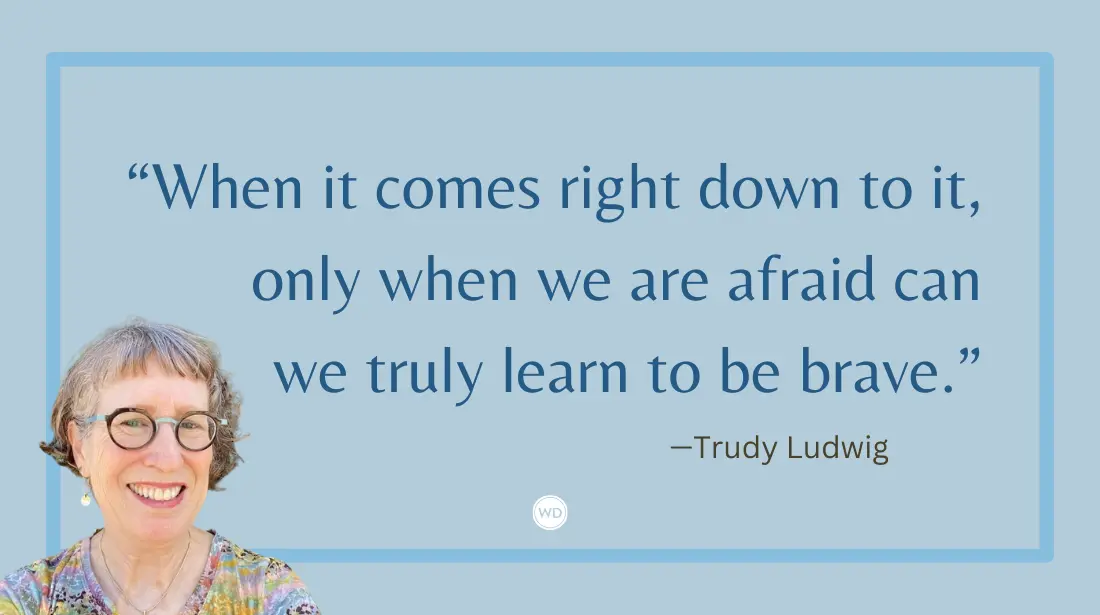
The central message for young worriers is empowering: worriers are true warriors. They are the children who step beyond their comfort zones every single day to face the unfamiliar, despite their racing hearts and trembling hands. By normalizing fear rather than demonizing it, we teach the next generation an enduring truth: It is only when we are afraid that we can truly learn how to be brave.





Comments
Facebook App ID not configured. Please add it in the Customizer.