In the shadow of anthropogenic climate change, a quieter, greener catastrophe is unfolding across Eurasia and parts of Eastern Europe. It is a crisis rooted not in carbon emissions or industrial slag, but in the ill-fated ambitions of mid-twentieth-century agrobiology. At the center of this botanical invasion is Heracleum sosnowskyi—commonly known as Sosnovsky’s hogweed—a towering, phototoxic monolith that has transitioned from an experimental Soviet forage crop to an aggressive, ecosystem-destroying invasive species.
Originally championed in the wake of World War II to alleviate rural famine, the plant has long since escaped human control. Today, it colonizes abandoned fields, railway embankments, and domestic gardens, converting diverse ecosystems into monocultural wastelands. Its sap, laden with phototoxic furanocoumarins, reacts violently with sunlight to inflict severe, blistering burns upon human skin and mucous membranes.
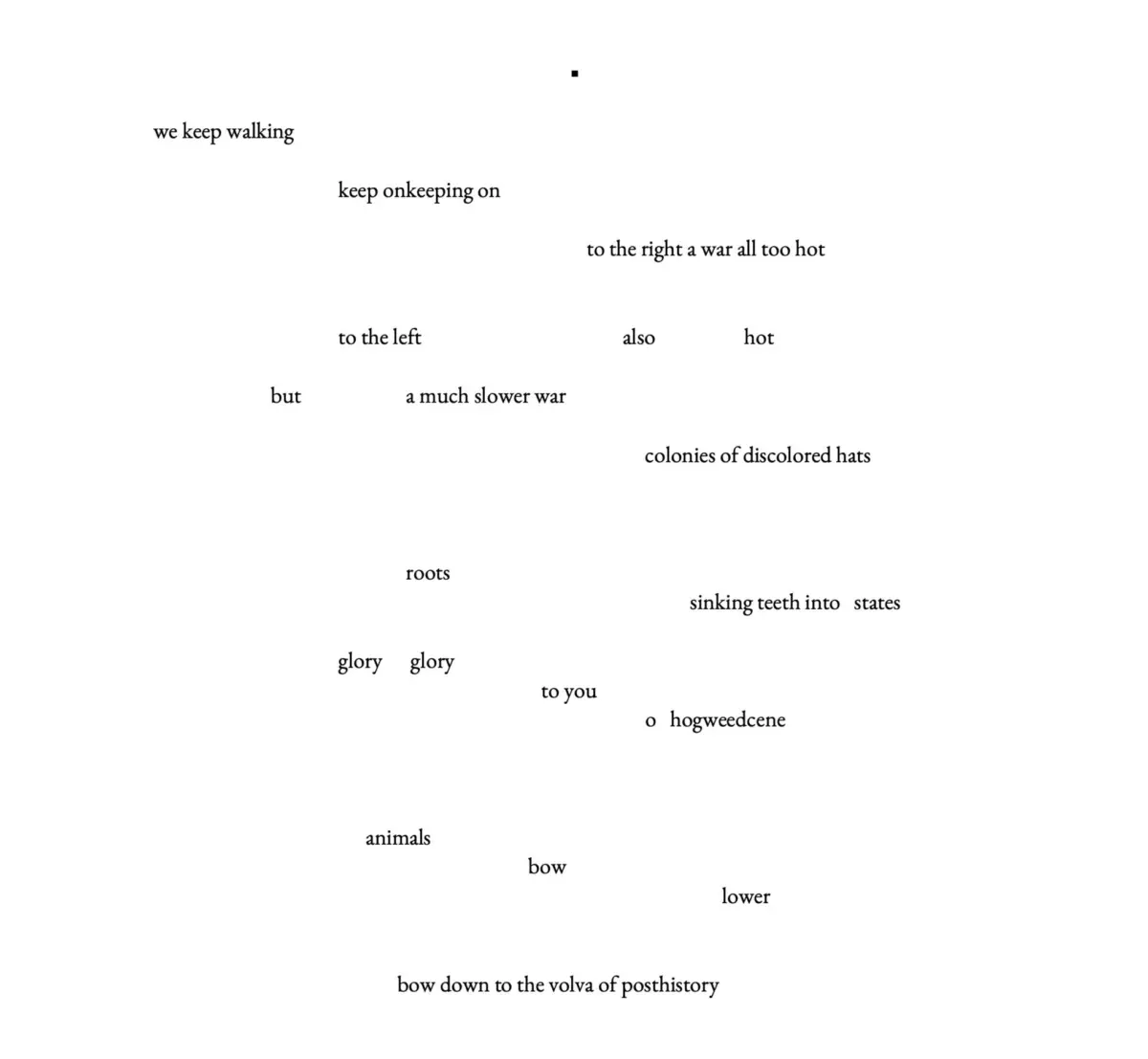
Beyond its immediate physical hazards, Sosnovsky’s hogweed has transcended its biological footprint to become a potent cultural and political metaphor. In contemporary literature and eco-criticism—exemplified by the experimental poetry and reflections of writer Tatiana Krasilnikova, translated by Venya Gushchin—the plant is examined as a living archive of totalitarianism, scientific hubris, and coloniality. Scholars and artists are now warning of the "Heracleocene," a hypothetical epoch defined by botanical supremacy, ecological homogenization, and the enduring scars of engineered nature. This investigative report explores the historical genesis of the hogweed crisis, its contemporary ecological devastation, and its profound reinterpretation through the lens of modern environmental art and philosophy.
Detailed Chronology: From Caucasian Valleys to State-Sponsored Expansion
To understand the scale of the contemporary hogweed crisis, one must trace its trajectory from an isolated native habitat to an ecological juggernaut. The history of Heracleum sosnowskyi is inextricably linked to the geopolitical ambitions and systemic pressures of the Soviet Union in the mid-twentieth century.
1. The Pre-Industrial Baseline: Endemic Stability in the Caucasus
For millennia, Sosnovsky’s hogweed existed in relative obscurity within its native ecosystems in the Caucasus Mountains. Operating under evolutionary checks and balances, the plant occupied a specific ecological niche alongside indigenous flora and fauna. It did not display the unchecked aggression that would later characterize its expansion. In its native habitat, it was merely one component of a complex, biodiverse landscape, entirely harmless to the broader balance of regional nature.
2. The Post-War Mandate and Botanical Extraction (1940s)
The turning point for the species arrived in the wake of the devastation of World War II. Facing widespread agrarian ruin, labor shortages, and impending famine, Soviet agricultural scientists sought high-yield crops capable of rapidly producing cattle silage to rebuild the nation’s livestock sector.
In the late 1940s, botanist Ida Mandenova formally described the species, naming it after her mentor, the prominent Russian researcher Dmitriy Sosnowsky. Wrenched out of its native ecosystem, the plant was transplanted into experimental fields across the Soviet Union. Promoted as a miracle crop due to its staggering biomass production and resilience, it was embraced by agrobiologists eager to meet aggressive state quotas. The logic was starkly utilitarian: the silage would feed the cattle, the cattle would feed the populace, and the sustained populace would fuel the machinery of the state.
3. The Great Escape and Agricultural Disillusionment (1960s–1980s)
By the 1960s and 1970s, the fatal flaws of the experiment became glaringly apparent. Farmers soon discovered that milk and meat derived from cattle fed on hogweed silage acquired a bitter, unpalatable flavor and pungent odor. Furthermore, agricultural workers attempting to harvest the towering stalks suffered horrific, third-degree chemical burns upon contact with the plant’s sap and subsequent exposure to sunlight.
As state priorities shifted and collective farms abandoned unprofitable or hazardous cultivation methods, Heracleum sosnowskyi was left to fend for itself. Having tasted cultivation, the plant demonstrated a terrifying adaptability. Without human intervention to check its spread, and unburdened by natural predators in its new environments, the hogweed broke containment. It migrated from experimental plots into drainage ditches, roadsides, forests, and residential dachas, inaugurating decades of unchecked biological expansion.
Supporting Context & Metrics: The Mechanics of a Botanical Invasion
The biological success of Sosnovsky’s hogweed is a masterclass in invasive resilience. Reaching heights of up to four meters with umbrella-like white flowerheads (umbbels) spanning nearly a meter across, the plant is an engineering marvel of survival and destruction.
Reproductive Vigor: A single mature hogweed plant is capable of producing tens of thousands of seeds per season. These seeds can remain viable in the soil seed bank for several years, frustrating eradication efforts.
Germination Advantage: Hogweed is among the earliest plants to emerge in the spring, allowing it to capture sunlight and outcompete native perennial species before they can fully establish their foliage.
Phototoxicity: The plant’s tissues contain high concentrations of furanocoumarins—organic chemical compounds that are activated by ultraviolet (UV) radiation. When sap contacts human skin and is exposed to sunlight, it induces phytophotodermatitis, destroying cellular membranes and causing painful, long-lasting blisters and hyperpigmentation that can mimic severe thermal burns.
Cultural and Philosophical Re-evaluations
The ecological threat posed by Heracleum sosnowskyi has sparked deep reflection among contemporary writers, historians, and artists. In her experimental writings collected under the title Heracleocene, contemporary author Tatiana Krasilnikova reflects on her childhood memories of the dacha—where neighborhood children were warned of the plant’s dangers—contrasted with a surreal, pro-hogweed children’s textbook from her Soviet-era schooling.
The textbook, which praised the plant’s supposed health properties and suggested fashioning hollow stalks into toy pipes before advising readers to "take a bite" because it is "crunchy like a cucumber," highlights a chilling disconnect between institutional propaganda and lethal biological reality. Krasilnikova interrogates this disturbing metaphor, noting how the comparison of a highly toxic, totalitarian invasive weed to a domestic, benign garden vegetable exemplifies the systemic normalization of ecological and social violence.
Translated into English by Venya Gushchin, Krasilnikova’s work conceptualizes the Heracleocene—an epoch where humanity’s dominion is usurped by the relentless spread of a botanical invader born of scientific ignorance and authoritarian overreach. The poetry embedded in her work serves as an excavation of hope from beneath the weight of historical and ecological oppression:
lessons from the earth under the lash under the table from under the floorboards from under the tomb of authoritarian regimes of totalitarian regimes from under the mycelium of actor-network theory from under oil arteries (ceci n’est pas une pipeline) from under the putrid poison of organic languages from under garbage; garbages
but also just: a handful of soil on a plot of land on this earth unteaches the transport of speech
Through this verse, the author links the physical burns inflicted by the plant’s furanocoumarins—described as "a fire on the tongue" and "a bruise in the mouth"—to the linguistic and political injuries inflicted by authoritarian governance and human hubris.
Official Statements and Institutional Responses
Governments and environmental protection agencies across Eastern Europe and the Baltic states have increasingly classified Sosnovsky’s hogweed as a national security and public health hazard, enacting strict legislative frameworks to mandate its eradication.
Ministry of Environmental Protection and Agriculture (Regional Consensus): Municipalities throughout the Baltic states, Poland, and Russia have designated Heracleum sosnowskyi as a quarantine weed. Property owners are legally required to eradicate the plant from their land, facing substantial fines for non-compliance.
Botanical and Ecological Research Groups: Leading botanists emphasize that mechanical removal—such as mowing or digging up roots—must be executed with extreme protective gear to prevent severe chemical burns. Chemical herbicide applications remain the primary method for large-scale infestations, though conservationists warn of secondary environmental impacts on local water tables.
Cultural Institutions and Artistic Collectives: In literary and academic spheres, institutions such as Words Without Borders have spotlighted works that merge ecological critique with poetic expression. Critics note that addressing invasive species requires moving beyond purely technical management to examine the socio-political narratives that enabled their spread in the first place.
Future Outlook: Navigating the Heracleocene
As global temperatures rise and climate patterns shift, traditional ecosystems face unprecedented stress. While coral reefs bleach and vanish in warming oceans, adaptable invasive species like Sosnovsky’s hogweed continue to expand their geographic range northward and westward.
The prospect of a "Heracleocene"—a world dominated by the monotonous, umbrella-like canopy of a phototoxic invader—serves as a sobering dystopia. It underscores the unintended, multi-generational consequences of treating the natural world as a passive resource to be manipulated for immediate political or economic gain.
Yet, as Krasilnikova’s literary explorations suggest, acknowledging the toxicity of our historical and ecological inheritance is the first step toward reclaiming agency. The path forward demands an integrated approach: rigorous, multi-year botanical eradication programs combined with a cultural awakening that respects the complex boundaries of natural ecosystems. Only by confronting the ghosts of agricultural experiments past can society hope to prevent the total botanical colonization of tomorrow.








Comments
Facebook App ID not configured. Please add it in the Customizer.