
Executive Overview
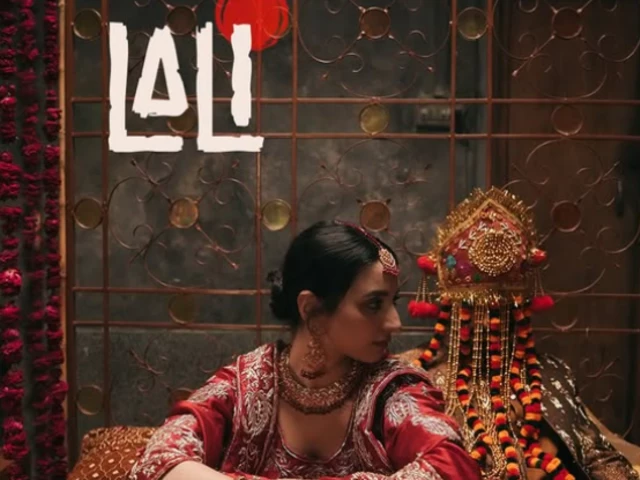
Pakistani independent cinema has achieved yet another historic milestone as acclaimed director Sarmad Khoosat’s feature film Lali secures an official selection at the prestigious 70th BFI London Film Festival (LFF). As the United Kingdom’s largest and most influential film event, the festival—scheduled to run from October 7 to 18—has positioned Lali within its vibrant "Laugh" strand. Adding to the prestige, the film is slated for an opening-day screening at the esteemed Institute of Contemporary Arts (ICA) on October 7.
This latest international laurel follows an impressive global run for the film, which made history earlier this year as the first fully Pakistani-produced feature to screen at the 76th Berlin International Film Festival (Berlinale). Co-written by Khoosat and Sundus Hashmi, Lali blends pitch-black comedy with supernatural undertones, exploring themes of societal superstition, trauma, and identity through the gripping narrative of its protagonist, Zeba.
Supported by an ensemble cast that features Mamya Shajaffar, Channan Hanif, Rasti Farooq, and Meher Bano, Lali represents a collaborative triumph between Khoosat Films and Dubai-based Enso Studios. By breaking structural boundaries and challenging traditional genre norms within South Asian storytelling, Khoosat’s latest directorial venture continues to cement Pakistan’s burgeoning footprint in contemporary world cinema. This comprehensive report details the trajectory of Lali, the operational metrics of its festival run, the thematic underpinnings of the film, and the broader renaissance currently transforming Pakistani independent filmmaking.
Read Also
Detailed Chronology of Lali’s International Journey
From Conception to the Berlinale Premiere
The journey of Lali began as a collaborative vision between director Sarmad Khoosat and screenwriter Sundus Hashmi. Designed from its inception to challenge the conventional boundaries of Pakistani narrative cinema, the project was brought to life through a strategic partnership between Khoosat Films and Dubai-based Enso Studios. The film’s development prioritized artistic autonomy, allowing the creators to lean heavily into genre fluidity, merging dark comedy, folklore, and supernatural elements.
The culmination of these early efforts materialized in February when Lali premiered at the 76th Berlin International Film Festival. The screening marked a watershed moment in cinematic history: it was the first time a fully Pakistani-produced feature film secured an official spot in the Berlinale lineup. This European premiere immediately distinguished the film as a bold, uncompromising work capable of resonating with international critics and audiences unfamiliar with the nuances of regional Pakistani folklore.
Critical Acclaim in North America: The Indian Film Festival of Los Angeles
Following its European debut, Lali crossed the Atlantic to participate in the prestigious Indian Film Festival of Los Angeles (IFFLA) in April. The North American screening further validated the film’s cross-cultural appeal and narrative complexity.
The feature jury at IFFLA awarded Lali a special honorable mention, singling out the film for its striking visual richness, fearless tone, and seamless blending of disparate genres. Critics and festival programmers noted that the film successfully subverted expectations regarding South Asian cinema, moving away from hyper-realist social dramas into a stylized, cinematic space marked by biting satire and atmospheric tension.
The 70th BFI London Film Festival Selection
The most recent chapter in Lali’s global journey unfolded when the British Film Institute announced the expansive lineup for the milestone 70th BFI London Film Festival. Sifting through thousands of submissions from across the globe, festival programmers selected Lali to screen within the "Laugh" strand—a section dedicated to films that utilize humor, satire, and wit to dissect human nature and societal absurdities.
Out of 251 features, shorts, series, and immersive works originating from 88 countries, Lali secured a highly coveted opening-day slot. The film will make its UK premiere at the Institute of Contemporary Arts (ICA) on October 7, setting an auspicious tone for the rest of the festival’s twelve-day run.
Supporting Context & Metrics: Navigating the Global Film Circuit
Festival Scale and Programming Dynamics
To fully grasp the magnitude of Lali’s selection, one must examine the sheer scale of the 70th BFI London Film Festival. As the premier cinematic event in the UK, the festival serves as a critical bridge between autumn festival circuits (such as Venice and Toronto) and the upcoming awards season.
- Global Reach: The 2026 festival showcases 251 distinct projects, encompassing feature films, short films, episodic series, and immersive digital works.
- Geographical Diversity: Selected works represent 88 distinct countries, highlighting the festival’s commitment to global representation.
- Thematic Strands: The festival categorizes its programming into distinct thematic strands—such as Love, Debate, Laugh, Dare, Journey, and Create. Lali’s placement in the "Laugh" strand underscores its comedic yet subversive structural DNA, proving that humor can transcend linguistic and cultural barriers.
Production and Financial Synergy
Lali’s success is also a testament to evolving cross-border production models within South Asia and the Middle East. By uniting the creative infrastructure of Khoosat Films with the financial and logistical backing of Dubai-based Enso Studios, the production navigated the notoriously underfunded landscape of Pakistani indie cinema. This partnership allowed for high production values, meticulous art direction, and a visual palette that has consistently drawn praise from international cinematographic juries.
Narrative Framework and Thematic Analysis
Synopsis and Character Dynamics
At its core, Lali centers on Zeba, portrayed with striking vulnerability and defiance by Mamya Shajaffar. Zeba’s life is upended when she is branded a "cursed bride" following the mysterious, untimely deaths of three successive suitors. In a society bound by rigid superstitions and patriarchal expectations, Zeba becomes an outcast, bearing the weight of communal paranoia.
Pushed into a desperate arrangement, she is married off to Sajawal—a man carrying his own heavy baggage of personal trauma and physical scars, most notably a distinct facial birthmark. Rather than playing this setup as a traditional romantic drama, Khoosat and Hashmi utilize the premise as a vehicle for pitch-black comedy laced with supernatural undertones. The dynamic between Zeba and Sajawal serves as an exploration of shared marginalization, forcing audiences to question who the true monsters are: the individuals cursed by circumstance or the society that condemns them.
Ensemble Performances and Genre Fluidity
The film’s thematic weight is bolstered by a stellar ensemble cast. Veteran and contemporary talents bring depth to the surreal narrative:
- Mamya Shajaffar anchors the film with a nuanced, magnetic performance as Zeba, balancing tragic resignation with sharp wit.
- Rasti Farooq, whose breakout work in Joyland earned global acclaim, delivers another compelling supporting performance that adds emotional gravity to the narrative.
- Meher Bano, known for her dynamic work in series like Churails, brings intensity and theatrical flair to the screen.
- Channan Hanif rounds out the principal cast, grounding the film’s absurdist elements within tangible human stakes.
Through this collaborative effort, Lali avoids the trap of single-note social commentary. Instead, it offers a multi-layered cinematic experience that defies easy categorization.
Official Statements and Industry Reactions
Director Sarmad Khoosat on the London Selection
The announcement of the London Film Festival selection elicited an enthusiastic response from director Sarmad Khoosat. Taking to Instagram shortly after the festival’s programme reveal, Khoosat shared his excitement with followers and peers alike:
"To be in this line-up, and to get to bring all the madness, music, colour, love and the many other crazy things of Lali to a global audience at the London Film Festival. Well, that feels rather lovely."
Khoosat placed special emphasis on the film’s scheduling, noting that securing an opening-day slot at the Institute of Contemporary Arts made the achievement feel "a little more special." This sentiment reflects the director’s awareness of festival placement dynamics, where opening-day slots often command heightened media attention, critical scrutiny, and audience turnout.
Industry Reception and the Rise of Pakistani Indie Cinema
Industry analysts have pointed to Lali’s festival run as part of a broader, structural shift within Pakistani cinema. For decades, the local film industry—often colloquially termed "Lollywood"—focused primarily on commercial domestic releases, melodramatic television adaptations, and formulaic action blockbusters. However, the last half-decade has witnessed the emergence of a fearless independent wave driven by auteur-driven storytelling.
Sarmad Khoosat has been at the epicenter of this renaissance. His 2019 directorial feature, Zindagi Tamasha, faced immense domestic censorship challenges yet was chosen as Pakistan’s official submission for Best International Feature Film at the 93rd Academy Awards. Following that, Khoosat served as a producer on Saim Sadiq’s groundbreaking 2022 film Joyland, which made history by winning the Jury Prize in the Un Certain Regard section at the Cannes Film Festival and subsequently representing Pakistan at the 95th Oscars.
With Lali, Khoosat has transitioned from producing international breakthroughs to spearheading his own globally recognized auteur projects, proving that Pakistani narratives can achieve critical success on the world stage without compromising their cultural specificity.
Future Outlook: The Global Trajectory of Pakistani Cinema
Implications of the BFI LFF Screening for Lali
As Lali prepares for its October 7 premiere at the Institute of Contemporary Arts in London, the stakes and opportunities for the film are exceptionally high. An enthusiastic reception from UK critics and international buyers could pave the way for broader European distribution deals, streaming acquisitions, and invitations to subsequent legs of the autumn and winter festival circuit.
Furthermore, the film’s selection within the "Laugh" strand signals to international sales agents that Pakistani cinema is not confined to trauma porn or heavy-handed social realism; rather, it possesses a sophisticated, satirical voice capable of reinterpreting universal comedic tropes through a distinctly localized lens.
Broader Horizons for South Asian Auteurs
The trajectory of Lali serves as a case study for emerging filmmakers across South Asia. It demonstrates that international film bodies are increasingly hungry for authentic, risk-taking narratives that challenge regional stereotypes. By combining traditional folklore with postmodern cinematic techniques, Khoosat and his team have established a blueprint for how independent productions from the Global South can successfully navigate the gatekeepers of elite European festivals.
As the 70th BFI London Film Festival approaches, all eyes will be on the ICA screen when Zeba and Sajawal’s darkly comedic tale unfolds before a packed house of international cinephiles, critics, and industry leaders. For Sarmad Khoosat, Lali is more than just another festival credit—it is a resounding affirmation that Pakistani stories, told with uncompromising vision, belong firmly at the vanguard of global cinema.

Comments
Facebook App ID not configured. Please add it in the Customizer.