
Executive Overview
In the high-stakes universe of 24-hour reality television, few productions demand the logistical rigor, emotional resilience, and operational secrecy required to run Pakistan’s premier reality mega-franchise, Tamasha. Behind the glittering facades, televised eliminations, tearful breakdowns, and volatile house dynamics lies a sprawling, highly coordinated industrial machinery. Managing 18 diverse personalities under relentless video surveillance is no minor feat; it is a complex, high-pressure orchestration that tests the limits of both its contestants and its production crew.
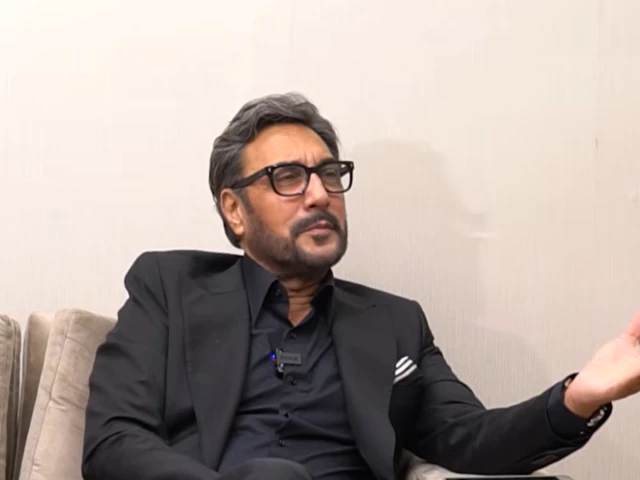
Recently, in a rare and candid behind-the-scenes interview conducted inside the show’s heavily guarded operational nerve center, the creative and executive masterminds pulled back the curtain. Show host Adnan Siddiqui—revered by fans and contestants alike under his authoritative moniker, "Badshah"—sat down alongside prominent media executives Jerjees Seja and Obaid Khan. Together, they offered a fascinating, unvarnished glimpse into the inner workings of a franchise that has captured the collective consciousness of Pakistani television audiences.
The conversation directly confronted the most pervasive criticism plaguing the reality television genre globally: the persistent allegations that the drama, contestant conflicts, and strategic eliminations are thoroughly scripted and artificially manufactured. Siddiqui and his executive team offered a definitive rebuttal, framing the show not as a scripted theatrical play, but as an unpredictable, organic "social experiment." Furthermore, the leadership addressed the inevitable comparisons to international counterparts like India’s Bigg Boss, the continuous nightmare of maintaining confidentiality in an era of social media leaks, and the exhaustive security measures required to protect the integrity of the format as Tamasha charges forward into its fifth season.
Read Also
This in-depth investigative report explores the mechanics of Pakistan’s most-watched reality phenomenon, examining the psychology of its participants, the realities of its production constraints, and the philosophy that keeps millions glued to their screens.
Detailed Chronology: The Evolution of Tamasha and Its Production Realities
To understand the current cultural footprint of Tamasha, one must examine the evolutionary trajectory that brought the format to the forefront of Pakistani entertainment. When the franchise first made its debut, skeptics questioned whether local audiences would embrace a format characterized by confinement, isolation, and unscripted interpersonal conflict. Reality television in Pakistan had historically been dominated by structured talent hunts, game shows, and dramatized serials where every line of dialogue was meticulously crafted by writers.
Introducing a 24-hour surveillance format where participants lived cut off from the outside world required a paradigm shift in both viewing habits and production methodologies. The production team realized early on that importing a foreign format wholesale would not suffice. They needed to engineer a localized psychological space that reflected cultural nuances while retaining the high-octane drama essential for a sustainable television franchise.
As the seasons progressed, the operational scale expanded exponentially. What began as a bold broadcasting experiment transformed into a juggernaut, demanding round-the-clock monitoring of multiple camera angles, sophisticated audio arrays, and a labyrinthine backstage infrastructure. The control room—affectionately and fearfully known on-set as "Badshah’s Room"—evolved into a high-security zone resembling a corporate intelligence bureau rather than a television set.
The challenges scaled proportionally with the show’s popularity. By the time production ramped up for subsequent installments, the team was forced to navigate the complexities of social media surveillance, viral culture, and the insatiable public appetite for spoilers. Contestants entering the house were no longer just aspiring actors or models; they were media-savvy individuals acutely aware of how public perception could make or break their careers. This acute self-awareness created a unique paradox: how to capture authentic human behavior when every participant knows they are perpetually under a microscope.
The producers’ response was to step back, establish strict boundary protocols, and let human psychology take its course. By refusing to intervene in house disputes unless safety or legal lines were crossed, the production team preserved the raw, unpredictable nature of the social experiment—a cornerstone of Tamasha‘s enduring appeal.
Supporting Context & Metrics: The Anatomy of a Reality Television Juggernaut
Running a production of this magnitude requires staggering resource allocation. While exact budgetary figures remain proprietary, industry analysts estimate that reality television franchises of this scale require multi-million-rupee investments encompassing set design, high-definition camera infrastructure, lighting grids, psycho-social support teams for contestants, and sprawling post-production editing suites operating on rapid turnarounds.
The Mathematics of Surveillance
To manage 18 contestants over a multi-week timeline, the technical infrastructure must be flawless:
- Camera Feeds: Over 60 robotic and stationary high-definition cameras capture every square inch of the house, operating 24 hours a day, 7 days a week.
- Audio Engineering: Hundreds of individual lavalier and ambient microphones track whispers, arguments, and quiet confessions, feeding massive multi-track mixing boards in the audio control room.
- Crew Rotation: The production crew operates on grueling shift rotations, ensuring that human eyes are monitoring the house feeds without interruption, logging noteworthy timestamps for the daily broadcast edits.
The Psychology of Confinement
From a sociological perspective, Tamasha functions as a pressure cooker. Confined spaces, sleep deprivation, restricted access to luxury items, and forced interactions with individuals harboring vastly different worldviews inevitably lead to friction. Psychologists often analyze such shows through the lens of group dynamics and conformity, noting that isolation accelerates emotional responses.
When contestants clash over trivial matters like kitchen duties or strategic alliances, critics unfamiliar with closed-environment psychology often assume outside direction. However, veteran producers understand that human beings placed under artificial scarcity and constant surveillance do not require scripts to generate conflict; their innate survival instincts, egos, and coping mechanisms provide all the narrative tension necessary.
Official Statements: Dispelling Myths and Addressing the Scripting Controversy
The heart of the recent behind-the-scenes disclosures centers on the relentless online discourse accusing the show of being entirely staged. Addressing these rumors directly, host Adnan Siddiqui did not mince words.
The "Social Experiment" Defense
"Absolutely not. You shouldn’t even say that word. Not at all. See, it’s basically a social experiment; we don’t know how the other person is going to react. It’s an action-reaction," Siddiqui asserted, firmly rejecting the notion that producers dictate house dynamics or orchestrate fights.
Siddiqui elaborated on the psychological vulnerability of the participants, explaining the underlying motivation of those who claim the show is scripted upon their exit. "Every year, those who get eliminated early, or those who are perhaps seeking virality, or perhaps had an experience like that, they say that it was scripted," he noted, highlighting how bruised egos and a desire to remain relevant in the digital sphere often drive former contestants to rewrite their own narratives.
The executive team reinforced this perspective, emphasizing that modern audiences possess a highly sophisticated bullshit detector. According to the producers, artificial manipulation is instantly transparent to viewers, and any attempt to fabricate storylines would actively alienate the core fanbase.
"See, the natural thing is what will be enjoyable. If you plant something, the public will know it’s planted, it’s scripted, and then it won’t be enjoyable," the executives stated. The core philosophy of Tamasha‘s production house relies on the premise that raw, unfiltered human reactions—no matter how messy or uncomfortable—are infinitely more compelling than pre-written dialogue delivered by non-professional actors playing heightened versions of themselves.
Navigating International Comparisons
When Tamasha was first conceptualized, comparisons to India’s cultural phenomenon Bigg Boss and its iconic host Salman Khan were both unavoidable and fiercely debated by television critics. Rather than shying away from the comparisons, the Pakistani production team made a strategic decision to carve out a distinct identity.
Jerjees Seja explained the deliberate structural divergence in the hosting format: "We said that we will not make Adnan a replica of what the host in India has, so that our comparison ends."
In many international formats, the host serves primarily as a weekly arbiter who visits the set exclusively for weekend episodes to reprimand contestants or announce eliminations. Siddiqui’s approach to Tamasha, however, defies this convention. He is embedded deeply within the operational rhythm of the house, interacting with the contestants on a frequent, almost daily basis, blurring the lines between authoritative overseer and empathetic mentor.
Siddiqui addressed the comparisons with characteristic wit and self-deprecation. "If I am becoming [like him], what is the bad thing in it? He is such a big actor. Let me become [one]," he joked, brushing aside the critical pigeonholing and focusing instead on building a unique rapport with his audience and contestants.
The War Against Leaks and Spoilers
In the digital age, maintaining narrative suspense is akin to guarding state secrets. With evicted contestants returning to a world dominated by Instagram, TikTok, and tabloid journalism, the risk of confidential plot points leaking prematurely is a constant operational hazard.
Jerjees Seja detailed the logistical nightmare of managing information security post-eviction: "When your person is eliminated and leaves from here, no matter how much we tell them that you won’t say anything, but they tell someone else, then they tell someone else, so it gets leaked."
To combat this vulnerability, the production team has drastically tightened internal security protocols. These measures include physically locking Badshah’s operational command room and frequently rotating physical tracking boards and confidential production schedules. Despite these precautions, the speed of modern digital communication means that keeping elimination results under wraps remains one of the production team’s most formidable challenges.
Stockholm Syndrome and the Pull of the House
In a fascinating psychological twist, the intensity of the Tamasha experience often breeds a bizarre form of nostalgic attachment among its participants. While current contestants frequently suffer from anxiety and emotional exhaustion, former housemates often look back on their tenure with profound fondness—so much so that they actively lobby to return.
"Some participants have enjoyed it so much that they want to still live it," the production team revealed. "Before Tamasha starts, all the old contestants are like family to us and they come and tell us, ‘Just send me inside somehow.’" This paradoxical desire to re-enter a high-stress environment speaks volumes about the addictive nature of fame, camaraderie, and the unique adrenaline rush that only a hyper-monitored reality set can provide.
Future Outlook: The Road Ahead for Tamasha Season 5 and Beyond
As Tamasha advances into its landmark fifth season, the franchise stands at a fascinating crossroads. The television landscape in South Asia is undergoing rapid transformation, driven by the migration of younger demographics toward digital streaming platforms, on-demand content, and bite-sized social media clips.
To remain relevant, the production team must continuously innovate while preserving the core elements that earned the show its dedicated following. The challenge moving forward will not be attracting initial viewership—the franchise has firmly established its commercial viability—but rather sustaining audience engagement in an era of hyper-saturated media consumption.
Innovations in Audience Interactivity
Looking to the future, industry insiders anticipate that the franchise will increasingly integrate digital-first interactive elements, allowing fans to exert greater influence over house dynamics through mobile applications and real-time voting analytics. However, the foundational rule emphasized by Siddiqui and his team will likely remain unchanged: the human element must stay authentic. As long as viewers can connect with the genuine flaws, ambitions, and vulnerabilities of the contestants, the format will endure.
Protecting the Brand Integrity
Furthermore, as the stakes rise, tightening security around the set and refining non-disclosure agreements will become even more critical. The battle against digital leaks will dictate how production houses manage participant rehabilitation post-show, ensuring that the mystique surrounding "Badshah’s Domain" remains intact.
Ultimately, Tamasha has transcended its status as a mere television program to become a cultural touchstone in Pakistan’s entertainment ecosystem. By demystifying their operations, confronting allegations of scripting head-on, and embracing the unpredictable chaos of human behavior, Adnan Siddiqui, Jerjees Seja, Obaid Khan, and their dedicated crew have proven that the true magic of reality television lies not in a script, but in the unscripted, unfiltered reality of the human condition.





Comments
Facebook App ID not configured. Please add it in the Customizer.