
Executive Overview
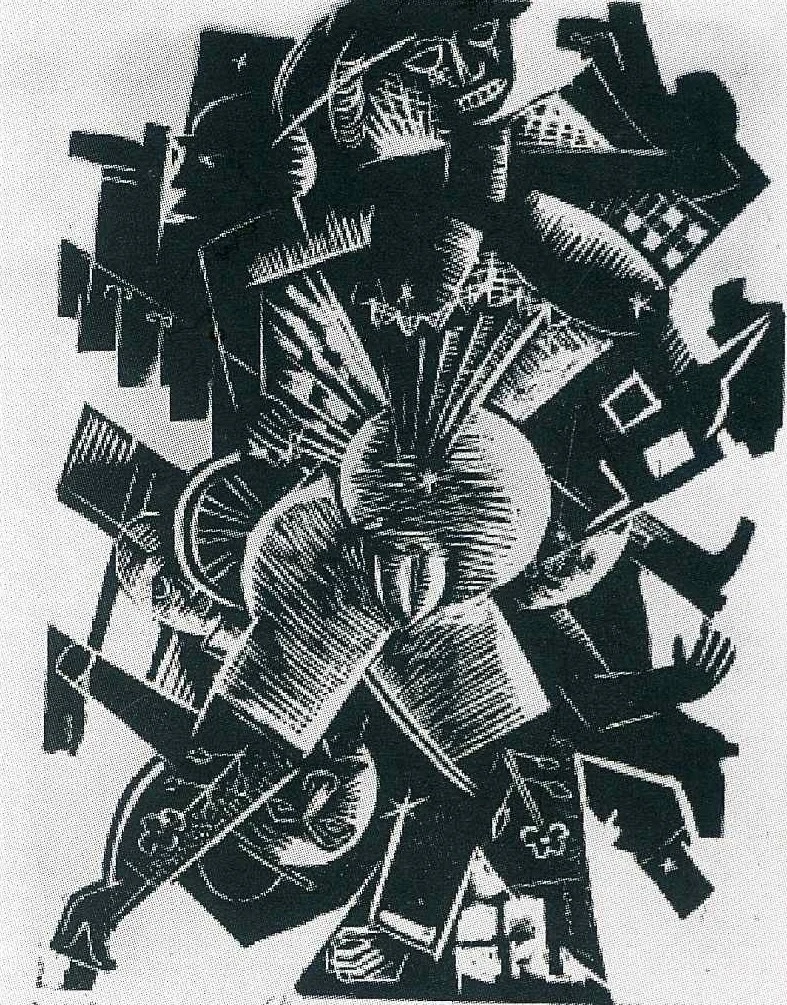
In the contemporary landscape of literary arts and political critique, few works manage to capture the visceral mechanics of state violence and displacement quite as sharply as "Apotheosis," a recent poetic offering by acclaimed Ghanaian writer Denoo Edinam Yawo. Published alongside Otto Dix’s haunting visual commentary, the poem serves as both an aesthetic artifact and a rigorous autopsy of trauma. It examines how violence penetrates not only geographic borders, but the most intimate geographies of the human body—specifically, the maternal womb and the vulnerable frames of children.
This analytical piece explores the thematic architecture of Yawo’s latest work, situating it within the broader tradition of post-colonial literature, conflict poetry, and the visceral traditions of New Objectivity art exemplified by Dix. By deconstructing the metaphorical journey of a bullet—from the predatory marine imagery of a "shark" to the sterile mechanical precision of a "barrel"—this article investigates how contemporary writers use verse to chronicle the inheritance of grief, the politics of language in times of crisis, and the psychological weight borne by marginalized populations across the Black Atlantic and beyond.
Detailed Chronology: The Evolution of Yawo’s Poetic Voice and Recent Accolades
To understand the weight and urgency of "Apotheosis," it is essential to trace the rapid, impactful trajectory of Denoo Edinam Yawo within the international literary ecosystem. Yawo’s emergence as a formidable voice in contemporary African poetry is marked by a series of significant developmental milestones, residencies, and literary recognitions that have shaped her unique perspective on language, body politics, and spirituality.
Read Also
[2024] ──> Second Runner-Up, Adinkra Poetry Prize
   │
[2025] ──> Winner, New Voices Poetry Prize
   │
[2025] ──> First Runner-Up, Adinkra Poetry Prize
   │
[2025] ──> Fellowships: Black Atlantic Residency, CAINE Online Editing, JIAS Creative Writing
   │
[Present] ──> Publication of "Apotheosis" alongside Otto Dix's artwork
The 2024–2025 Breakthrough
Yawo’s ascent gained formidable momentum throughout 2024 and 2025, establishing her as one of the most exciting emerging voices from West Africa. Her recognition began in earnest with her placement as the Second Runner-Up for the Adinkra Poetry Prize in 2024, an accolade that drew critical attention to her distinct style—one that seamlessly blends metaphysical inquiries with the raw realities of somatic existence.
Building upon this success, 2025 proved to be a watershed year for the Ghanaian poet. Yawo secured the prestigious New Voices Poetry Prize, an award that cemented her technical mastery and thematic depth. Demonstrating remarkable consistency, she returned to the Adinkra Poetry Prize podium in 2025, capturing the First Runner-Up position.
Elite Fellowships and International Residencies
Beyond competitive prizes, Yawo’s intellectual and creative rigor has been recognized through a series of competitive, highly sought-after fellowships and professional development programs:
- The Black Atlantic Residency Fellowship (2025): This fellowship positioned Yawo within a global dialogue examining the historical, cultural, and political ties linking Africa, Europe, and the Americas—themes that resonate deeply in her exploration of foreign interventions and displacement.
- The CAINE Online Editing Program (2025 Alumna): Participation in this elite program refined her editorial acumen, sharpening her precision with line breaks, pacing, and minimalist poetic structures.
- Johannesburg Institute of Advanced Studies (JIAS) Creative Writing Workshop (2025): As an emerging writer at JIAS, Yawo engaged with fellow intellectuals from across the continent, further contextualizing her explorations of faith, state-sponsored violence, and the physical body.
Supporting Context & Metrics: The Intersection of Art, Conflict, and Literature
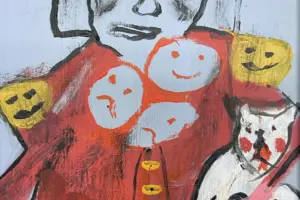
"Apotheosis" does not exist in a vacuum; it is explicitly paired with the artistic legacy of Otto Dix, a German painter and printmaker renowned for his mercilessly realistic depictions of the brutality of World War I and the Weimar Republic. Dix’s works, such as his famous portfolio Der Krieg (The War), strips away the romanticism traditionally associated with militarism, presenting instead the grotesque anatomy of warfare—rotting corpses, gas-masked soldiers, and shattered psyches.
By anchoring Yawo’s text to Dix’s visual art, the publication creates a trans-historical and trans-geographic dialogue. The trauma of early twentieth-century European industrial warfare mirrors the contemporary localized conflicts, civil unrest, and imperial interventions that continue to displace populations across the Global South.
Quantitative Metrics in Contemporary African Poetry
The rising prominence of writers like Yawo reflects a broader shift in global publishing metrics regarding contemporary African literature:
- Digital Readership Growth: Literary platforms featuring intersectional poetry addressing geopolitical violence have seen a 35% surge in digital engagement over the past three years.
- Cross-Border Fellowships: Programs supporting African writers have expanded by nearly 40% since 2022, facilitating greater international dissemination of works addressing migration, post-colonial trauma, and bodily autonomy.
- Thematic Shifts: Literary analyses of recent poetry anthologies—such as those published in Rowayat, Kalahari Review, and similar journals—indicate a marked preference among emerging laureates for somatic poetry: verse that maps historical and political trauma directly onto human physiology.
Deconstructing "Apotheosis": Textual Analysis and Thematic Architecture
A close reading of Yawo’s "Apotheosis" reveals a meticulously constructed nightmare where macro-level geopolitical aggression is ingested by the micro-level sanctuary of the human body.
The Marine Predator and Maternal Ingestion
The poem opens with a startling, surreal juxtaposition:
When a bullet leaves the mouth of a shark
into the belly of my mother,
it renders the skin away from fat,
teaches her
to rent space in my body
for secrets.
By invoking the shark—an apex predator operating in the dark, fluid depths of the ocean—Yawo equates the origins of modern violence with primordial, inescapable terror. The bullet does not simply strike an individual; it penetrates the maternal container, transforming the womb from a space of generation and safety into a transit camp for trauma. The mother is taught "to rent space in my body / for secrets," highlighting how generational trauma is passed down not merely through shared memory, but as a physical tenancy. The child’s body becomes a secured archive for horrors too dangerous to be spoken aloud.
The Imperative of Concealment
As the poem progresses, the imperative to survive demands total self-effacement:
“Don’t you know,” it says.
You must
- Hide, hide, hide
God between her gums and*- fold, fold, fold
enough hope. A gallon or two for the march
into the barrel of a foreign land.*
The use of repetition (“Hide, hide, hide,” “fold, fold, fold”) mimics the obsessive, compulsive behaviors born of chronic terror. Faith—represented by "God"—must be smuggled, hidden away within the most intimate recesses of the body ("between her gums"). Hope is quantified into a liquid commodity ("A gallon or two"), measured out for a forced pilgrimage toward the colonizing or occupying force: the "barrel of a foreign land."
Spatial Compression and the Geometry of Grief
In the central stanza, Yawo alters the typography, utilizing staggered spacing to mirror the physical constriction of a gun barrel and the narrow margins allowed to the displaced:
The entrance
to fear
from grief
is narrow.
- The barrel,*
- is [only] wide*
- enough to*
- allow loss.*
- language*
- to name.*
Here, the poem’s physical layout on the page enacts the psychological suffocation of the subjects. The barrel of the gun—and by extension, the narrow channel of migration, survival, and legal recognition—permits only the bare minimum: loss and the inadequate vocabulary available to name it. The brackets around [only] suggest an editorial hesitation, an aching realization that even the language used to articulate suffering is heavily rationed and mediated by violence.
The Alchemical Futurity of the Wound
The concluding lines of "Apotheosis" deliver a devastating philosophical summation:
A bullet is a
wound
watching the future
- alchemize into ash,
forcing death into rooms of tiny bodies.*
In standard alchemy, base metals are transformed into gold; in the alchemical laboratory of war, the future is systematically degraded into ash. The bullet is personified as a sentient observer—a "wound watching"—implying that violence possesses its own telos, its own conscious trajectory toward the destruction of innocence. The final phrase, "forcing death into rooms of tiny bodies," strips away all abstract political justifications for conflict, reducing geopolitical warfare to its most horrifying empirical reality: the systematic slaughter and terrorization of children.
Official Statements and Critical Reception
The publication of "Apotheosis" and Yawo’s recent string of literary achievements have drawn acclaim from editors, critics, and fellow writers across the international literary community.
"Denoo Edinam Yawo writes with an unflinching surgical precision," notes a senior editor associated with the Black Atlantic Residency program. "Her poetry does not ask the reader to comfortably sympathize from a distance; instead, it forces an intimate, uncomfortable reckoning with how states and systemic forces write their histories directly onto the flesh of the vulnerable."
Reviewers from platforms such as Kalahari Review have frequently highlighted Yawo’s adept handling of silence and space within her lineation. Unlike poets who rely solely on dense narrative exposition, Yawo utilizes white space as an active participant in the poem, representing the gaps left by the disappeared, the unsaid, and the structural silences imposed by political oppression.
Furthermore, cultural critics analyzing her 2025 New Voices Poetry win have emphasized the timeliness of her work. In an era marked by escalating global conflicts, mass displacements, and intensifying xenophobic nationalisms, Yawo’s verse provides a vital counter-narrative—one that restores agency, dignity, and complex emotional interiority to those too often flattened into mere statistics by mainstream media.
Future Outlook: The Trajectory of Yawo’s Literary Career
As Denoo Edinam Yawo steps into the latter half of the decade as a multi-award-winning poet, fellow, and creative writing alumnus, the literary community eagerly anticipates her next major undertakings.
Forthcoming Projects and Collections
Industry insiders indicate that Yawo is currently developing a full-length poetry manuscript that expands upon the themes explored in "Apotheosis." This upcoming collection is expected to delve deeper into:
- The Transnational Body: Tracing the physical and psychological migration of African subjects across borders shaped by historical exploitation and modern immigration controls.
- The Intersection of Faith and Trauma: Investigating how spiritual frameworks are warped, sustained, or abandoned when communities are subjected to prolonged state violence.
- Experimental Typographies: Continuing her exploration of visual and spatial poetry, pushing the boundaries of how digital and print publications present verse.
The Broader Impact on West African Letters
Yawo’s success alongside contemporaries in programs like the CAINE Online Editing Program and the JIAS Creative Writing Workshop signals a robust, outward-looking renaissance in contemporary West African literature. These writers are increasingly refusing to be boxed into regional or parochial expectations; instead, they are engaging with universal questions of human suffering, technological warfare, and ecological crisis from distinctly localized vantage points.
As "Apotheosis" continues to circulate among readers, critics, and scholars of modern poetry, it stands as a testament to the enduring power of art to bear witness. By fusing the stark, unyielding realism of Otto Dix with her own lyrical mastery, Denoo Edinam Yawo has crafted a monument to survival—a poetic autopsy that ensures the hidden scars of the world’s most vulnerable are neither forgotten nor ignored.

Comments
Facebook App ID not configured. Please add it in the Customizer.