The romanticized image of the solitary writer—a lone figure laboring silently in a secluded garret—is one of the most enduring myths of Western culture. Yet a rigorous examination of literary history reveals a starkly different reality: masterpieces do not emerge from isolation; they spring from complex, messy, and collaborative human ecosystems. As the acclaimed Mexican novelist Juan Rulfo once dryly observed when asked why he had stopped publishing: "My uncle died." Rulfo’s implicit message was clear—his stories did not belong to him alone; they were drawn directly from the life, voice, and memories of his relative.
In this sense, literature operates less like a solo performance and more like cinema or music—it is the product of a collective gathering. Husbands, wives, editors, lovers, financial patrons, stable housing, and domestic labor are all essential components in the production of what we call "a book." Even the creation of a mediocre text requires a baseline of material comfort and human connection.
Contemporary publishing generally fractures into two distinct arenas. On one side stands commercial fiction and non-fiction—a homogenized output that functions as polished "state literature," designed specifically to satisfy market demands and algorithm-driven demographics. On the other side sits its defiant, unpolished counterpart: personal literature. In these works, authors demonstrate little regard for commercial conventions. Instead, they are consumed by the immediate communities that nurtured their voices, driven to record the people they have loved, fought, lived alongside, and stolen from.
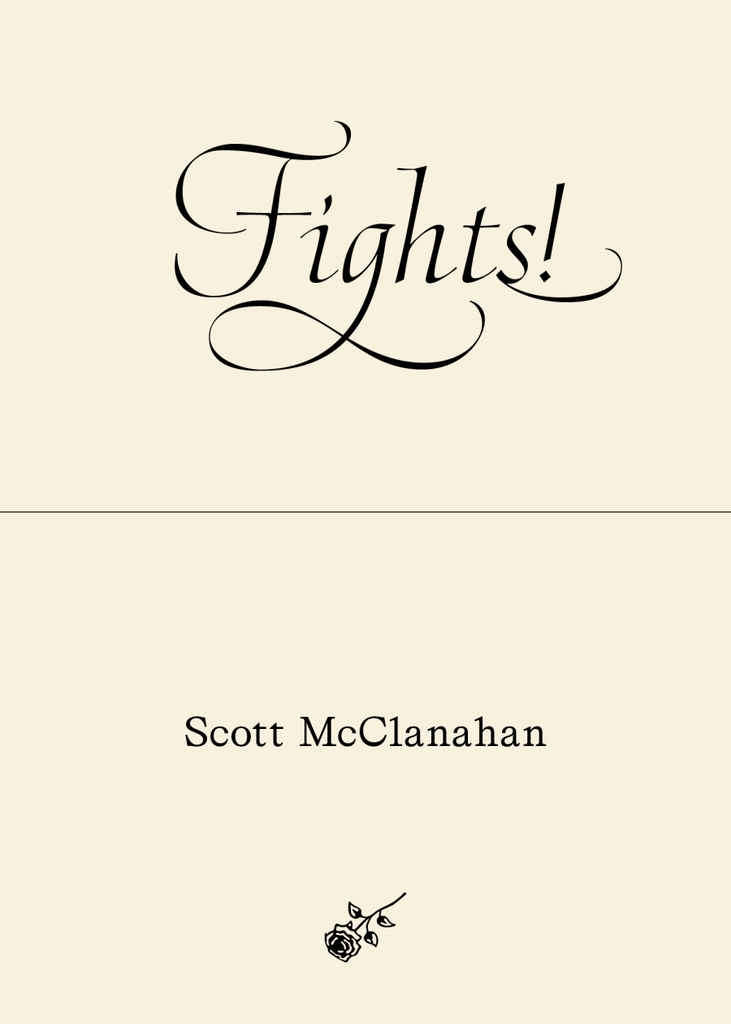
This dynamic lies at the heart of author Scott McClanahan’s novel Fights!, a raw portrait of the now-legendary independent publisher Tyrant Books. The narrative centers on a shared creative space occupied by two married writers and their editor, illustrating how literature is forged through intimate human friction. To write personal literature is to commit a form of artistic larceny against real life—drawing on the lives of actual artists and companions rather than sanitized, imagined characters. Below is an investigation into seven seminal works that pioneered this tradition, demonstrating that to capture the truth of literature, one must examine the thieves who created it.
Detailed Chronology: The Evolution of Ecosystem Literature
The tradition of the "personal book"—works built on intimate gossip, collective labor, and the deliberate betrayal of artistic circles—spans centuries. The following chronology traces how writers across different eras transformed their immediate social worlds into enduring art.
1830s - 1850s ----------------> 1880s - 1920s ----------------> 1940s - 1960s ----------------> 2000s - Present
Romantic Friction               Decadent Modernism              Mid-Century Revolutions         Meta-Memoir & Indie Presses
* De Quincey (Lakes)            * George Moore                  * Frank O'Connor                * Vila-Matas (Paris)
* Elizabeth Gaskell             * Livia Veneziani Svevo         * Saadat Hasan Manto            * Scott McClanahan
1. The Romantic Crucible (1830s–1850s)
Recollections of the Lakes and the Lake Poets by Thomas De Quincey (1834–1839)
Thomas De Quincey, best known for his harrowing account Confessions of an English Opium-Eater, turned his sharp, unsparing gaze toward his close friends Samuel Taylor Coleridge, William Wordsworth, and Dorothy Wordsworth. The text offers a surreal, pastoral record of a period when De Quincey and Coleridge were consuming up to two quarts of laudanum weekly while subjecting themselves to chaotic medical treatments.
De Quincey shattered the idealized myth of the Romantic poets by recording precise, unvarnished physical and personal details—famously noting Wordsworth’s noticeably short, disproportionate legs. Upon publication, the book shattered De Quincey’s relationships with the Lake Poets. Wordsworth privately denounced De Quincey as "a pest in society and one of the most worthless of mankind." Yet, in a rare moment of concession, when Wordsworth learned that De Quincey had described Mary Hutchinson as a far better wife than the poet deserved, Wordsworth admitted: "Did he really say that? This is so true that I can forgive him almost anything else he says."
+-----------------------------------------------------------------------+
| CASE STUDY: THE LAKE POETS ECOSYSTEM                                  |
+-----------------------------------------------------------------------+
| Key Figures: Thomas De Quincey, S.T. Coleridge, William Wordsworth    |
| Substance Consumption: ~2 Quarts of Laudanum / week (De Quincey/Coleridge)|
| Critical Fallout: Total severance of personal ties                    |
| Historical Impact: Demolished Romantic idealization; established      |
|                    unfiltered literary portraiture.                   |
+-----------------------------------------------------------------------+
The Life of Charlotte Brontë by Elizabeth Gaskell (1857)
Following the death of Charlotte Brontë, her father, Patrick Brontë, commissioned her close friend and fellow novelist Elizabeth Gaskell to write an official biography. What Gaskell produced was a masterpiece of collective mourning, documenting how an entire canon of English literature was forged inside the isolated walls of Haworth Parsonage through the shared creative energy of the Brontë sisters.
Gaskell captured intimate, jarring details—such as Charlotte’s extraordinarily diminutive physical frame, noting that her shoes were so small they resembled those of a baby doll. Upon its initial release, the biography provoked outrage, with several individuals threatening libel suits over Gaskell’s unvarnished depictions of the family’s acquaintances and domestic struggles. The first edition was forcibly withdrawn. Nevertheless, Gaskell’s account successfully rescued the Brontës from sanitizing Victorian revisions, revealing them not as quiet recluses, but as fierce artistic revolutionaries.
2. Decadence and Pre-Modernist Friction (1880s–1920s)
Confessions of a Young Man by George Augustus Moore (1888)
An Irish bohemian, Francophile, and pioneer of autobiographical fiction, George Augustus Moore possessed one of the most abrasive personalities in 19th-century letters. When later asked about James Joyce’s stylistic innovations, Moore dismissed them, remarking: "Why would anyone read him, when I have done it so much better?"
In Confessions of a Young Man, Moore chronicled his youth in 1880s Paris, portraying a self-absorbed aspiring artist far more enamored with the idea of art than the labor of craft. The narrative offers a rare, firsthand view of the birth of modernism. Moving among Paris’s avant-garde painters and intellects, Moore criticized the stale environment of London’s elite literary clubs, arguing that genuine literature requires raw passion rather than institutional comfort:
"What is wanted is enthusiasm and devil may careism; and the very aspect of a tavern is a snort of defiance at… leather armchairs."
      [ Stale Institutional Literature ]           [ Dynamic Personal Literature ]
      - Victorian Leather Armchairs                - Tavern Atmosphere
      - Market-Driven Formulas                     - Raw Bohemian Friction
      - Solitary Pretensions                       - Collective Artistic Theft
Memoir of Italo Svevo by Livia Veneziani Svevo (1928)
Livia Veneziani Svevo’s biography of her husband, the Italian novelist Italo Svevo (Ettore Schmitz), stands as a high mark in the sub-genre of memoirs written by artistic spouses. Expecting to produce a modest tribute, Livia created a vital historical document that captures one of the most remarkable encounters in modern literary history.
The narrative details the moment in Trieste when her husband—a disillusioned, middle-aged businessman who had abandoned his writing ambitions—hired a young, impoverished Irishman to tutor him in English. The tutor was James Joyce. Through their conversations, Joyce discovered Svevo’s discarded early novels, praised his talent, and ultimately propelled him into international fame. Livia observed her husband’s dramatic transformation from an obscure executive into an avant-garde icon, eventually finding her own name and her long, flowing hair immortalized within the complex prose of Joyce’s Finnegans Wake.
3. Mid-Century Revolutions and Cinema (1940s–1960s)
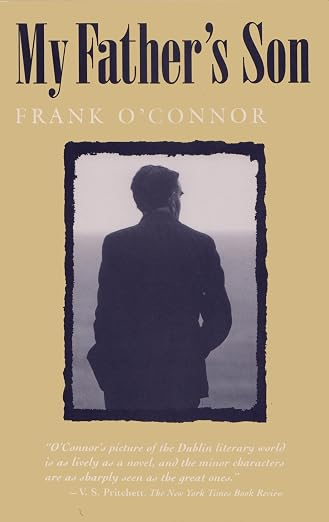
My Father’s Son by Frank O’Connor (1968)
Frank O’Connor’s memoir charts his transition from an imprisoned Irish Republican Army (IRA) combatant to the managing director of Dublin’s Abbey Theatre alongside William Butler Yeats. The book provides a sweeping portrait of the Celtic Twilight era, featuring figures such as George Russell (AE), J.M. Synge, Lady Gregory, and Seán O’Casey.
At the center of O’Connor’s chronicle stands Yeats—depicted as both a brilliant cultural visionary and an overbearing, manipulative mentor. O’Connor candidly writes: "After my father, I never quarreled with another so much." The text records Yeats’s supreme confidence and ego; when O’Connor objected to including a mediocre poet in an anthology they were co-editing, Yeats famously brushed the concern aside, stating: "Why worry about literary eminence? You and I will provide that."
Stars from Another Sky by Saadat Hasan Manto (1948)
Saadat Hasan Manto, one of the South Asian subcontinent’s premier short-story writers, brought a strikingly modern, unsentimental perspective to his chronicles of mid-20th-century Indian culture. While famous for his searing stories about the horrors of the 1947 Partition, Stars from Another Sky focuses on his years as a screenwriter in the vibrant Bombay film industry.
Rather than portraying cinema icons like Ashok Kumar or Noor Jehan as distant celebrities, Manto wrote about them as flawed, vulnerable friends. His accounts read like insider dispatches, detailing the chaotic, human realities behind the silver screen. By demystifying his peers, Manto offered an intimate portrait of his own artistic development, proving that documenting one’s immediate circle is often the most profound form of self-portraiture.
+-----------------------------------------------------------------------+
| MANTO'S BOMBAY FILM ECOSYSTEM                                         |
+-----------------------------------------------------------------------+
| Context: Mid-20th Century Bombay Cinema & Pre-Partition Culture      |
| Subjects: Actors, Directors, Screenwriters, Marginalized Figures      |
| Narrative Technique: Informal, intimate, gossip-as-social-realism     |
| Objective: Strip away celebrity illusions to reveal human truth       |
+-----------------------------------------------------------------------+
4. Postmodern Meta-Memoir (2000s–Present)
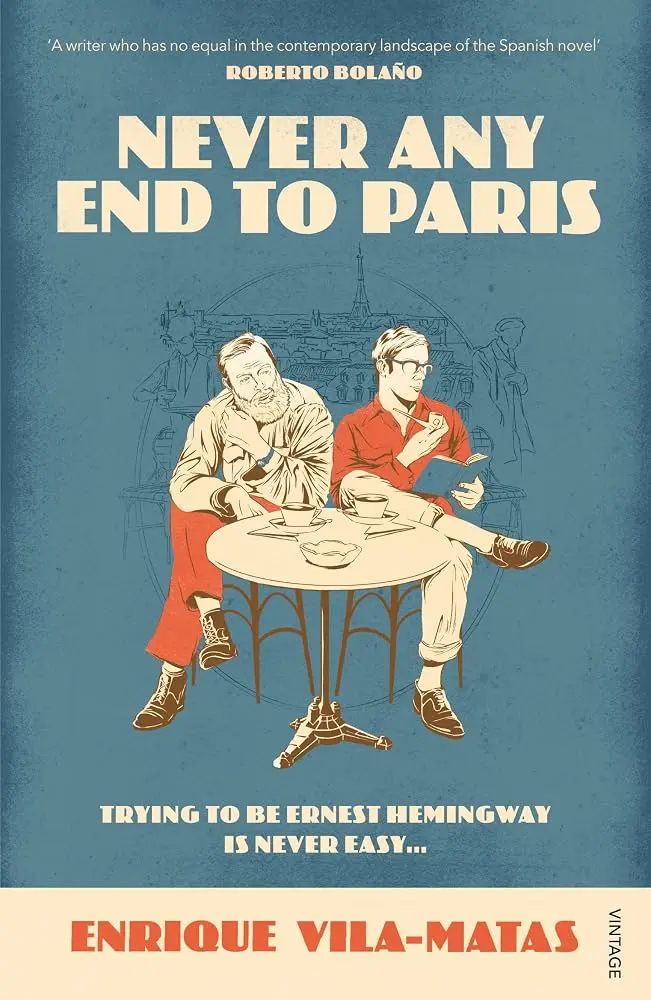
Never Any End to Paris by Enrique Vila-Matas (2003)
Inspired by the meta-fictional traditions of Javier Marías (specifically Dark Back of Time), Spanish author Enrique Vila-Matas crafted Never Any End to Paris, an account of his years as a struggling young writer in 1970s France.
Renting a small attic room from the formidable novelist Marguerite Duras, Vila-Matas navigated a surreal literary landscape. He describes attending a public reading by Georges Perec, only to realize that Perec had dispatched an imposter to perform in his place. At the time, Vila-Matas was attempting to write a debut novel so devastating that it would literally kill anyone who read it. Over time, however, he realized the ultimate purpose of storytelling was not destructive, but transformative: the true role of the writer is not to destroy the reader, but to bring them fully to life.
Supporting Context & Metrics: Analyzing the Literary Ecosystem
To understand why "personal literature" consistently outlasts polished commercial fiction, one must analyze the structural components that fuel these creative environments. Literature requires material resources and interpersonal dynamics that commercial publishing models frequently overlook.
+-----------------------------------------------------------------------+
|            COMMERCIAL LITERATURE vs. PERSONAL LITERATURE              |
+-----------------------------------------------------------------------+
| METRIC / ASPECT    | COMMERCIAL "STATE" LIT   | PERSONAL LITERATURE   |
+--------------------+--------------------------+-----------------------+
| Primary Motivation | Market Demand / Sales    | Community Memory      |
| Target Audience    | Broad Mass Market        | Immediate Social Circle|
| Character Origin   | Synthetic Archetypes     | Real-life Companions  |
| Production Model   | Corporate House Style    | Small-Press/Collectives|
| Primary Risk       | Financial Failure        | Social Fallout/Libel  |
| Cultural Longevity | Short (Seasonal)         | High (Historical Value)|
+--------------------+--------------------------+-----------------------+
The Material Mechanics of Creation
As McClanahan notes, literary production is rooted in basic material realities:
Domestic & Financial Infrastructure: Writers require housing, physical sustenance, and basic stability. Historically, spouses (such as Livia Svevo or Mary Hutchinson) provided the emotional and organizational labor that allowed writers to operate.
Small Press Collectives: Independent publishing entities—such as Giancarlo DiTrapano’s Tyrant Books—serve as modern equivalents of the 19th-century literary salon or Parisian tavern. They prioritize artistic risk over commercial viability, offering a sanctuary for uncompromising voices.
Creative Interdependence: Key literary movements (the Lake Poets, the Irish Literary Revival, the Bombay Cinema Boom) were driven by intense peer friction, shared spaces, and competitive rivalries rather than isolated labor.
Official Statements and Historical Testimonies
The history of personal literature is filled with sharp exchanges, admissions of theft, and candid observations regarding the ethics of writing about one’s peers.
William Wordsworth on Thomas De Quincey: "He is a pest in society and one of the most worthless of mankind… [Yet regarding his praise of my wife] Did he really say that? This is so true that I can forgive him almost anything else he says."
W.B. Yeats to Frank O’Connor (on editing anthologies): "Why worry about literary eminence? You and I will provide that."
Juan Rulfo on his publishing silence: "My uncle died."
George Augustus Moore on artistic spaces: "What is wanted is enthusiasm and devil may careism; and the very aspect of a tavern is a snort of defiance at… leather armchairs."
Enrique Vila-Matas on the evolution of narrative intent: "I wanted to write a book so powerful it would kill the reader. Eventually, I realized… the writer must do just the opposite. The writer must bring the reader to life."
Future Outlook: The Resurgence of Communal Storytelling
As corporate publishing continues to consolidate around risk-averse, market-tested formulas, the impulse toward "personal literature" is reasserting itself across new mediums. The spirit that once animated 19th-century taverns, Dublin theater halls, and small independent presses is adapting to contemporary channels:
Independent & Micro-Presses: Vanguard presses continue to act as crucial incubators, publishing works that record niche subcultures and real-life artistic circles without corporate sanitization.
Substack and Digital Salons: Modern writers are increasingly bypassing traditional editorial gatekeepers, using direct-to-reader platforms to build tight-knit creative communities reminiscent of historical literary circles.
Autofiction and Unfiltered Memoir: The boundary between fiction and biography continues to blur. Writers are increasingly acknowledging that their true material is not abstract invention, but the real, living ecosystem of friends, partners, and rivals around them.
The history of letters demonstrates that books are never born in total isolation. They are communal artifacts, forged from the shared warmth, conflicts, and lives of the communities that produce them. So long as writers continue to live alongside others, they will continue to steal from life—and in doing so, keep the literary tradition alive.




Comments
Facebook App ID not configured. Please add it in the Customizer.