
Executive Overview
A quarter of a century has passed since the cataclysmic morning of September 11, 2001, when the coordinated terrorist attacks destroyed the Twin Towers of the World Trade Center, claimed the lives of more than 2,700 individuals, and radically reshaped the physical and psychological landscape of Lower Manhattan. The destruction left a 16-acre void in the heart of the world’s financial capital—a gaping wound that necessitated not only physical reconstruction, but a complex, decades-long negotiation regarding memory, municipal governance, real estate capitalism, and architectural ambition.
In the immediate aftermath of the tragedy, the global architectural community responded with an unprecedented outpouring of proposals. Ranging from mournful, restrained landscapes of remembrance to wildly speculative, avant-garde mega-structures, these visions captured the world’s imagination. Yet, this idealistic momentum quickly crashed against the jagged rocks of political acrimony, bureaucratic paralysis, competing developer interests, and intense emotional trauma. The subsequent twenty-five-year saga became a masterclass in the friction between visionary urban planning and the realities of American governance involving City Hall, Albany, the Port Authority of New York and New Jersey, and private leaseholders.
Today, the rebuilding process is essentially complete. The site now hosts a somber and powerful memorial and museum, a cluster of gleaming supertall office towers led by One World Trade Center, an ultra-expensive transit hub, and a cutting-edge performing arts center. Yet, the physical completion of the master plan invites a rigorous retrospective. What lessons can New York City draw from this quarter-century odyssey? What does the current configuration of the site reveal about the trajectory of Lower Manhattan, the dysfunction and efficacy of New York governance, and the state of contemporary architecture culture? Most importantly, twenty-five years on, does Ground Zero function as a living, breathing urban neighborhood, a sacred zone of perpetual mourning, or some uneasy, fragmented combination of the two?
Read Also
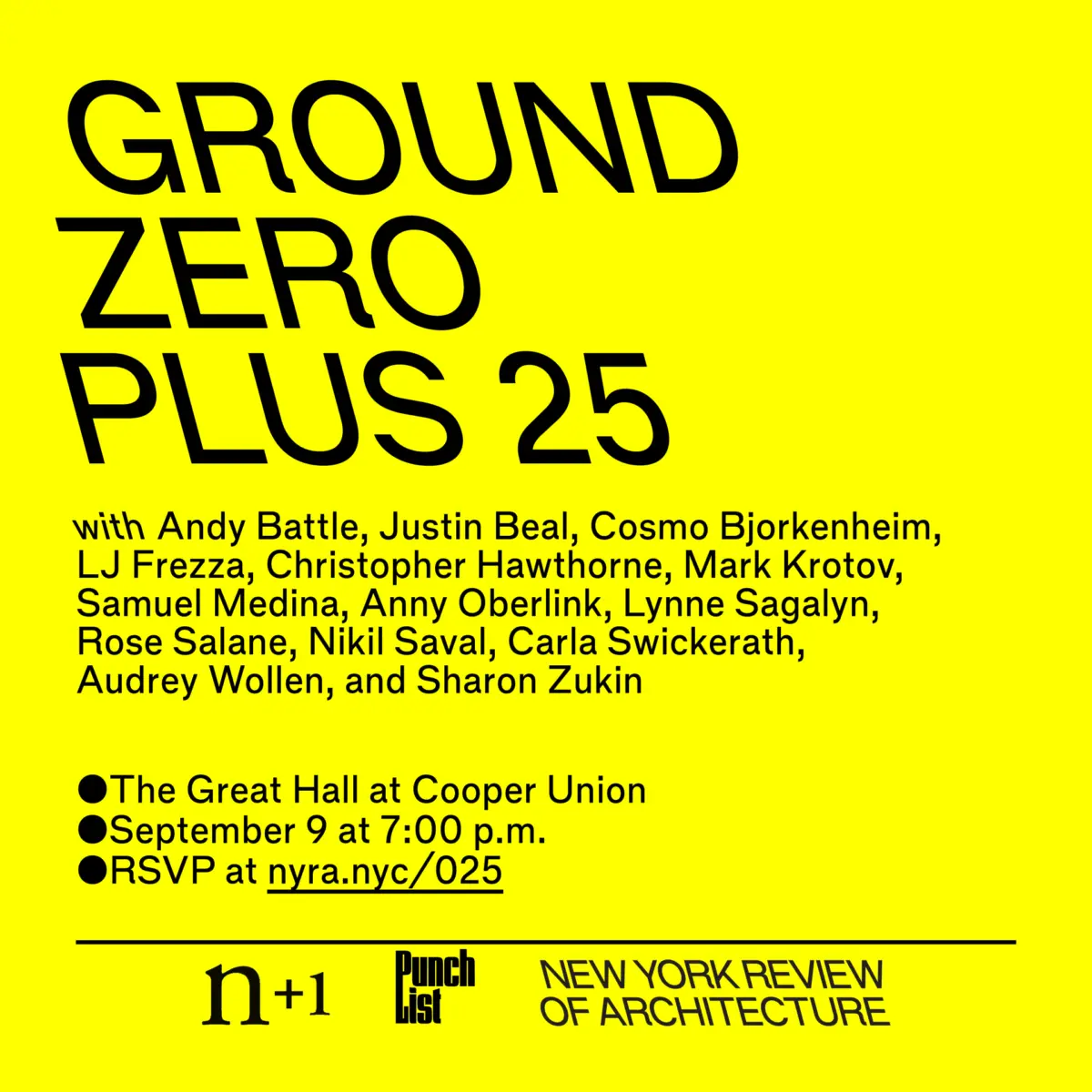
To unpack these complex questions, cultural institutions n+1, the New York Review of Architecture, and Punch List are convening a major public discussion to examine the rebuilding process, the paths not taken, and the enduring legacy of the World Trade Center site. The event will take place on Wednesday, September 9, at 7:00 PM in the historic Great Hall at Cooper Union. As the city reflects on this milestone, this article provides a comprehensive investigative overview of the quarter-century transformation of Ground Zero, examining its chronology, the political forces that shaped it, the architectural victories and compromises, and the future outlook for downtown Manhattan.
Detailed Chronology: From Devastation to Completion
The twenty-five-year evolution of the World Trade Center site can be understood through distinct historical phases, moving from emergency response and visionary speculation to gridlocked politics, and finally, pragmatic execution.
Phase I: The Immediate Aftermath and Ideation (2001–2003)
In the months following September 11, the immediate priority was search, rescue, and recovery, a harrowing nine-month operation at "Ground Zero." Once the site was cleared, the Lower Manhattan Development Corporation (LMDC) was established by Governor George Pataki and Mayor Rudy Giuliani to oversee the rebuilding effort.
By late 2002 and early 2003, the LMDC launched an international design competition. Architects from around the globe submitted visionary concepts. Studio Libeskind ultimately won the master plan competition with "Memory Foundations," a proposal that preserved the footprints of the original towers as sunken memorial voids while positioning a 1,763-foot spire (symbolizing the height of the Statue of Liberty) as a beacon of resilience. Concurrently, Michael Arad and Peter Walker’s design, "Reflecting Absence," was selected for the National September 11 Memorial, featuring cascading water waterfalls descending into the twin footprints.
Phase II: Political Gridlock and Developer Battles (2004–2010)
While the master plan provided a framework, the execution phase descended into a quagmire of competing interests. Larry Silverstein, the leaseholder of the World Trade Center complex, clashed repeatedly with Governor Pataki, the Port Authority (which owned the land), and NYPD security officials over insurance payouts, construction costs, and architectural security standards.
The initial design for the Freedom Tower (later renamed One World Trade Center), drafted by Daniel Libeskind and David Childs of Skidmore, Owings & Merrill (SOM), was heavily criticized by the NYPD for being vulnerable to truck bombings, forcing a complete redesign of its base. Proposals for surrounding commercial towers stalled due to the 2008 financial crisis, leaving the site as a chaotic construction zone for years. Public frustration mounted as completion dates slipped and budgets ballooned.
Phase III: Incremental Realization and Ribbon Cuttings (2011–2020)
The turning point came with the tenth anniversary in September 2011, when the National September 11 Memorial opened to the public, followed by the museum three years later. The emotional impact of these spaces helped heal a skeptical public.
In November 2014, One World Trade Center officially opened, welcoming its first major corporate tenants like Condé Nast, signaling the return of commercial life to downtown. They were followed by the opening of Santiago Calatrava’s controversial Transportation Hub (The Oculus) in 2016, and subsequent commercial additions including Tower 4 (designed by Fumihiko Maki) and Tower 3 (by Richard Rogers). During this decade, Lower Manhattan transitioned from a monocultural financial district into a mixed-use residential neighborhood, driven by tax incentives and the conversion of older office stock into apartments.

Phase IV: The Final Pieces and Modern Integration (2021–2026)
As the twenty-five-year mark approached, the final structural elements of the master plan fell into place. The opening of the Perelman Performing Arts Center (PAC NYC) in late 2023 added a much-needed cultural anchor to the site, providing flexible theater spaces wrapped in translucent marble. Today, in 2026, the rebuilding of the core 16-acre site is essentially complete, prompting a widespread reassessment of how the area functions as a modern urban ecosystem.
Supporting Context & Metrics: The Numbers Behind the Rebuilding
To comprehend the scale of the Ground Zero enterprise, one must examine the staggering financial, structural, and demographic metrics that define the project over the past quarter-century.
Financial Scope and Cost Overruns
The rebuilding of the World Trade Center is widely recognized as one of the most expensive and complex construction projects in human history.
- Total Estimated Cost: The cumulative price tag for the site’s redevelopment—encompassing the memorial, museum, transit hub, towers, infrastructure, and PATH terminal—surpassed $25 billion.
- The Oculus Budget: Santiago Calatrava’s transportation hub became a symbol of public cost overruns, ballooning from an initial projection of $2亿元 ($2 billion) to a final cost of approximately $4 billion, making it the most expensive train station ever built.
- Insurance and Public Subsidies: Billions in federal post-9/11 disaster relief funds, Liberty Bonds, and insurance payouts were funneled into the project to absorb private market hesitancy and infrastructure deficits.
Real Estate and Demographic Shifts
Lower Manhattan underwent a profound demographic revolution concurrent with the rebuilding process.
- Residential Boom: Prior to 2001, Lower Manhattan south of Chambers Street was largely a 9-to-5 financial district with a permanent residential population of roughly 15,000 to 20,000. Today, the residential population has surged past 75,000 residents, fueled by the Lower Manhattan Lower-Incentive Program and the conversion of obsolete corporate towers into residential high-rises.
- Commercial Absorption: Despite the rise of remote work post-pandemic, the new World Trade Center towers have largely achieved high occupancy rates, attracting a diverse array of tenants ranging from media and tech companies to traditional financial and legal firms.
Official Statements and Institutional Perspectives
The upcoming symposium at Cooper Union brings together critics, architects, and urban theorists to interrogate the decisions that brought Lower Manhattan to its present state. The participating organizations have long served as critical watchdogs over New York’s built environment.
- The n+1 Perspective: Known for its incisive cultural and political critique, n+1 has consistently interrogated how public tragedy is commodified, aestheticized, and leveraged by real estate interests. Their involvement centers on examining the socio-political forces that dictated who profited from the rebuilding and which neighborhood needs were sidelined.
- The New York Review of Architecture (NYRA): As a vital voice in contemporary architectural discourse, NYRA brings an eye for design critique, questioning the architectural hegemony of supertall glass towers and the legacy of signature "starchitecture" in public-private partnerships.
- Punch List: Focusing on labor, urban logistics, and the mechanics of city-making, Punch List provides grounded analysis regarding the administrative hurdles, union labor dynamics, and bureaucratic friction that defined the twenty-five-year timeline.
Organizers emphasize that the symposium will not merely celebrate milestones, but critically assess the "paths not taken"—the visionary, radical, and community-centric proposals discarded in favor of corporate office spaces and tourist-heavy security zones.
Future Outlook: Ground Zero at 25 and Beyond
As the dust settles on the physical construction of the World Trade Center site, New York City faces a complex future. The quarter-century milestone forces a reckoning with several pressing urban dilemmas.
The Tension Between Memorial and Metropolis
One of the most enduring debates is whether Ground Zero can ever truly function as a normal neighborhood. The footprint of the World Trade Center remains a hyper-securitized, heavily touristed zone surrounded by bollards, police details, and the crushing emotional weight of the memorial. While the perimeter streets hum with local life, the core 16 acres exist in a state of suspended solemnity. Urban planners must ask: Can a site of mass trauma ever successfully integrate into the casual, everyday fabric of a city, or is it destined to remain an eternal monument?
Governance and Public Accountability
The multi-agency governance model that directed the rebuilding—involving the Port Authority, the LMDC, state governors, the mayor’s office, and private developers—frequently resulted in bureaucratic paralysis and obscured accountability. As New York faces future climate adaptation challenges (such as Lower Manhattan coastal resiliency projects), the lessons learned from the WTC governance saga will serve as both a warning and a blueprint.
Architecture in an Era of Crisis
The architectural culture that birthed the new World Trade Center was rooted in the early 2000s obsession with height, corporate prestige, and defensive urbanism. Today, architecture faces entirely different imperatives: carbon neutrality, climate resilience, social equity, and flexible adaptive reuse. The glass-and-steel supertowers of the rebuilt WTC represent the pinnacle of an outgoing twentieth-century corporate paradigm.
Ultimately, the twenty-five-year history of Ground Zero is a testament to the resilience of New York City, the tenacity of its people, and the enduring complexities of urban democracy. Whether the site is viewed as a triumph of modern engineering or a missed opportunity for radical urban imagination, its legacy will shape the identity of New York for generations to come.
Event Information
- What: Panel discussion on the 25-year rebuilding of the World Trade Center, hosted by n+1, New York Review of Architecture, and Punch List.
- When: Wednesday, September 9, at 7:00 PM.
- Where: The Great Hall at Cooper Union, 7 East 7th Street, New York, NY.
- Tickets: $14 for n+1 subscribers and plus-ones; $24 for non-subscribers. Tickets are available via Luma.




Comments
Facebook App ID not configured. Please add it in the Customizer.