Eighty-one years have passed since the atomic bombings of Hiroshima and Nagasaki permanently altered the course of human history, introducing the devastating reality of the nuclear age. Every August, the global community pauses to reflect on the immense loss of life, the profound human suffering, and the catastrophic environmental destruction wrought by the events of 1945. Yet, as the calendar advances into an era marked by rising geopolitical tensions and a steadily escalating risk of nuclear catastrophe, the imperative to remember and share these vital historical lessons has never been more urgent.
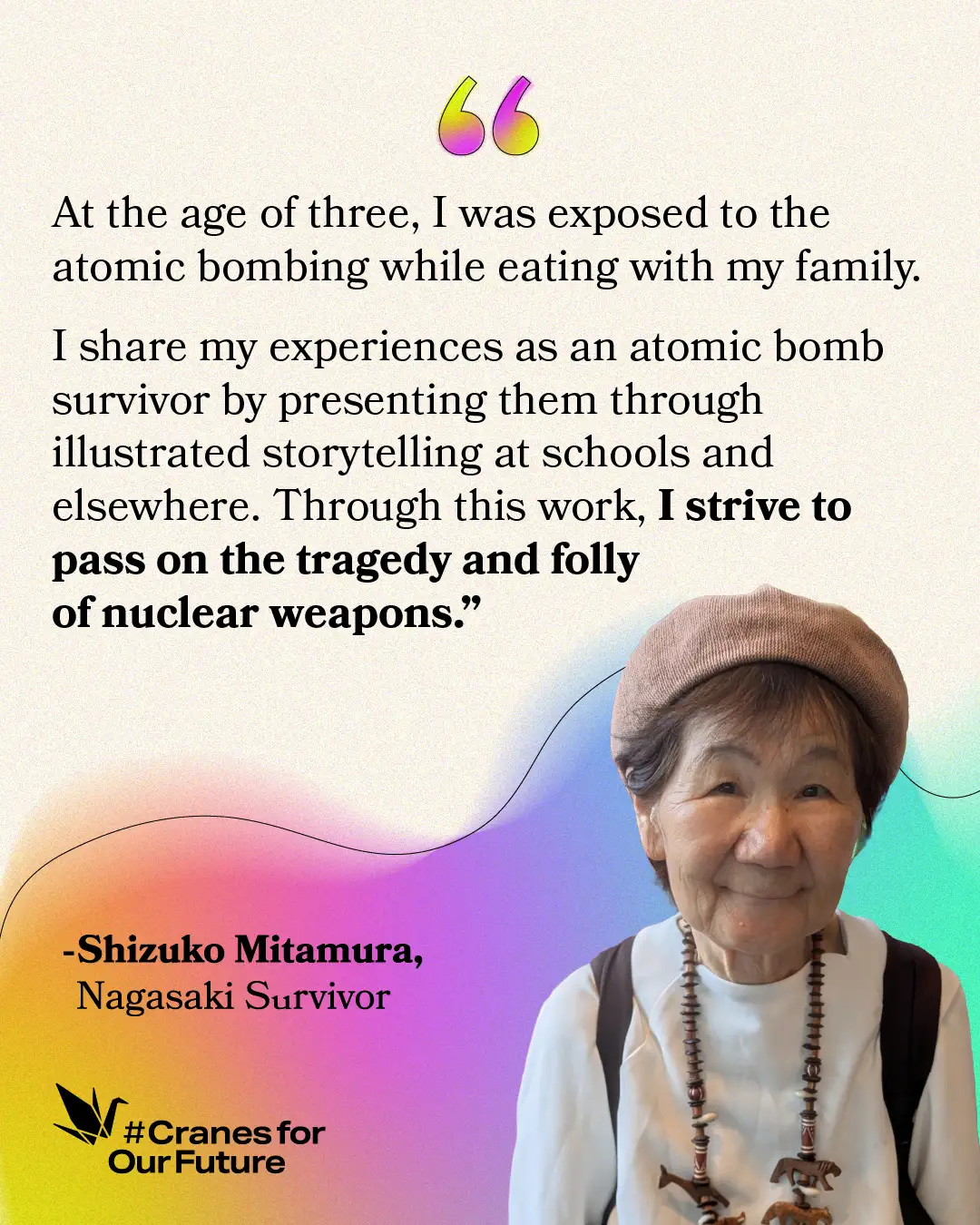
At this critical juncture, humanity faces an unprecedented and irreversible loss: the final generation of direct survivors—known in Japanese as the hibakusha—is rapidly fading from the planet. These aging individuals represent the world’s sole remaining living witnesses to the visceral horrors of nuclear warfare. Their testimonies, carved from unimaginable trauma and decades of resilience, are the ultimate safeguard against historical amnesia.
Recognizing the gravity of this impending silence, prominent advocates, educators, and organizations such as the Nuclear Threat Initiative (@nti_wmd) are redoubling efforts to capture, preserve, and uplift these vital narratives. Central to this mission is a growing global commitment to ensure that Nagasaki—and Hiroshima—stand forever as the first and last cities to suffer the devastation of an atomic bomb. Through educational outreach, literature, and active preservation of oral histories, contemporary society bears the profound responsibility of carrying the torch of memory forward for future generations.
Detailed Chronology: The Path to the Atomic Age and Its Aftermath
To fully grasp the magnitude of the nuclear legacy and the ongoing mission of the hibakusha, it is essential to trace the historical trajectory that culminated in August 1945 and the subsequent decades of advocacy.
The Manhattan Project and the Decision to Deploy (1942–1945)
The genesis of the atomic age lay in the Manhattan Project, a clandestine research and development undertaking authorized by the United States government during World War II. Spurred by fears that Nazi Germany might successfully develop an atomic weapon, Allied scientists—including many European émigrés—worked feverishly in facilities spanning Los Alamos, New Mexico, Oak Ridge, Tennessee, and Hanford, Washington. By July 16, 1945, the project achieved success with the Trinity test, the world’s first detonation of a nuclear device, near Alamogordo, New Mexico.
With the war in Europe concluded in May 1945, Allied planners turned their full attention to the Pacific theater. Faced with the daunting prospect of a mainland invasion of Japan—codenamed Operation Downfall—which military analysts predicted would cost hundreds of thousands of Allied lives and millions of Japanese casualties, U.S. leadership elected to deploy the newly developed atomic weapons to force an unconditional surrender.
August 1945: The Devastation of Hiroshima and Nagasaki
August 6, 1945: The Boeing B-29 bomber Enola Gay, piloted by Colonel Paul Tibbets, dropped an enriched-uranium atomic bomb codenamed "Little Boy" over the city of Hiroshima. Detonating approximately 1,900 feet above the city, the blast generated a searing fireball with temperatures reaching millions of degrees Celsius. A ferocious shockwave flattened nearly five square miles of the city, instantly killing tens of thousands of people. By the end of 1945, cumulative deaths from thermal burns, blast injuries, and acute radiation syndrome brought the estimated death toll in Hiroshima to roughly 140,000.
August 9, 1945: Three days later, a second B-29 bomber, Bockscar, commanded by Major Charles Sweeney, targeted the industrial port city of Kokura. Obscured by heavy clouds and smoke, the aircraft diverted to its secondary target, Nagasaki. At 11:02 AM, a plutonium implosion-type bomb codenamed "Fat Man" was detonated over the city’s Urakami district. Due to the terrain’s topography, the immediate damage was somewhat contained compared to Hiroshima, yet the human toll was catastrophic. By the close of 1945, an estimated 74,000 people had perished from the bombing and its immediate aftermath.
August 15, 1945: Emperor Hirohto announced Japan’s acceptance of the Potsdam Declaration, leading to the formal surrender signed aboard the USS Missouri on September 2, 1945, officially bringing World War II to a close.
The Post-War Era and the Rise of Hibakusha Advocacy (1945–Present)
In the decades following the war, survivors of the bombings—the hibakusha—organized into powerful social and political movements. Despite facing severe social stigma, discrimination in employment and marriage, and long-term medical complications, they dedicated their lives to global peace activism. Traveling the world, sharing harrowing personal accounts, and lobbying international bodies, the hibakusha became the moral anchor of the global anti-nuclear weapons movement, ultimately contributing to the adoption of landmark treaties such as the Treaty on the Prohibition of Nuclear Weapons (TPNW).
Supporting Context & Metrics: The Human Toll and Current Risks
The legacy of Hiroshima and Nagasaki cannot be fully understood through historical narratives alone; it requires an examination of the enduring medical, social, and geopolitical metrics that define the nuclear threat.
Quantifying the Impact
Immediate and Long-Term Fatalities: Combined estimates indicate that between 210,000 and 220,000 people died by the end of 1945 from the two bombings. Over subsequent decades, thousands more succumbed to radiation-induced cancers, leukemia, and other chronic illnesses.
Demographic Decline of Survivors: According to data from Japan’s Ministry of Health, Labour and Welfare, the number of living hibakusha holding official survivor certificates has plummeted over the years. As of recent demographic reports, the average age of surviving hibakusha exceeds 85 years, underscoring the urgent reality that living witnesses will soon be entirely gone.
Global Nuclear Arsenals: In the modern geopolitical landscape, despite decades of bilateral arms reduction treaties between major nuclear powers, global arsenals remain perilously large. Organizations tracking global security estimate that nine nations—the United States, Russia, China, the United Kingdom, France, India, Pakistan, Israel, and North Korea—possess a combined total of roughly 12,500 nuclear warheads, many of which remain on high-alert operational status.
The Intersection of Memory and Modern Literacy
Preserving this history extends far beyond archival footage and political treaties; it requires embedding these realities into cultural and educational frameworks. Authors, educators, and cultural advocates have long championed multicultural literature and children’s books that address themes of peace, historical trauma, and social justice. Works focusing on Japanese American heritage, historical milestones such as Pearl Harbor Day, and symbols of resilience—such as the origami crane immortalized in peace education worldwide—serve as vital pedagogical tools. By engaging younger generations through age-appropriate narratives and interactive activities, educators ensure that the human cost of conflict remains a cornerstone of civic understanding.
Official Statements and Institutional Perspectives
As the international community confronts the dwindling presence of direct witnesses, global institutions, advocacy groups, and cultural leaders have issued strong statements emphasizing the urgency of memory preservation.
The Nuclear Threat Initiative (@nti_wmd) on the Imperative of Survivor Stories:
"Today, as survivors age, we are losing the only living witnesses to this dark history. That is why we must actively amplify their words. It is up to us to keep these stories alive, and to ensure that future generations never lose sight of the human toll of nuclear weapons. In a world where the risk of nuclear catastrophe is rising, remembering these stories is not merely an exercise in historical reflection—it is an absolute necessity for human survival."
Educational and Cultural Advocates:
Community leaders and authors committed to multicultural education emphasize that teaching the lessons of Hiroshima and Nagasaki fosters deep empathy and critical thinking among youth. By connecting historical events to contemporary movements for peace and civil rights, educators empower students to recognize their own agency in shaping a safer, more equitable world. Collaborative educational resources, teachers’ guides, and literature initiatives provide structured pathways for classrooms to explore complex historical truths without losing sight of hope and resilience.
Future Outlook: Safeguarding Peace in the 21st Century
Looking forward, the global anti-nuclear movement stands at a historic crossroads. The imminent passing of the last hibakusha transitions the responsibility of testimony from living memory to collective historical stewardship.
To prevent historical amnesia, institutions, digital archives, and educational networks are investing heavily in advanced preservation technologies. Virtual reality archives, interactive digital oral histories, and comprehensive school curricula are being deployed to ensure that future generations can engage directly with the testimonies of those who suffered in 1945. These digital initiatives bridge the generational divide, transforming passive historical learning into an immersive, impactful experience.
Furthermore, grassroots peace organizations and international coalitions must maintain relentless pressure on policymakers to recommit to nuclear non-proliferation and disarmament treaties. The growing risks of modern geopolitical instability—compounded by technological advancements in weapons systems and rhetoric surrounding nuclear deterrence—demonstrate that the specter of atomic devastation has not been banished to the past.
Ultimately, the collective mission inspired by Hiroshima and Nagasaki is clear: to honor the victims through active remembrance, to support the enduring legacy of the hibakusha, and to cultivate a global culture of peace. By ensuring that the horrors of August 1945 are never forgotten, humanity takes its most vital step toward ensuring that Nagasaki remains forever the last city to experience the devastation of a nuclear weapon.











Comments
Facebook App ID not configured. Please add it in the Customizer.