
Executive Overview
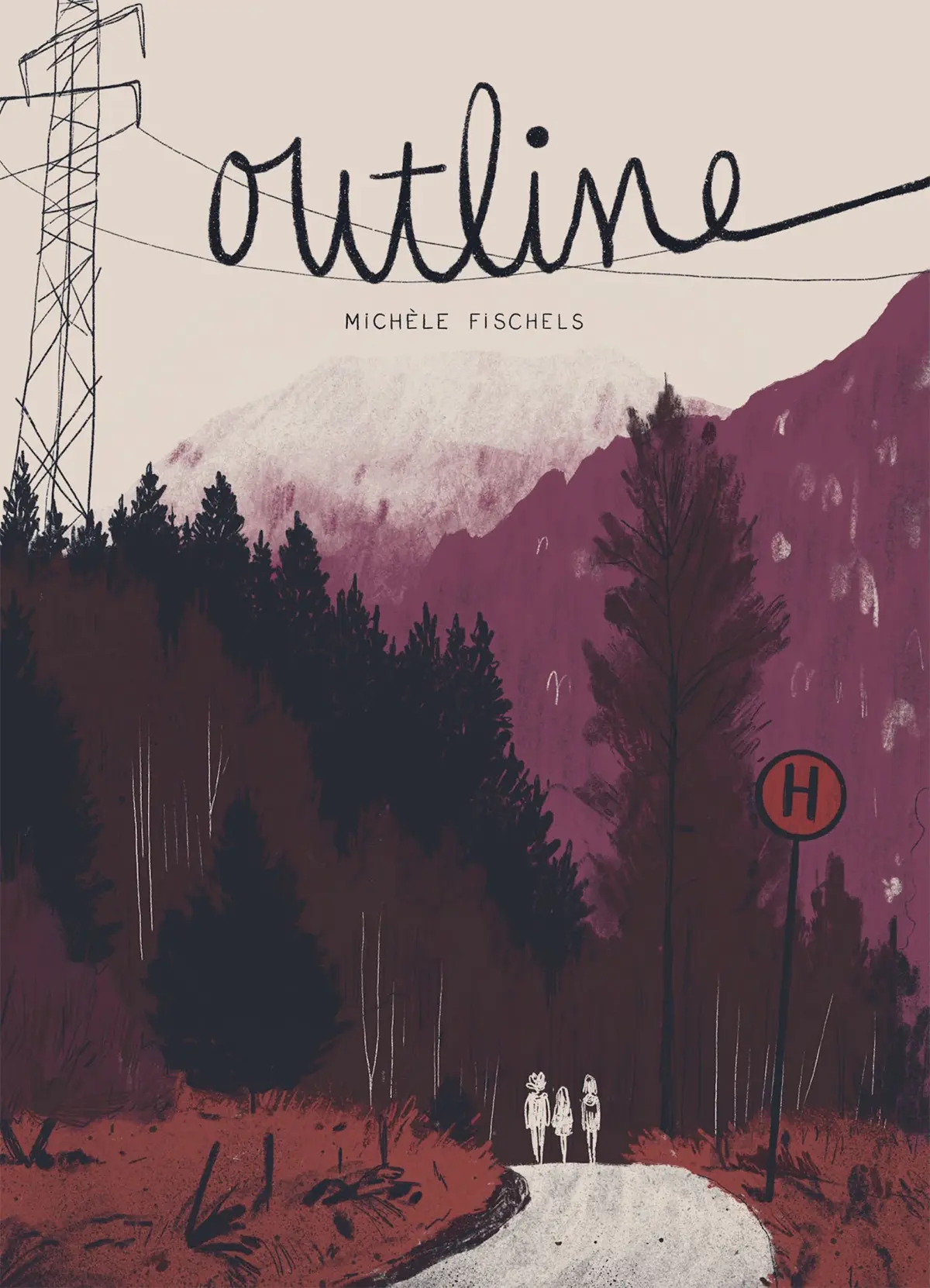
The liminal space between adolescence and adulthood has long served as fertile ground for literature, film, and visual art. It is a season defined by heightened emotional stakes, the slow dissolution of childhood certainties, and the daunting prospect of self-determination. Yet, few contemporary works capture this psychological geography with the quiet precision, visual grace, and emotional resonance found in Michèle Fischels’ debut graphic novel, Outline. Published by Oni Press and translated into English by Thomas Mauer, Outline establishes Fischels as a formidable new voice in European comics, offering a masterclass in atmospheric storytelling and character-driven narrative architecture.
Set against the backdrop of a European high school as the academic year winds to its inevitable conclusion, the book charts the intersecting lives of three seniors: the romantic couple Ben and Clara, and their fiercely independent, rebellious friend Andreas. As these characters stand on the precipice of graduation, they are forced to confront competing personal desires and societal expectations. The narrative does not rely on melodramatic plot twists or sensationalized crises; instead, it finds its profound power in the quiet moments between major life decisions—late-night conversations, shared bicycle rides, lingering glances, and the heavy burden of unshared secrets.
Fischels’ artistic approach is central to the book’s success. Utilizing a moody, briskly expressive drawing style, she translates the internal turbulence of her youthful subjects into tangible visual language. The linework is at once delicate and assertive, capturing the nervous energy of characters who are simultaneously trying to anchor themselves and break free. Supported by Thomas Mauer’s sensitive translation—which preserves the natural cadence and emotional vulnerability of the original dialogue—Outline transcends the conventions of the traditional "coming-of-age" genre. It offers an intimate, deeply empathetic exploration of identity formation, interpersonal dynamics, and the bittersweet melancholia of leaving youth behind.
Read Also
This report provides a comprehensive examination of Outline, analyzing its narrative structure, thematic depth, artistic merits, and the broader cultural context of its publication. Through a detailed chronology of its central plot points, evaluation of its production and translation, and an assessment of its place within the contemporary graphic novel landscape, we explore why Fischels’ debut has quickly become one of the most talked-about releases of the publishing season.
Detailed Chronology: The Anatomy of a Transition
To understand the narrative engine of Outline is to understand the rhythm of high school seniors whose worlds are simultaneously shrinking and expanding. The narrative unfolds over the course of a single, crucial academic year, capturing the slow accumulation of pressure that culminates in the final weeks before graduation.
Act I: The Equilibrium of the Inner Circle
The story opens in media res, establishing the status quo among the core trio of Ben, Clara, and Andreas. Fischels immediately sets a tone of intimate familiarity. Ben and Clara represent a stable, albeit fragile, romantic partnership—a couple attempting to figure out what their mutual devotion means when individual futures threaten to pull them in opposite directions. Clara is introspective, academically focused, and quietly grappling with the expectations placed upon her by family and institution. Ben, more easygoing on the surface, is plagued by internal anxieties regarding his post-graduation trajectory and his capacity to support those he cares about.
Entering this dynamic is Andreas, the narrative catalyst and emotional wildcard. Andreas does not merely bend the rules; he seems to operate entirely outside of them. His rebellious streak is not rooted in simple teenage angst, but in a profound alienation from the conveyor-belt nature of the educational system. Through Andreas, Fischels introduces a sense of volatility into the narrative. He is the friend who challenges assumptions, pushes boundaries, and exposes the artificial constraints of their suburban environment.
Act II: The Anatomy of Secrets and Diverging Paths
As the academic calendar marches toward finals and university application deadlines, the equilibrium established in the early chapters begins to fracture. Fischels masterfully paces the rising action not through external obstacles, but through the gradual unspooling of personal secrets.
Andreas’s rebelliousness escalates, revealing darker undercurrents of isolation. He is harboring a secret that threatens to alienate him from the very people who understand him best. Concurrently, Ben and Clara find their relationship tested by divergent educational options. The possibility of attending universities in different cities—or pursuing entirely different lifestyles—casts a long shadow over their romance. The script, brilliantly translated by Mauer, captures the unspoken tension in conversations where both parties are thinking about the future while pretending to live entirely in the present.
A pivotal sequence within the book—and the focus of its widely shared promotional excerpt—occurs mid-narrative. Ben embarks on a solitary bicycle ride through the countryside to meet Clara and their wider circle for a day trip in the woods. Along the way, he crosses paths with Andreas. This seemingly mundane encounter serves as a microcosm for the entire novel: the physical journey through a moody, atmospheric landscape mirrors Ben’s internal navigation of his friendships and his future. The natural world in Outline is never merely a backdrop; it actively reflects the emotional weather of the characters. When Ben arrives at the gathering in the woods, the subsequent interactions among the group highlight the fragile truce they have struck with their impending adulthood.
Act III: The Threshold of the Unknown
The climax of Outline avoids Hollywood resolutions. There are no dramatic speeches that fix broken relationships, nor are there miraculous salvations for characters in crisis. Instead, Fischels offers a more authentic reflection of life’s transitions: things change, people drift, and decisions must be made in the absence of absolute certainty.
As graduation day arrives, the characters are left to reconcile the outlines of the lives they planned with the messy reality of who they actually are. The final sequences of the graphic novel leave a lingering, haunting impression, emphasizing that the end of high school is not a definitive conclusion, but merely the first draft of an unwritten text.
Supporting Context & Metrics: The Art, Translation, and Publishing Landscape
The Visual Language of Michèle Fischels
The aesthetic power of Outline lies in Fischels’ distinctive artistic choices. Eschewing the hyper-polished, digital slickness common in much of contemporary commercial comics, Fischels employs a raw, expressive technique that prioritizes emotional truth over anatomical perfection. Her linework is characterized by a kinetic urgency—lines are often sketchy, layered, and brimming with nervous energy, perfectly mirroring the psychological state of teenagers navigating identity crises.
Fischels’ use of negative space and shadow is particularly noteworthy. The panels frequently utilize stark contrasts to underscore moments of emotional isolation. Even when characters are physically crowded together in a classroom or at a social gathering, Fischels compositionally isolates them, emphasizing the fundamental loneliness of the human experience during adolescence. The pacing of the visual narrative is brisk yet deliberate; wordless sequences often stretch across multiple panels, allowing readers to absorb the heavy atmospheric weight of a lingering look or a solitary journey through the landscape.
The Art of Translation: Thomas Mauer’s Contribution
Translating a graphic novel is a delicate exercise in literary balancing. The translator must not only render the dialogue into natural, idiomatic English but must also ensure that the translated text fits harmoniously within the physical constraints of speech balloons and caption boxes, without disrupting the rhythm established by the artist’s visual pacing.
Thomas Mauer achieves this with remarkable dexterity. The English adaptation of Outline feels organic, avoiding the stilted phrasing that often plagues translated European comics. Mauer captures the colloquialisms, conversational pauses, and emotional subtext of contemporary youth culture. The dialogue is sparse where it needs to be, allowing Fischels’ artwork to carry the emotional weight, yet sharp and cutting during moments of interpersonal conflict.
Publishing Context and Market Reception
Published by Oni Press—an independent publisher renowned for championing distinct, creator-owned graphic novels such as Scott Pilgrim, The Kurotzu, and The Tea Dragon Society—Outline arrives in an expanding literary market. Graphic novels exploring mental health, identity, and coming-of-age themes have seen a massive surge in readership, driven by both YA audiences and adult readers seeking sophisticated narratives in visual form.
Measuring up against industry standards, Outline distinguishes itself through its mature refusal to pander to its audience. It does not offer easy moral lessons or neat narrative closures. By focusing on the nuanced realities of European secondary education and social structures, the book also offers American and international readers a fresh cultural perspective on universal adolescent anxieties.
Official Statements & Critical Response
The release of Outline has generated significant buzz within the literary and comics communities, drawing high praise from critics and fellow creators alike.
In its official starred review, Publishers Weekly lauded the work as a "sensitively rendered tale on the competing personal and social realities facing a group of high school seniors nearing graduation." The review went on to commend Fischels’ technical execution, noting that the book is "expertly depicted by Fischel’s moody, briskly expressive drawings," which elevate a familiar premise into something profoundly resonant.
Publishing executives and critics have likewise pointed to the book’s thematic maturity as a standout feature. In promotional materials accompanying the launch, Oni Press editors emphasized the unique tonal alchemy of Fischels’ work:
"Outline captures a very specific, fleeting moment in human development—the exact second when the safety nets of childhood fall away and we are forced to sketch the parameters of our own lives. Michèle Fischels has translated that universal terror and beauty onto the page with breathtaking economy and grace."
Literary critics have drawn favorable comparisons between Outline and the works of acclaimed graphic novelists such as Jillian Tamaki, Mariko Tamaki, and Craig Thompson, noting that Fischels shares their rare ability to translate ephemeral teenage emotional states into durable visual art. Reviewers have particularly highlighted the strength of the ensemble cast, praising Fischels for resisting the temptation to reduce Ben, Clara, and Andreas to archetypes. Each character is granted a distinct internal life, complete with contradictions, flaws, and quiet aspirations.
Future Outlook: The Trajectory of Michèle Fischels and the Evolution of the Genre
As Outline finds its way into the hands of readers globally, its release marks a significant milestone not only for Michèle Fischels’ career but also for the broader landscape of contemporary graphic literature.
What’s Next for the Author?
While Outline serves as Fischels’ breakout English-language debut, critics and publishers are already looking toward her future projects. The critical acclaim garnered by the book positions Fischels as a major talent to watch within the European and international comics scenes. Industry insiders speculate that the distinct aesthetic and narrative depth demonstrated in Outline will open doors for larger multi-volume graphic novel projects, potential adaptations, and cross-cultural collaborations. Her ability to mine the psychological depths of ordinary human experience ensures that her future bibliography will be eagerly anticipated by both critics and fans.
Implications for the Graphic Novel Industry
The success of translated European graphic novels like Outline in the English-speaking market signals a healthy diversification of reader tastes. Publishers are increasingly willing to invest in nuanced, character-driven narratives that defy easy genre categorization. As readers continue to embrace comics as a premier literary medium capable of addressing complex psychological and social themes, works like Outline pave the way for more experimental, artist-driven storytelling.
Ultimately, Outline is more than just a snapshot of high school seniors on the brink of graduation. It is a testament to the enduring power of the graphic novel as a medium for psychological exploration. Through her evocative artwork, precise pacing, and unflinching emotional honesty, Michèle Fischels has crafted a timeless meditation on the art of becoming oneself—a book that will undoubtedly resonate with readers long after the final page is turned.





Comments
Facebook App ID not configured. Please add it in the Customizer.