The Hawaiian archipelago has long captivated travelers from around the globe with its volcanic mountain ranges, pristine coastlines, and deeply rooted indigenous traditions. Among its most alluring destinations is the island of Kauai, frequently celebrated as the "Garden Isle" due to its lush tropical rainforests, dramatic sea cliffs, and verdant valleys. For travelers seeking a profound immersion into the island’s botanical majesty, a visit to the neighboring Allerton and McBryde Botanical Gardens—situated side by side on the island’s southern coast—offers an unparalleled exploration of ecological preservation, landscape architecture, and horticultural history.
Managed under the umbrella of the National Tropical Botanical Garden (NTBG), these two distinct properties present contrasting yet complementary visions of human interaction with nature. The Allerton Garden is an architectural tour de force, born from the ambitious, highly personal creative vision of an artistic patron who poured his fortune and imagination into reshaping a historic valley. Immediately adjacent lies the McBryde Garden, functioning as a sprawling research and conservation sanctuary that houses a peerless collection of rare, endangered tropical flora gathered from across the globe.
Beyond their immediate aesthetic and horticultural appeal, these gardens serve as vibrant cultural hubs. They offer educational programs, including specialized botanical illustration and watercolor classes that allow visitors to deeply engage with the natural environment. Furthermore, the surrounding region holds hidden histories, accidental discoveries, and rich ecological narratives—such as historical local salt-making traditions, ancient trails, and native cultural landmarks—that weave together the past and present of the Hawaiian Islands. This report provides an exhaustive investigative and narrative overview of the gardens, their distinct developmental philosophies, their broader ecological significance, and the expansive array of cultural experiences awaiting those who venture deep into the heart of Kauai.
Phase I: The Origins of the Valley and Early Agricultural Use
Long before the arrival of landscape architects or modern botanical preservationists, the valleys encompassing the modern-day Allerton and McBryde Gardens were integral to the lives of Native Hawaiians. Situated along the lower reaches of the Lawai Stream valley, these fertile lands were traditionally utilized for agricultural cultivation, most notably the terracing and flooding of fields for kalo (taro), a dietary and spiritual staple of indigenous society.
The microclimate of the Lawai Valley—sheltered from harsh trade winds yet generously watered by inland rainfall and subterranean streams—made it an ideal ecosystem for diverse plant life. Native forests blanketed the slopes, populated by endemic species that evolved in isolation over millions of years. This indigenous ecological balance persisted for centuries, serving as a sustainable lifeline for local communities until the mid-19th century, when the Hawaiian Islands underwent a profound socioeconomic transformation driven by the rise of the commercial sugar industry.
Phase II: The McBryde Legacy and Agricultural Conversion
During the late 19th century, large swaths of Kauai’s arable land were acquired for commercial sugar cultivation. The McBryde family, prominent figures in Hawaii’s plantation era, established extensive agricultural operations across the southern coast of the island. The land that would eventually become the McBryde Garden was originally utilized for sugarcane production and related agricultural infrastructure.
As the sugar industry matured and consolidated, visionaries began to recognize the necessity of preserving declining native species and testing the adaptability of foreign tropical plants in Hawaiian soil. In the early 20th century, portions of the former agricultural lands were set aside for horticultural experimentation. This laid the structural groundwork for what would officially be established decades later as a dedicated botanical research facility: the McBryde Garden. Rather than forcing continuous, intensive crop yields, conservationists and scientists pivoted toward transforming the landscape into a living museum of tropical plant diversity.
Phase III: The Artistic Vision and Creation of Allerton Garden
Parallel to the agricultural evolution of the valley, a separate artistic enterprise was taking shape. Robert Allerton, a wealthy heir, businessman, and self-described "failed artist," along with his adopted son and partner John Gregg Allerton, acquired a sprawling estate on the shores of the Lawai Valley in the early 20th century.
Driven by a profound desire to express his creative impulses through the medium of landscape architecture, Robert Allerton poured a substantial portion of his personal fortune and several decades of labor into sculpting the terrain. Unlike a traditional botanical garden organized solely for scientific taxonomy, Allerton Garden became a "rich man’s folly"—an immersive, theatrical landscape where nature was intentionally melded with classical European architectural elements.
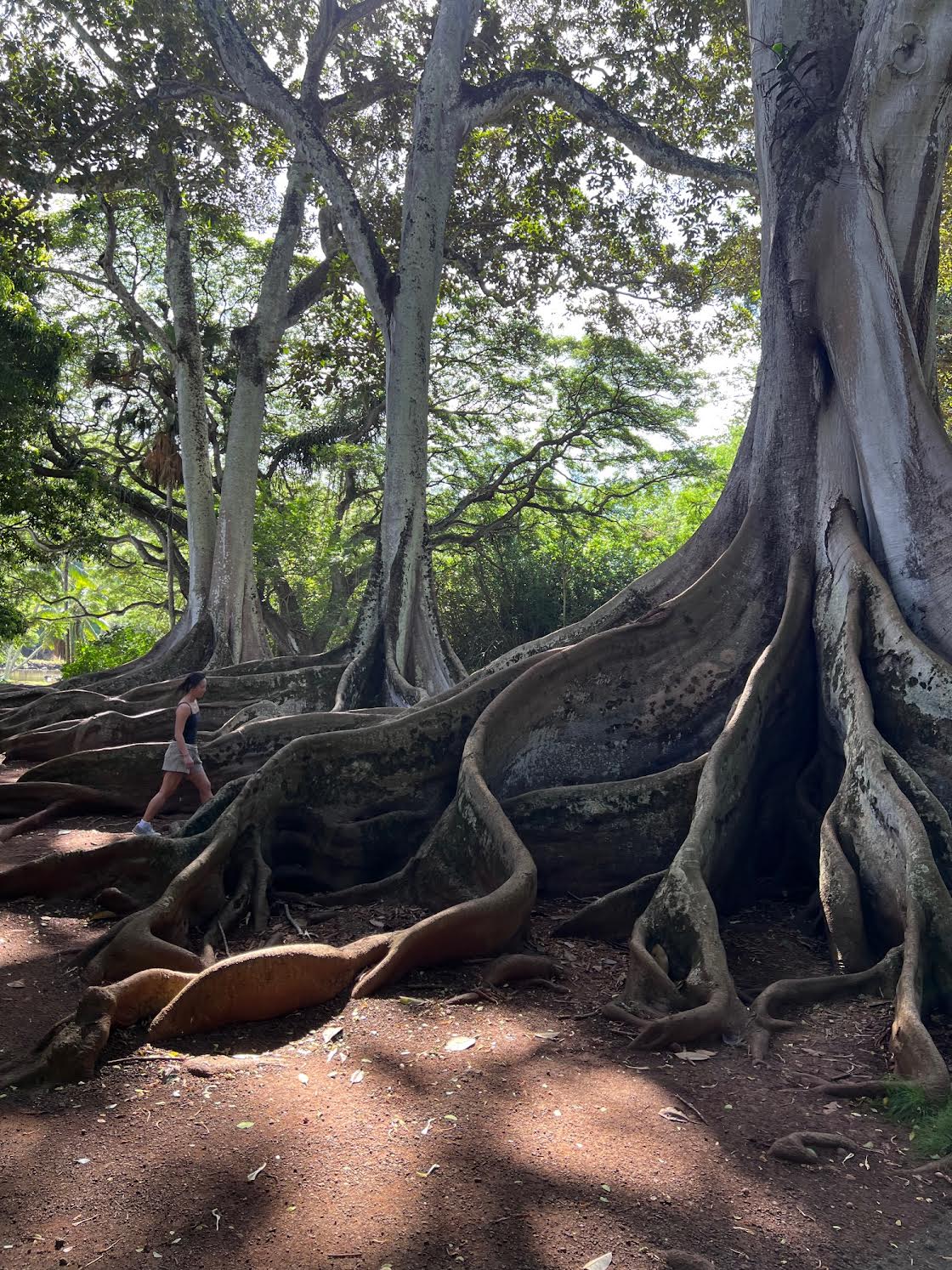
Allerton collaborated with landscape designers to construct grand vistas, reflecting pools, monumental stone staircases, European statuary, and hidden outdoor "rooms." He famously imported massive specimens, such as the towering Moreton Bay fig trees (Ficus macrophylla) with their gargantuan, undulating root systems—trees that later achieved international cinematic fame for their appearances in major Hollywood productions like Jurassic Park. The Allerton era successfully fused formal Italian and French garden design principles with the untamed, tropical exuberance of the Hawaiian rainforest.
Phase IV: Establishment of the National Tropical Botanical Garden
Recognizing the irreplaceable ecological and historical value of both the Allerton and McBryde properties, visionary conservationists sought to protect them from commercial development. In 1964, a congressional charter officially established the Pacific Tropical Botanical Garden (later renamed the National Tropical Botanical Garden, or NTBG).
Over the subsequent decades, the NTBG consolidated stewardship over the adjacent Lawai Valley properties. The McBryde Garden was formally dedicated to scientific research, ex-situ conservation, and education, while the Allerton Garden was preserved as an exceptional historic landscape. Together, they formed a dual-identity institution: part rigorous scientific research center, part breathtaking public sanctuary.
Phase V: Modern Exploration and Educational Expansion
In contemporary times, the gardens have evolved into premier eco-tourism destinations while maintaining their core mission of conservation. Visitors arriving at the visitor center can select from various tour formats, ranging from guided bus excursions that navigate the valley’s historical highlights to immersive, self-paced explorations that allow botanists, artists, and casual travelers alike to commune quietly with the flora.
In recent years, the NTBG has expanded its community outreach through specialized creative programming, introducing watercolor and botanical illustration workshops directly inspired by the surrounding ecosystem. These programs fulfill Robert Allerton’s original artistic aspirations, transforming visitors from passive observers into active participants in the creative documentation of nature.
Supporting Context & Metrics
To fully appreciate the scope of the Allerton and McBryde Botanical Gardens, it is essential to examine the underlying geographical, ecological, and institutional metrics that define their operations.
Geographical and Climatic Metrics
Total Acreage: The combined footprint of the adjacent gardens spans several hundred acres within the Lawai Valley on Kauai’s south shore. McBryde Garden alone encompasses approximately 250 acres of deeply varied terrain.
Topography: The landscape ranges from sea-level coastal flats up through steep valley walls, creating multiple microclimates that mimic rainforest, riparian, and upland ecological zones.
Hydrology: The Lawai Stream runs directly through the valley, supplying a natural freshwater source that sustains both native aquatic species and an elaborate network of historical irrigation and decorative water features.
Botanical Diversity and Conservation Metrics
Plant Collections: McBryde Garden houses the largest ex-situ collection of native Hawaiian flora in the world, alongside tens of thousands of accessioned plants gathered from tropical forests globally.
Endangered Species Protection: Many plant species cultivated within the gardens are extinct in the wild, making these grounds vital "arks" for genetic preservation. The NTBG actively conducts seed banking, tissue culture propagation, and reintroduction programs across the Hawaiian Islands.
Architectural Features (Allerton): The Allerton property features dozens of classical European art pieces, urns, fountains, and man-made water cascades integrated seamlessly into over a dozen distinct "garden rooms."
Official Statements
The significance of the Lawai Valley and its twin botanical institutions has been repeatedly emphasized by conservation leaders, historians, and cultural preservationists associated with the National Tropical Botanical Garden.
Janet L. Moyer, a senior horticultural historian specializing in 20th-century American estate gardens, noted the unique nature of Robert Allerton’s work:
"Robert Allerton did not simply plant a garden; he sculpted an emotional landscape. By combining classical design grammar with the overwhelming, primeval scale of Hawaiian tropical foliage, he created a singular artistic statement that blurs the boundary between high European art and raw ecological majesty. It stands as one of the most remarkable private landscape commissions in American history."
Dr. Chiaki Kawakami, a conservation botanist working in coordination with NTBG research initiatives, underscored the scientific imperative of the McBryde collection:
"We are living through an unprecedented extinction crisis, particularly regarding island flora. The McBryde Garden is not merely a scenic attraction for tourists; it is a critical scientific lifeline. The living collections housed here preserve the genetic blueprints of species that have vanished from their native mountain ridges due to invasive ungulates, climate shifts, and habitat destruction. Every successful propagation here represents a victory for global biodiversity."
Furthermore, educational coordinators leading the NTBG’s art workshops have emphasized the therapeutic and cognitive benefits of combining natural exploration with creative expression. A statement released by the NTBG education division highlights this philosophy:
"When a visitor sits beneath the canopy of a Moreton Bay fig with a paintbrush in hand, they are engaging with the environment on a neurological and emotional level that goes far beyond a standard walk-through tour. Our botanical illustration and watercolor programs are designed to cultivate deep observation, fostering a lifelong commitment to environmental stewardship through the lens of art."
Future Outlook
As the tourism and environmental landscape of Hawaii continues to evolve, the Allerton and McBryde Botanical Gardens face both immense opportunities and formidable challenges.
1. Scaling Conservation and Habitat Restoration
Looking toward the coming decades, the primary institutional objective for the NTBG remains the expansion of native plant rescue and habitat restoration initiatives. With climate change accelerating weather volatility, prolonged droughts, and the spread of invasive plant pathogens across the Pacific, the gardens serve as frontline defensive laboratories. Future capital investments will likely target advanced seed banking facilities, expanded greenhouse propagation units, and enhanced genetic tracking systems to ensure that endangered Hawaiian plant lineages survive into the 22nd century.
2. Balancing Eco-Tourism with Ecological Preservation
Managing visitor volume while protecting delicate micro-ecosystems represents an ongoing operational tightrope. While guided bus tours and structured group visits currently regulate visitor flow, future projections point toward a growing demand for specialized, low-impact exploration models. Expanding self-guided access options safely—while preventing ecological degradation and unauthorized trespassing along perimeter boundaries, such as those near the adjacent coastal access points—will require innovative crowd-management strategies and enhanced digital interpretation tools.
3. Deepening Community and Cultural Integration
The future of the gardens also relies heavily on strengthening partnerships with Native Hawaiian cultural practitioners, educators, and local artists. By integrating traditional ecological knowledge (ike kupuna) more deeply into daily tour narratives and educational workshops, the gardens can transcend standard Western botanical frameworks. This holistic approach ensures that the land is honored not merely as a collection of exotic specimens or architectural follies, but as a living, breathing cultural landscape deeply tied to the heritage of the Hawaiian people.
Through the careful balancing of artistic preservation, rigorous scientific research, and immersive public education, the Allerton and McBryde Botanical Gardens are poised to remain crown jewels of Kauai—inspiring new generations of conservationists, artists, and travelers for decades to come.












Comments
Facebook App ID not configured. Please add it in the Customizer.