
Executive Overview
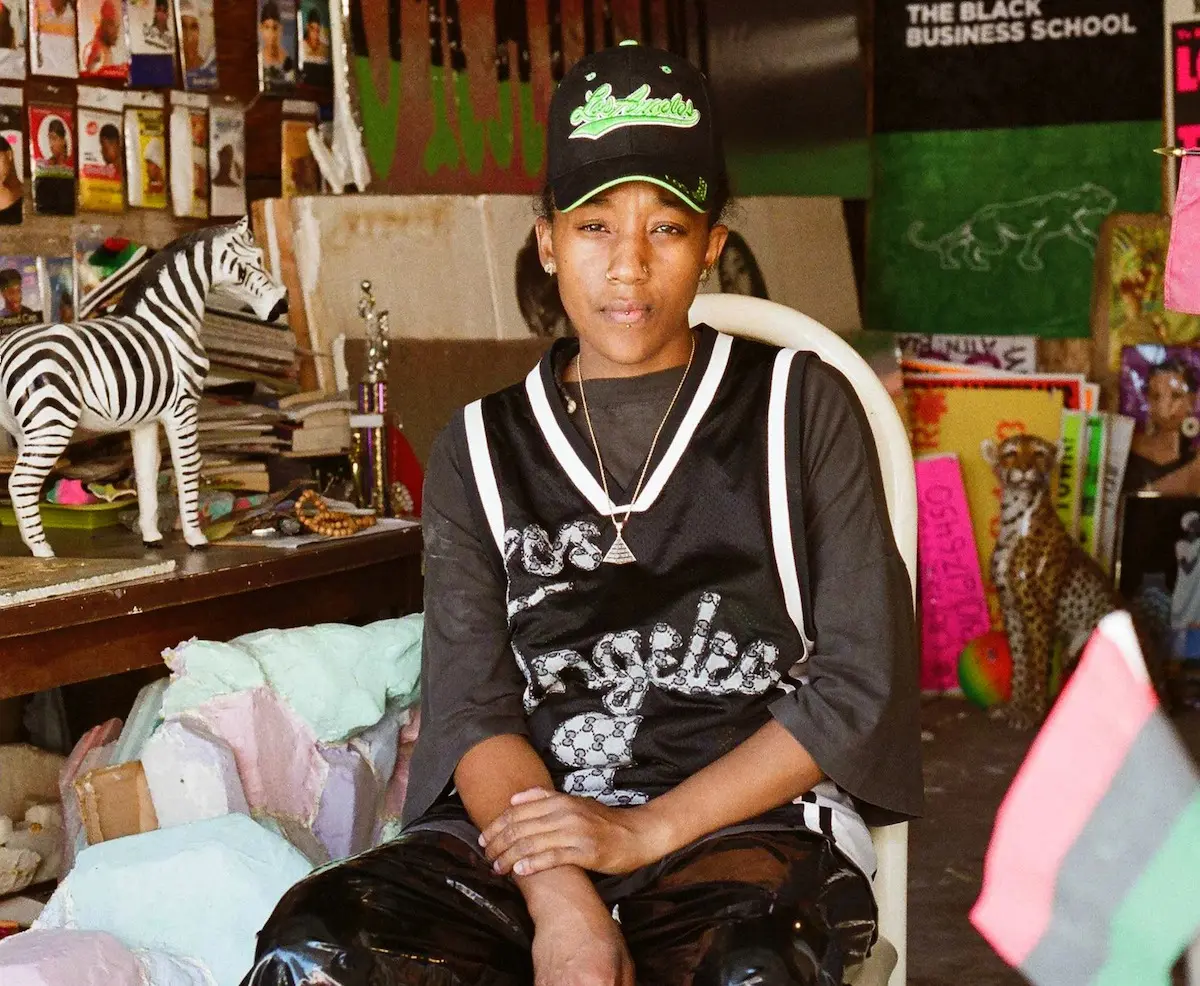
Tonight, the historic Hollywood Bowl will undergo a breathtaking, multi-sensory metamorphosis courtesy of acclaimed Los Angeles-based artist Lauren Halsey. For a single, high-profile night, the iconic outdoor amphitheater will serve as the canvas for a sweeping campus-wide installation and custom stage design headlined by neo-soul pioneer Erykah Badu.
Titled emajendat—a name borrowed from Halsey’s critically lauded 2024 exhibition at London’s Serpentine Galleries—the event represents a watershed moment in contemporary art and live music integration. Halsey, celebrated for her dense, hyper-saturated architectural installations that merge ancient Egyptian symbolism, science fiction, and Black urban vernacular, has envisioned a complete spatial reimagining of the Bowl.
Doors open at 6:00 p.m., welcoming ticket-holders into an immersive environment complete with carnival games, arcade installations, and larger-than-life sculptural "funk mounds." Curated to bridge the gap between high-concept visual art and accessible community celebration, the star-studded lineup also features hip-hop producer The Alchemist, Anderson .Paak’s alter ego DJ Pee .Wee, Red Hot Chili Peppers bassist Flea, and conceptual artist Charles Gaines collaborating with Black Nile and Devin Daniels. Comedian and actor Yvonne Orji serves as the evening’s host.
Read Also
Far from a conventional concert, tonight’s happening is the realization of a childhood dream for Halsey, a native Angeleno whose artistic trajectory has long been intertwined with music. It also serves as a bold "proof of concept" for an envisioned annual Los Angeles festival where visual artists dictate the aesthetic universes of performing musicians.
Detailed Chronology: From Childhood Awe to a Campus-Wide Canvas
The genesis of tonight’s monumental takeover traces back to a serendipitous meeting between Halsey and Johanna Rees, vice president for programming and creative partnerships at the Hollywood Bowl. Recognizing an opening to push the boundaries of institutional programming, Halsey seized the moment.
"I knew that I just had to jump in, and the opportunity wasn’t going to come to me," Halsey told ARTnews. "I said to her, ‘What would you think about a visual artist doing a campus takeover—very maximalist aesthetic, all anchored by a stage or a headliner?’ […] I thought how cool it could be to just remix it and turn it on its head."
Rees enthusiastically greenlit the visionary pitch, prompting Halsey to immediately invite Erykah Badu to headline. The pairing was organic; Halsey had recently commissioned Badu to DJ at the Hammer Museum’s 2025 gala, an event that honored Halsey alongside actor and activist Jane Fonda.
For Halsey, the Hollywood Bowl holds deep personal resonance. Long before her rise to international prominence, the amphitheater was a foundational touchstone of her creative imagination, experienced during childhood field trips and summer camp excursions. "The spaciousness, how beautiful it is—I always knew I wanted to do something there," she reflected.
This instinct to merge physical space with live musical performance dates back to Halsey’s formative years. Even before earning her BFA from the California Institute of the Arts (CalArts) in 2012, she was crafting theatrical sets for performances at her local church, drawing heavy inspiration from the cosmic, elaborate stage designs of Parliament-Funkadelic.
"It’s always been a goal of mine to contextualize objects around musicians in a live setting," Halsey noted.
As her international art market presence has expanded, Halsey has consistently folded music into her milestones. When her primary representative, David Kordansky Gallery, inaugurated its New York exhibition space with a major solo show for Halsey, she tapped Lauryn Hill to perform at the exclusive afterparty at the Boom Boom Room. Over the years, her artistic ecosystem has continually absorbed icons like Badu, Doechii, and Parliament-Funkadelic.
Tonight’s production builds directly upon her initial collaborations with Badu. "I built a sort of world around her, and I’m excited to present it," Halsey explained. That world translates her signature collage-based visual language—described by the artist as "super saturated, super dense"—into a three-dimensional architectural reality.
"I started going back to this typology I call my ‘funk mounds’ that have these little vignettes inside of them, and isolating moments that I wanted to scale in a very experimental way," she said. "I don’t want to give it away, but I’ve done that basically."
In addition to the stage transformation, Halsey’s campus takeover draws heavy inspiration from another iconic Southern California landmark: the Santa Monica Pier. Attendees will encounter custom, artist-designed variations of boardwalk staples, including ping-pong tables, mini-golf setups, and basketball games—the latter being a lifelong favorite pastime of the artist. "I’m doing my own version of that, in my language," she affirmed.
Supporting Context & Metrics: Pushing Beyond Gallery Walls
The conceptual backbone of the Hollywood Bowl event is rooted in Halsey’s acclaimed 2024 exhibition emajendat at the Serpentine Galleries in London. That exhibition marked a turning point in the artist’s practice, allowing her to lean into a freer, more improvisational methodology.
"That whole show was me chasing my funk and having fun," Halsey shared. "I’ve tried to bring that energy and that looseness, and that sort of free-spirited way of making to this—and it’s been liberating."
Bringing this vision to life has required an immense logistical effort, spanning months of planning, engineering, and spatial design. However, Halsey remains convinced that the heavy lifting is a vital investment in cultural accessibility. She anticipates the evening will attract "a multitude of demographics and ages," specifically drawing in audiences who might not otherwise engage with traditional museums and commercial art galleries.
By shifting the locus of contemporary art from the white-cube gallery to a historic, open-air music venue, Halsey breaks down structural barriers to entry. The inclusion of diverse musical acts—ranging from avant-garde jazz collaborations by Charles Gaines, Black Nile, and Devin Daniels to hip-hop royalty like The Alchemist and soul royalty like Badu—ensures that the demographic footprint of the audience mirrors the eclectic cultural fabric of Los Angeles itself.
Official Statements & Industry Perspectives
The collaboration has drawn high praise from arts administrators and cultural critics alike, who view the partnership as a blueprint for the future of institutional programming. Johanna Rees and the programming team at the Hollywood Bowl recognized early on that Halsey’s proposal offered a rare opportunity to redefine how civic spaces interact with visual artists.
Halsey herself views the undertaking not as a singular isolated spectacle, but as a crucial testing ground. "It’s a proof of concept for this festival and concert I hope to have every year in Los Angeles, where perhaps I build an aesthetic universe around musicians," she stated.
This ambition aligns with her long-term civic practice in South Los Angeles, such as her work on the Sister Dreamer Park project, an initiative she spent nearly seventeen years workshopping across various institutions, museums, and backyards before realizing its community potential. Whether building visionary parks or re-engineering public music venues, Halsey’s core mission remains steadfast: constructing architectural and aesthetic sanctuaries that honor Black queer and working-class histories in Los Angeles.
Future Outlook: A New Paradigm for Live Arts
As the sun sets over the Hollywood Bowl tonight, Lauren Halsey stands at the threshold of a new professional and creative frontier. The success of emajendat at the Bowl signals a growing appetite among cultural institutions to trust visual artists with macro-scale public environments.
By dissolving the traditional boundaries that separate the visual arts, live music, and recreational space, Halsey is forging a sustainable template for future annual festivals in Los Angeles. Her ability to scale intimate collage aesthetics into expansive, participatory festival grounds proves that contemporary art can be simultaneously rigorous, profoundly community-oriented, and wildly entertaining.
As doors open to the public at 6:00 p.m., ticket-holders are stepping into more than just a concert—they are entering a living, breathing archival universe crafted by one of the most visionary artists of her generation. If tonight serves as the inaugural chapter of Halsey’s annual festival dream, the future of live performance art in Los Angeles is exceptionally bright, undeniably funky, and fiercely imaginative.

Comments
Facebook App ID not configured. Please add it in the Customizer.