
Executive Overview
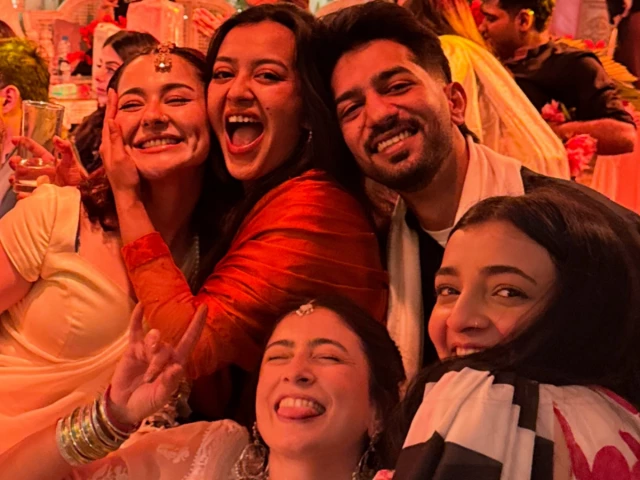
In an era where celebrity culture is monitored by an unforgiving army of online commentators, few public figures navigate the digital landscape with as much resilience, charm, and sheer disruptive playfulness as Pakistani superstar Hania Aamir. The acclaimed actor recently found herself at the receiving end of a fresh wave of digital critique after sharing an extensive photo dump and video compilation on Instagram. The content chronicled a year-old, unconventional, mehndi-themed birthday celebration—a lavishly decorated, mock-wedding party replete with traditional bridal customs, energetic dance sequences, cake-cutting ceremonies, and a sartorial pairing that instantly divided the internet.
Rather than caving to the predictable cycle of outrage, unsolicited style advice, and moral policing that often characterizes the comments sections of South Asian celebrities, Aamir chose a path of radical authenticity. She hit back at her critics with a characteristically defiant message: "Don’t let anyone take your whimsy away. And if they try, they stupid. Always be that man."
This high-profile digital exchange transcends a mere celebrity spat; it serves as a fascinating case study in modern fame, parasocial relationships, the suffocating expectations placed on female public figures in South Asia, and the therapeutic power of unapologetic joy. This report offers a comprehensive look at the event, the online backlash, Aamir’s calculated yet casual rebuttal, and the broader cultural implications of her steadfast refusal to conform to conventional norms.
Read Also
Detailed Chronology
The Genesis: The "Fake Shadi" Birthday Party
The origins of the current online discourse trace back to a private yet heavily documented celebration hosted by Hania Aamir to mark her birthday. Opting out of the conventional, Westernized black-tie or casual diner celebrations typical of urban elites, Aamir decided to lean heavily into the theatrical, vibrant aesthetics of a traditional South Asian pre-wedding ceremony—specifically, a mehndi or shadi (wedding) night.
Surrounded by a close-knit circle of family, industry peers, and fellow celebrities—including notable television personality Yashma Gill—Aamir transformed the venue into a mock wedding hall. The event was packed with immersive details:
- The Decor: The space featured traditional marigold aesthetics, festive lighting, and a customized mirror emblazoned with the playful phrase, "Happy Hanu Day," signaling the tongue-in-cheek nature of the proceedings.
- The Rituals: Guests and the birthday girl engaged in mock wedding customs, traditional singing sessions, and high-energy choreographed dance routines.
- The Bride Persona: In several frames of the digital archive, Aamir playfully posed as a traditional bride, complete with a heavily draped dupatta over her head, while friends surrounded her to capture paparazzi-style mock-portrait shots.
The Instagram Photo Dump
While portions of the event had trickled onto social media when it originally took place, Aamir chose to revisit the memories by publishing a comprehensive throwback photo dump on her official Instagram account (@haniaheheofficial). The post was designed as a celebration of unadulterated friendship and theatrical fun, featuring a carousel of high-resolution images and short video clips.
However, internet users immediately zeroed in on two distinct elements:
- The Outfit: Aamir’s sartorial choices sparked intense debate. She wore a vibrant, yellow-themed traditional sari. However, true to her eclectic and boundary-pushing personal style, she paired the ethnic drape with revealing leggings and a pair of chunky, industrial Doc Martens boots underneath—a high-low fashion juxtaposition that immediately triggered conservative and traditional fashion critics online.
- The Scale of Social Circles: In a culture where personal lives are heavily scrutinized, one fan commented with mock disbelief: "How do you have that many friends?" Aamir replied with characteristic wit: "Alhamdulillah, MashaAllah bolo pls."
When another follower playfully noted, "We need to think about your next birthday theme," Aamir deadpanned a cultural redirection, replying: "Ramzan Mubarak, girl."
The Backlash and the Rebuttal
As the algorithms pushed the throwback post into feeds across the globe, the comments section quickly became a battleground. Trolls and conservative commentators criticized the actor for mocking sacred traditions (shadi customs), wearing non-traditional footwear with a sari, and projecting an image deemed too frivolous for a public role model.
Rather than deleting the post, disabling comments, or issuing a sanitized public relations statement, Aamir addressed the noise directly within the captions and comment replies. Her caption—"Don’t let anyone take your whimsy away. And if they try, they stupid. Always be that man"—became an instant viral manifesto. By reclaiming the word "whimsy," she reframed her playful fake wedding not as a disrespect of cultural sanctity, but as an exercise in personal freedom and theatrical joy.
Supporting Context & Metrics
The Economics of Celebrity "Whimsy" in Pakistan
Hania Aamir is not merely a television star; she is a digital titan. With tens of millions of followers across Instagram, TikTok, and other platforms, her digital footprint commands immense commercial value. Her engagement rates regularly outpace those of her peers, largely due to her raw, unfiltered, and deeply relatable internet persona.
While traditional Pakistani celebrities often curate immaculate, sanitized, and deeply traditional feeds to appease conservative advertisers and family audiences, Aamir has carved out a distinct niche. She routinely posts makeup-free selfies, goofy video reels, and unfiltered rants. This authenticity has forged an intensely loyal demographic of Gen Z and millennial fans who see her as a breath of fresh air in an otherwise rigid industry.
However, this commercial freedom comes with a psychological tax. The table below outlines the dual-edged sword of Aamir’s digital strategy:
| Metric / Dimension | Traditional Celebrity Approach | Hania Aamir’s Approach |
|---|---|---|
| Content Curation | Highly polished, editorial, and curated for maximum mass appeal. | Raw, spontaneous, nostalgic, and playfully chaotic. |
| Fashion Choices | Adherence to classic, culturally approved silhouettes (conservative formals, standard bridals). | Experimental fusion (e.g., traditional saris paired with Doc Martens and streetwear). |
| Fan Interaction | Distant, polite, highly managed by PR agencies. | Conversational, witty, sarcastic, and direct-to-consumer. |
| Crisis Management | Issuing formal apologies or going silent during online controversies. | Direct defiance, reclaiming narratives, and weaponizing humor. |
The Sociology of the "Fake Shadi" Trend
The concept of a fake shadi-themed birthday is not entirely new within South Asian urban subcultures, but it occupies a fascinating sociological space. Weddings in Pakistan are monumental, high-stress, highly capitalized social events. They are rife with rigid social hierarchies, familial obligations, and intense scrutiny.
By turning a wedding into a birthday theme, young urbanites like Aamir and her circle subvert the institution. They strip away the anxiety, the financial burden, and the solemnity of actual marriage rituals, reducing them to what they should fundamentally be: an excuse to dress up, dance, eat cake, and celebrate community. The backlash Aamir faced, therefore, was less about the specific details of her party and more about a cultural discomfort with women subverting sacred, traditional spaces for purely selfish, hedonistic fun.
Official Statements & Digital Dialogue
Aamir’s digital footprint during this cycle was characterized by quick-witted, unbothered banter. Below is a reconstructed log of the key interactions that defined the news cycle:
- The Manifesto Caption (Instagram):
"Don’t let anyone take your whimsy away. And if they try, they stupid. Always be that man."
- Exchange 1 (On the nature of the event):
- Fan: "Just remembered the fake shadi-themed birthday."
- Hania Aamir: "It was fun."
- Exchange 2 (On social circles):
- Fan: "How do you have that many friends?"
- Hania Aamir: "Alhamdulillah, MashaAllah bolo pls."
- Exchange 3 (On future planning):
- Fan: "We need to think about your next birthday theme."
- Hania Aamir: "Ramzan Mubarak, girl."
These exchanges illustrate Aamir’s mastery of tone. She balances spiritual acknowledgment (Alhamdulillah, MashaAllah, Ramzan Mubarak) with modern internet sarcasm and unyielding self-confidence. She refuses to be painted into a corner as either a hyper-religious traditionalist or a rebellious westernized icon; instead, she exists comfortably in the nuanced intersection of modern Pakistani youth culture.
Future Outlook
What This Means for South Asian Celebrity Culture
Hania Aamir’s handling of the backlash marks a continuing evolution in how South Asian stars interact with public scrutiny. For decades, the playbook for female actors in Pakistan caught in moral panics or fashion controversies involved issuing remorseful clarifications or retreating from the public eye.
Aamir’s playbook is entirely different. By doubling down on her joy, labeling her critics as "stupid," and wrapping her defense in the language of "whimsy," she shifts the burden of proof back onto the audience. The message is clear: the problem does not lie in her choice of footwear or her themed birthday party; it lies in the small-mindedness of those who police women’s happiness.
Career Trajectory and Brand Impact
Far from damaging her commercial viability, controversies of this nature tend to cement Aamir’s status as an untouchable cultural icon. Brands recognize that her audience—particularly younger demographics—value her precisely because she refuses to be cowed by moral policing. As she continues to headline major television projects and dominate digital screens, her ability to turn online criticism into a masterclass in personal branding ensures that she remains the undisputed darling of Pakistani entertainment.
Ultimately, Hania Aamir’s throwback photo dump is more than a digital scrapbook of a wild night with friends. It is a reminder to a hyper-critical digital world that joy is non-negotiable, individuality is worth defending, and whimsy is a form of resistance.




Comments
Facebook App ID not configured. Please add it in the Customizer.