
Executive Overview
The journey from a speculative thought experiment to a fully realized debut novel is one of the most grueling transformations in contemporary literature. In the spring edition of Electric Literature’s debut craft series, interviewer Kyla D. Walker sat down with three emerging voices in contemporary fiction—Alexa Yasemin Brahme, Sonia Feldman, and Vincent Yu—to examine how initial "what if" questions are forged into high-stakes narrative landscapes.
Though operating across vastly different backdrops—the cutthroat, glamorous Manhattan art scene; a sticky, humid mid-90s summer in suburban Ohio; and a panic-stricken Massachusetts town under a false missile alert—each author addresses a singular literary problem: how irreversible decisions, split-second choices, and interior desires dictate the trajectory of a human life.
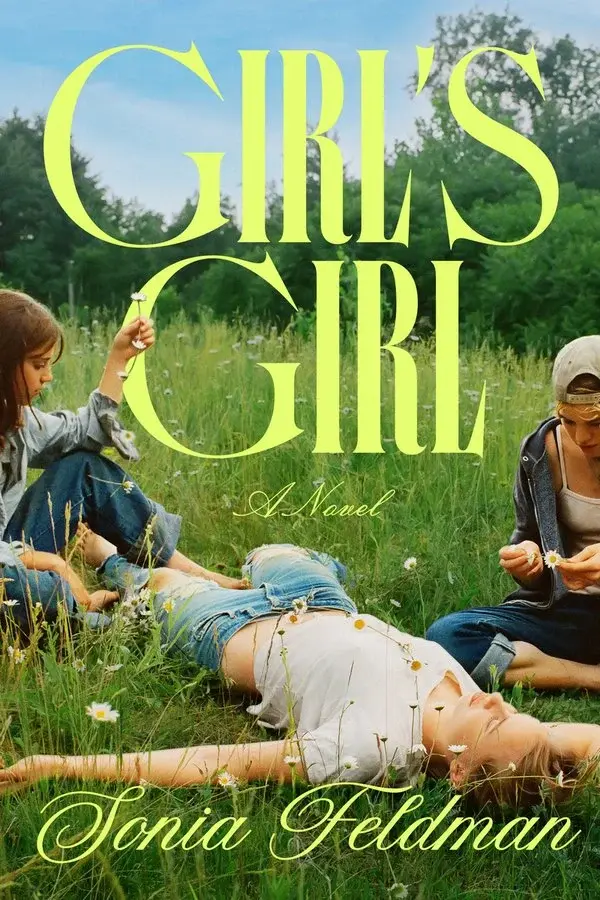
This analytical report offers an in-depth examination of the craft, methodology, and narrative structures behind Brahme’s Good News, Feldman’s Girl’s Girl, and Yu’s Seek Immediate Shelter. By dissecting their choices regarding point of view (POV), atmospheric world-building, research protocols, and structural revision, this study provides actionable insights for emerging writers and industry analysts alike.
Read Also
Detailed Chronology & Comparative Narrative Breakdown
+---------------------------------------------------------------------------------------------------+
|                                 DEBUT NOVEL ARCHITECTURE COMPARISON                               |
+----------------------+-----------------------------+-------------------------------+--------------+
| Novel & Author       | Narrative Setting           | Central Inciting "What If"    | Core POV     |
+----------------------+-----------------------------+-------------------------------+--------------+
| Good News            | Contemporary New York City  | What if one artistic choice   | Third-person |
| by Alexa Y. Brahme   | Art Scene (MFA Program)     | redefines an entire life?     | Limited      |
+----------------------+-----------------------------+-------------------------------+--------------+
| Girl’s Girl          | Suburban Northeastern Ohio  | What if unrequited desire     | First-person |
| by Sonia Feldman     | High School Summer          | rewires teenage friendship?   | Retrospective|
+----------------------+-----------------------------+-------------------------------+--------------+
| Seek Immediate       | Beckitt, Massachusetts      | What if a false missile alert | Multi-POV    |
| Shelter by Vincent Yu| (Pioneer Valley)            | exposes every secret choice?  | Ensemble     |
+----------------------+-----------------------------+-------------------------------+--------------+
1. Good News by Alexa Yasemin Brahme: The Art Scene as a Canvas of Choices
Alexa Yasemin Brahme’s Good News follows Maggie, a Turkish-American MFA student putting the finishing touches on her evocative thesis painting centered around "feminine suffering." Set within the competitive crucible of the contemporary New York art world, Maggie finds herself locked in implicit competition with her brother’s girlfriend—a creator who self-consciously claims the grand moniker of "the Artist."
Brahme constructs a narrative where art-making serves as an explicit metaphor for life choices. As Maggie navigates gallery openings, social-climbing parties, romantic uncertainties, and the unexpected re-emergence of an enigmatic ex-partner, the novel demonstrates how a single metaphorical stroke on a canvas—or a single phone call—can alter an entire life path.
- Key Theme: The terrifying agency of youth and the weight of artistic and romantic ambition.
- Catalyst Question: How does an artist orient herself when surrounded by competing visions of success, love, and identity?
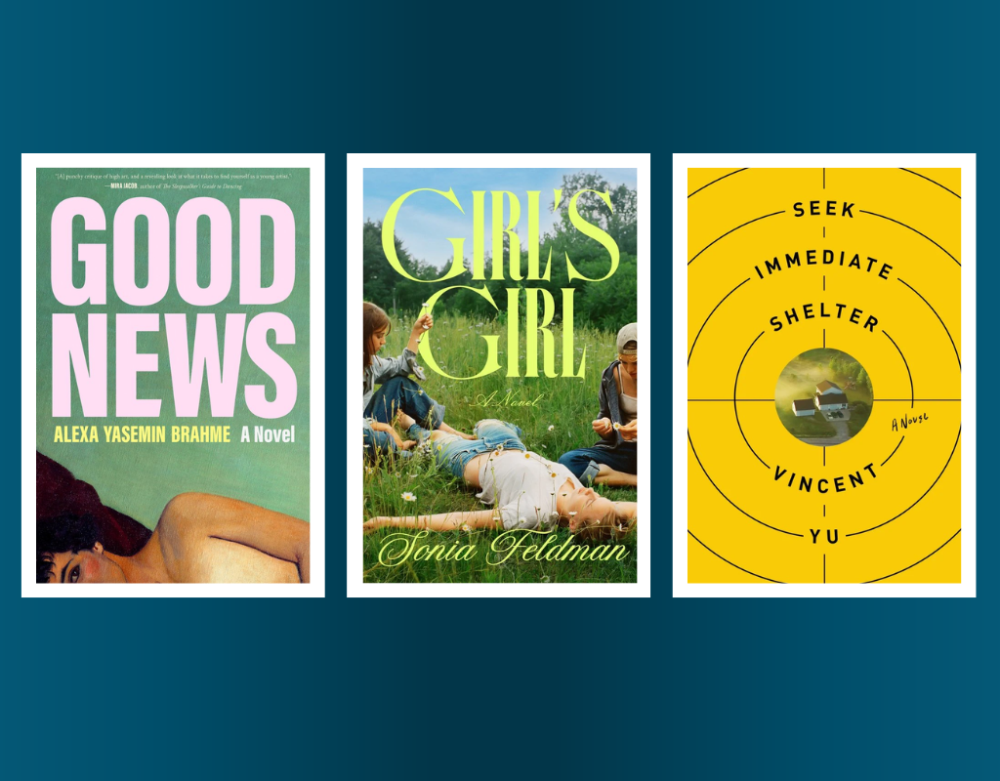
2. Girl’s Girl by Sonia Feldman: Atmospheric Nostalgia and Queer Desire
Sonia Feldman’s debut, Girl’s Girl, plunges readers into the liminal space between freshman and sophomore year of high school in suburban Ohio. The protagonist, Mina, is suspended in a delicate web of adolescent longing, caught between her lifelong best friend, Margaret, and Eleanor, the girl she secretly loves.
Feldman focuses heavily on atmospheric density—the smell of chlorinated pools, the sheen of bug spray sweating off skin, and the chaotic intensity of Midwestern summer nights. Through Mina’s lens, the novel captures the intense, often painful transition where platonic devotion and romantic desire bleed into one another.
- Key Theme: The agonizing opacity of teenage emotion and the construction of self through unrequited love.
- Catalyst Question: What happens when the boundary between intense friendship and romantic passion remains unspoken during a transformative summer?
3. Seek Immediate Shelter by Vincent Yu: The Existential Panic of the False Alarm
Vincent Yu’s Seek Immediate Shelter takes inspiration from a real-world technological error: the 2018 false missile alert in Hawaii. Yu transplants this premise to the fictional small town of Beckitt, Massachusetts, nestled in the Pioneer Valley.
On a serene spring morning, an emergency broadcast instructs residents to seek immediate shelter from an incoming ballistic missile. For several agonizing minutes, the population faces the ultimate existential fight-or-flight prompt. When a second alert arrives declaring the warning a false alarm, the true story begins. The novel examines the aftermath: how do individuals navigate their lives after revealing their darkest priorities, cowardice, or hidden desires during what they believed were their final moments?
- Key Theme: Existential reckoning, small-town interconnectedness, and moral vulnerability under crisis.
- Catalyst Question: Who do you become, and what do you choose to save, when you believe the world is ending in minutes?
Supporting Context & Literary Metrics
An examination of the mechanics utilized by Brahme, Feldman, and Yu reveals how distinct technical decisions dictate narrative pacing, psychological depth, and thematic resonance.
                    +------------------------------------------+
                    |    CRAFT STRATEGY DRIVERS IN DEBUTS      |
                    +------------------------------------------+
                                         |
         +-------------------------------+-------------------------------+
         |                               |                               |
         v                               v                               v
+------------------+           +------------------+           +------------------+
| Point of View    |           | Research Depth   |           | Structural Flow  |
| Strategy         |           | & World-Building |           | & Revision       |
+------------------+           +------------------+           +------------------+
| - Third-person   |           | - Artistic theory|           | - Multi-drafting |
|   distance       |           | - Sensory memory |           |   POV experiments|
| - First-person   |           |   & girlhood lit |           | - Pruning redundant|
|   subjectivity   |           | - Technical EMA  |           |   narrative paths|
| - Multi-POV      |           |   bureaucracy    |           | - Editorial      |
|   ensemble       |           |   & medical facts|           |   structuring    |
+------------------+           +------------------+           +------------------+
Point of View Mechanics: Distance vs. Intimacy
The choice of point of view was a central point of negotiation for all three novelists during their drafting processes:
-
Third-Person Limited as an Unmasking Tool (Brahme):
Brahme deliberately avoided first-person narration for Good News. She noted that first-person carries an inherent "sure-footedness" and authority that would allow an unreliable protagonist like Maggie to manipulate the reader. By adopting a close third-person perspective, Brahme created enough distance for the reader to observe Maggie’s self-deceptions without completely detaching from her emotional journey. -
First-Person Retrospective as Realism (Feldman):
Feldman initially spent years attempting to write Girl’s Girl in an omniscient third-person voice inspired by 18th-century British literature and Jane Austen. However, the narrative remained stagnant because an omniscient narrator required objective truths about the characters that felt dishonest to the subjective experience of youth. Shifting to Mina’s first-person voice allowed the novel to thrive on subjective opinion, raw emotion, and personal bias. -
Multi-POV Ensemble as a Thought Experiment (Yu):
Yu expanded Seek Immediate Shelter from a single-character short story into a five-perspective ensemble novel. To test how different personality types react to an existential crisis, Yu required a broad spectrum of subjects—ranging from public relations executives and classical musicians to emergency management officials.
Official Statements & Direct Insights from the Authors
In their conversation with Kyla D. Walker, the authors detailed the personal breakthroughs, craft hurdles, and philosophical insights that governed their writing processes.
On Point of View and Drafting Exercises
Alexa Yasemin Brahme:
"First person is an intimidating point of view—’I’ can be very powerful. First person felt immediate, intimate, and had a sure-footedness that wasn’t quite right for Maggie. First person feels to me like certainty… What’s presented as fact is actually distorted. I wanted there to be a little distance between the reader and Maggie so she couldn’t hide from their gaze."
Brahme revealed a unique drafting technique for scenes where she felt disconnected from her protagonist:
"When I was drafting and editing the book, if I got stuck in certain scenes wondering what Maggie would say or do, I would write them in first person to see if there was anything Maggie could reveal to me about herself. If it proved to be useful, I’d take what I’d written and massage it into a third-person version for the final draft."
   [Drafting Problem: Character Stagnation in 3rd Person]
                            │
                            ▼
     [Temporary Shift to 1st Person Exploratory Draft]
                            │
                            ▼
     [Uncover Raw Psychological / Unfiltered Truths]
                            │
                            ▼
  [Translate Discoveries Back to Final 3rd Person Limited]
On Overcoming Perfectionism and the "Bad Book" Paradox
Sonia Feldman offered a candid look at the creative paralysis that often stalls debut writers, describing her transition from poetry to fiction as a struggle against idealization.
Sonia Feldman:
"I spent several years trying to write ‘Girl’s Girl’ in the third person and basically banging my head against the wall… I had no story, no causality, just a bunch of information about people. I had a pile of pages that weren’t in any way a book."
Feldman addressed the crucial mental pivot that allowed her to complete the manuscript:

"I felt like if I wrote the book in the first person—I might be able to actually write it, but—the book would be bad. And so I had to ask myself: Would you prefer to write a bad book or to write no book? Because those were my two options. I had to truly in my heart accept that I’d rather write a bad book that embarrassed me than to write no book at all."
                 +-----------------------------------+
                 |      THE AUTHOR'S DILEMMA         |
                 +-----------------------------------+
                                   |
                  +----------------+----------------+
                  |                                 |
                  v                                 v
        [ Option A: No Book ]             [ Option B: Imperfect Book ]
        - Infinite perfection             - High vulnerability
        - Zero progress                   - Complete manuscript
        - Total safety                    - Material to edit & refine
                  |                                 |
                  x                                 │ (Chosen Path)
                                                    v
                                          [ Realized Publication ]
On Research, Realism, and Systems Failure
Vincent Yu discussed how drawing from his background as a former competitive musician and public relations practitioner grounded his speculative premise, while specialized research exposed systemic vulnerabilities.
Vincent Yu:
"The most research-heavy chapter was the sixth, in which I follow the character who worked at the Emergency Management Agency and actually sent out the false alert. This required investigation into the bureaucratic processes that are actually involved in sending out such notifications. It also gave me tremendous, terrifying insight into how fallible these kinds of systems are, and how quickly a single offhand decision can yield a runaway reaction."
Yu also reflected on his discovery process while mapping out the narrative:
"The whole process was a bit like mapping out a completely dark room. I started in the middle, without knowing the shape of the space I was in or its contours or objects. I had no choice, really, but to move and feel my way around. I bumped into many things, but I think every form of discovery begins as a kind of disturbance."
Future Outlook & Strategic Takeaways for Emerging Writers
The insights shared by Brahme, Feldman, and Yu offer a valuable playbook for writers working on debut manuscripts. As contemporary publishing increasingly values high-concept premises grounded in deep psychological realism, these three authors highlight essential strategies for sustaining long-form creative projects.
Core Strategic Takeaways
-
Protect Early Work from External Critique (The Isolation Principle):
Brahme emphasizes keeping early drafts private until the manuscript develops enough weight to withstand critique. Sharing premature work can introduce conflicting opinions that derail the author’s original vision before it fully takes shape.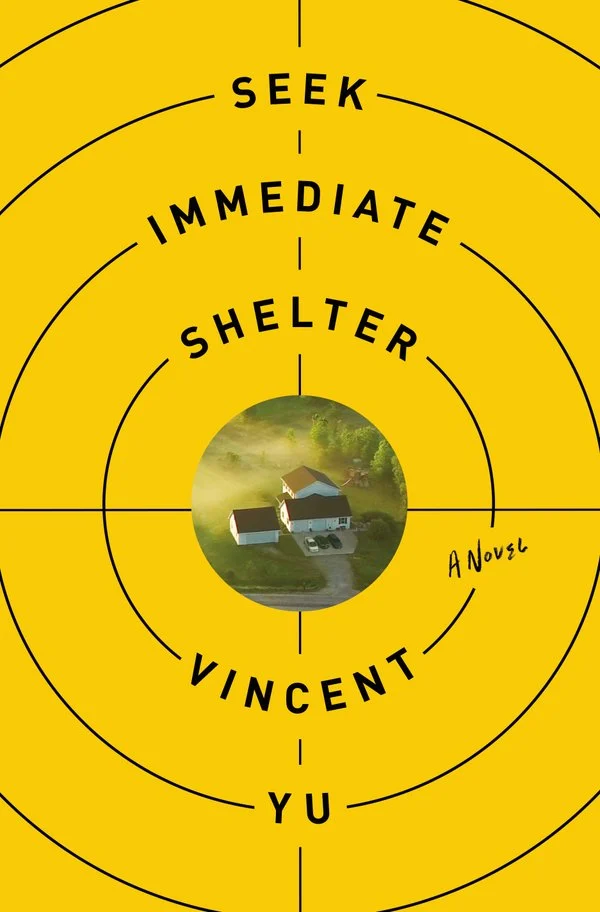
-
Prioritize Execution Over Idealization (The Completion Principle):
Feldman’s breakthrough underscores that finishing a flawed draft is a necessary prerequisite for revision. Holding onto an idealized, unwritten vision often leads to creative paralysis. Accepting imperfection allows the actual work of writing to begin. -
Treat Narrative as a Controlled Experiment (The Discovery Principle):
Yu’s multi-POV framework demonstrates the utility of treating an inciting incident as a thesis statement. Allowing characters genuine autonomy within a controlled setting yields unpredictable, authentic plot developments that outshine rigid, pre-planned outlines. -
Iterate Across Genres and Influences (The Cross-Pollination Principle):
From Feldman drawing structural inspiration from Kazuo Ishiguro’s Never Let Me Go and Fleur Jaeggy’s Sweet Days of Discipline, to Yu pulling from personal experiences in music and corporate public relations, cross-disciplinary research enriches narrative texture.
As Good News, Girl’s Girl, and Seek Immediate Shelter make their mark on the literary landscape, they stand as compelling examples of how theoretical "what ifs" can be transformed into resonant, enduring fiction.



Comments
Facebook App ID not configured. Please add it in the Customizer.