For centuries, the global cultural consciousness has viewed the destruction of Pompeii and Herculaneum in 79 C.E. through a singular, tragic lens: sudden, catastrophic death. The iconic plaster casts of Mount Vesuvius’ victims—frozen in agonizing, final contortions—have long defined our understanding of the disaster. However, a groundbreaking semi-fictionalized documentary series from National Geographic, Pompeii: Out of Time With Tom Hiddleston, challenges this fatalistic monopoly on history. Hosted by British actor Tom Hiddleston—whose childhood fascination with the ancient ruins inspired him to study classics at the University of Cambridge—the series shifts the paradigm from mass mortality to survival, resilience, and reconstruction.
Developed alongside executive producer Kevin Wright (with whom Hiddleston collaborated on Marvel’s Loki), the three-part docuseries pairs high-end visual effects and cinematic storytelling with rigorous archaeological research. Rather than focusing exclusively on those who perished, Hiddleston and a team of leading classicists, archaeologists, and disaster psychologists track historical figures who navigated the eruption’s unfolding hours and successfully escaped. By examining ancient inscriptions, artifact trails, and behavioral patterns in high-stress emergencies, the project bridges the gap between cold historical data and the human pulse of antiquity, offering a richer, more complex narrative of one of history’s most famous natural disasters.
Detailed Chronology: A Day That Unfolded in Stages
Popular culture often depicts the eruption of Mount Vesuvius as an instantaneous apocalypse that wiped out the region in a blinding flash. As Hiddleston emphasizes in the series, this is a dangerous misconception. The catastrophe was not a singular moment of destruction, but a prolonged, escalating geological process that unfolded over the course of a harrowing day. This temporal window provided a critical, albeit narrow, opportunity for evacuation—a chance that some residents seized with life-saving results.
Long before the ash and pyroclastic surges filled the streets, the region experienced significant seismic activity. Days and weeks prior, severe earthquakes rocked the Campanian plain. In the documentary, Hiddleston consults Sarita Robinson, a disaster psychologist specializing in human behavior during life-or-death scenarios. Robinson notes a striking parallel to modern psychology: just as contemporary populations routinely ignore fire alarms out of habit or complacency, the inhabitants of Pompeii and Herculaneum were conditioned to dismiss seismic tremors. Earthquakes were commonplace in Italy; consequently, residents learned to shrug them off, severely underestimating the escalating peril until it was almost too late.
Phase Two: The Eruption and the Scramble for Loved Ones
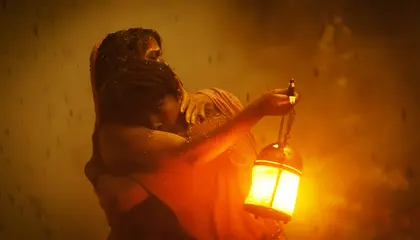
When Vesuvius finally breached its caldera, it did not immediately unleash a wall of lethal gas and debris. The initial phases allowed for a frantic, chaotic scramble for survival. Through dramatic reenactments, the series follows Avianius Felicio, an adolescent apprentice working for a local bronzesmith family, the Masuri. As the skies darken and ash begins to rain down, Felicio’s immediate instinct—verified by psychological models of disaster behavior—is not to flee blindly, but to plunge deeper into the danger zone to locate and secure his mother.
Concurrently, in the neighboring coastal town of Herculaneum, situated even closer to the volcano’s base, a cynical Roman soldier—identified through artifact analysis as a member of the elite Praetorian Guard—finds a sudden sense of purpose. Utilizing his military discipline and tactical training, he attempts to organize an evacuation by boat, embodying the split-second decisions that separated the victims from the survivors.
Phase Three: The Pivot to Reconstruction
For those who successfully slipped through the shrinking window of escape, the aftermath of 79 C.E. marked the beginning of a grueling diaspora. Classicist Steven L. Tuck, whose exhaustive research forms the backbone of the documentary’s premise, has spent years tracking pre-eruption names across regional inscriptions. By matching names recorded in Pompeii and Herculaneum before the disaster with post-eruption municipal records in neighboring towns like Nuceria, researchers have been able to definitively chart the trajectories of survivors as they pieced their lives back together in new communities.
Supporting Context & Metrics: The Archaeological Evidence
Reconstructing the lives of people who made it out requires an innovative approach to the archaeological record, which is inherently biased toward preservation through destruction. The methodology utilized by Tuck, Hiddleston, and their expert panel relies on epigraphy—the study of ancient inscriptions—combined with spatial and sociological analysis.
Tracking the Invisible: The Epigraphic Method
The fundamental breakthrough behind the docuseries rests on a deceptively simple question: Do pre-eruption names reappear in post-eruption contexts elsewhere?
Avianius Felicio: Before the disaster, Felicio’s family, the Avianii, had experienced a precipitous socioeconomic decline. Loan tablets recovered from Pompeii reveal a family member signing as a witness to a debt just above the signatures of the enslaved—an indicator of diminished social standing. Following the eruption, Felicio’s name vanishes from Pompeii, only to emerge years later in an ancient gravestone in Nuceria. The inscription reads: "To the Spirits of the Dead. The Masuri made [this] for Avianius Felicio, dearest foster son." This epigraphic evidence suggests that after Felicio’s biological family likely perished in the cataclysm, his former employers, the Masuri bronzesmiths, took him in, providing a rare window into the fate of orphaned minors in the post-eruption Mediterranean.
Julia Felix: As one of the wealthiest property owners in Pompeii, Felix represents a fascinating case study in elite resilience and enterprise. Excavated in 1755, her sprawling estate featured luxury amenities, including a dedicated bathhouse and rental shops—a business model stimulated, in part, by the severe public infrastructural damage caused by an earlier earthquake in 62 or 63 C.E. While a body adorned with expensive jewelry was eventually recovered from her estate near a shrine to the goddess Isis, archaeologists remain divided. Did Felix perish in her own home while seeking divine intervention, or did she evacuate earlier, leaving behind a trusted servant or family member? Scholars like Caitie Barrett concede the fundamental limitation of archaeology: it can recover material culture, but it cannot pierce the inner thoughts of historical actors.
Official Statements and Expert Perspectives
The intersection of rigorous academic scholarship and high-end entertainment production has generated substantial discourse among historians and scientists alike.
"We all know the story of Pompeii, right? The story of Pompeii is a story of death—but that isn’t exactly true."
— Tom Hiddleston, Host and Co-creator
Hiddleston’s academic background in classics at Cambridge heavily informed the conceptual framework of the series. Drawing on the dual definition of the Latin word historia—which translates to both "history" and "story"—Hiddleston argues that historical inquiry requires an active partnership between hard empirical evidence and imaginative reconstruction.
"That means evidence and imagination intermingled. They’re the same thing. You review the evidence and then you provide a fuller truth, presenting fictional scenarios that could have plausibly happened on that fateful day."
— Tom Hiddleston
From a production standpoint, executive producer Kevin Wright noted that translating this academic premise into a compelling television format required leveraging blockbuster cinematic techniques.
"Sometimes you need that big VFX shot, you need the big drone to sell the story, because that’s the only way you can do it justice. That was where the worlds really merged."
— Kevin Wright, Executive Producer (speaking to Ars Technica)
Archaeological and psychological experts interviewed in the series emphasize that shifting the narrative toward survivors fundamentally humanizes the ancient world. Disaster psychologist Sarita Robinson pointed out that understanding how ancient populations reacted to environmental stressors mirrors modern sociological responses to climate disasters and sudden emergencies, proving that human behavioral psychology has remained remarkably consistent across two millennia.
Future Outlook: Reimagining Classical Studies and Public Archaeology
Pompeii: Out of Time With Tom Hiddleston signals a broader, much-needed evolution in how cultural institutions and documentary filmmakers communicate historical research to the public. For generations, public interest in Pompeii has been overwhelmingly morbid, fixated on the final moments of thermal shock, asphyxiation, and entombment. By spotlighting the grueling, courageous realities of survival, displacement, and community rebuilding, the series opens up new avenues for archaeological inquiry.
Moving forward, researchers anticipate that digital epigraphy databases and advanced spatial mapping will allow classicists to trace even more diaspora networks stemming from Campanian towns. As scholars continue to cross-reference pre- and post-eruption municipal records across the Roman Empire, the silent majority of survivors—those who walked away from Vesuvius with nothing but their lives—will step out of the shadows of antiquity.
Ultimately, the project proves that history is not merely a static record of what was destroyed, but a dynamic, ongoing story of how human beings endure, adapt, and rebuild in the wake of unimaginable loss.

/https://tf-cmsv2-smithsonianmag-media.s3.amazonaws.com/filer_public/18/2a/182ab01e-864b-429e-a53a-0a1b41ecc75d/pompeii.png)
/https://tf-cmsv2-smithsonianmag-media.s3.amazonaws.com/accounts/headshot/Ellen_Wexler.png)
:focal(750x500:751x501)/https://tf-cmsv2-smithsonianmag-media.s3.amazonaws.com/filer_public/18/2a/182ab01e-864b-429e-a53a-0a1b41ecc75d/pompeii.png)
/https://tf-cmsv2-smithsonianmag-media.s3.amazonaws.com/filer_public/ee/53/ee536521-6613-4f49-acae-284942a3540d/101_tremors_pompeiioutoftimewithtomhiddleston_uhd_065.jpg)

/https://tf-cmsv2-smithsonianmag-media.s3.amazonaws.com/filer_public/f7/66/f7661576-1bd8-4601-9542-5e5d9c1121f9/102_eruption_pompeiioutoftimewithtomhiddleston_032.jpg)

Comments
Facebook App ID not configured. Please add it in the Customizer.