In the grand pantheon of World War II intelligence operations, few figures navigated the clandestine corridors of high-risk espionage with the sheer audacity of Francis Lowell Coolidge. A direct descendant of Founding Father Thomas Jefferson, Coolidge was an elite American commando who achieved a vanishingly rare distinction: he parachuted behind enemy lines in both the European and Pacific theaters of the global conflict.
As a captain in the United States Army Air Forces and a veteran of the legendary French Foreign Legion, Coolidge volunteered for the Office of Strategic Services (OSS)—the pioneering precursor to the Central Intelligence Agency (CIA). From the high-altitude drops over Nazi-occupied mountain passes to clandestine missions in Japanese-controlled China, his career defined the nascent era of modern American special operations.
For decades, the specifics of Coolidge’s wartime heroics remained largely obscured, locked behind a wall of classified files and the quiet discretion demanded of America’s early spies. However, the publication of a deeply moving, five-page farewell letter written to his wife, Helen Curtis Coolidge, before his perilous 1944 jump into France offers an unprecedented window into the psychological weight carried by the men and women of the OSS. This comprehensive retrospective explores Coolidge’s extraordinary trajectory through European resistance networks, his post-war tenure as a high-ranking CIA officer, and his enduring legacy as an architect of America’s intelligence apparatus.
Detailed Chronology: From the French Foreign Legion to the OSS
The Road to the Secret War
Long before the United States entered World War II, Francis Lowell Coolidge’s adventurous spirit drew him away from conventional paths. A native of Massachusetts, Coolidge had previously served in the French Foreign Legion, hardening his resolve in the crucible of North African military discipline. When the United States was drawn into the conflict following the attack on Pearl Harbor, Coolidge recognized the critical convergence of his linguistic abilities, combat experience, and deep affinity for France.
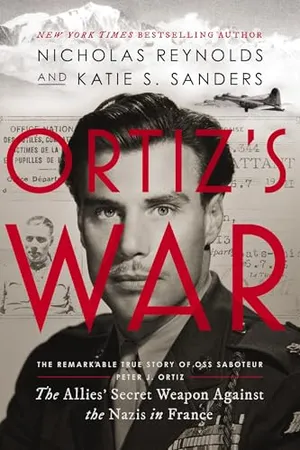
Seeking a more direct role in liberating Western Europe, Coolidge requested a transfer to the OSS in 1943. By the summer of 1944, he found himself stationed in England as a member of the OSS Special Operations branch. There, he reunited with a kindred spirit: Marine Corps Major Peter J. Ortiz, a fellow veteran of their French Foreign Legion days. Ortiz had recently returned from a deep-penetration mission into occupied France known as "Union I" and was already planning its high-stakes sequel, "Operation Union II." Coolidge eagerly accepted an invitation to join the team.
Operation Union II: The Perilous Descent into France
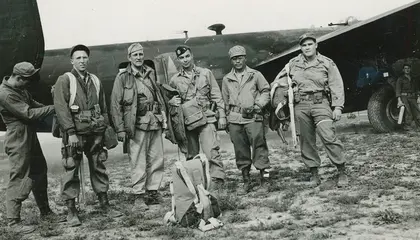
On August 1, 1944, Coolidge, Ortiz, and five other OSS operatives boarded a B-17 heavy bomber bound for the Col des Saisies mountain pass in occupied France. The tactical parameters were terrifyingly narrow: the aircraft was forced to fly at an altitude of less than 500 feet to drop the commandos safely onto their target drop zone. They were accompanied by an armada of 78 B-17s transporting 864 containers of munitions and supplies designated for the Bulle Battalion, a prominent Free French resistance unit led by Captain Jean Bulle.
The jump was fraught with immediate tragedy. Sergeant Charles Perry was killed instantly when his parachute failed to deploy. Another operative, Marine Robert LaSalle, lost consciousness and suffered severe spinal and ankle injuries upon impact. Despite these losses, the surviving members of Union II pressed forward. The morning after the drop, the commandos and the Bulle Battalion held a solemn funeral for Sergeant Perry before immediately pivoting to their primary objective: arming and training the French Resistance ahead of Operation Dragoon, the imminent Allied invasion of southern France.
The Farewell Letter
Before boarding the B-17 for the Col des Saisies jump, Coolidge penned a poignant, five-page handwritten letter to his wife, Helen, instructing that it be delivered only if he failed to return. The couple had married in Concord, Massachusetts, four years prior, and Helen was left behind to care for their young daughters, Georgina ("Nina") and Mary ("Cuppy").
Confined by the strict security protocols of the OSS, Coolidge could not disclose the specifics of his mission. Instead, the missive served as an emotional anchor, articulating the moral imperative driving his service:
"You will only get this letter in case something has happened to me," Coolidge wrote. "You have made my life. You gave me so much, and I gave so little in return. You gave me a purpose and a meaning that I never had before. Thank you, darling, for all that you have done… This job for which I gave my life was a worthy one. It was mixed up with the liberation of France and the defeat of the [Germans]. I felt so strongly that Cuppy and Nina had the right to grow up and live in freedom and in the way they may choose that I was willing to pay any price to help in the defeat of the [Germans]."
Ambush and Command in the French Alps
On August 15, 1944, Allied forces landed on the French Riviera during Operation Dragoon. While the invasion successfully established a new southern front, it triggered fierce retaliatory sweeps by retreating German forces.
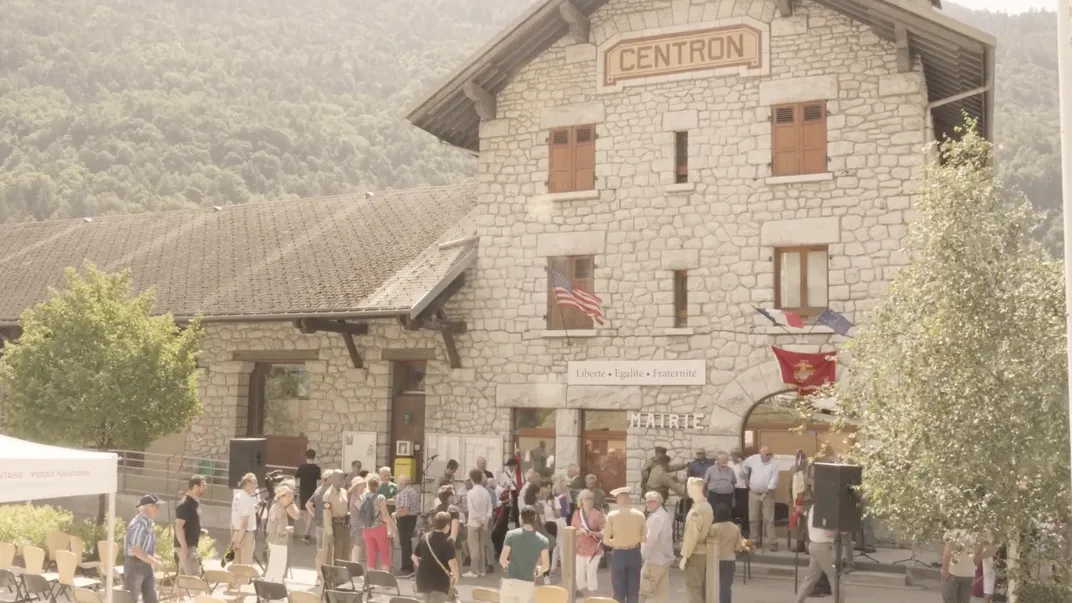
On August 16, as the Union II team navigated toward the village of Centron, they were spotted by a German convoy of more than 100 heavily armed troops. "Pete, we have been seen," Coolidge shouted to Ortiz.
Under intense machine-gun fire, the Allied patrol split. Coolidge sustained a bullet wound to his right thigh but managed to evade capture alongside OSS Marine Frederick Brunner. Ortiz and three of his men, completely surrounded in Centron, chose to surrender under the condition that the German forces spare the local civilian population from brutal reprisals.
Following Ortiz’s capture, Coolidge assumed command of the remaining Union II operatives. He spent the subsequent weeks coordinating with the Bulle Battalion to harass German communications and supply lines. The liberation, however, demanded a heavy toll: on August 21, German forces in Albertville executed Captain Jean Bulle under a flag of truce as he attempted to negotiate a local surrender. By late September, Coolidge had successfully maneuvered back to Allied lines and returned to the OSS London office, earning a Purple Heart and a Silver Star for leading the operation "with great coolness and ability."
Into the Pacific: Operation Spaniel
Rather than seeking a peaceful discharge following the war in Europe, Coolidge volunteered for a second perilous assignment in the Pacific theater. Newly promoted to major, he deployed to Japanese-held China in May 1945 to lead "Operation Spaniel."
Tasked with establishing contact with collaborationist Chinese generals to disrupt Japanese supply lines, Coolidge and his four-man team parachuted into the Communist-controlled Fuping region on May 28, 1945. Complicating matters, local Chinese Communist guerrilla forces under Mao Zedong’s sphere of influence apprehended and disarmed the American commandos, detaining them in caves. While officially claiming they were protecting the Americans from Japanese patrols, the Chinese forces essentially held the team under house arrest.
While imprisoned, Coolidge contracted a severe malarial fever. Simultaneously, back in Massachusetts on August 4, 1945, his wife Helen gave birth to twins, a daughter (Ellen) and a son (Francis Jr., the father of modern family descendants). American diplomatic pressure eventually secured the release of the Spaniel team later that summer, trading a single truck for their freedom. Coolidge returned to the United States in September 1945, just as World War II came to a definitive close.
Supporting Context & Metrics
The scope of Coolidge’s service places him within an exceptionally small cohort of Allied personnel who operated via parachute behind enemy lines across multiple global theaters.
Metric / Operational Detail
European Theater (Union II)
Pacific Theater (Operation Spaniel)
Year of Operation
August 1944
May – August 1945
Location
Col des Saisies, France
Fuping Region, China
Primary Adversary
Nazi Germany (Wehrmacht / SS)
Imperial Japanese Army / Regional Forces
Primary Allied Asset
Bulle Battalion (French Resistance)
Local Chinese Communist Factions
Tactical Objective
Sabotage, Reconnaissance, Arming Resistance
Guerrilla Intelligence, POW Support, General Liaison
Personal Outcome
Thigh wound, Awarded Silver Star & Purple Heart
Detained in caves, Contracted Malaria
Official Statements and Archival Revelations
With the post-war dissolution of the OSS by President Harry S. Truman in October 1945, many operatives transitioned into civilian life. However, the brewing Cold War prompted the establishment of the Central Intelligence Agency in 1947, drawing heavily upon veteran OSS talent.
According to research shared by former CIA operations officer and agency historian Randy Burkett, Coolidge officially transitioned into the post-war intelligence structure by the early 1950s. While obituary records suggest a move to Washington, D.C., in 1950, formal agency employment records trace his continuous tenure starting in 1954. Coolidge’s career within the CIA saw him rise through operational management ranks:
North Africa Station Chief: Served as the CIA’s chief of station for North Africa between January 1958 and November 1959.
Headquarters Division Chief: Reassigned to Washington in 1960 to direct a major division, though records indicate his heart remained tied to field operations rather than bureaucratic management.
Post-Agency Transition: Retired from the CIA in 1963 before accepting a position as deputy director of the United States Post Office’s international postal service, a cover-adjacent administrative role that often befitted retired intelligence officers of his era. He retired fully in 1967 and passed away in 1972 at the age of 65.
Reflecting on his grandfather’s legacy, grandson Curtis Lowell Bogetto noted the profound dedication embedded in Coolidge’s private writings: "Someday tell the girls about me and how sorry I was not to have known them better. Tell them also that in them I live. That has always been my creed."
Future Outlook & Commemorative Legacy
For decades, the exploits of Francis Lowell Coolidge remained buried beneath classification stamps and the quiet humility of a career intelligence officer. Today, however, a renewed wave of historical scholarship and international commemoration is bringing his contributions to light.
In August 2024, exactly 82 years after the historic drop into the Col des Saisies, descendants of the Union II commandos—including U.S. Navy veteran Curtis Lowell Bogetto—gathered alongside American, French, and British military officials in the French Alps. The multi-day ceremonies honored not only Coolidge and his fellow OSS operatives, but also the French Resistance fighters like Jean Bulle who gave their lives to liberate Europe.
As newly declassified files, personal letters, and academic histories illuminate the shadows of World War II’s secret wars, figures like Francis Lowell Coolidge stand as enduring symbols of the personal cost of freedom. His journey—from the snowy ridges of the French Alps to the caves of China, and finally into the foundation of America’s modern intelligence network—ensures that his legacy will continue to resonate for generations to come.

/https://tf-cmsv2-smithsonianmag-media.s3.amazonaws.com/filer_public/f8/c6/f8c6c426-628a-4133-beac-bc8e5dce1071/coolidge2.png)
/https://tf-cmsv2-smithsonianmag-media.s3.amazonaws.com/accounts/headshot/katie.png)
:focal(750x500:751x501)/https://tf-cmsv2-smithsonianmag-media.s3.amazonaws.com/filer_public/f8/c6/f8c6c426-628a-4133-beac-bc8e5dce1071/coolidge2.png)
/https://tf-cmsv2-smithsonianmag-media.s3.amazonaws.com/filer_public/3f/d7/3fd7330f-8a31-47bd-8d01-21450770823f/e92-f16908-coolidge_francis-photo-1943-caption.jpg)
/https://tf-cmsv2-smithsonianmag-media.s3.amazonaws.com/filer_public/ad/96/ad96a659-1293-48f4-a9e9-a2da4b1dc79c/coolidge-letter.png)
/https://tf-cmsv2-smithsonianmag-media.s3.amazonaws.com/filer_public/a8/b9/a8b90d64-5b11-430b-af30-5e7da4ff2961/1_funeral1944_aug_union_2_members_at_perrys_gravesite.jpg)
/https://tf-cmsv2-smithsonianmag-media.s3.amazonaws.com/filer_public/f6/86/f6860392-f969-4d7c-ba14-240a41412b2c/capitaine_jean_bulle_1913-1944.jpg)
/https://tf-cmsv2-smithsonianmag-media.s3.amazonaws.com/filer_public/7c/89/7c895b5c-3521-4be9-8ebd-34eca2d82560/unioniiteam.jpeg)
/https://tf-cmsv2-smithsonianmag-media.s3.amazonaws.com/filer_public/76/4b/764bd39d-8fe7-4246-b9aa-40f524ebe0a5/coolidgefamily.jpg)

Comments
Facebook App ID not configured. Please add it in the Customizer.