
Executive Overview
Few franchises hold the sacred, blood-soaked cultural footprint of Friday the 13th. For over four decades, the hockey-masked slasher Jason Voorhees has remained an undisputed icon of modern horror. Yet, despite his ubiquitous presence in popular culture—gracing everything from arcade cabinets to cinematic crossovers—the foundational mechanics of his supernatural durability have largely been left to viewer interpretation. Is he an unholy revenant cursed by an ancient rite, a mutated survivalist born of isolation, or simply a manifestation of pure, unadulterated vengeance?
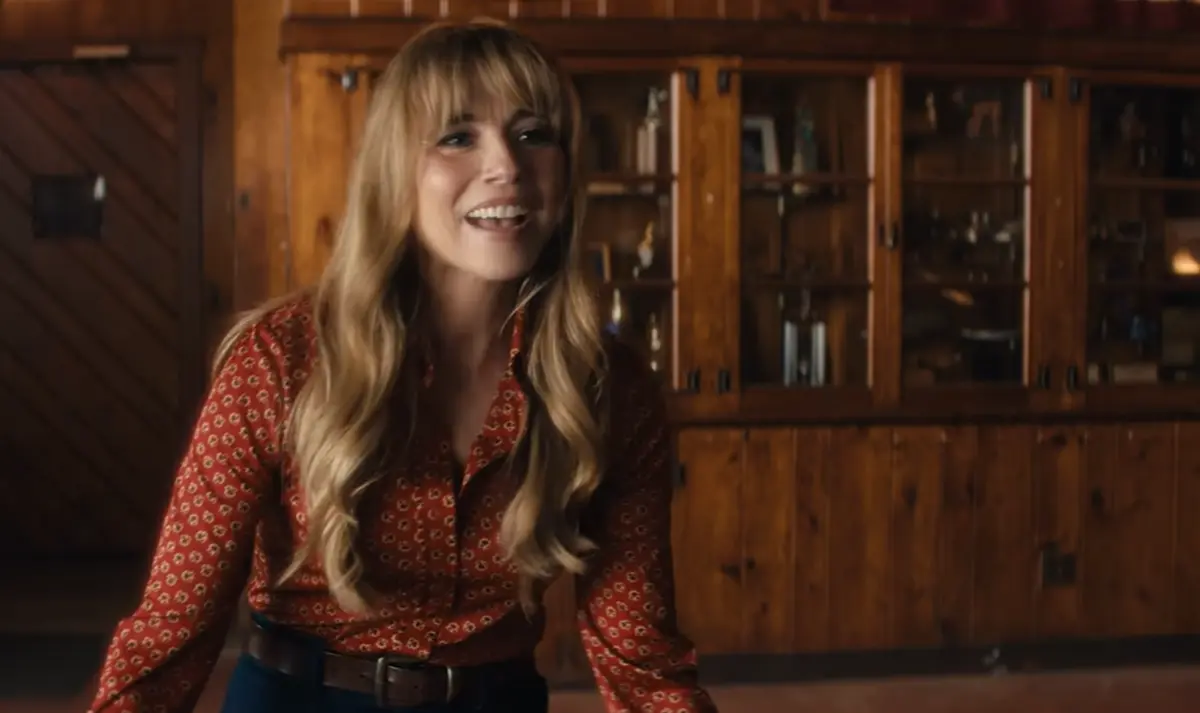
When Peacock released the official trailer for its upcoming prequel (or potential series reboot) titled Crystal Lake, the fandom went into an immediate frenzy. At the center of the controversy was a fleeting, enigmatic sequence near the 1:53 mark, wherein a character confronts Pamela Voorhees with a chilling inquiry regarding the true nature of what she and her son "really are." The subsequent reveal of a mysterious, symbol-etched yellow door at the end of a sterile hallway sent internet sleuths down a deep rabbit hole of speculation.
Before long, a runaway fan theory dominated horror discourse: Crystal Lake was preparing to strip away the supernatural mystique of the franchise, recasting Jason Voorhees as the unwitting subject of a clandestine government experiment akin to the CIA’s MK-Ultra program—essentially turning Camp Crystal Lake into a Stranger Things pastiche.
Read Also
The speculation grew so deafening that Crystal Lake showrunner Brad Caleb Kane felt compelled to intervene, taking to social media to firmly shut down the government-conspiracy narrative. This article provides a comprehensive investigative overview of the trailer controversy, evaluates the broader implications of prequels in legacy horror franchises, analyzes the delicate balance between expanding lore and preserving mystique, and outlines what audiences can genuinely expect when the series premieres this October.
Detailed Chronology: From Trailer Tease to Social Media Shutdown
The trajectory from promotional asset rollout to full-scale narrative panic unfolded with surprising velocity across digital fandom spaces.
The Trailer Drop and the Catalyst Frame
On the surface, the Crystal Lake teaser was designed to establish mood, atmosphere, and period-specific dread, leaning heavily into the rustic isolation that defined the 1980 slasher boom. However, meticulous frame-by-frame analysis by the online horror community quickly zeroed in on a pivotal dialogue exchange.
As the camera tracks a tense confrontation involving Jason’s matriarch, Pamela Voorhees, a voice off-camera delivers a provocative ultimatum:
"What do you think the good people of Crystal Lake would say if they knew what you and Jason really were?"
The edit immediately cuts to a harsh, brightly lit institutional hallway terminating at a stark yellow door branded with an ambiguous, esoteric symbol. No narrative context is provided. The trailer presses forward, showcasing glimpses of dread-inducing woods and atmospheric dread, but the damage—or rather, the intrigue—was already done.
The Rise of the MK-Ultra Hypothesis
Within hours of the trailer’s debut, digital platforms such as Reddit, X (formerly Twitter), and specialized horror forums like Bloody Disgusting became incubators for complex origin theories. The most prominent hypothesis posited that Jason’s infamous physical resilience, superhuman strength, and apparent immortality were not born of inherent evil or supernatural damnation, but rather biological or psychological tampering engineered by shadowy federal operatives.
Reviewers and fans alike began drawing immediate parallels to Netflix’s mega-hit Stranger Things, speculating that Pamela Voorhees might have handed her troubled child over to state-sponsored scientists, leading to horrific experimentation.
While speculative fiction thrives on bold reinventions, the immediate community reaction to the MK-Ultra concept was overwhelmingly hostile. For a segment of the fanbase, the allure of Jason Voorhees lies precisely in his primal, inexplicable nature—the idea that unmitigated evil can fester in the American wilderness without needing a bureaucratic or sci-fi justification.
The Showrunner’s Response
Recognizing that the speculation threatened to misdirect audience expectations entirely, showrunner Brad Caleb Kane stepped into the digital fray. Utilizing his official Instagram account, Kane addressed the runaway theories head-on, deploying a mix of self-deprecating humor and direct narrative clarification.
Accompanying an image of Mr. Freeze advising everyone to "chill out," Kane wrote:
"It’s not the CIA. He’s not a gov’t super soldier or an Eleven… He’s probably just a Chud. Or at worst a Trog. In any case, all will be known Oct. 15. Y’know, they called Copernicus a heretic at first, too. And look how that turned out! Well, bad for him, I guess. Nevermind. Enjoy!!!"
Kane punctuated his statement with a telling string of hashtags designed to completely dismantle the sci-fi conspiracy circuit:
#NotRoy#NotDemonicParasite#NotSpaceX
Supporting Context & Metrics: The Anatomy of Legacy Prequels
To fully appreciate why the Crystal Lake trailer sparked such an intense backlash, one must examine the precarious historical tightrope walk that contemporary horror prequels are forced to navigate.
The Burden of Unnecessary Backstory
In the golden age of cinematic reboots, studios frequently fall into the trap of over-explanation. Modern audiences have grown weary of "origin fatigue"—the corporate impulse to demystify iconic monsters by giving them tragic, clinically analyzed backstories.
- The Halloween (2007) Precedent: Rob Zombie’s reboot of John Carpenter’s classic leaned heavily into a sociological and familial breakdown explanation for Michael Myers, a choice that divided purists who preferred the original film’s depiction of Michael as pure, inexplicable "shape" and embodiment of evil.
- The Hannibal Lecter Trajectory: Works like Hannibal Rising attempted to codify the genesis of a cultural monster through sequential trauma, often diminishing the chilling aura of the character’s sophisticated enigma.
When early marketing hints at government conspiracies, super-soldier serums, or clandestine laboratories in the context of Friday the 13th, it triggers deep-seated anxieties among long-term fans who fear the franchise is abandoning its gritty, slasher roots in favor of serialized prestige-TV tropes.
Fan Reception Metrics Across Digital Platforms
An informal sentiment analysis of horror communities following the Crystal Lake trailer release highlighted stark ideological divides among viewers:
| Fan Segment | Primary Concern | Desired Narrative Direction |
|---|---|---|
| Purists (Legacy Fans) | Loss of supernatural/primal mystique | Grounded psychological tragedy or classic curse mythos |
| Mainstream Streamer Audiences | High-concept plotting, pacing, and modern twists | Complex institutional conspiracies akin to contemporary prestige thrillers |
| Lore Completionists | Resolution of continuity gaps across 12+ films | Harmonization of Pamela and Jason’s early years without breaking established canon |
Kane’s intervention successfully mollified the purist demographic, reassuring them that Crystal Lake will not transform into a Cold War sci-fi laboratory thriller.
Official Statements & Industry Breakdown
While Brad Caleb Kane’s statement poured cold water on the government-super-soldier hypothesis, media analysts and investigative pop-culture critics note that his remarks leave ample room for creative interpretation.
Decoding Kane’s Metaphors
Kane’s reference to characters like a "Chud" (a nod to the 1984 cult classic C.H.U.D., involving subterranean mutants) or a "Trog" suggests that if any biological aberration exists, it is likely rooted in environmental decay, rural isolation, or regional folklore rather than high-tech government intervention.
However, the lingering question remains: What lies behind the yellow door?
Industry insiders point out that trailer editors rarely include high-impact, cryptic visual beats purely as red herrings. Even if the CIA and MK-Ultra have been officially ruled out, the door undoubtedly conceals something of profound significance to the Voorhees family dynamic.
[Trailer Tease: The Yellow Door]
       │
       ├─► REJECTED: CIA / MK-Ultra / Super-Soldier Experiments
       ├─► REJECTED: Demonic Parasites / Space Anomalies
       │
       └─► PLAUSIBLE: Regional Isolation Anomalies / Family Secrets / Early Medical Trauma
Navigating the Canon Minefield
Friday the 13th boasts one of the most notoriously convoluted continuity timelines in horror history. Across twelve feature films, Jason has evolved from a tragic, drowned child to an urban legend, a backwoods stalker, a lightning-resurrected zombie, and eventually a space-faring cyborg (Jason X).
Crafting a television prequel that bridges the gap between Pamela’s psychotic grief and Jason’s eventual emergence as an unstoppable force requires immense narrative discipline. By publicly distancing the series from sci-fi tropes, Kane has signaled an awareness of the franchise’s distinct tone—one that relies on atmospheric dread, isolation, and folkloric superstition rather than boardroom conspiracies.
Future Outlook: What to Expect from Crystal Lake
As the October 15 premiere date rapidly approaches, audience expectations have shifted from apprehensive dread of a corporate misfire to cautious optimism.
Balancing Mystery and Revelation
The primary challenge for Crystal Lake will be exploring the psychology of Pamela and a young Jason without stripping away the terrifying aura that made the 1980 original a masterclass in suspense. If the series avoids the trap of over-explanation, it can successfully utilize the format of prestige television to enrich the tragedy of Camp Crystal Lake.
Key elements to watch for as the series rolls out include:
- The Nature of the Environment: How the isolation and socio-economic decay of the region shape the psychological state of the Voorhees family.
- Pamela’s Descent: A deeper examination of Pamela Voorhees’ grief, obsession, and the specific societal pressures that drove her to commit the legendary 1979 murders.
- The Enigmatic Symbol: Whether the mysterious yellow door teased in the trailer connects to local folklore, medical anomalies of the era, or simply a deeply guarded domestic secret.
Conclusion
Brad Caleb Kane’s unorthodox approach to quelling fan anxiety demonstrated a rare, refreshing willingness to engage directly with the horror community. By categorically denying the involvement of government super-soldiers, the Crystal Lake showrunner has successfully refocused attention where it belongs: on the deeply human, profoundly disturbed, and inherently terrifying roots of America’s most enduring slasher legend.
As the fog rolls back over the waters of Crystal Lake this October, audiences will finally discover the truth waiting behind that mysterious door—safe in the knowledge that some nightmares cannot be explained away by science.

Comments
Facebook App ID not configured. Please add it in the Customizer.