
Executive Overview
In the sprawling, tightly formatted landscape of modern comic book adaptations, few cinematic properties dare to lean heavily into genuine discomfort. Yet, Clayface—the latest gritty entry in the expanded Gotham cinematic sphere—aims to do precisely that. Spearheaded conceptually by modern horror luminary Mike Flanagan and brought to the screen by director James Watkins (The Woman in Black), alongside a screenplay penned by Hossein Amini, the film sets out to merge the grotesque, tactile aesthetic of classic body horror with the familiar scaffolding of an antihero origin story.
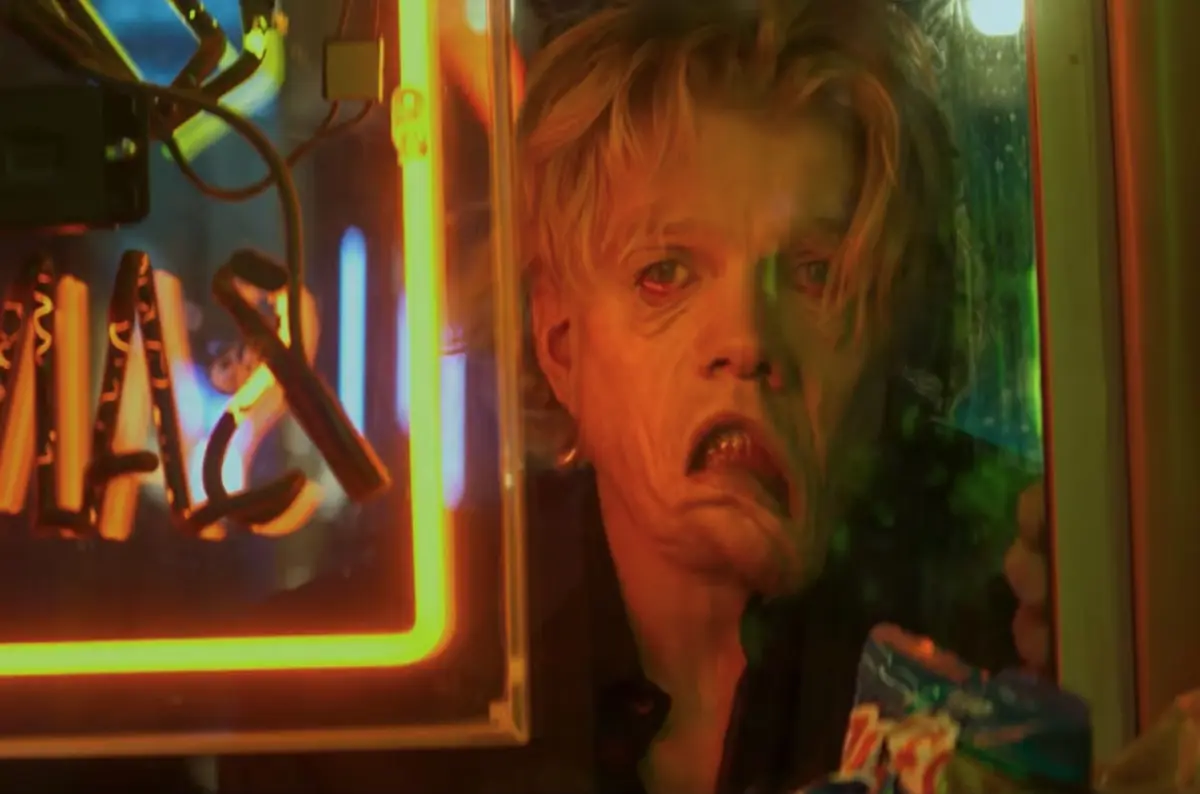
On paper, the pedigree is formidable. Watkins is no stranger to cultivating dread, and the creative team demonstrates an occasional willingness to push past the traditional boundaries of studio filmmaking. When Clayface commits to its darker impulses, it achieves moments of visceral, upsetting brilliance. The practical and digital hybrid effects are strikingly rendered, shifting the human visage with an unsettling fluidity that lingers in the mind long after the credits roll.
However, the film ultimately buckles under the weight of its own structural contradictions. Rather than fully embracing the psychological and physical degeneration central to its premise—an trajectory more akin to David Cronenberg’s The Fly or Oscar Wilde’s The Picture of Dorian Gray—Clayface frequently pulls back from the abyss. It interrupts its own momentum to service the mechanical demands of a standard cinematic universe narrative. The result is a fractured feature: a movie where brilliant, skin-crawling sequences of transformation are perpetually sidelined by rote crime-syndicate subplots, predictable procedural beats, and an undercooked exploration of identity. It comfortably clears the low bar set by modern genre misfires, but it consistently misses the terrifying, transcendent euphoria of its cinematic ancestors.
Read Also
Detailed Chronology: From Gotham Roots to Body Horror Descent
The narrative architecture of Clayface traces a tragic, rapidly accelerating downward spiral, rooted in ambition and corrupted by desperation.
The Ascent and the Fall
The story follows Matt Hagen (portrayed with sharp, shifting intensity by Tom Rhys Harries), a man who has painstakingly clawed his way out of an impoverished, abusive upbringing in Gotham City to establish a burgeoning acting career in Coast City. Standing on the precipice of true mainstream acclaim, Hagen receives an Academy Award nomination—a milestone he celebrates with his childhood best friend, Corey Bowery (Joshua James).
What begins as celebratory excess rapidly devolves. Intoxicated and emotionally untethered, Hagen makes a fateful detour, returning home with the wrong companion and stumbling directly into the crosshairs of ruthless Coast City crime boss Markos Szabo (David Dencik). Szabo, a figure with a distinct and terrifying penchant for razor-based intimidation, leaves Hagen physically broken and psychologically shattered.
The Turning Point
Desperate to salvage his career and mend his mutilated appearance, Hagen turns to Dr. Caitlyn Corr (Naomi Ackie), a brilliant researcher working on cutting-edge, artificial intelligence-driven nanotechnology. Initially hesitant, Dr. Corr yields to his pleas, utilizing Hagen as an unauthorized test subject for her experimental tech. Predictably, the fusion of advanced science and human desperation yields catastrophic results.
Hagen undergoes a radical, agonizing transformation. He becomes Clayface: a mutable entity capable of shifting his physical form at will, driven forward by a volatile cocktail of consuming rage and a singular desire for revenge.
The Procedural Collision
While Hagen navigates his terrifying new reality, the narrative bifurcates. Dr. Corr’s fiancé, Detective John Borrelli (Max Minghella), finds himself drawn into a parallel investigation, attempting to piece together the mysterious, increasingly gruesome deaths of high-ranking associates within Szabo’s criminal enterprise.
As Hagen’s humanity dissolves beneath the shifting clay of his new physique, the film attempts to balance a personal psychological tragedy with a conventional cat-and-mouse detective story. It is a collision of tones that ultimately dilutes the raw horror of Hagen’s physical collapse, forcing a deeply personal body-horror narrative to constantly share screen time with standard police procedural beats.
Supporting Context & Metrics: Analyzing the Craft
To fully understand Clayface, one must examine the friction between its technical execution and its narrative strategy. The production boasts several distinct strengths, offset by recurring structural pitfalls.
Practical and Visual Effects
The film’s greatest triumph lies in its creature design and optical effects. The transformation sequences avoid the clean, digital gloss that plagues many modern blockbusters. Instead, they lean into tactile realism. The subtle drooping of an eyelid moments before a complete facial collapse, or the chaotic, fluid choreography of a nightclub sequence where Hagen changes his appearance in real-time, represent the high-water mark of the production. When the violence is graphic, it is disgusting, upsetting, and undeniably thrilling.
Performances within Genre Constraints
Tom Rhys Harries anchors the film with a compelling dual performance, charting Hagen’s transition from hopeful stardom to psychological disintegration with precision. Naomi Ackie brings sharp comedic timing and grounding empathy to the role of Dr. Caitlyn Corr. However, Ackie’s character is frequently hampered by familiar genre tropes—namely, functioning primarily as a hyper-competent scientist whose agency is largely tethered to her relationships with the men in her life. Supporting players like Joshua James, Wil Coban, and Joana Ribeiro inject much-needed energy into peripheral roles, punctuated by a memorable mid-film cameo that briefly revitalizes the narrative momentum.
The Identity Crisis
At its conceptual core, Clayface aims to explore the fragility of identity. Hagen spent his youth escaping trauma by hiding behind the personalities of fictional characters, eventually parlaying that survival mechanism into a Hollywood career. This raises a profound philosophical question: Is there anything left of the true Matt Hagen beneath the memorized lines and adopted personas?
Unfortunately, the film refuses to commit to an answer. By rushing past Hagen’s early life, the script fails to establish a baseline personality, leaving viewers uncertain whether Hagen has lost his identity or if he simply never had one to begin with. The omission of foundational flashbacks—particularly regarding an abusive father figure hinted at late in the runtime—robs the character arc of its necessary emotional weight.
Official Statements & Creative Ambitions
The promotional and behind-the-scenes narrative surrounding Clayface has emphasized a desire to push the boundaries of comic-adjacent storytelling. Director James Watkins and writer Hossein Amini approached the material with the explicit intent of injecting classic cinematic dread into a traditionally sanitized intellectual property.
In statements regarding the film’s tonal aspirations, the creative team noted a desire to pay homage to classic psychological thrillers and body horror milestones, explicitly drawing inspiration from David Cronenberg’s The Fly and the thematic decay found in The Picture of Dorian Gray. The goal, according to production insiders, was to craft a visceral character study that utilized superhero-adjacent mythology merely as a springboard for an exploration of physical and moral corruption.
However, industry analysts and early reviewers have pointed out a persistent studio hesitancy. While the initial pitch—reportedly seeded by horror veteran Mike Flanagan—carried the DNA of uncompromising genre filmmaking, the final product reflects the compromises inherent in large-scale franchise management. The studio’s need to maintain narrative connectivity to the broader Gotham ecosystem frequently short-circuits the filmmakers’ attempts to plunge entirely into uncompromised terror.
Future Outlook: Implications for Gotham’s Cinematic Horizon
The release of Clayface marks a critical juncture for Warner Bros. and DC’s cinematic strategy, illustrating both the potential and the peril of branching out into genre-specific character studies.
The Subgenre Dilemma
Approaching three decades of dominance by the modern superhero subgenre, audiences have grown acutely familiar with its structural beats. Clayface borrows heavily from predecessors like Sam Raimi’s Darkman and the gritty Gotham underworld aesthetics established in series like The Penguin and Birds of Prey. Yet, where those projects succeeded by anchoring themselves firmly to the distinct, subjective viewpoints of their protagonists, Clayface often struggles to maintain a singular narrative anchor.
The film proves that audiences are hungry for comic book adaptations willing to embrace darker, R-rated sensibilities. However, it also serves as a cautionary tale: dabbling in body horror is not enough if the narrative continually retreats to the safety of formulaic crime plots and exposition-heavy investigations.
What Lies Ahead
As the studio looks toward future standalone projects, the reception of Clayface will likely serve as a litmus test. If the film finds commercial success—driven largely by its stellar creature effects and strong lead performances—it may encourage executives to greenlight even bolder, less conventional adaptations. Conversely, if critics and audiences fixate on its choppy pacing and unfulfilled thematic promises, it may signal that the studio system remains unwilling to let artists take the ultimate, uncompromised swing.
Ultimately, Clayface remains a fascinating paradox: a film that glimpses true cinematic brilliance through the cracks of its own conventionality, leaving viewers to wonder what might have been had it possessed the courage to let its monstrous vision completely consume the frame.





Comments
Facebook App ID not configured. Please add it in the Customizer.