
Executive Overview
In an era dominated by hyper-curated digital aesthetics, influencer perfectionism, and meticulously filtered personas, contemporary celebrity culture frequently alienates the very audiences it seeks to captivate. However, Pakistani television actor Hina Altaf has recently subverted this polished paradigm, offering her followers a refreshing, unvarnished look into her personal life. Stripping away the heavy makeup, professional styling, and studio lighting typically associated with mainstream entertainment figures, Altaf took to Instagram to share a deeply personal, unfiltered snapshot from her archives.
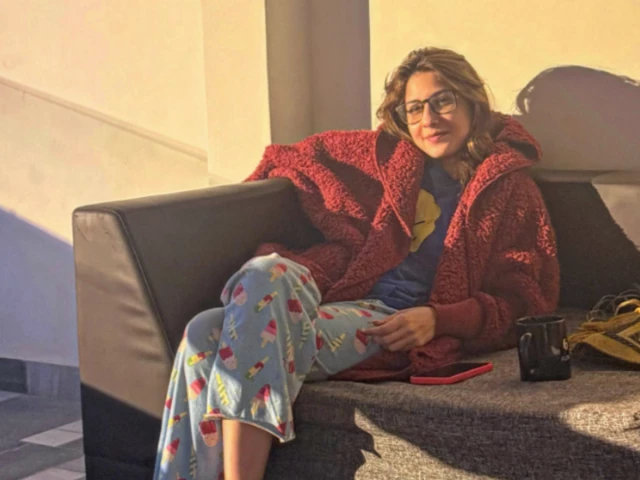
The post, featuring the actor in playful popsicle-print pyjamas, an oversized t-shirt, a plush red jacket, and whimsical bunny slippers, serves as far more than a simple throwback. It acts as a deliberate philosophical statement against the pressures of digital perfectionism. Captured by her close friend and fellow actor Mahi Baloch in late December, the candid photograph encapsulates a moment of raw vulnerability: Altaf was battling a fever, yet radiating a carefree spirit defined by deep human connection, quiet introspection, and the enduring comfort of a warm cup of chai.
By choosing to frame her social media presence as an open diary rather than a continuous highlight reel, Altaf has sparked a broader cultural conversation surrounding the psychological toll of fame, the paramount value of genuine friendships, and the therapeutic nature of everyday rituals. Beyond her personal musings, the actor continues to maintain a robust professional profile, currently anchoring prime-time television with her compelling performance in the Express Entertainment drama series Aye Dushman-e-Jaan, alongside veteran co-stars Sami Khan and Babar Ali. This comprehensive review examines the anatomy of Altaf’s viral post, the cultural significance of authenticity within South Asian celebrity ecosystems, the psychological implications of digital curation, and the trajectory of her flourishing artistic career.
Read Also
Detailed Chronology: Unpacking the Viral Post and Its Behind-the-Scenes Reality
The unfolding of Hina Altaf’s viral social media narrative provides a fascinating look into how modern celebrities manage their public image while carving out spaces for authentic self-expression.
The Setting and the Snapshot
The narrative centers around an archival photograph captured during the winter season. Eschewing the high-fashion ensembles that traditionally grace her grid, Altaf is pictured outdoors on a comfortable couch, completely makeup-free and dressed for ultimate comfort. Her attire—comprising playful pyjamas stamped with popsicles, a relaxed oversized t-shirt, a statement-making fluffy red jacket, and novelty bunny slippers—presents a stark contrast to the glamorous red-carpet appearances and high-production promotional shoots that define much of her professional life.
Rather than positioning herself as an untouchable icon, Altaf leans heavily into self-deprecation and relatable humour. Recalling the moment through her caption, she openly queries her own appearance with a lighthearted, "What do I even look like?" This self-aware approach disarms the audience, instantly bridging the gap between celebrity and consumer.
The Unspoken Struggle: Health Beneath the Surface
Beneath the lighthearted aesthetic of cosy winter loungewear and leisurely outdoor lounging lay a physical vulnerability. Altaf revealed that despite the outward appearance of carefree relaxation, she was actually unwell at the time the photo was taken, grappling with a fever.
"Well, this look is called when you’re having the best time of your life and you don’t care about anything, and also I remember I had a fever. Hehehehehe," she noted in her caption. This revelation adds layers of emotional depth to the image. It underscores a universal human truth: genuine happiness and moments of profound peace often coexist with physical discomfort and life’s minor adversities. By exposing her vulnerable state—feverish yet smiling—Altaf humanizes herself in a way few public figures dare to do, demonstrating that well-being is not the absence of sickness, but the presence of peace and supportive company.
The Dynamics of Sisterhood and Support
A central theme of Altaf’s reflection is the profound value of authentic friendship, specifically highlighting her bond with fellow industry peer Mahi Baloch. Not only was Baloch behind the camera lens capturing the candid moment, but she was also actively participating in the quiet, restorative afternoon.
Altaf’s caption reads as a heartfelt ode to platonic intimacy: "What a privilege to sit and think about life and your bestie not just listens to you but lends you her clothes and captures you as well." In an industry frequently plagued by notions of fierce competition and superficial interactions among female actors, Altaf and Baloch’s public display of mutual support, shared wardrobes, and deep conversations serves as a powerful counter-narrative. It emphasizes the foundational necessity of safe spaces where public figures can shed their professional armour and simply exist as ordinary individuals.
The Constant Companion: The Cultural and Emotional Weight of Chai
No reflection by Hina Altaf would be complete without paying homage to her ultimate culinary and emotional constant: chai (tea). Long before this post, Altaf has made no secret of her deep-seated affection for the brewed beverage, often referencing it across various digital platforms. In this particular post, she elevates chai from a simple drink to an emotional anchor.
"And ahh CHAI. Chai has been there in my happiest moments to my roughest patches of life. No one can change my mind when it comes to chai. I make the best tea as well. That’s all," she declared with characteristic conviction.
Within South Asian households and professional circles alike, chai functions as a social lubricant, a therapeutic ritual, and a solitary comfort. For Altaf, it represents stability. Whether navigating the dizzying heights of television stardom or enduring personal or professional turbulent periods, the ritual of brewing and consuming tea remains a steadfast grounding mechanism. Furthermore, her playful assertion that she brews "the best tea" injects a dose of domestic pride into her otherwise glamorous persona, further endearing her to a domestic and international audience.
Supporting Context & Metrics: The Economics and Psychology of Authenticity
To fully understand the resonance of Hina Altaf’s post, one must examine the broader digital ecosystem within which contemporary South Asian celebrities operate. The transition from traditional media gatekeeping to direct-to-consumer social media channels has fundamentally altered how public figures build and maintain their brands.
The Tyranny of Digital Perfectionism
For over a decade, platforms like Instagram have functioned as high-stakes marketplaces for personal branding. For actors, models, and public intellectuals, the grid has historically served as a digital portfolio—a place where every pixel must be calculated, every outfit curated, and every lighting angle optimized.
However, psychological research increasingly points to the detrimental effects of this curated perfectionism. Studies in digital media consumption indicate that continuous exposure to flawless celebrity lifestyles frequently correlates with heightened anxiety, body dissatisfaction, and feelings of inadequacy among young demographics. When prominent figures like Hina Altaf intentionally disrupt this cycle by posting makeup-free, fever-stricken, pyjama-clad archives, they offer a psychological release valve for their followers.
The Shift Toward "Anti-Curation"
In recent years, industry analysts have noted a pronounced shift away from hyper-polished feeds toward "anti-curation"—a digital movement characterized by blurry photos, unedited skin textures, casual outtakes, and raw, stream-of-consciousness captions. Altaf’s explicit declaration—"My Instagram won’t be about perfect slides but also my diary"—places her squarely at the vanguard of this movement within the Pakistani entertainment industry.
By redefining her Instagram grid as a personal diary rather than a commercial billboard, Altaf achieves several strategic and personal objectives:
- Audience Trust: Followers develop a deeper, more loyal connection to creators who reveal their flaws and everyday mundane realities.
- Burnout Mitigation: Public figures who attempt to maintain an unblemished digital facade often face severe emotional exhaustion. Embracing imperfection alleviates the immense pressure of constant performance.
- Algorithmic Resilience: Ironically, authentic content often generates higher organic engagement rates than heavily produced promotional material, as audiences are far more likely to comment on, share, and relate to human vulnerability.
A Humorous Postscript on AI and Authenticity
In a world increasingly dominated by generative artificial intelligence, chatbots, and automated social media management teams, the authorship of celebrity content has become a subject of public curiosity. Concluding her lengthy, conversational note, Altaf added a characteristically witty disclaimer: "This caption is a hundred per cent not written by ChatGPT. Can’t believe it’s 2 September."
This self-aware nod not only reinforces her authentic voice—complete with idiosyncratic phrasing, playful punctuation, and spontaneous tangents—but also highlights a growing cultural fatigue with sterile, corporate-sounding social media copy. By injecting her unique personality into every sentence, Altaf ensures her digital footprint remains unmistakably human.
Official Statements and Professional Trajectory
While Hina Altaf’s personal musings offer an intimate look into her private world, her professional standing within the South Asian television landscape remains robust and multifaceted. Balancing personal authenticity with a thriving acting career requires immense discipline, a balance Altaf has successfully maintained over the years.
Current Artistic Endeavors: Aye Dushman-e-Jaan
Away from her cosy couch and morning cups of chai, Altaf continues to command television screens across Pakistan and international diaspora markets through her work in serial drama. She currently stars in the Express Entertainment production Aye Dushman-e-Jaan, sharing screen space with industry heavyweights Sami Khan and Babar Ali.
The drama, which has garnered steady viewership and critical discussion, showcases Altaf’s dramatic range. Known historically for her ability to portray emotionally complex, resilient, and deeply human characters, her involvement in Aye Dushman-e-Jaan cements her status as a reliable, bankable lead actor in an intensely competitive television ecosystem. Industry critics have frequently praised her capacity to bring emotional gravity and nuanced empathy to her television roles, attributes that clearly bleed into her candid off-screen persona.
Navigating Public Life and Privacy
Throughout her career, Altaf has been remarkably candid about the trials and tribulations of growing up in the public eye. Rising to prominence at a young age, she has navigated the intense scrutiny of the Pakistani entertainment media with a mixture of resilience and boundary-setting.
Her recent social media reflections are an extension of this lifelong negotiation between public accessibility and private sanctity. By controlling the narrative—choosing when to be glamorous and when to be grounded—Altaf exercises agency over her public image. She does not reject glamour entirely; rather, she contextualizes it, reminding her audience that the red-carpet dresses and designer wardrobes are merely costumes worn for work, while the real Hina Altaf is far more comfortable in oversized t-shirts, bunny slippers, and a mug of steaming tea.
Future Outlook: The Evolution of Celebrity Engagement
As the digital landscape continues to evolve at a breakneck pace, the expectations placed upon public figures are shifting dramatically. Audiences are increasingly rejecting the manufactured porcelain idols of the past in favor of relatable, multi-dimensional human beings who experience illness, fatigue, doubt, and quiet moments of joy.
Hina Altaf’s recent viral reflection serves as a case study in modern celebrity branding done right. By anchoring her digital presence in honesty, she has successfully transformed her social media channels from transactional marketing tools into genuine communities of empathy and shared experience.
What Lies Ahead for Altaf?
- Continued Artistic Diversification: As her role in Aye Dushman-e-Jaan demonstrates, Altaf is continuing to challenge herself professionally, selecting scripts that test her emotional range and allow her to work alongside esteemed industry veterans.
- Deeper Digital Connection: The positive reception to her unfiltered archives signals a clear mandate from her fanbase: they want more of the real Hina. Future digital content is likely to feature more behind-the-scenes glimpses, unscripted reflections, and unfiltered dialogues about mental health, lifestyle balance, and personal growth.
- A Blueprint for Industry Peers: Altaf’s ability to seamlessly blend professional ambition with unapologetic personal authenticity provides a valuable blueprint for emerging artists within the South Asian entertainment sphere. It demonstrates that vulnerability is not a liability, but a profound asset in building enduring, meaningful connections with an audience.
In conclusion, Hina Altaf’s winter snapshot, framed by feverish chills, supportive sisterhood, oversized pyjamas, and an unwavering devotion to chai, transcends the transient nature of social media trends. It stands as a gentle, timely reminder that despite the glittering illusions of fame, the most treasured moments of human existence are invariably found in the quiet, unscripted spaces of everyday life.


Comments
Facebook App ID not configured. Please add it in the Customizer.