
Executive Overview
In an era where higher education institutions globally are facing acute financial pressures, humanities departments are frequently the first on the chopping block. The latest flashpoint in this ongoing crisis is unfolding at the University of Dundee, where a sweeping cost-reduction proposal has targeted the institution’s philosophy offerings. The administration’s plan, unveiled earlier this summer, involves suspending entry to all named undergraduate philosophy degrees starting in 2027.
What the university administration likely anticipated as a routine internal restructuring has instead metastasized into an international cause célèbre. In response to the proposed cuts, academics, students, and intellectual leaders from across the globe have mobilized. Spearheaded by campus faculty and bolstered by a newly launched centralized campaign hub, the resistance has already gathered over 5,300 signatures on a petition opposing the shutdown.
The backlash transcends mere departmental nostalgia. The University of Dundee occupies a singular, irreplaceable niche within the Scottish and international academic ecosystems. It is home to Scotland’s only philosophy program specializing in the European "Continental" tradition, taught in dialogue with non-Western systems of thought—including Buddhism, Daoism, and Ubuntu—alongside traditional analytic philosophy. Furthermore, its pioneering joint degree with the Duncan of Jordanstone College of Art and Design has no equivalent anywhere else in the nation.
Read Also
As the formal consultation period remains open and no definitive decision has been rendered by university leadership, the campaign to save philosophy at Dundee has entered a critical new phase. Armed with high-profile endorsements from major philosophical associations, a roster of heavy-hitting intellectual signatories, and a forward-thinking counter-proposal centered on Artificial Intelligence, the defenders of Dundee philosophy are fighting not just for their jobs, but for the soul and utility of the humanities in the 21st century.
Detailed Chronology: From Internal Cost-Cutting to Global Resistance
The crisis at the University of Dundee did not emerge in a vacuum; it is the latest iteration of a systemic financial squeeze affecting universities throughout the United Kingdom and beyond.
Early Summer 2026: The Announcement
The controversy began earlier this summer when the executive administration of the University of Dundee released a broad administrative and financial review aimed at trimming operational expenditures. Buried within the sweeping measures was a devastating proposal: the cessation of philosophy as a major option for incoming students. Under the university’s initial scheme, entry to all named philosophy degrees would be suspended effective 2027, effectively phasing out the discipline as an independent academic pillar at the institution.
The Immediate Grassroots Response
Recognizing the existential threat posed to the department, local faculty, students, and alumni immediately mobilized. Within days, an online petition was drafted to register formal dissent against the university’s plan. The petition argued that dismantling the philosophy department would inflict irreparable damage on the institution’s academic breadth and cultural standing.
Late August 2026: The Launch of a Centralized Campaign
As the petition gained traction, organizers recognized the need for a more coordinated, multimedia approach to hold the administration accountable. Oisín Keohane, a lecturer in philosophy at Dundee, announced the launch of a dedicated, centralized campaign platform: savedundeephilosophy.org.
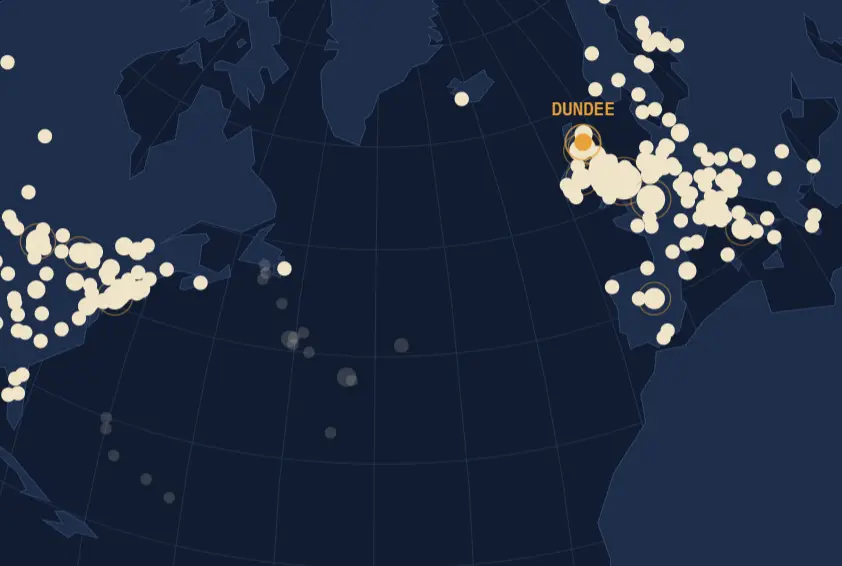
The new digital hub was designed to aggregate support, provide transparency on the consultation process, and visualize the staggering scale of international solidarity. Rather than simply listing raw numerical data, the website features an interactive global mapping tool that plots the institutional affiliations of every academic supporter, vividly illustrating that the fate of a regional Scottish department is of profound concern to the worldwide intellectual community.
Supporting Context & Metrics: The Anatomy of a Global Backlash
The quantitative and qualitative metrics surrounding the "Save Dundee Philosophy" campaign demonstrate that this is far from a localized labor dispute. It has transformed into a referendum on the global value of humanistic inquiry.
The Numbers That Matter
According to campaign updates provided by Lecturer Oisín Keohane, the petition has crossed a significant threshold:
- Total Signatures: Over 5,300 individuals have formally added their names in support of the department.
- Academic Representation: More than 1,100 of these signatories are active university academics.
- Institutional Reach: The academic supporters hail from 365 distinct universities.
- Geographic Diversity: Signatories represent higher education institutions across 40 countries, highlighting a truly multinational coalition.
A Unique Pedagogical Footprint
To understand why the academic world has rallied so fiercely around Dundee, one must examine the specific curriculum under threat. Dundee is not merely another philosophy department offering standard modules in ethics and logic; it holds a distinctive place in British higher education.
It is Scotland’s sole academic program specializing in the European "Continental" tradition. Crucially, the Dundee faculty does not teach this tradition in isolation. They examine Continental philosophy in direct conversation with diverse global philosophical frameworks, including:
- Buddhist philosophy
- Daoist philosophy
- Ubuntu philosophy (an African ethical and humanistic worldview)
- Analytic philosophy
Additionally, the university offers a highly innovative joint degree with the Duncan of Jordanstone College of Art and Design—a multidisciplinary program that bridges critical theory and creative practice with no equivalent anywhere else in Scotland. Dismantling this program would erase a rare bridge between the arts, design, and philosophical critique.
Official Statements and Institutional Heavyweights
The credibility of the campaign is underscored by the sheer caliber of organizations and individual scholars who have stepped forward to lobby the University of Dundee administration.
Major Philosophical Societies Weigh In
Institutional oversight bodies have formally intervened. The American Philosophical Association (APA) and the British Philosophical Association (BPA) have issued a joint letter of support addressed to the university administration. These letters, hosted prominently on the campaign’s website, articulate the broader professional consensus that weakening philosophy infrastructure has cascading negative effects on broader educational standards.
Furthermore, all four office-holders of the prestigious The Royal Institute of Philosophy—Jonathan Wolff, Lucy O’Brien, Sarah Sawyer, and Edward Harcourt—have personally signed the petition, lending institutional weight and leadership prestige to the protest effort.
The AI and Human Values Connection
Perhaps the most striking strategic argument deployed by the Dundee philosophy faculty involves the intersection of philosophy and emerging technologies. Critics of the humanities often level accusations of impracticality, claiming that philosophy degrees offer little tangible value in a tech-dominated economy. The Dundee faculty has aggressively subverted this narrative.
The department put forward a concrete, future-focused counter-proposal to university leadership: the creation of a named Philosophy and Artificial Intelligence qualification.
To test the viability of this initiative, campaign organizers consulted top-tier global thinkers who specialize in AI and human values for a living. The response was an overwhelming endorsement of Dundee’s vision. Signatories to the campaign include:
- Luciano Floridi (Yale University), a leading authority on the philosophy of information and AI ethics.
- Shannon Vallor (University of Edinburgh), a renowned scholar in the ethics of data and artificial intelligence.
- Edward Harcourt (University of Oxford).
- Mpho Tshivhase (University of Pretoria).
- Brendan McCord, founder of the Cosmos Institute.
These experts argue that as society grapples with the existential, ethical, and regulatory challenges posed by generative AI and autonomous systems, rigorous philosophical training is more critical than ever. The relevance of this argument is further reinforced by success stories from the department’s own alumni network, such as Amanda Askell, a Dundee philosophy graduate now shaping the safety and alignment of AI at frontier labs like Anthropic.
Future Outlook: What Lies Ahead for Dundee Philosophy?
As the autumn term approaches, the situation at the University of Dundee hangs in the balance. While the administration’s cost-reduction goals remain a pressing institutional reality, the immense friction generated by the proposed cuts has fundamentally changed the political calculus on campus.
The Consultation Window
Campaign organizers emphasize that no final decision has been taken and that the formal consultation process remains open. This leaves a crucial window for internal debate, administrative reconsideration, and external pressure. The university executive now faces a stark choice: proceed with the closure and absorb the reputational damage of alienating thousands of international scholars, or pivot toward innovation.
A Blueprint for Renewal?
The alternative path—championed by faculty and endorsed by international AI ethicists—offers a viable roadmap for modernization rather than elimination. By integrating philosophical training with data science, tech ethics, and creative arts, Dundee could position itself not as a dinosaur of the traditional university system, but as a cutting-edge hub for 21st-century critical thinking.
Whether the university leadership has the appetite to embrace this vision remains to be seen. What is certain, however, is that the campaign to save philosophy at Dundee has transcended local administrative politics. It has become a global test case for how universities value the humanities in an era of fiscal austerity—and a testament to the fact that when philosophy is threatened, philosophers and scientists alike will cross oceans and disciplines to defend it.
For ongoing updates, to view the interactive global map of supporters, or to add your name to the protest, visit the official campaign hub at savedundeephilosophy.org.





Comments
Facebook App ID not configured. Please add it in the Customizer.