
Executive Overview
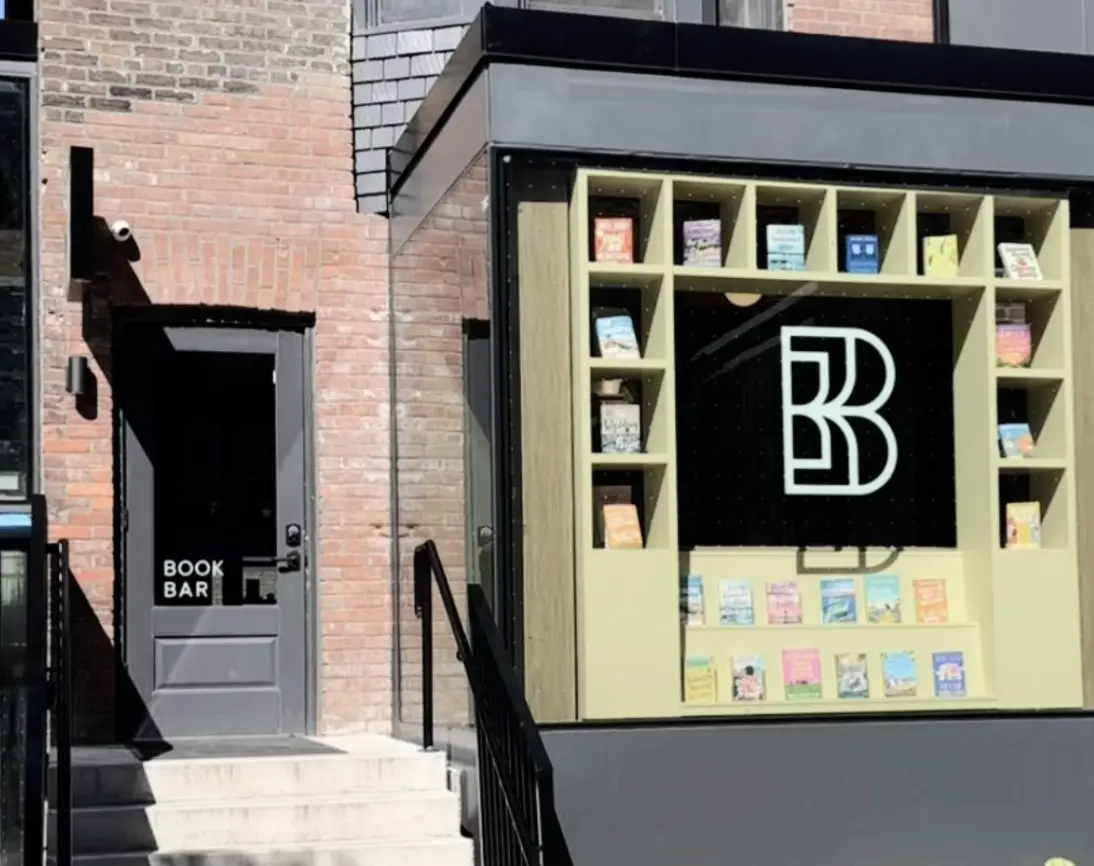
Nearly two months after flinging open its heavy oak doors in Toronto’s burgeoning Mirvish Village development, a novel hybrid enterprise known simply as Book Bar has cemented its status as an essential fixture in the city’s intellectual ecosystem. Part social salon, part high-end cocktail lounge, and part independent bookstore, the liquor-licensed establishment has defied contemporary digital expectations to carve out a distinct identity.
While its pre-launch digital footprint—cultivated carefully across TikTok and Instagram—suggested an inevitable wave of demand for the "BookTok" and "Bookstagram" mainstays of romance and fantasy, reality has charted a markedly more highbrow course. Driven by a fertile mix of local geography, academic proximity, and deliberate community programming, Book Bar has emerged as a temple for traditional literary fiction, proving that the ancient alchemy of a good book, a well-crafted drink, and unhurried conversation remains violently relevant in the 21st century.
Occupying 2,600 square feet of meticulously converted Victorian-era architecture, the venue represents a masterclass in modern spatial design, balancing the cozy intimacy of a traditional reading room with the sleek sophistication of an upscale bar. Yet, beneath its polished aesthetic and the Instagram-friendly glow of custom "Book Boyfriend" candles lies a more profound narrative: the rebirth of community-focused, independent retail spaces within a newly redeveloped urban core that actively resists corporate homogeneity.
Read Also
Detailed Chronology: From Neighborly Vision to Toronto Reality
The genesis of Book Bar is rooted as much in serendipity as it is in exhaustive entrepreneurial legwork. Co-owned by Tom Freeman, a veteran of the hospitality industry, and Robin Storfer, a mental health professional specializing in adult ADHD treatment, the enterprise began not in a boardroom, but across neighboring backyard fences.
Bonded by a shared appreciation for the slower, more tactile pleasures of life, the duo frequently lamented a glaring gap in Toronto’s vibrant nightlife landscape. Despite the city’s legendary love affair with reading, there existed no physical space where one could seamlessly transition from browsing the poetry section to savoring a top-tier craft cocktail without breaking the spell of contemplation.
The Research and Mentorship Phase
Determined to turn their casual porch-side musings into a concrete business plan, Storfer embarked on a rigorous research pilgrimage. The conceptual blueprint was heavily inspired by the pioneering Book Club Bar in New York City’s East Village. Recognizing the blueprint’s potential north of the border, Storfer forged a mentorship with its proprietors, Erin Neary and Nat Esten, flying to New York twice to study the mechanics of running a dual-purpose literary watering hole.
Not content to rely solely on an American blueprint, Storfer expanded her domestic reconnaissance, touring independent booksellers across Ontario and British Columbia. She absorbed operational strategies from legendary regional hubs such as:
- Blue Heron Books in Uxbridge, Ontario
- Cedar Canoe Books in Huntsville, Ontario
- Iron Dog Books in Vancouver, British Columbia
The Architectural Transformation
With a vision crystallized, Freeman and Storfer secured a 2,600-square-foot footprint spanning two floors of a converted Victorian-era rowhouse within the newly constructed Mirvish Village development. To bring the physical space to life, they enlisted the Toronto-based design powerhouse DesignAgency.
The resulting interior is an exercise in architectural flow. Sweeping, curved bookshelves soften the rigidity of the room, while a commanding stone bar anchors the ground floor. Ascending the staircase reveals the "Green Room"—an upstairs mezzanine engineered for versatility. By day, it serves as a tranquil, sun-dappled reading lounge; by night, it deftly reconfigures into a 30-chair, theater-style setup designed to host everything from poetry readings to academic lectures.
Supporting Context & Metrics: Defying the Digital Algorithms
When Book Bar first materialized on social media, its digital marketing strategy relied heavily on the reigning monarchs of modern internet reading culture: fantasy epics and sweeping romance novels. Given the sheer velocity of BookTok and Bookstagram trends, staff members braced themselves for an avalanche of demands for fae romances and dark academia series.
Instead, reality intervened in the form of actual Toronto readers.
The Literary Fiction Phenomenon
"It turns out that actually our biggest seller is still literary fiction," notes Assistant Operations Manager Daniel Roberts, a seasoned veteran of the local book trade who previously honed his craft at the now-defunct Toronto staple Book City.
Roberts attributes this surprising metric largely to geography. Nestled squarely within striking distance of the University of Toronto, Book Bar attracts an intellectually voracious demographic of students, faculty, and lifelong scholars. Roberts actively leans into this local literary appetite, utilizing the store’s social media channels to champion dense, classic, and under-appreciated works. In a recent digital campaign, he spotlighted William Maxwell’s 1979 masterpiece So Long, See You Tomorrow, framing it as an essential companion piece for admirers of John Williams’s 1965 existential classic, Stoner.
Navigating the Learning Curve
Despite its instant local appeal, the novelty of Book Bar’s hybrid model has occasionally required mild anthropological translation for first-time visitors. Because a vast segment of the clientele discovers the venue via algorithms before ever stepping foot onto the sidewalk, operations manager Sarah Labrie—whose formidable publishing pedigree includes stints at Penguin Random House, Scholastic, and Kids Can Press—noted an immediate need for customer orientation.
"Customers regularly ask whether the shelved books are for decoration, whether they can read one at a table and put it back, or take one home without paying," Labrie explains with an amused smile. "Our concept really is new to them."
To bridge this cognitive gap, management stations a dedicated greeter near the entrance during peak hours, transforming potential confusion into an interactive educational moment about the symbiotic relationship between a bookstore and a bar.
The Menu and Merch Strategy
The duality of the venue extends directly to its beverage and merchandise programs. Rather than leaning into heavy-handed literary puns, the drink menu subtly nods to the broader arts. The cocktail list features sophisticated creations like the Frida—a vibrant mezcal margarita named after Frida Kahlo—alongside the singular, unabashedly book-tied exception: Rosemary’s Baby, a rosemary-infused cocktail named in honor of Ira Levin’s chilling 1967 horror novel.
To preserve the contemplative sanctity of the space, Book Bar enforces a strict laptop-free policy after 6:00 p.m., deliberately discouraging remote work grinds in favor of conversation and analog relaxation. Furthermore, the venue is fully accessible, ensuring that all readers can navigate its tiered spaces.
Beyond beverages, the store has cultivated a thriving sideline merchandise economy. Custom items like the Book Bar candle—scented with rich notes of vanilla, aged leather, and sandalwood—and the tongue-in-cheek Book Boyfriend candle (designed to evoke the olfactory memory of a stolen hoodie dusted with high-end cologne) have gone viral organically on Instagram. "And of course," Labrie adds, "the tote bags are a must-have."
Official Statements & Community Integration
Book Bar’s arrival in Mirvish Village is significant not merely as a commercial venture, but as a statement of urban identity. For decades, Toronto’s independent bookstores have faced the existential pressures of rising commercial rents, digital retail giants, and urban gentrification. Yet, Book Bar has managed to plant its flag in a neighborhood specifically engineered to honor the creative class.
Defending the Independent Spirit
Because of its name and concept, the establishment is frequently misidentified as a northern outpost of New York’s Book Club Bar (which operates locations in the East Village and Brooklyn’s Bushwick neighborhood). Robin Storfer is quick to clear up any confusion:
"We are an independently owned and operated, original Canadian concept—not at all an extension of anywhere else."
This fierce independence is championed equally by Daniel Roberts, who views Book Bar’s early triumph as a direct indictment of homogenized, corporate urban planning. Mirvish Village itself was developed with a mandate to prioritize independent merchants over national franchises, creating a micro-economy built on local character.
"What makes a city vibrant isn’t the Harvey’s and the Wendy’s on the corner," Roberts asserts. "It’s the mom-and-pop places. People know that, and they’re supporting us and they’re supporting books again. Books are cool. Books really are cool."
Future Outlook: Programming, Partnerships, and Cultural Staying Power
As Book Bar cruises past its two-month milestone, its operational bandwidth is rapidly filling with a diverse array of community-driven events that threaten to make it the premier intellectual salon of downtown Toronto.
High-Profile Author Engagements
The store’s events calendar is already packed for the foreseeable future. During its opening media blitz, the shop hosted Canadian publishing phenomenon Carley Fortune. Looking ahead, the venue is gearing up to host master thriller writer Shari Lapena for the grand launch of her latest novel, Getting Away with Murder, scheduled for the end of the month.
Niche Programming and Social Innovation
Beyond traditional author readings, Book Bar is curating unique recurring programming designed to forge genuine human connections in an era defined by digital isolation:
- Bored of Dating Apps (BODA): Serving as the exclusive Canadian partner for this innovative singles’ event series, Book Bar hosts targeted mixers that strip away the artifice of swiping in favor of face-to-face literary chemistry.
- Sip & Scholar: An ongoing academic lecture series that brings university-level discourse out of sterile lecture halls and into an environment lubricated by fine wine and craft beer.
The Long-Term Horizon
In an era where brick-and-mortar retail often feels defensive and fragile, Book Bar’s gamble has paid off through a profound understanding of human psychology: people do not simply want to buy commodities; they want to inhabit spaces that reflect their intellectual identities and foster communal belonging.
By refusing to choose between the quiet intellectualism of the written word and the vibrant socialization of the bar, Book Bar has not only secured its own commercial viability—it has given Toronto’s literati a long-overdue home of their own.





Comments
Facebook App ID not configured. Please add it in the Customizer.