
Executive Overview
In the upper echelons of American academia, a quiet transformation has taken place over the past several decades—one that has fundamentally shifted the purpose of higher education from the acquisition of rigorous, foundational knowledge to the performance of intellectual sophistication. Nowhere has this phenomenon been more visibly manifest than within the historic gates of Columbia University, an institution whose legendary Core Curriculum once served as the gold standard for Western liberal arts education. Today, however, that very curriculum—and the pedagogical culture surrounding it—faces a severe reckoning.
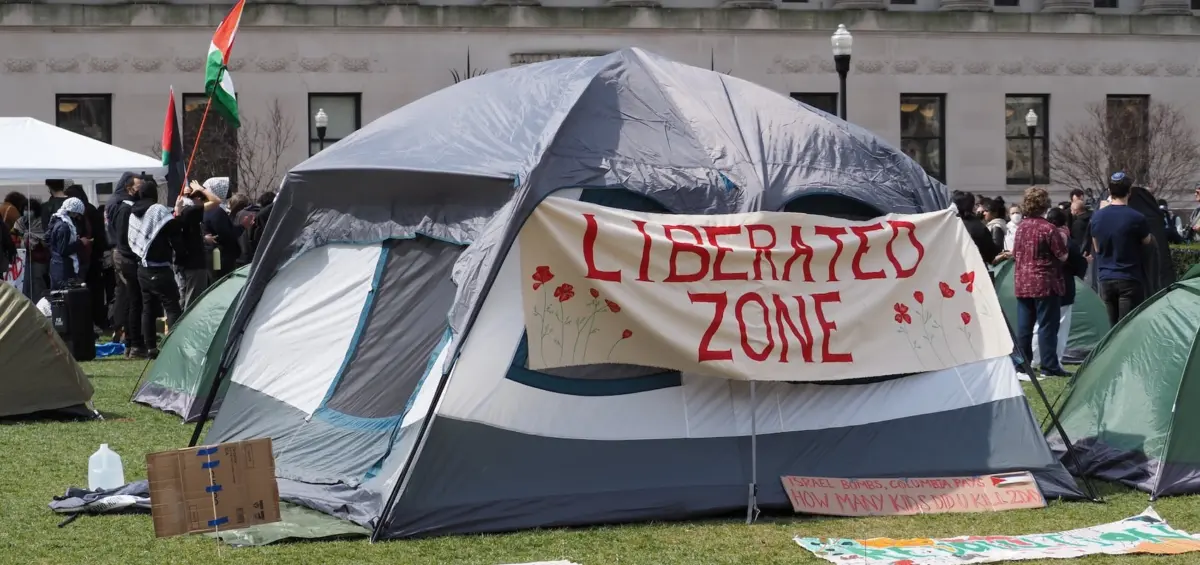
The gravity of this cultural shift within elite universities is no longer confined to campus quads, academic journals, or faculty senate meetings. It has crossed the threshold into the halls of federal power. The ascension of Darializa Avila Chevalier—upper Manhattan’s newly minted congressional candidate, backed by the Democratic Socialists of America (DSA)—illustrates the real-world consequences of this academic evolution. Chevalier, an alumna of Columbia who later returned as a prominent leader of the campus Gaza encampments, is poised to enter the United States Congress. Her platform champions policies that disrupt fundamental geopolitical and domestic structures: the complete termination of foreign aid to Israel, the total abolition of the American prison system, and the eradication of national borders.
Yet, Chevalier’s policy positions are not merely outlier eccentricities; they are symptoms of a wider ideological ecosystem. When Chevalier’s primary victory was celebrated widely across elite academic networks, it laid bare a troubling alignment between institutional training and radical political outcomes. How is it that some of the nation’s brightest young minds—individuals selected through hyper-selective admissions processes and granted access to the world’s most distinguished thinkers—have embraced radical, surface-level ideologies with such unbridled fervor?
Read Also
This investigation explores the mechanics of elite miseducation. By examining the micro-culture of the Columbia seminar room—where the art of faking comprehension is systematically incentivized—we can trace a direct line from classroom performative politics to the halls of Congress. The crisis in higher education is not simply a matter of partisan bias or ideological capture; it is an epistemological crisis born of an overemphasis on ungrounded "critical thinking" at the expense of deep, humble, foundational study.
Detailed Chronology: From the Seminar Table to Capitol Hill
To understand the trajectory of figures like Darializa Avila Chevalier, one must trace the institutional milestones and campus dynamics that forged this generation of political actors. The chronology of this intellectual shift reveals a steady erosion of academic rigor replaced by performative activism.
The Foundation of Performance (2012–2016)
Long before the national media turned its cameras toward campus encampments, the foundational habits of future political figures were being shaped in the small seminar rooms of Columbia’s Core Curriculum. In courses such as Literature Humanities 1001, students sat in circles of twenty, participating in a high-stakes, low-information game. Because class participation accounted for a substantial portion of final grades, students quickly realized that the system rewarded the appearance of mastery far more than actual comprehension.
This dynamic fostered an academic culture where students learned to speak with supreme confidence about texts they had barely skimmed, if they had read them at all. Whether analyzing John Stuart Mill’s utilitarianism without understanding his nuances, or opining on Shakespearean tragedy while confusing character relationships, the imperative was clear: never reveal a gap in one’s knowledge. Over four years, this repetitive exercise conditioned elite students to become remarkably comfortable with shallow, superficial understandings of complex historical, philosophical, and political concepts.
The Return of the Alumna Activist (2016–2024)
Darializa Avila Chevalier graduated from Columbia in 2016, a period during which the institutional incentives of the seminar room were already fully entrenched. However, her relationship with the university did not end at commencement. In the years that followed, she maintained deep ties to the campus ecosystem, eventually emerging as a key operational and ideological leader during the high-profile Gaza encampments that paralyzed Columbia’s campus during the spring semester.
The transition from seminar room dissimulation to direct-action radicalism was seamless. Just as students in Lit Hum had learned to deploy sophisticated vocabulary to mask a lack of textual engagement, the leaders of the campus encampments deployed sweeping, absolutist rhetoric to address complex, centuries-old geopolitical conflicts. The lack of deep historical grounding—whether concerning the Middle East, legal frameworks, or economic theory—did not dampen their conviction; rather, their unearned self-esteem insulated them from counter-arguments.
The Primary Victory and the National Stage (June 2024–Present)
Following her success in the primary elections, Chevalier secured a near-guaranteed path to the United States House of Representatives. Her campaign represents the culmination of a decade-long institutional failure. Armed with policy positions that defy standard geopolitical and economic realities—such as the total dismantling of national borders and the immediate abolition of prisons—Chevalier stepped onto the national stage. Her rhetorical style mirrors precisely what is practiced in elite seminar rooms: the absolute refusal to let a lack of foundational knowledge impede bold, uncompromising pronouncements.
Supporting Context & Metrics: The Anatomy of Pedagogical Failure
The crisis at Columbia and other Ivy League institutions cannot be dismissed as an isolated cultural aberration. It is supported by systemic pedagogical strategies that prioritize abstract "critical thinking" over the unglamorous, cumulative labor of acquiring factual knowledge.
The "Critical Thinking" Fallacy
Modern university curricula frequently market themselves on teaching students how to think, not what to think. While this sounds noble in theory, in practice it has devolved into an educational shortcut. When universities elevate critical thinking to the singular focus of their academic mission—often in the total absence of foundational study—they sever analysis from its necessary anchor: facts.
- Art History Without History: In typical undergraduate art history courses, students are routinely asked to analyze masterworks—such as Jacques-Louis David’s Oath of the Horatii—without any instruction in the historical context, classical mythologies, or socio-political backdrops that gave rise to the art. The resulting discussions devolve into superficial critiques of color theory or emotional expression, mistaking stylistic observation for genuine historical comprehension.
- Music Theory Without Theory: Similarly, students are tasked with writing sophisticated essays on musical masterpieces before they have mastered basic music theory.
- The Consequence: These pedagogical choices send a clear, unmistakable message to impressionable minds: serious, grounded study and painstaking research are optional luxuries. Critical thinking, divorced from factual grounding, becomes king.
The Epistemological Crisis
True critical thinking cannot exist in a vacuum of self-ignorance. Historically, the foundation of genuine scholarship has been the recognition of one’s own limitations—a deep intellectual humility forged through rigorous, long-term engagement with humanity’s greatest texts, institutions, and traditions.
Instead of cultivating this humility, modern elite institutions have increasingly prioritized building unearned self-esteem among their student bodies. By assuring students that their isolated, instantaneous critical faculties are sufficient to unpack any topic—from Kantian philosophy to Middle Eastern geopolitics—universities have created an intellectual class incapable of recognizing its own blind spots. When surface knowledge is systematically rewarded and confused with true understanding, graduates leave academia ill-equipped to govern a complex world, yet intensely eager to tear it down.
Official Statements & Institutional Responses
The polarization surrounding figures like Chevalier and the broader ideological climate of elite universities has drawn sharp reactions from across the political and academic spectrum.
- Defenders of Student Activism: Proponents of the recent student movements argue that the campus demonstrations and the subsequent political careers of alumni like Chevalier represent a vital resurgence of moral clarity and social justice. Supporters emphasize that young leaders are refusing to be bound by outdated institutional norms and are instead forcing the nation to confront systemic injustices, both foreign and domestic.
- Critics and Academic Traditionalists: Conversely, critics within and outside academia view these developments with deep alarm. Conservative and classical liberal commentators argue that the capitulation of elite universities to radical ideologies is the direct result of abandoning the traditional liberal arts canon. Prominent educational critics have noted that when universities abandon standards of rigorous textual analysis in favor of ideological performative exercises, they cease to be centers of learning and instead become incubators for dogmatic extremism.
- The Congressional Response: As figures tied to radical campus movements transition into federal legislative roles, congressional oversight committees have begun scrutinizing the institutional environments that foster such ideologies. Lawmakers from both sides of the aisle have raised questions regarding the tax-exempt status, foreign funding, and administrative stewardship of elite universities that appear unable or unwilling to maintain academic neutrality and scholarly rigor.
Future Outlook: Navigating the Post-Institutional Era
As Darializa Avila Chevalier prepares to take her seat in Congress, and as universities grapple with the long-term cultural fallout of recent campus unrest, the broader implications for American society are profound.
The Contagion of Performative Governance
The primary danger of exporting the "performative seminar" model to the national political stage is the degradation of public policy discourse. When legislators approach complex matters of national security, criminal justice, and international relations with the same ungrounded confidence and disdain for foundational facts that was rewarded in elite college seminars, the legislative process degenerates. Nuanced diplomacy is replaced by rigid dogmatism; intricate legal systems are met with demands for total abolition; and the hard, unglamorous work of governance is subverted by theatrical posturing.
Reforming Higher Education
If American higher education is to recover from this epistemological crisis, a fundamental reassessment of institutional pedagogy is urgently required. Elite universities must move away from the hyper-focused cult of ungrounded "critical thinking" and return to the humbler, more demanding work of foundational instruction.
This requires:
- Restoring Academic Humility: Curricula must be redesigned to teach students the limits of their own knowledge, emphasizing that genuine critique is impossible without deep, sustained engagement with primary sources and historical context.
- Re-establishing Rigor: Grading criteria must penalize dissimulation and surface-level participation while actively rewarding comprehensive preparation and factual mastery.
- Institutional Neutrality: Universities must refocus their mission on the unfettered pursuit of truth and knowledge rather than serving as training grounds for political activism.
Without these vital corrections, the pipeline from the elite seminar room to the halls of national power will continue to produce leaders who possess immense confidence in ideas they do not understand—leaving the nation to bear the dangerous consequences of their miseducation.





Comments
Facebook App ID not configured. Please add it in the Customizer.