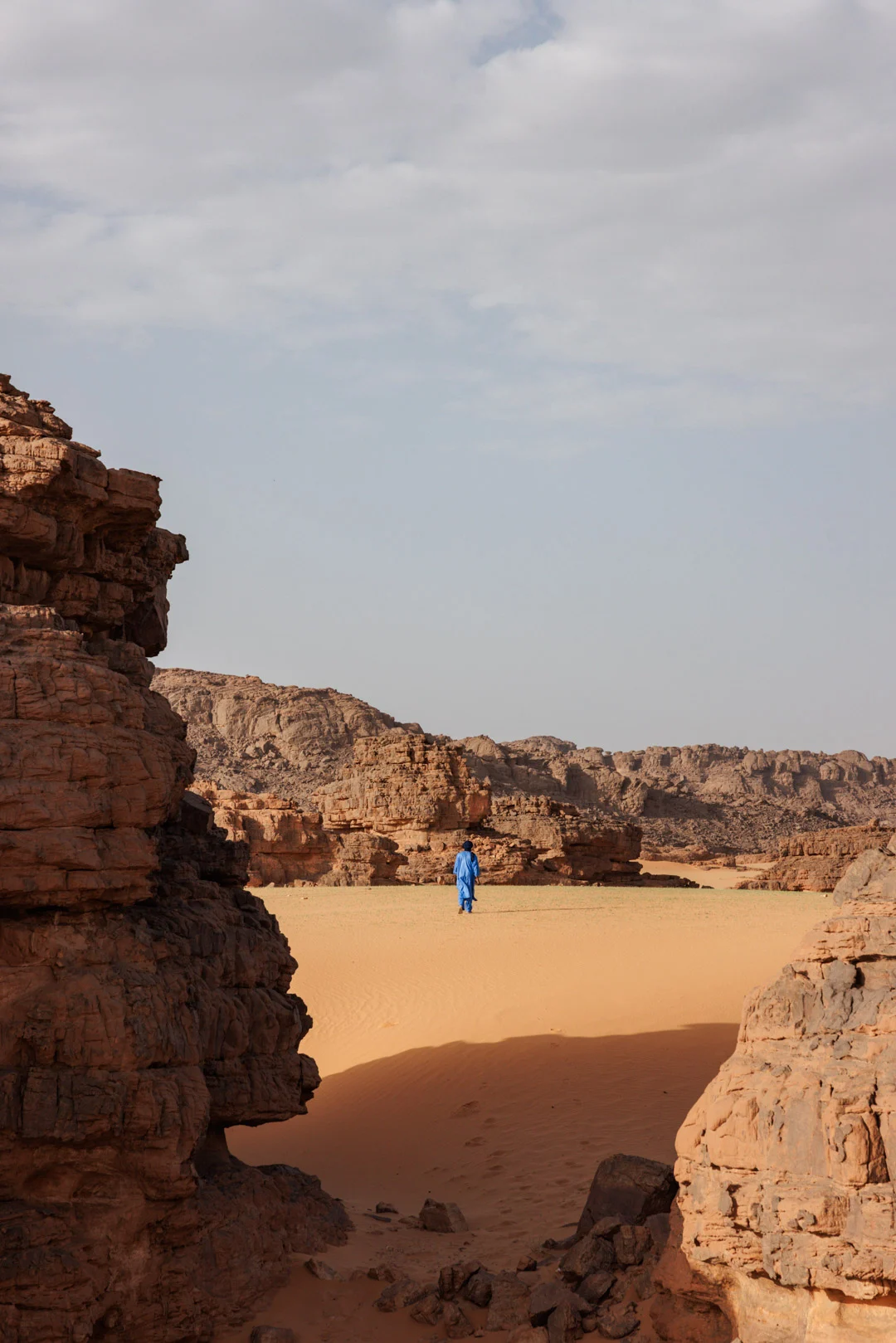
Deep in the Algerian Sahara, where the sandstone towers of the Tassili n’Ajjer rise like jagged monoliths from a sea of sand, the desert defies its reputation for static desolation. Following rare afternoon downpours, a faint, impossible green tinge washes over the arid dunes—a visceral reminder that the Sahara is not an empty void, but a living, breathing expanse.
Against this dramatic backdrop unfolds Sebeïba, an ancient festival tracing its roots back three millennia. Staged annually in the oasis town of Djanet, the day-long cultural contest pits two rival ksours (historical quarters)—El Mihan and Zelouaz—against one another in a vibrant display of traditional drumming, sword-dancing, and ancestral poetry.
Yet, Sebeïba is far more than a historical re-enactment frozen in amber. As reported by journalists and photographers Ben Buckland and Carissa Western, the festival stands at a precarious crossroads. Caught between the forces of regional security crackdowns, the commercialization of tourism, and the shifting dynamics of modern Algerian society, Sebeïba is undergoing a profound, subterranean transformation. This feature-length investigation explores the history, the ritual mechanics, the matriarchal core, and the uncertain future of one of North Africa’s most guarded cultural treasures.
Detailed Chronology: From the Mediterranean Coast to the Deep Sahara
The Journey South
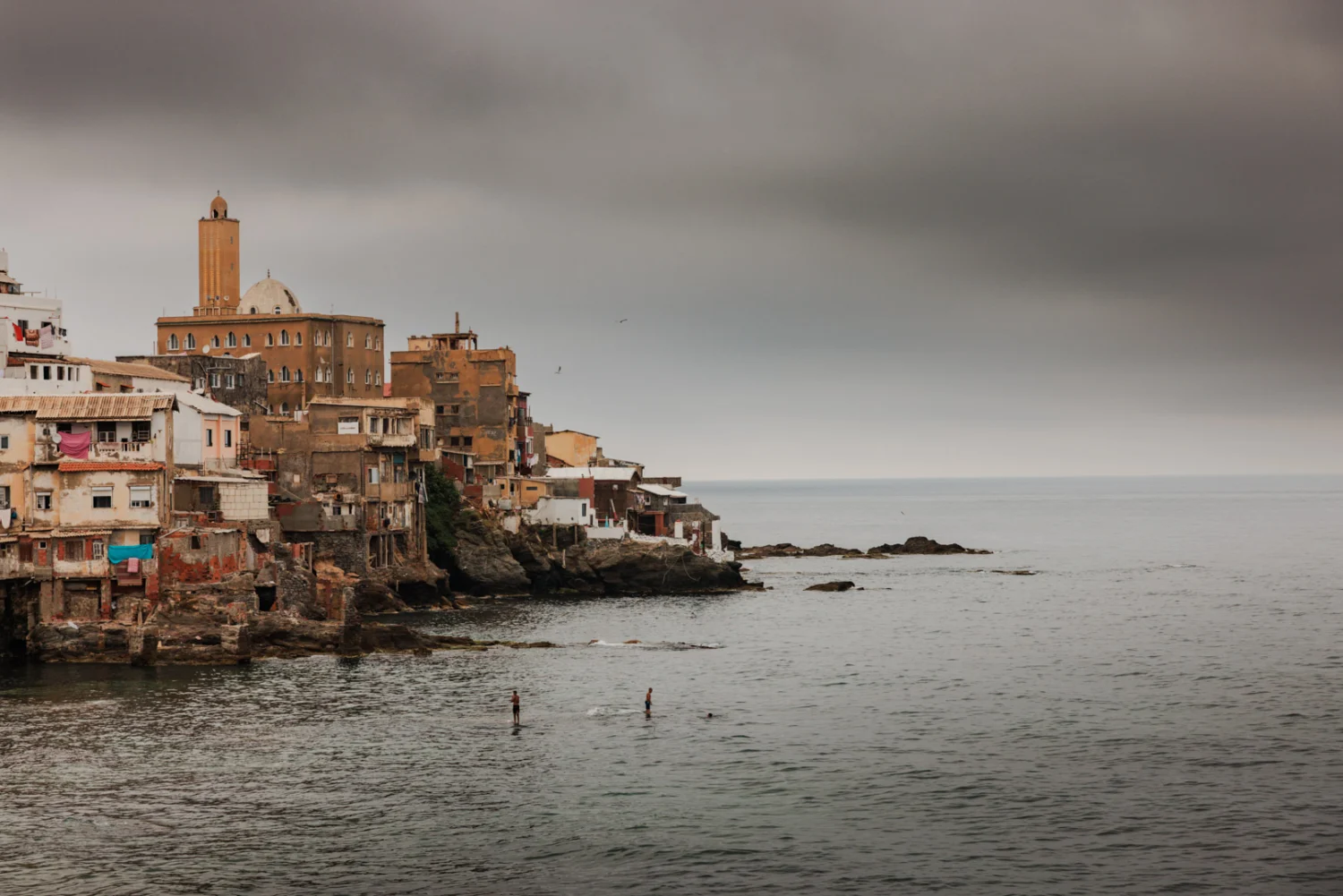
The journey to the heart of the Sahara begins days prior on the damp, sea-sprayed coast of Algiers. A cold Mediterranean fog rolls over the city, creeping through the labyrinthine alleys of the historic Casbah and wrapping the stark white minarets in long, woolen scarves. Down below, Haussmann-era boulevards impose European grids upon ancient African bedrock, flanked by fishermen hauling their nets and feral cats scavenging on rocky precipices.
These urban streets carry heavy historical scars—they were the crucible of the brutal Battle of Algiers during the war for independence, and later, the site of uncounted casualties during the dark years of the Algerian Civil War, where the haunting question of qui tue qui (who is killing whom) still lingers in the national psyche.
Leaving the coast behind, travelers board nocturnal flights bound for the deep Sahara. Descending into Djanet in the dead of night, passengers are met with the visceral realities of the desert: howling winds sweep heavy blankets of sand across the asphalt like the surface of a subterranean river caught in headlights. It is an environment that feels perpetually ready to reclaim human infrastructure should vigilance slip for even a moment.
Preparation and Anticipation
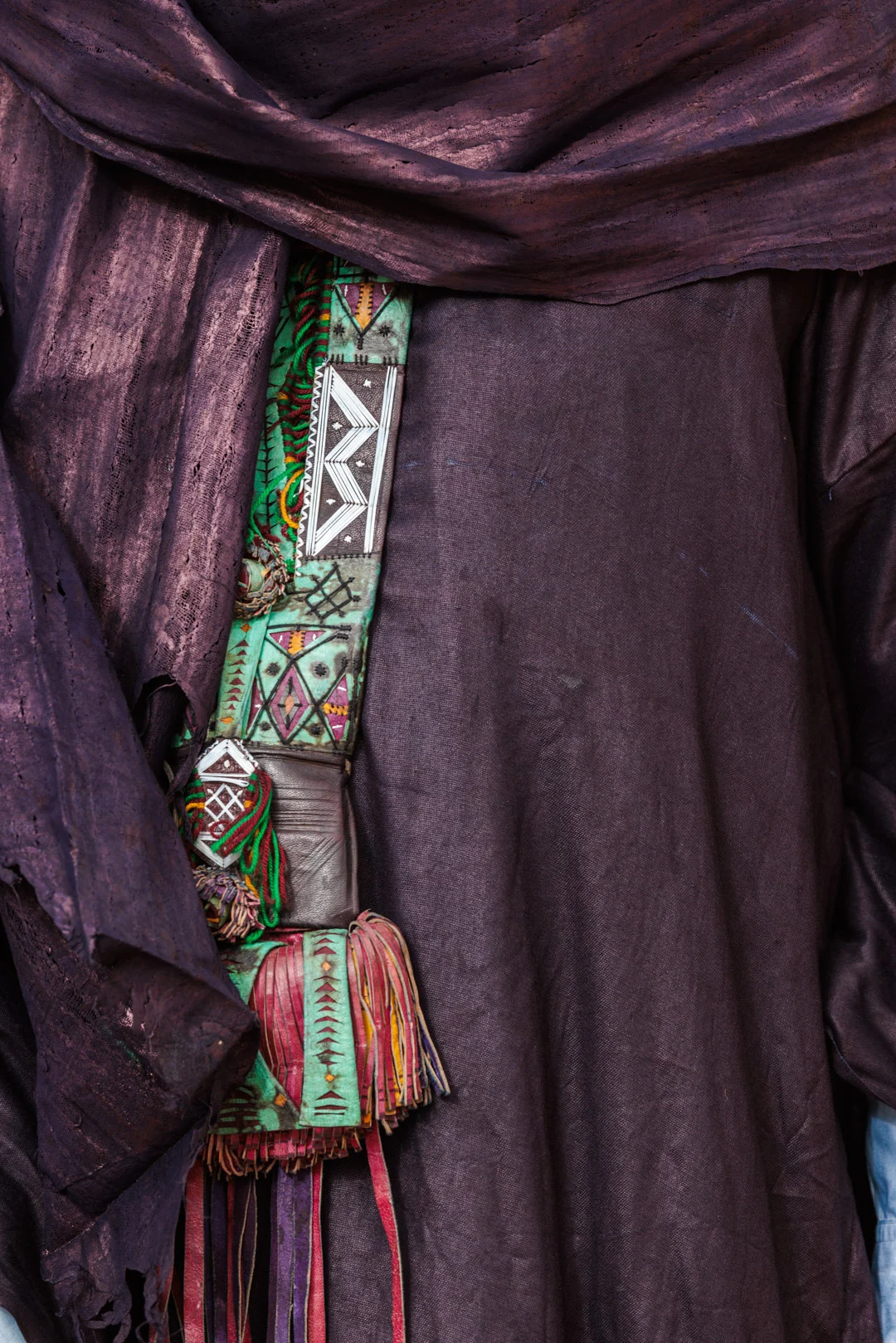
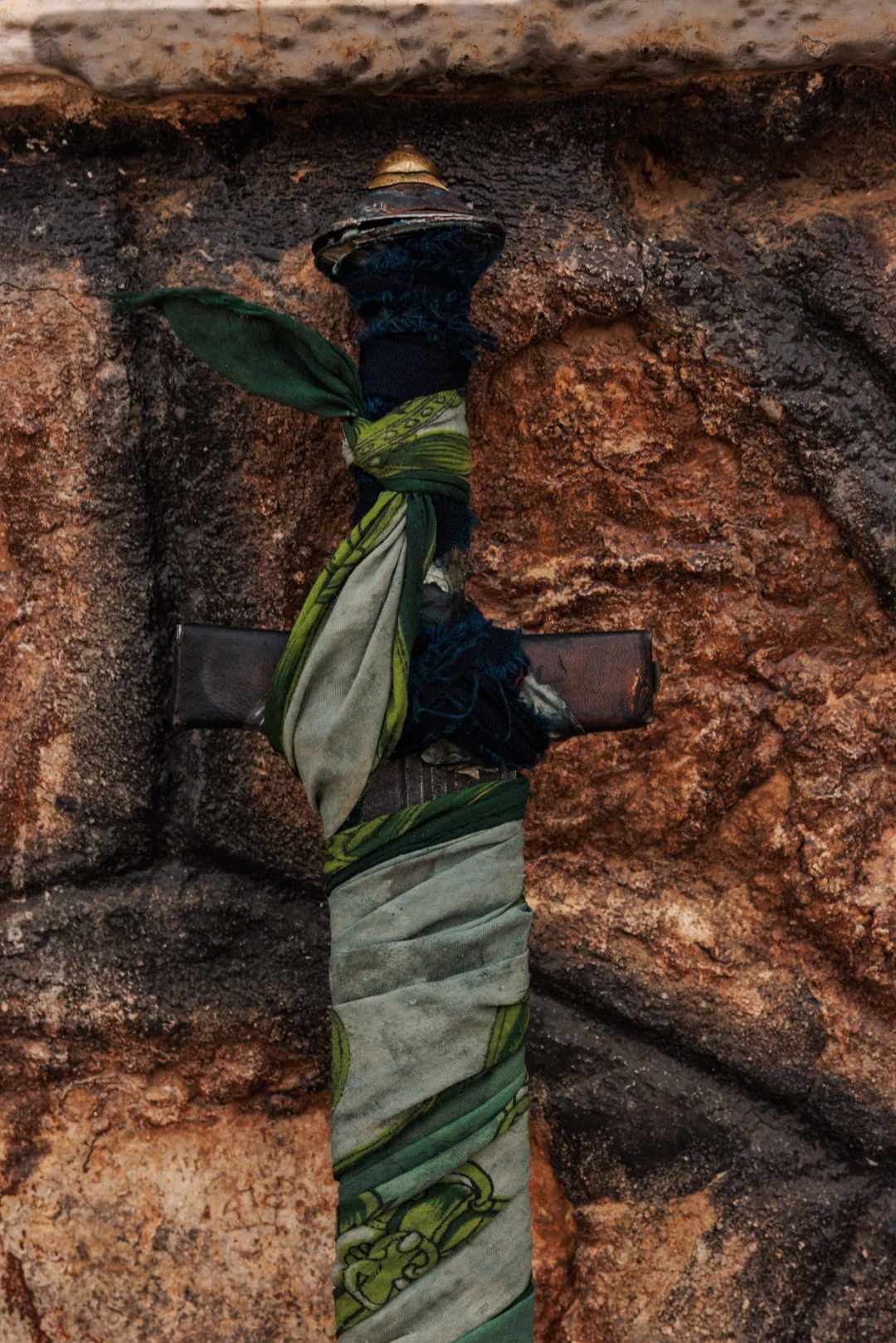
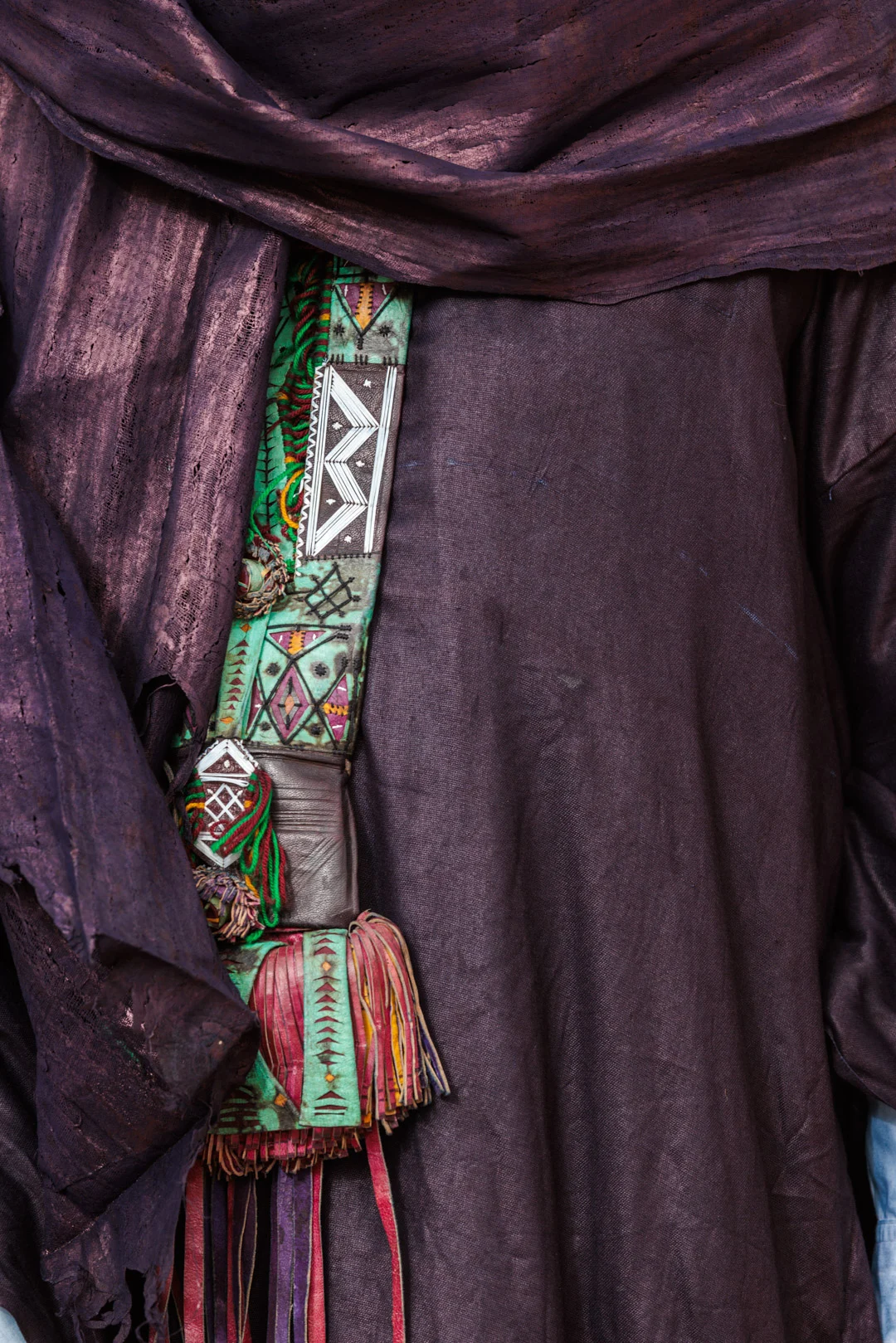
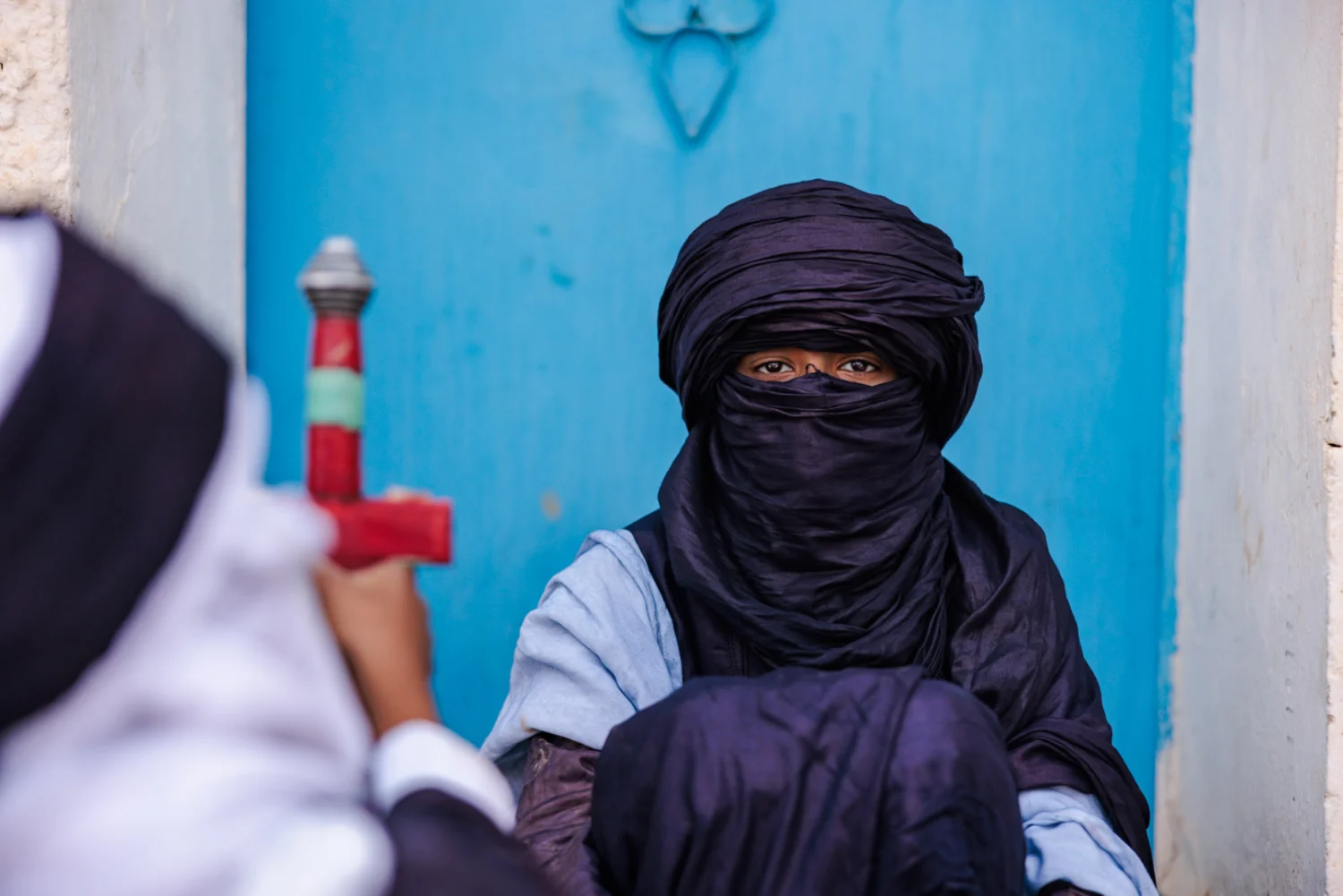
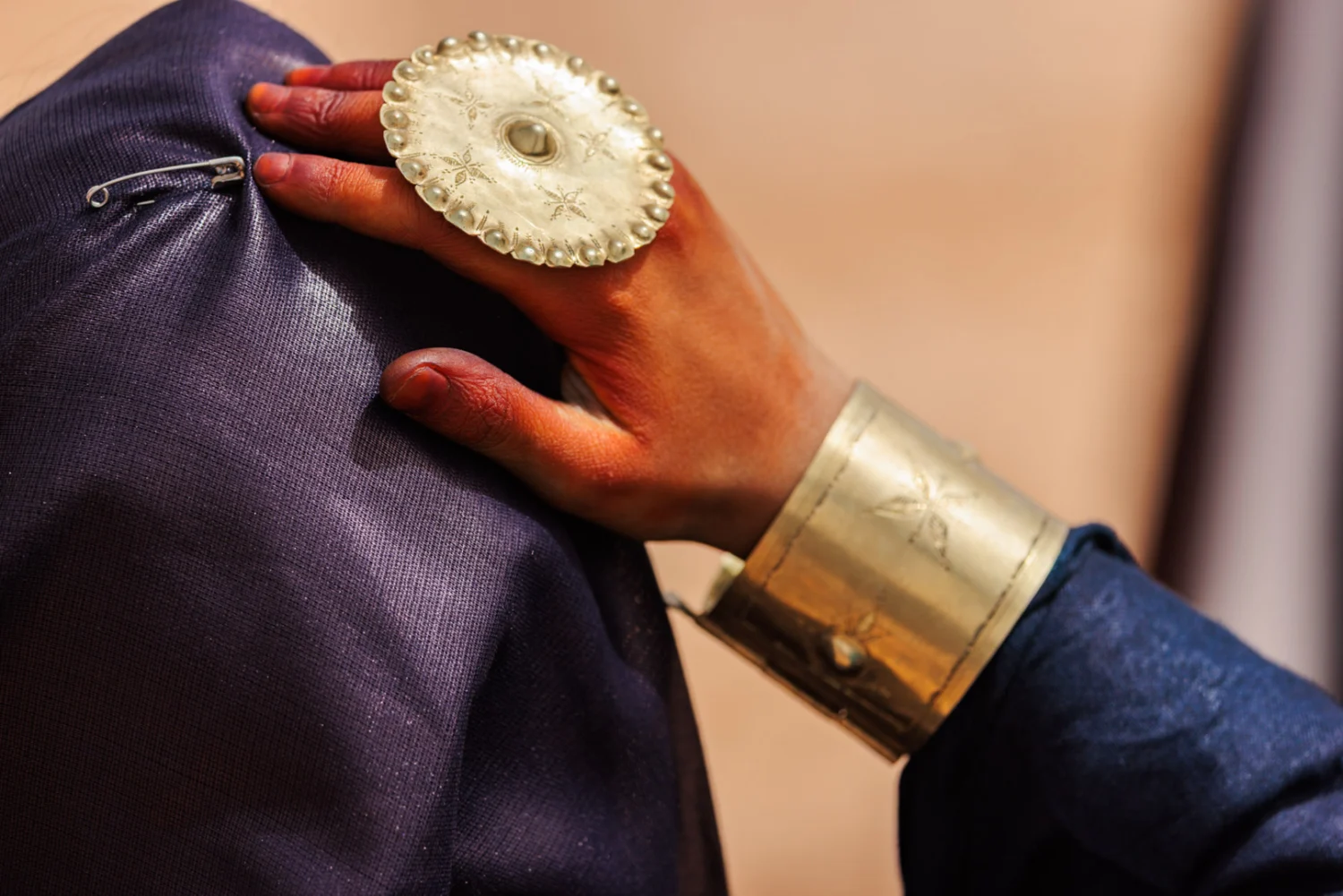
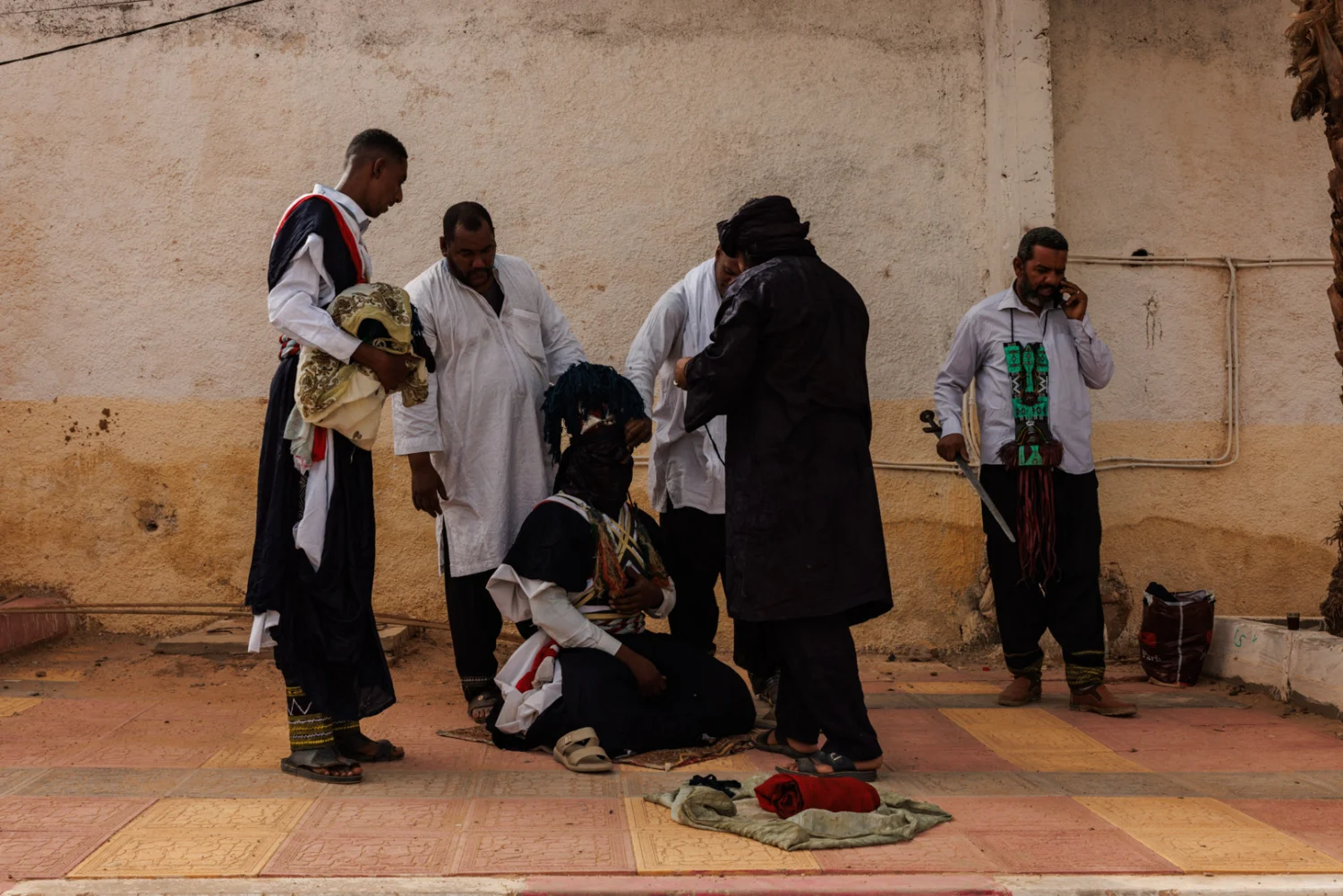
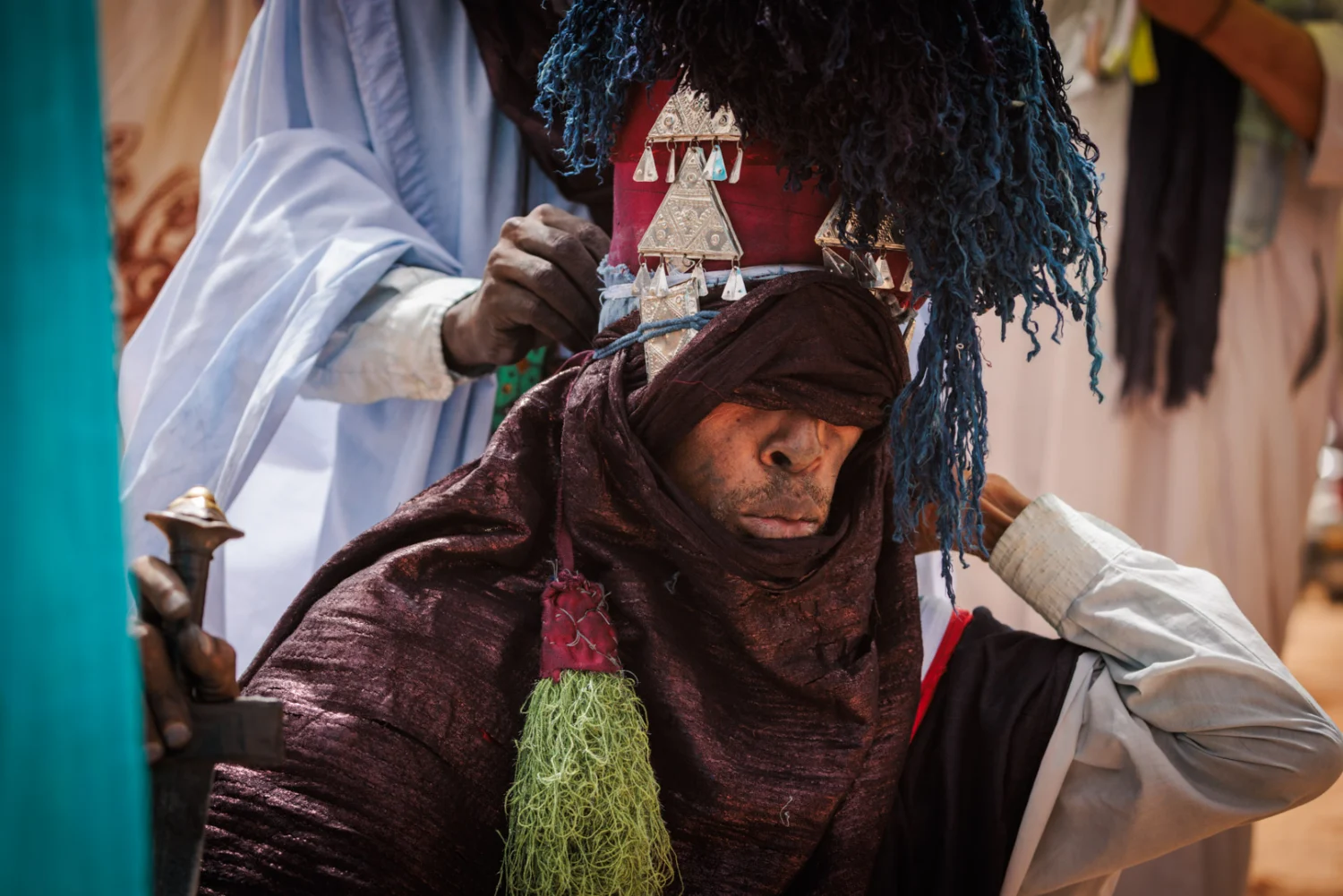
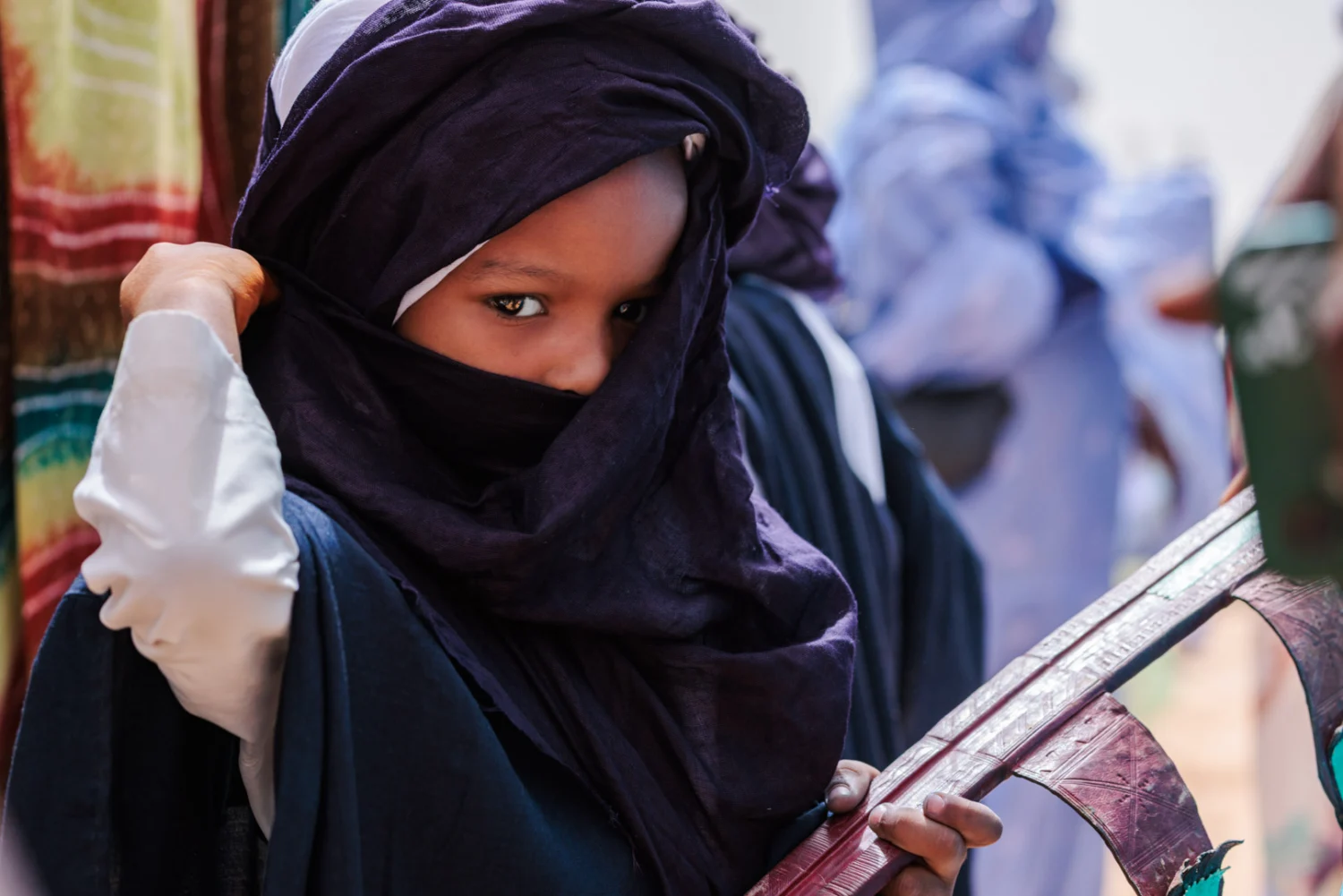
For weeks prior to the festival, Djanet hums with clandestine industry. Women meticulously polish heirloom silver, sharpen the razor-edged tekamest (swords), and inspect lengths of tagelmust—the precious indigo veils that appear nearly black in the shade.
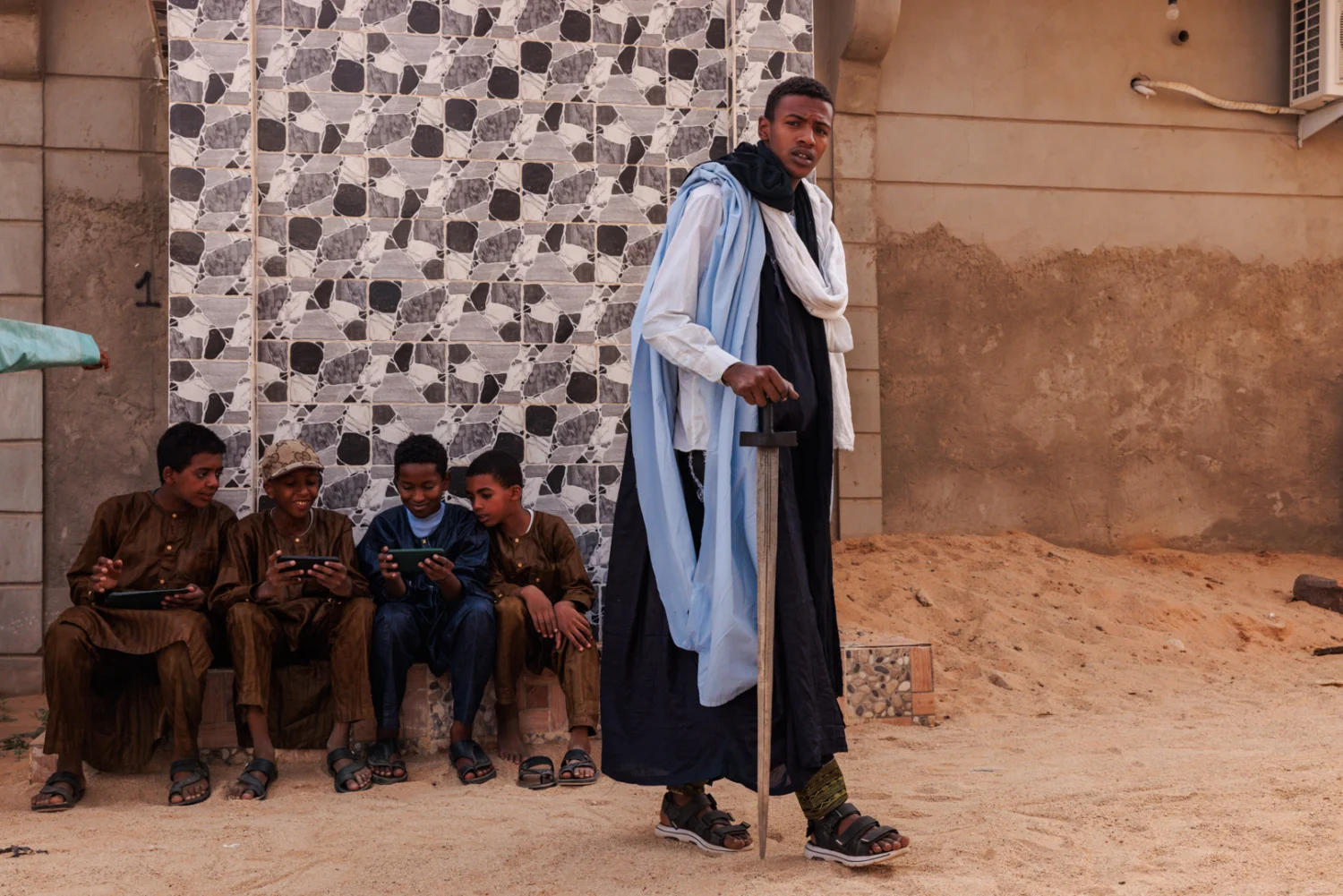
During the days leading up to the main event, the community holds intensive practice sessions. These rehearsals serve a dual purpose: they determine which side of the oasis will secure bragging rights, and they act as an informal academy for the community’s youth. Traditionally, young people were strictly barred from the high-stakes festival day. Today, however, that exclusion has softened. Elders like Moussa, a lifelong resident born into one of Djanet’s oldest founding families, emphasize that in an era of rapid social upheaval, actively instilling a passion for Sebeïba in the next generation is an existential necessity.
The Festival Day (Tunfar)
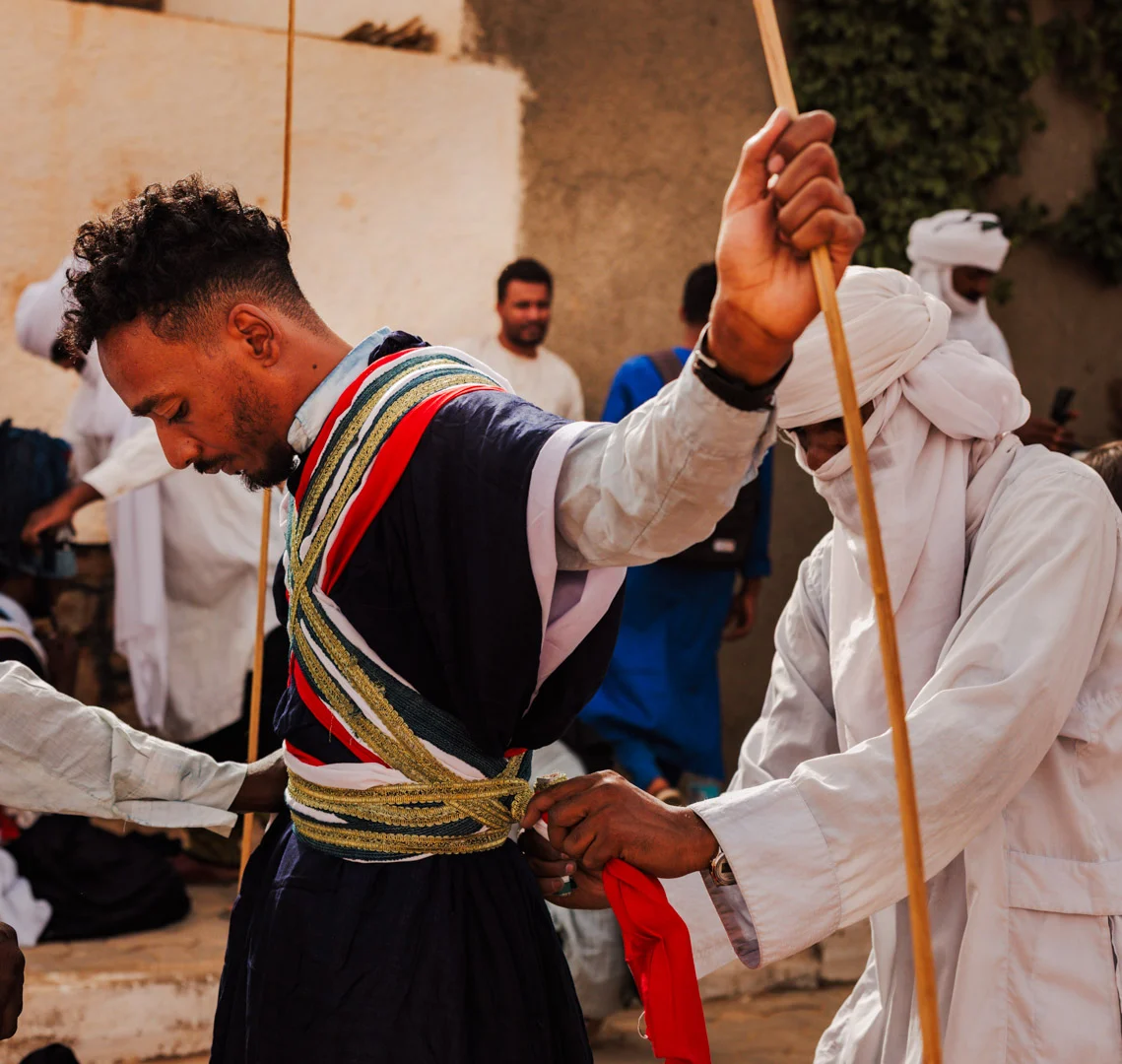
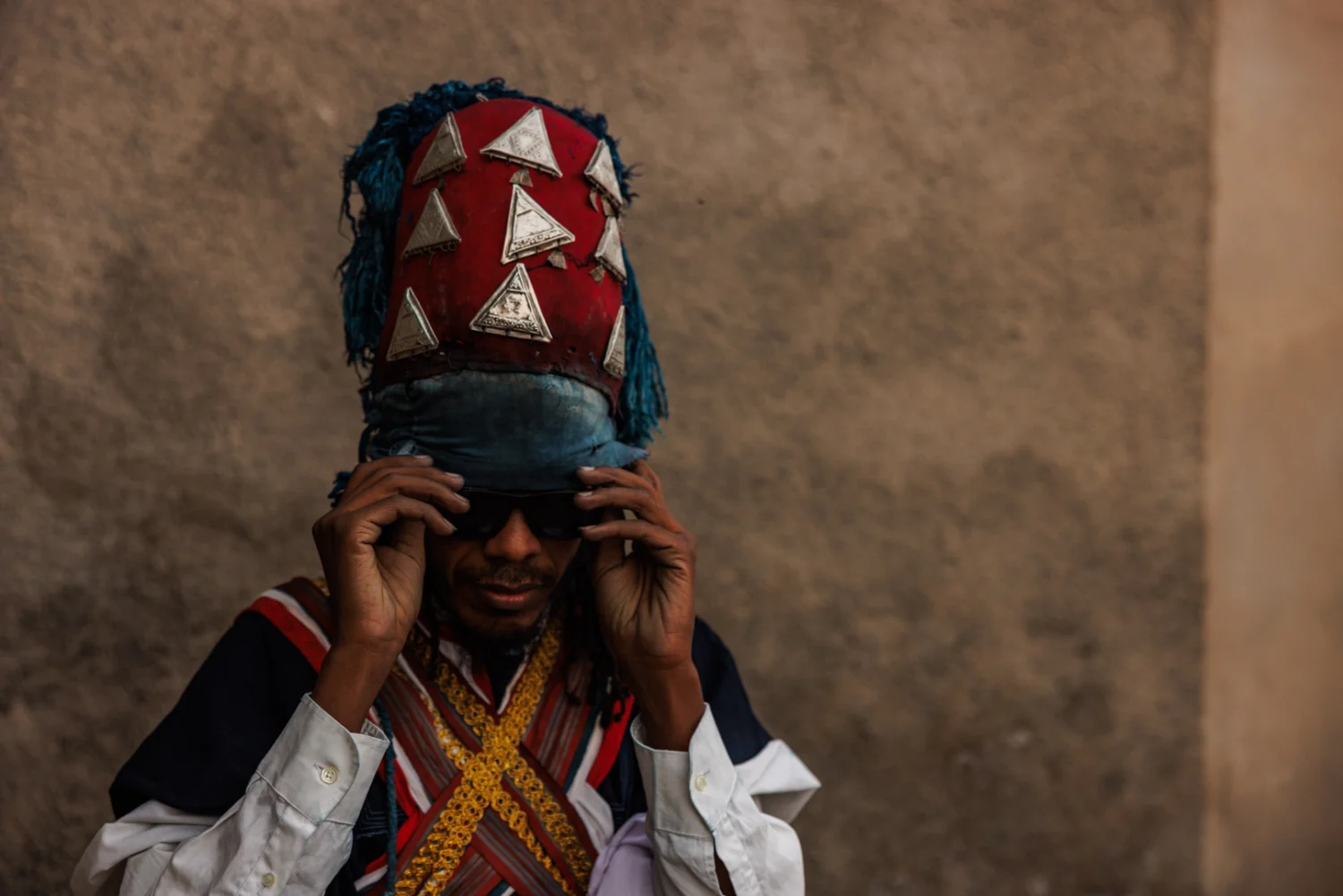
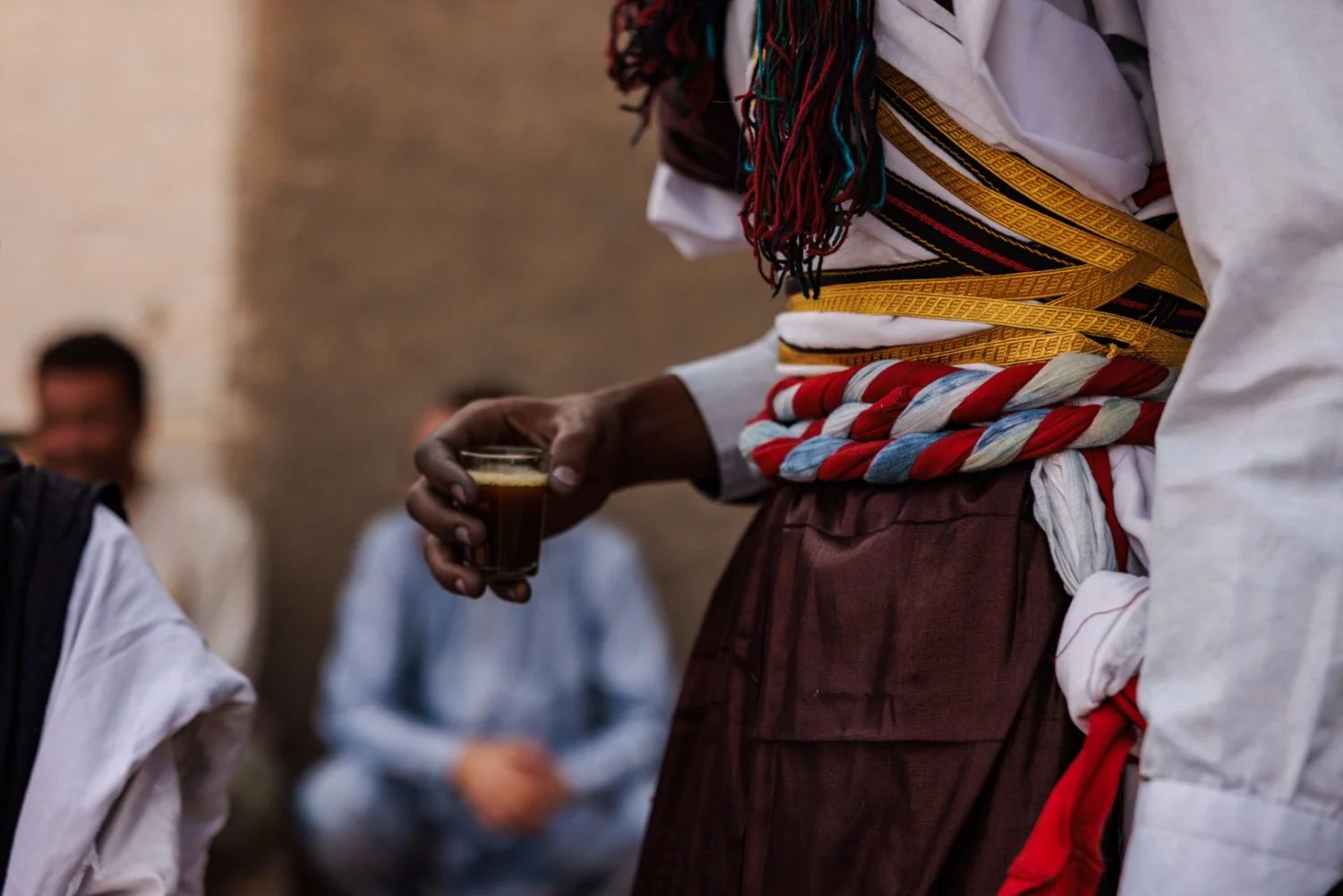
As dawn breaks on the day of the festival, participants and spectators gather along the dry riverbeds (wadis). The morning session—known as Tunfar—is officially judged based on specific metrics: the quantity and quality of the tkumbut (tall red hats studded with silver triangles), the precision of the traditional attire, and the sheer number of drawn tekamest swords.
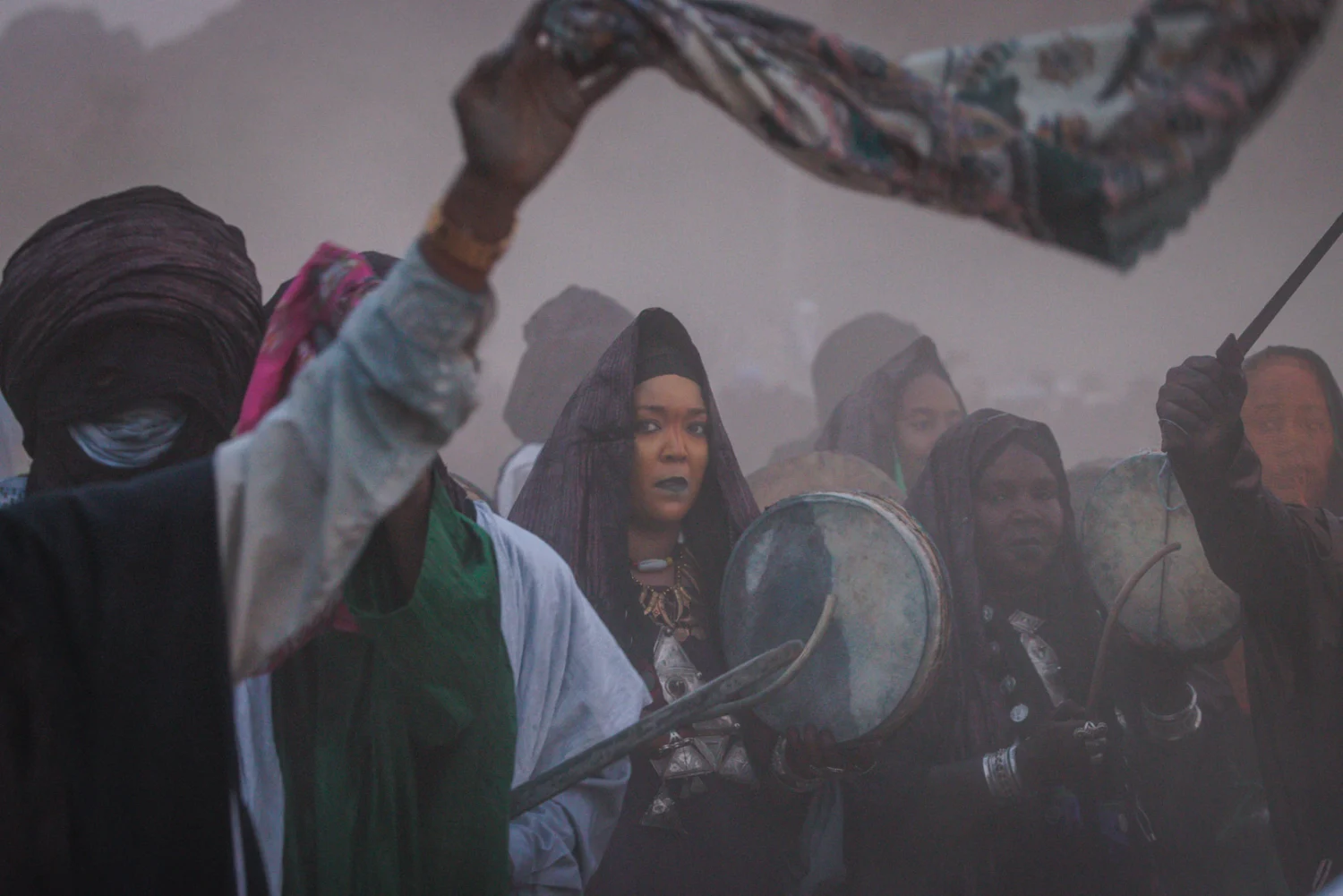
Men dressed in flowing indigo robes and plumed headdresses perform the intricate "step-step" dance, bending low with a blade in one hand and a white scarf of peace in the other. Their movements are synchronized to a hypnotic, thunderous percussion driven entirely by the women of the community. As the afternoon dust rises and the desert light softens into amber hues, the boundaries between past and present dissolve, transporting onlookers into a timeless epoch where myth and reality bleed together.
Supporting Context & Metrics: History, Myth, and the Imuhar Identity
The Origins of Sebeïba
The historical genesis of Sebeïba is shrouded in multiple, overlapping oral traditions. According to Moussa, the most prominent narrative recounts a historic truce: two rival tribes inhabiting an oasis deep in the Sahara, locked in a generation-spanning conflict, laid down their weapons upon hearing the news that Moses had triumphed over the Pharaohs.
Alternative accounts tie the festival’s origins to deep communal mourning for the death of the Queen of Sheba. In this version, the iconic tkumbut hat and accompanying poems were crafted as enduring memorials so subsequent generations would never forget their noble lineage. Other elders, nodding to the howling winds and the ever-present tesist (sand haze), suggest the festival emerged as a primal appeasement of the harsh desert elements.
The Imuhar (Tuareg) People
To accurately understand Sebeïba, one must understand the people who carry it. While mainstream media often applies the exogenous term "Tuareg," residents of Djanet explicitly self-identify as Imuhar. The etymology of "Tuareg" remains academically disputed, but for the Imuhar, self-naming is an act of cultural sovereignty.
Long relegated to the socio-economic and political margins of northern-dominated Algeria, the Imuhar are witnessing a shift. Both the Algerian state and international tourists have turned their gaze southward, transforming the Sahara from a forgotten frontier into a focal point of cultural tourism.
The Matriarchal Engine of the Festival
A central pillar of Sebeïba is its deeply matriarchal structure. As veteran historian Ibrahim notes, "Our society is matriarchal; the woman is at the base of everything."
This philosophy dictates every aspect of the festival. Aicha, a respected local farmer and performer, breaks down the division of labor with stark clarity:
"All the poems are from women, all the music and rhythm is from the women, everything is from the women, the men just dance."
During the afternoon ceremonies, women form the adjutum—a striking pyramid formation ranked strictly by age, from the oldest matriarchs to the youngest girls, who advance a position each year upon reaching adulthood. Seated around massive elganga drums painted with ancient Tifinagh-derived symbols, the women dictate the tempo, dynamics, and emotional resonance of the entire festival. The men’s feet, swords, and bodies must implicitly obey the rhythmic heartbeat established by the female drummers.
Official Statements & Cultural Perspectives
While Sebeïba remains a vibrant expression of heritage, community leaders and scholars are increasingly vocal about the pressures facing the festival in the 21st century.
Ibrahim, Historian and Veteran Teacher:
Offering a critical assessment of the festival’s evolution, Ibrahim warns against the dangers of cultural fossilization and commercial dilution. Reflecting on the introduction of modern synthetic fabrics (such as glossy cottonades and Indian saris) alongside traditional indigo, he cautions:
"The people who reflected on it were desert sages… It has been reasoned through, not stumbled into. If you have changed, you will change again and again. If you falsify today, you’ll falsify your whole life."
Moussa, Community Elder:
Emphasizing the irreplaceable nature of the ritual in an increasingly globalized world, Moussa describes Sebeïba not merely as entertainment, but as personal documentation:
"Sebeïba is my ID card in the world. You will not find Sebeïba in other places."
Geopolitical Isolation:
Behind the festive atmosphere lies a stark geopolitical reality. In previous decades, Sebeïba was a truly transnational gathering, drawing judges, musicians, and visitors from neighboring Niger, Libya, and across the Sahara. Today, heightened regional security concerns, counter-terrorism measures, and state apprehension regarding transnational gatherings have choked off these historic cross-border networks. Festivals like the Tafsit and Ziyara of the Hoggar have vanished entirely, forcing Sebeïba to turn aggressively inward. The community must now judge itself, relying on local consensus rather than external arbiters.
Future Outlook: Preservation versus Commercialization
As the last echoes of the elganga drums fade into the Saharan night and the pale moon ascends over the sandstone towers of the Tassili, a sobering question remains: What is the future of Sebeïba?
The festival finds itself caught in an existential paradox. On one hand, the influx of domestic tourists—primarily Algerians from the industrialized northern provinces eager to reconnect with a marginalized heritage—provides crucial economic and social validation. On the other hand, the creeping commercialization of culture poses an insidious threat.
The presence of state television crews wielding drones, boom mics, and tourists demanding casual selfies underscores Ibrahim’s dark prophecy:
"We fear that one day people will go looking for Sebeïba and we’ll be forced to buy a ticket… like at the cinema."
Furthermore, material shifts are evident across the oasis. Heirloom silver jewellery, once crafted exclusively by hereditary Inaden artisans using pure silver, is increasingly alloyed with nickel and zinc. Traditional family-inherited tkumbut hats are now pooled by the municipality and assigned to performers based on merit rather than bloodline. Heavy ritual drums like the uzarnas of Zelouaz have disappeared altogether due to a lack of physical stamina among younger generations.
Yet, despite these material losses, the core spirit of Sebeïba endures. As long as the desert blooms with the faintest green after a rare rainstorm, as long as the women hammer out relentless rhythms on chalk-marked drums, and as long as the Imuhar youth learn to lift the indigo tagelmust, Sebeïba will remain the beating heart of the Sahara—a defiant testament to resilience, community, and cultural survival.
Note: Some interview names have been modified using pseudonyms to protect the identities of individuals discussing sensitive cultural and political topics within Algeria.



Comments
Facebook App ID not configured. Please add it in the Customizer.