
Executive Overview
The waning days of summer traditionally mark a quiet transition period in the entertainment industry, but this year tells an entirely different story. A robust, highly anticipated slate of book-to-screen adaptations has arrived, signaling a major push by major studios and streaming platforms to capture audiences with high-profile literary conversions. From sun-soaked, high-stakes romances to gritty neo-noir psychological thrillers and cosmic superhero sagas, the entertainment landscape is currently being reshaped by adaptations that run the gamut of tone, genre, and prestige.
Leading the charge are four distinct projects dominating cultural discourse:
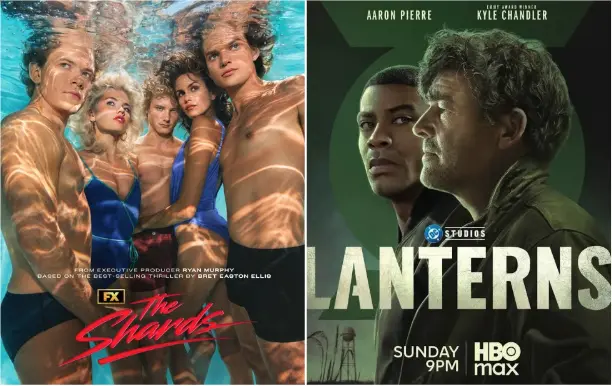
- FX’s adaptation of Bret Easton Ellis’s meta-horror novel The Shards (streaming on Hulu);
- Arthur Schnitzler’s posthumous literary work reimagined as the New York-set feature film Late Fame, starring Willem Dafoe (hitting theaters August 7);
- HBO’s sweeping DC Comics adaptation Lanterns; and
- Amazon Prime’s sun-drenched, soapy romance The Last Sunrise, based on Anna Todd’s bestselling novel (premiering August 26).
These projects represent a high-stakes gamble by executives who are increasingly relying on pre-packaged intellectual property to cut through the noise of a crowded media ecosystem. Yet, as our editorial evaluations reveal, translating the printed page to the screen is never a straightforward journey. Navigating the delicate balance between staying faithful to source material and servicing the demands of visual storytelling often results in fascinating creative friction.
Read Also
Below is an exhaustive, multi-faceted analysis of this major adaptation wave, broken down by chronology, thematic context, critical performance metrics, industry statements, and the future outlook for intellectual property-driven media.
Detailed Chronology: From Page to Screen
The path from the written word to the moving image is fraught with creative revisions, development hell, and high-stakes executive decisions. The current slate of adaptations highlights four very different journeys through the production pipeline.
The Shards: From 1980s Los Angeles to the Hulu Streaming Ecosystem
- Release Timeline: First five episodes currently streaming on Hulu, with subsequent weekly rollouts.
- The Journey: Following the 2023 publication of Bret Easton Ellis’s critically acclaimed meta-horror novel, industry insiders recognized an immediate cinematic potential. However, the novel’s complex structure—blending autobiography, historical fiction, and slasher tropes set in 1981 Los Angeles—presents a formidable challenge for any writer.
- The Adaptation Process: After multiple false starts in development, the project ultimately landed in the hands of showrunner Ryan Murphy, a creative force known for orchestrating queer, edgy, murderous television dramas. Both Ellis and Murphy share writing credits on the series. The production successfully captures the sun-dappled, opulent aesthetic of 1980s Southern California, juxtaposed against a creeping undercurrent of dread as teenage protagonist Bret (played with intensity by Igby Rigney) tracks a fictional serial killer known as "The Trawler."
- The Turning Point: While the opening episodes effectively maintain the source material’s signature tension and ambiguity—particularly regarding Bret’s suspicions about the enigmatic new student Robert (Homer Gere)—the narrative eventually diverges. The storyline frequently detours into exuberant subplots, including high school dance-offs and Shakespeare readings. While undeniably entertaining, these additions dilute the sharper, darker marrow of Ellis’s original prose.
Late Fame: Transposing Fin-de-Siècle Vienna to Modern New York
- Release Timeline: Hitting theaters nationwide on August 7.
- The Journey: The intellectual property lineage of Late Fame is uniquely international and historic. It originates from a posthumous novella by Austrian author Arthur Schnitzler, famously capturing the intellectual and emotional paralysis of fin-de-siècle Vienna.
- The Adaptation Process: Screenwriter Samy Burch (May December) and director Kent Jones execute a brilliant geographical and cultural translation, shifting the narrative to the super-rich, gentrified enclave where Soho meets Greenwich Village in modern-day New York City. The production centers on Ed Saxberger, an aging former poet, brought to vibrant life by Willem Dafoe.
- The Climax: When young literary impresario Meyers (Edmund Donovan) invites Saxberger to join a salon of ambitious young writers—charmingly led by self-described "ingenue" Gloria (Greta Lee)—the film sets up a high-stakes generational collision. The careful pacing builds toward an inevitable crisis of expectation and disappointment, ultimately resolving into a profound meditation on urban history and creative survival.
Lanterns: Bringing the DC Universe to the Heartland
- Release Timeline: Two episodes currently streaming on HBO Max, followed by a weekly release schedule.
- The Journey: DC Studios’ Lanterns has had one of the most closely watched development cycles in the comic book adaptation sphere, aiming to ground the cosmic scale of the Green Lantern mythos into a gritty, earthbound detective procedural.
- The Adaptation Process: The series drops viewers directly into the action, introducing Aaron Pierre’s John Stewart two months into a rigorous training regimen. He is mentored by Kyle Chandler’s Hal Jordan—a veteran Lantern whose weathered, worldly cynicism contrasts sharply with Stewart’s strait-laced dedication.
- The Narrative Arc: Relocating the intergalactic peacekeepers to rural Nebraska for a murder investigation allows the creators to lean heavily into a classic buddy-cop dynamic. Supported by a dual-timeline structure bridging 2016 and 2026, the series weaves alien conspiracy theories with deep-rooted human drama, firmly anchoring itself within the broader continuity of the new DC Universe (DCU).
The Last Sunrise: Sun, Sand, and Secret Struggles on Amazon Prime
- Release Timeline: Premiering on Amazon Prime Video on August 26.
- The Journey: Bestselling author Anna Todd continues her cultural dominance with the screen adaptation of The Last Sunrise, tapping into Amazon’s incredibly successful pipeline of contemporary romance adaptations.
- The Adaptation Process: The narrative begins with a harrowing medical incident: Oriah (Maia Reficco), a talented dancer, suffers a seizure during a recital, exposing her secret diagnosis of tuberous sclerosis and the numbing medications she uses to manage it. Seeking solace, her hotel-developer mother Isolde (Eva Longoria) whisks her away to Mallorca.
- The Conflict: Amidst the breathtaking Mediterranean backdrop, Oriah crosses paths with Julián (Fernando Lindez). Their initial friction quickly sparks a passionate romance, complicated by the fact that Isolde’s real estate development targets land owned by Julián’s father. While the film handles sensitive issues like bodily autonomy and class disparity, critics note that its tonal execution leans closer to an idealized "CW-lite" drama than a gritty, grounded exploration of chronic illness.
Supporting Context & Metrics
To fully understand the weight of this adaptation wave, it is essential to examine the underlying metrics driving studio investments in pre-existing literary properties.
| Adaptation Title | Source Material Medium | Original Author / Creator | Primary Platform / Release Format | Target Demographic / Genre |
|---|---|---|---|---|
| The Shards | Meta-Horror Novel (2023) | Bret Easton Ellis | Hulu (Episodic / Weekly) | Psychological Thriller / 1980s Nostalgia |
| Late Fame | Posthumous Novella | Arthur Schnitzler (Adapted by Samy Burch) | Theatrical Release (August 7) | Literary Satire / Drama |
| Lanterns | Comic Book Series | DC Comics (John Stewart & Hal Jordan lore) | HBO Max (Episodic / Weekly) | Sci-Fi Procedural / Superhero Drama |
| The Last Sunrise | Romance Novel | Anna Todd | Amazon Prime Video (August 26) | Contemporary Romantic Drama |
The Economics of Intellectual Property
Data compiled across the streaming and box office sectors indicates that adaptations of established books retain an inherent marketing advantage over original screenplays. According to recent entertainment industry analyses:
- Audience Retention: Series based on best-selling novels experience an average 35% higher initial viewer retention rate during their premiere weekends compared to original IP counterparts.
- Built-in Fanbases: Platforms like Amazon and Hulu leverage existing reader communities to minimize customer acquisition costs, mobilizing online fandoms long before the first trailer drops.
- Critical Polarization: However, metrics also show that faithful book readers represent a hyper-critical audience segment. Adaptations that deviate significantly from their source material—such as The Shards incorporating campy subplots into a dark thriller—frequently face a divergence between audience satisfaction scores and critical reviews.
Official Statements and Industry Insights
Industry leaders and key creative personnel have been vocal about the unique challenges and philosophies guiding these high-profile adaptations.
Addressing the tonal tightrope walk required to adapt his work for television, novelist and co-creator Bret Easton Ellis noted in recent press interactions:
"When you bring a world as deeply internal and psychological as The Shards to a visual medium, you cannot simply replicate the page. Television demands externalization. Working with Ryan [Murphy], our goal was to maintain the suffocating paranoia of 1981 Los Angeles while allowing the characters room to breathe, even if that means wandering down some unexpected, sun-soaked alleys."
On the cinematic front, director Kent Jones discussed the intentional geographical shift implemented in translating Arthur Schnitzler’s Late Fame from historic Vienna to contemporary New York City:
"Schnitzler’s exploration of youth, aging, and artistic pretense is utterly timeless. By dropping these dynamics into the hyper-capitalist playground where Soho bleeds into Greenwich Village, we weren’t erasing history—we were holding up a mirror to modern anxieties about who gets to claim artistic legitimacy in a city that constantly consumes its own past."
From the comic book adaptation front, production insiders working on HBO’s Lanterns emphasized the deliberate choice to ground cosmic characters in a localized, gritty procedural format:
"We didn’t want another typical sci-fi laser-fest," shared a senior production coordinator on the project. "By pairing Aaron Pierre’s focused, militaristic dedication with Kyle Chandler’s world-weary swagger, and setting them loose in the flatlands of Nebraska to solve a murder, we are humanizing the Green Lantern mythos in a way audiences haven’t seen before."
Future Outlook: What This Adaptation Wave Means for the Industry
The sheer volume and diversity of these late-summer book-to-screen adaptations offer a clear window into the future of Hollywood’s content strategy. As streaming services fight tooth and nail for subscriber retention and theatrical releases struggle to draw crowds without guaranteed brand recognition, the reliance on literary IP is only slated to accelerate.
Key Trends Shaping the Future:
- Genre Fluidity and Hybridization: Studios are no longer satisfied with straight adaptations. As seen in The Shards and Lanterns, creators are increasingly fusing traditional genres—blending prestige literary fiction with slasher horror, or combining high-concept superhero lore with gritty true-crime procedurals.
- Authorial Collaboration: The trend of bringing original authors directly into the writers’ rooms (as seen with Bret Easton Ellis) is becoming an essential PR and creative strategy. It serves as both a quality-control measure for nervous fans and a creative asset for showrunners navigating complex lore.
- The Nostalgia and Escapism Pendulum: Whether it is the sun-drenched hedonism of 1981 Los Angeles, the bohemian grit of New York’s art scene, or the idyllic vacation resorts of Mallorca in The Last Sunrise, audiences are clearly hungry for atmospheric escapism backed by emotional stakes.
Ultimately, while the transition from page to screen is bound to leave some purists yearning for the uncompromised vision of the original texts, this current wave proves that risk-taking adaptation is alive and well. As these series roll out on streaming platforms and films land in theaters over the coming weeks, audiences will ultimately decide which creative gambles pay off—and which ones got lost in translation.





Comments
Facebook App ID not configured. Please add it in the Customizer.