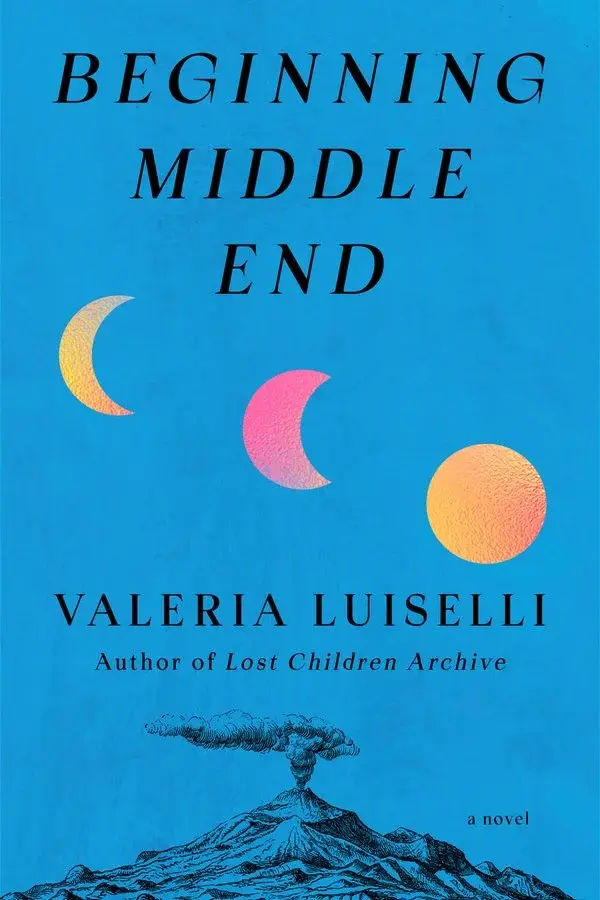
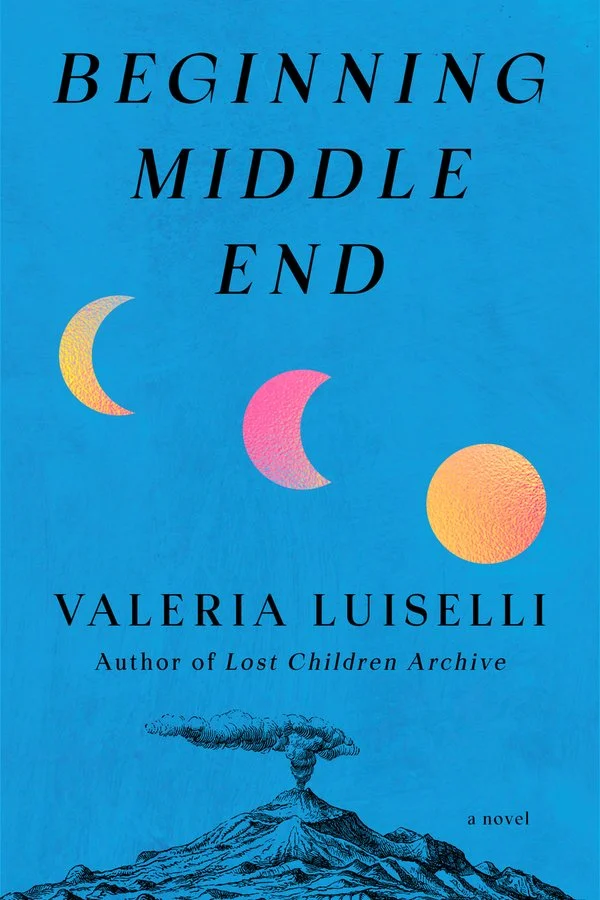
Renowned Mexican author Valeria Luiselli continues to dismantle the conventional boundaries of novelistic form. Her latest work, Beginning Middle End, represents an ambitious synthesis of literature, documentary acoustics, and archival art. Deepening the thematic inquiries into displacement, memory, and multi-generational heritage that defined her prior celebrated works—such as Tell Me How It Ends and Lost Children Archive—Luiselli’s new project expands the novel into a multi-sensory journey.
Centering on an unnamed narrator and her 12-year-old daughter traveling across Sicily to return a stolen archaeological relic, Beginning Middle End acts as both a maternal road novel and an investigation into geological and geopolitical borders. The book incorporates QR codes linked to authentic field recordings captured throughout Sicily—ranging from the subterranean rumbles of volcanic exhalations to the rhythmic chants of local fish markets—alongside polaroid photography and embedded epistolary fragments.
In an extensive dialogue with fellow Mexican author Ofelia Montelongo, Luiselli unpacks the artistic evolution behind her sound-driven prose, the complex geopolitical status of Sicily as a meeting point for continents and migrant paths, and her groundbreaking process of composing the novel simultaneously in Spanish and English without traditional translation.
Detailed Chronology: The Evolution of Luiselli’s Multi-Modal Oeuvre
Luiselli’s novelistic methodology has developed across more than a decade of literary and interdisciplinary experimentation. Rather than viewing each publication as a discrete entity, Luiselli conceives of her bibliography as a continuum—where abandoned artistic paths from previous projects are resuscitated and transformed in subsequent works.
+-----------------------------------------------------------------------------------+
|                     VALERIA LUISELLI'S LITERARY EVOLUTION                         |
+-----------------------------------------------------------------------------------+
|                                                                                   |
|  2011 -- Faces in the Crowd (Los ingrávidos)                                       |
|          * Translation, spectral identities, multi-layered literary voices.       |
|                                                                                   |
|  2014 -- Swings of Harlem                                                         |
|          * Early experimentation with Polaroid photography; mapping urban spaces. |
|                                                                                   |
|  2017 -- Tell Me How It Ends: An Essay in Forty Questions                         |
|          * Nonfiction transcribing court questionnaires of undocumented children. |
|                                                                                   |
|  2019 -- Lost Children Archive                                                    |
|          * Introduction of sound documentarian narrator; blending audio concepts   |
|            with the US-Mexico border road novel.                                  |
|                                                                                   |
|  2021+ - Echoes from the Borderlands                                              |
|          * 24-hour sound installation documenting sonic borderscapes.             |
|                                                                                   |
|  Current - Beginning Middle End                                                   |
|          * Fully integrated QR soundscapes, geotectonic borderland setting (Sicily), |
|            and simultaneous dual-language composition.                            |
|                                                                                   |
+-----------------------------------------------------------------------------------+
Key Milestones in Luiselli’s Work:
2011 (Faces in the Crowd / Los ingrávidos): Established Luiselli’s preoccupation with translation, fragmented narrative structures, and spectral presences across urban geographies.
Mid-2010s (Swings of Harlem): A lesser-known project mapping childhood playground swings in Harlem, marking her initial integration of visual archival elements via Polaroid photography.
2017 (Tell Me How It Ends: An Essay in Forty Questions): A nonfictional testimonial born from her work translating intake questionnaires for undocumented children in federal immigration custody, translating bureaucratic procedures into a stark moral critique.
2019 (Lost Children Archive): Features an audio-documentarian protagonist recording environmental and human sounds along the US–Mexico border, bridging prose fiction with acoustic theory.
2021–Present (Echoes from the Borderlands): A multi-year sound art installation and 24-hour sonic essay capturing environmental acoustics, land border tensions, and human histories along the US Southwest border.
Current (Beginning Middle End): The formal culmination of these precedents. The novel combines field-recorded ambient audio, visual artifacts, and epistolary fragments into a road narrative navigating the European-African border zone.
Supporting Context & Metrics: Sicily as a Tectonic and Geopolitical Nexus
To understand the architecture of Beginning Middle End, one must examine its core setting: the island of Sicily. Luiselli chooses Sicily not merely as a scenic backdrop, but as a site where physical geology mirrors human history.
+------------------------------------------------------------------------------------+
|                         SICILY: GEOLOGICAL & GEOPOLITICAL NEXUS                    |
+------------------------------------------------------------------------------------+
|                                                                                    |
|   GEOLOGICAL LEVEL:                                                                |
|   Subduction Zone: African Tectonic Plate meets Eurasian Tectonic Plate.           |
|   Phenomena: Volcanic exhalations (Etna/Stromboli), erratic wind patterns,         |
|              complex maritime currents.                                            |
|                                                                                    |
|   GEOPOLITICAL LEVEL:                                                              |
|   Central Mediterranean Route: Key maritime entry point for migration to Europe.   |
|   Cultural Encounters: Millenniums of convergence between Mediterranean, North    |
|                        African, and Middle Eastern civilizations.                  |
|                                                                                    |
|   NARRATIVE TRANSLATION IN "BEGINNING MIDDLE END":                                 |
|   * Audio Layer: QR code field recordings act as an acoustic "Greek Chorus."       |
|   * Multi-Generational Arc: Memory loss & restoration across four generations.     |
|                                                                                    |
+------------------------------------------------------------------------------------+
The Geotectonic Dimension
Sicily sits atop the active subduction zone where the African Tectonic Plate slides beneath the Eurasian Plate. This geological tension generates intense volcanic activity (including Mount Etna and Stromboli), seismic volatility, and hyper-specific microclimates marked by powerful maritime winds and complex currents. In Beginning Middle End, these geophysical forces are converted into narrative motifs, representing the friction between past and present, memory and forgetting.
The Geopolitical Reality
For millennia, Sicily has functioned as an crossroads for Mediterranean empires—Phoenician, Greek, Roman, Arab, and Norman. In contemporary geopolitics, the island and its surrounding waters (such as Lampedusa) serve as a primary gateway along the Central Mediterranean migration route. By setting her narrative at this junction, Luiselli connects historical diasporas with contemporary movements of people across borders.
Sensory Innovation via QR Soundscapes
Rather than relying on generic stock sound effects, Luiselli and her collaborators conducted extensive on-site sound gathering throughout Sicily. The novel embeds specific environmental sounds:
Subterranean Volcanic Audio: Acoustic capture of volcanic venting, registering at frequencies similar to distant thunder.
Cultural Soundscapes: Unfiltered field recordings of Sicilian fish markets, capturing the vocal calls and songs of local vendors.
These audio elements act as an emotional and narrative "Greek chorus," providing readers with an acoustic counterpoint to the written text.
Official Statements: In Conversation with Valeria Luiselli
In an interview conducted via Zoom with Mexican author Ofelia Montelongo, Valeria Luiselli detailed the conceptual framework, formal choices, and philosophical questions behind Beginning Middle End.
+------------------------------------------------------------------------------------+
|                         KEY THEMATIC INSIGHTS FROM LUISELLI                        |
+------------------------------------------------------------------------------------+
|                                                                                    |
|  ON UNEXPLORED PATHS:                                                              |
|  "There's always a moment in a novel when you have to abandon a path... Those     |
|   abandoned paths are ones that I often pick up again in another book."            |
|                                                                                    |
|  ON GEOPOLITICAL BORDERLANDS:                                                      |
|  "Sicily is an island that has belonged to everyone and to no one... It's a very   |
|   bizarre kind of borderland."                                                     |
|                                                                                    |
|  ON RECLAIMING IMAGINATION:                                                        |
|  "We all have a right to imagine. We should exercise it freely."                   |
|                                                                                    |
+------------------------------------------------------------------------------------+
On Narrative Continuity and the Evolution of Characters
Addressing how themes of displacement and maternal relationships recur across her work, Luiselli described her writing process as a continuous cycle of inquiry:
"There is a line of continuity in many of my books… The characters are not the same. The narrator has a different profession in each of the books. In Faces in the Crowd she’s a translator, in Lost Children Archive she’s a sound documentarist, and in Beginning Middle End she’s a fiction writer.
The narrator somehow has grown alongside me. It’s like she’s a kind of presence in my life… I always end up writing about what I don’t know when I start writing a book, and the process of writing it is a process of me trying to get closer to knowing something. There’s always a moment in a novel when you have to abandon a path because you are already on another. Those abandoned paths are ones that I often pick up again in another book."
On Constructing the Sonic Landscape of Sicily
Expanding on the integration of audio field recordings into text, Luiselli emphasized the physical nature of authentic soundscapes:
"There is an entire layer of sound that we recorded on-site in Sicily, and we recorded all the winds mentioned. We recorded underwater soundscapes and currents, beautiful volcanic exhalations—which sound a little like thunder, so I really hope the listeners understand that what they’re listening to is a volcano and not thunder…
We recorded fish markets where fishermen are screaming, saying things, and singing about swordfish. We have this entire sonic landscape… and not a single sound is stock sound. All sounds were recorded there… That translation work, like going from text to sound, has been such a beautiful experience."
On Sicily as a Geotectonic and Historical Border
Luiselli reflected on Sicily’s position as both a physical and cultural borderland:
"Sicily is the border of Africa and Europe. But it is, first of all, a tectonic border, meaning the tectonic plate of Africa meets the tectonic plates of Europe under Sicily. As a result of the friction between those two tectonic plates, there is volcanic activity in the area, the bizarre winds, and the strange currents.
It’s a geological tectonic border, but it is also a geopolitical tectonic border… Sicily has always been an island where all the cultures of the Mediterranean… have met, have clashed, have made wars, have coincided, have co-inhabited. It is an island that has belonged to everyone and to no one; no one belongs to it, and everyone belongs."
On Historical Amnesia and Migration
Discussing the wider implications of migration stories, Luiselli pointed to the cyclical nature of human movement:
"Everyone might have to migrate at some point. It is human history. Be it political violence, environmental catastrophe, or whatever other reason, it has always dictated great diasporas and migrations. We never know who is next. People in richer nations tend to forget their own past of migration.
Italains forget that they had to migrate out of poverty and that they migrated to Cuba and Mexico… Contemporary Spain and Italy might not remember how much they owe to their people in America and the U.S. We just never know who’s next."
On Autofiction and the Freedom of the Reader’s Imagination
When asked about the autobiographical aspects of her work, Luiselli pushed back against the focus on autofiction, encouraging readers to engage directly with imagination:
"If it’s real or not, who cares? I mean, we want to know, but really, it doesn’t matter… We all have a right to imagine. We should exercise it freely. I like to leave doors open for that in my work, not only for readers to be a very active part of the construction of a story, but even for my future self.
I do very badly in the real world if I’m not also in the process of constructing another reality. I have learned to trick myself into leaving, in each book that I open, the door for the next."
On the Dual-Language Writing Process
Unlike her previous books, which underwent formal translation from one language to another, Luiselli noted that Beginning Middle End was drafted simultaneously in two languages:
"This is the first book I wrote where I wouldn’t even use the term translation. I wrote it in both languages, period. I didn’t translate from one to the other. I just wrote it in those languages… The chronology of it is messy; it’s not quite retellable. Not linear. Which also means it’s not a translation. I wrote it in both languages."
Future Outlook: The Evolution of Transmedia Narratives and Preservation of Memory
The release of Beginning Middle End signals a significant moment in contemporary literature, pointing toward several developments in storytelling and memory work:
+------------------------------------------------------------------------------------+
|                         FUTURE IMPACT & LITERARY TRAJECTORY                        |
+------------------------------------------------------------------------------------+
|                                                                                    |
|  1. MULTI-MODAL STORYTELLING                                                       |
|     * Integration of field recordings and visual artifacts challenges traditional   |
|       literary boundaries, expanding print prose into physical space.              |
|                                                                                    |
|  2. COUNTERING CULTURAL AMNESIA                                                    |
|     * Using narrative to preserve family histories against memory loss             |
|       and cognitive decline.                                                       |
|                                                                                    |
|  3. BILINGUAL COMPOSITION MODELS                                                   |
|     * Replacing linear translation with simultaneous dual-language composition     |
|       reflects modern global identities.                                           |
|                                                                                    |
+------------------------------------------------------------------------------------+
Key Trends Highlighted by Luiselli’s Novel:
Expansion of Multi-Modal Literature:
By seamlessly embedding field-recorded audio into print via accessible QR technology, Luiselli offers a model for transmedia literature. Rather than acting as a gimmick, sound operates as an essential narrative layer, broadening how readers experience setting and prose.
Countering Cultural Amnesia through Narrative: Beginning Middle End addresses memory loss on two fronts: the personal (the grandmother Nanna’s failing memory) and the historical (society’s tendency to forget migration histories). The novel suggests that literature, archival photos, and audio recordings serve as essential tools to record fragile histories before they vanish.
Re-defining Bilingual Creative Processes:
Luiselli’s rejection of traditional linear translation in favor of simultaneous, non-linear composition in English and Spanish highlights an evolving approach for multilingual authors. This method mirrors the fluid reality of living across languages and cultures, presenting translation not as a post-hoc conversion, but as an integral part of the creative process.
Through Beginning Middle End, Valeria Luiselli reinforces her position as a crucial voice in contemporary literature. By combining sound art, geography, and multi-generational history, she demonstrates that fiction can serve both as an inquiry into personal memory and a vital archive of our shared world.






Comments
Facebook App ID not configured. Please add it in the Customizer.