
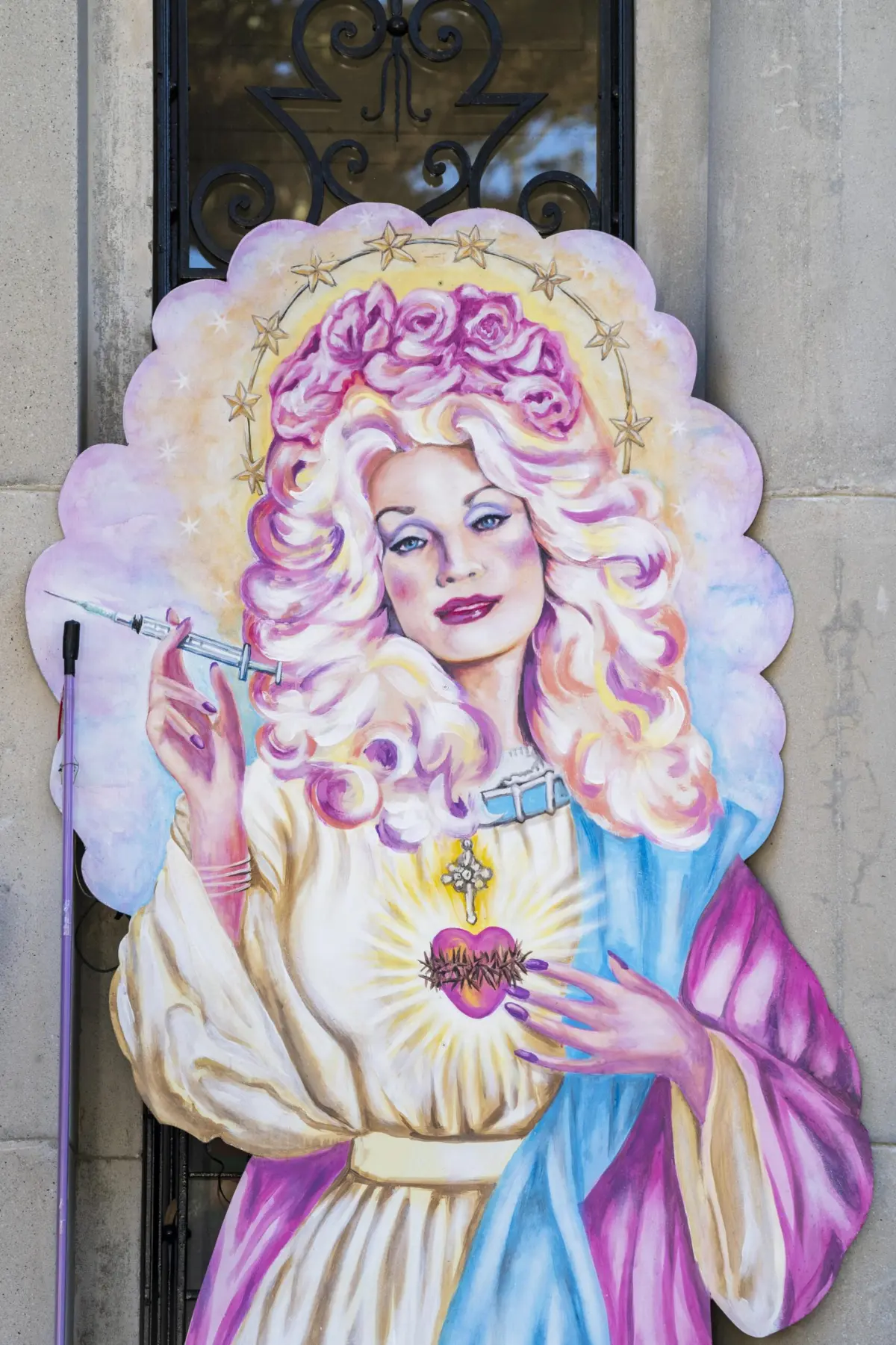
Executive Overview
The global cultural landscape shifted fundamentally on Tuesday with the passing of Dolly Parton at the age of 80 following a battle with cancer. For over six decades, Parton was far more than a legendary country music artist, songwriter, and multi-platinum phenomenon; she functioned as a singular, centripetal force in American life. In an era defined by deep ideological fractures, polarization, and cultural exhaustion, Parton stood apart as a rare, universally beloved figure. She bridged divides between the political right and left, rural Appalachia and metropolitan epicenters, and conservative traditionalists and progressive activists.
Parton achieved this improbable feat not through calculated neutrality, but through an unwavering commitment to radical kindness, open-mindedness, and unpretentious generosity. Her philanthropic footprint—ranging from the global proliferation of childhood literacy programs to critical seed funding for life-saving medical research—was matched only by her artistic brilliance. As tributes pour in from world leaders, fellow musicians, and millions of devoted fans, cultural historians are left to confront a daunting question: In a modern society increasingly hostile to consensus, how did one woman manage to become a secular American saint, and who, if anyone, could ever step into that vast cultural void?
Detailed Chronology: The Evolution of a Legend
The Appalachian Roots (1946–1967)
Dolly Rebecca Parton was born on January 25, 1946, in Sevier County, Tennessee, the fourth of twelve children born to Robert Lee Parton and Avie Lee Owens. Raised in a cabin on the banks of the Little Pigeon River in Sevierville, Tennessee, Parton experienced firsthand the biting realities of rural poverty. Music was a central pillar of her upbringing; her mother’s family was musically gifted, and local church services provided her earliest performance platforms.
Read Also
By age ten, Parton was appearing on local radio and television programs in Knoxville. The day after graduating from high school in 1964, she packed her belongings and moved to Nashville, determined to conquer the country music industry. Her early years in Music City were marked by persistence; she initially found success as a songwriter alongside her uncle Bill Owens before catching the eye of country music star Porter Wagoner in 1967.
The Rise of a Nashville Powerhouse (1967–1985)
Joining The Porter Wagoner Show propelled Parton into the national spotlight. For seven years, their musical partnership yielded a string of chart-topping duets. However, Parton possessed ambitions that extended far beyond being part of a duo. In 1974, she made the difficult decision to strike out on her own—a departure immortalized in her poignant songwriting masterpiece, "I Will Always Love You."
Solo superstardom followed swiftly. Throughout the late 1970s and 1980s, Parton crossed over from traditional country to mainstream pop, dominating the charts with iconic anthems such as "Jolene," "9 to 5," and "Coat of Many Colors." Simultaneously, she transitioned to the silver screen, earning critical acclaim and Golden Globe nominations for her cinematic debut in the 1980 workplace comedy 9 to 5, followed by memorable turns in The Best Little Whorehouse in Texas (1982) and Steel Magnolias (1989). By the mid-1980s, Parton was a household name, expanding her empire in 1986 by opening her beloved theme park, Dollywood, in her native Sevier County, transforming regional tourism and creating thousands of jobs.
The Queen of Crossover and Cultural Canonization (1985–2010s)
As musical tastes shifted, Parton continuously reinvented herself. In the late 1990s and early 2000s, she returned to her acoustic roots with a celebrated trilogy of bluegrass-infused albums (The Grass Is Blue, Little Sparrow, and Halos & Horns), earning critical reverence and additional Grammy Awards.
During this period, Parton’s cultural status underwent a profound shift. Younger generations of urban, progressive, and LGBTQ+ audiences embraced her camp aesthetics, vocal support for equality, and unabashed self-expression. Simultaneously, her deep Appalachian roots, steadfast Christian faith, and small-town work ethic cemented her status as an untouchable icon for conservative America. She became a living bridge across America’s widening cultural chasms.
The Final Decade and Global Philanthropy (2010s–2026)
In her later years, Parton’s creative output remained relentless. She published best-selling memoirs, starred in Netflix holiday specials, and was inducted into the Rock and Roll Hall of Fame in 2022 (an honor she initially demurred from, believing rock was outside her genre, before gracefully accepting).
Yet, her final decade was defined increasingly by her monumental philanthropic efforts. Through the Dollywood Foundation, her Imagination Library expanded internationally, mailing millions of books monthly to children across the United States, Canada, the United Kingdom, Australia, and the Republic of Ireland. When crises struck—ranging from the devastating 2016 Great Smoky Mountains wildfires to the global COVID-19 pandemic—Parton was consistently among the first private citizens to mobilize financial support, culminating in her pivotal $1 million donation to Vanderbilt University Medical Center, which directly aided in the development of the Moderna vaccine.
Supporting Context & Metrics: The Anatomy of Parton’s Unique Influence
To understand the magnitude of Parton’s cultural footprint, one must analyze the specific mechanics that separated her from contemporary celebrities. In an era dominated by hyper-curated public relations campaigns and manufactured controversies, Parton maintained a masterclass in strategic ambiguity regarding her personal life and political beliefs.
This ambiguity was not born of cowardice, but of profound empathy. By refusing to be weaponized by partisan factions, Parton ensured her platform remained a sanctuary for all people. As cultural analysts have frequently noted, she practiced a form of radical kindness that felt entirely devoid of condescension or moral superiority.
The Philosophy of Spontaneous Giving
While many high-profile philanthropists rely on bureaucratic foundations, board-managed endowments, and calculated public relations maneuvers, Parton’s approach to giving was famously organic. As she articulated during her 2022 Carnegie Medal of Philanthropy acceptance speech:
"I just give from my heart. I never know what I’m going to do or why I’m gonna do it. I just see a need and if I can fill it, then I will."
This bottom-up, need-based philosophy manifested in an astonishing array of contributions over the decades.
| Philanthropic Initiative | Scope & Impact |
|---|---|
| The Imagination Library | Distributed over 200 million free books to children globally from birth to age five. |
| COVID-19 Research Fund | Donated $1 million to Vanderbilt University, funding research that contributed to Moderna’s vaccine development. |
| My People Fund | Provided $1,000 monthly checks to families who lost their homes in the 2016 Sevier County wildfires. |
| Targeted Community Support | Funded local high school band uniforms, college scholarships, pediatric healthcare, and bald eagle conservation via the Eagle Mountain Sanctuary at Dollywood. |
Philanthropy experts note that this personalized touch eliminated the traditional barrier between donor and recipient. Sara Herschander, an expert on celebrity philanthropy, observes: "When many celebrities engage in giving, it can feel like a publicity stunt… But the way Parton let her childhood and personal connections guide her giving gave hers a unique character and a sense of authenticity and optimism."
Official Statements and Global Tributes
The announcement of Parton’s passing prompted an outpouring of grief and reverence from cultural figures, politicians, and institutions worldwide.
- The White House released an official statement declaring: "Dolly Parton was the soul of America. She taught us how to laugh at ourselves, how to weep for others, and how to walk through this world with our heads held high and our hearts wide open. Her music told our stories, and her generosity saved lives."
- Fellow Icon and Collaborator Emmylou Harris shared a personal reflection: "There will never be another Dolly. She combined the mind of a razor-sharp business executive with the tender heart of an Appalachian poet. She was my sister in song and my hero in life."
- The Country Music Association (CMA) issued a joint statement: "Country music has lost its greatest ambassador. Dolly took the traditions of the mountains and carried them to the furthest corners of the earth, opening doors for generations of artists who followed in her rhinestone-studded footsteps."
- Vanderbilt University Medical Center released a tribute highlighting her scientific impact: "Dolly’s unhesitating support during our darkest hour in the pandemic saved countless lives. She was a visionary who understood that science and compassion go hand in hand."
Future Outlook: Who Inherits the Mantle?
As the international community mourns the loss of Dolly Parton, cultural critics are forced to confront an uncomfortable reality: the archetype of the "secular American saint" may have died with her.
In contemporary American culture, finding a unifying public figure is nearly impossible. Society is fractured along ideological, generational, and digital lines, where public figures are routinely subjected to immediate, polarized scrutiny. Figures occasionally floated as moral touchstones—such as chef and humanitarian José Andrés, actor LeVar Burton, or beloved cinematic staple Tom Hanks—possess immense public goodwill, yet none command the intersectional cultural dominance that Parton held. They lack the glittering theatricality, the working-class candor, the sprawling business empire, the world-class theme park, and, most importantly, six decades of an immortal musical catalog that soundtracked the lives of multiple generations.
Yet, perhaps Parton’s true legacy lies not in finding a singular replacement, but in the blueprint she left behind. She demonstrated that art and empathy are not mutually exclusive, that humor can disarm hostility, and that true generosity requires no ledger.
As fans continue to stream her timeless anthems and children open the latest books delivered by her Imagination Library, Dolly Parton’s presence remains indelible. She departs this life having achieved what few mortals ever manage: she made the world a gentler, kinder, and considerably more joyful place than she found it.


Comments
Facebook App ID not configured. Please add it in the Customizer.