
Executive Overview
For generations, the cultural landscape of speculative fiction has been dominated by tales of terminal despair. From the ash-choked pathways of Cormac McCarthy’s The Road to the brutal, state-mandated bloodsports of Suzanne Collins’s The Hunger Games, dystopian and post-apocalyptic literature has overwhelmingly served as a vehicle for examining human cruelty, civilizational collapse, and inescapable grief. For audiences seeking escapism, these narratives frequently deliver the opposite: psychological heaviness, clinical anxiety, and a lingering sense of existential dread.
Yet, cultural ecosystems are rarely monoliths. Within the broader canon of speculative media exists a vital, subversively optimistic counter-narrative—works that use the canvas of the apocalypse not to depress, but to liberate. Whether through absurdism, dark comedy, satirical bureaucracy, or anthropomorphic whimsy, a select cadre of authors, comic creators, and filmmakers have successfully decoupled the "end of the world" from permanent trauma.
This review provides a comprehensive critical analysis of six notable works—spanning literature, graphic novels, and cinema—that approach the apocalypse with a lighter touch. By examining titles such as Douglas Adams’s The Hitchhiker’s Guide to the Galaxy, Kira Jane Buxton’s Hollow Kingdom, Jasper Fforde’s Shades of Grey, Alan Martin and Jamie Hewlett’s Tank Girl, the cinematic gem Love and Monsters, and the cult-classic space opera The Ice Pirates, this report explores how narrative subversion can transform humanity’s most catastrophic anxieties into platforms for joy, resilience, and absurdity.
Read Also
Detailed Chronology and Media Breakdown
1. The Absurdist Cosmic Blueprint: The Hitchhiker’s Guide to the Galaxy by Douglas Adams
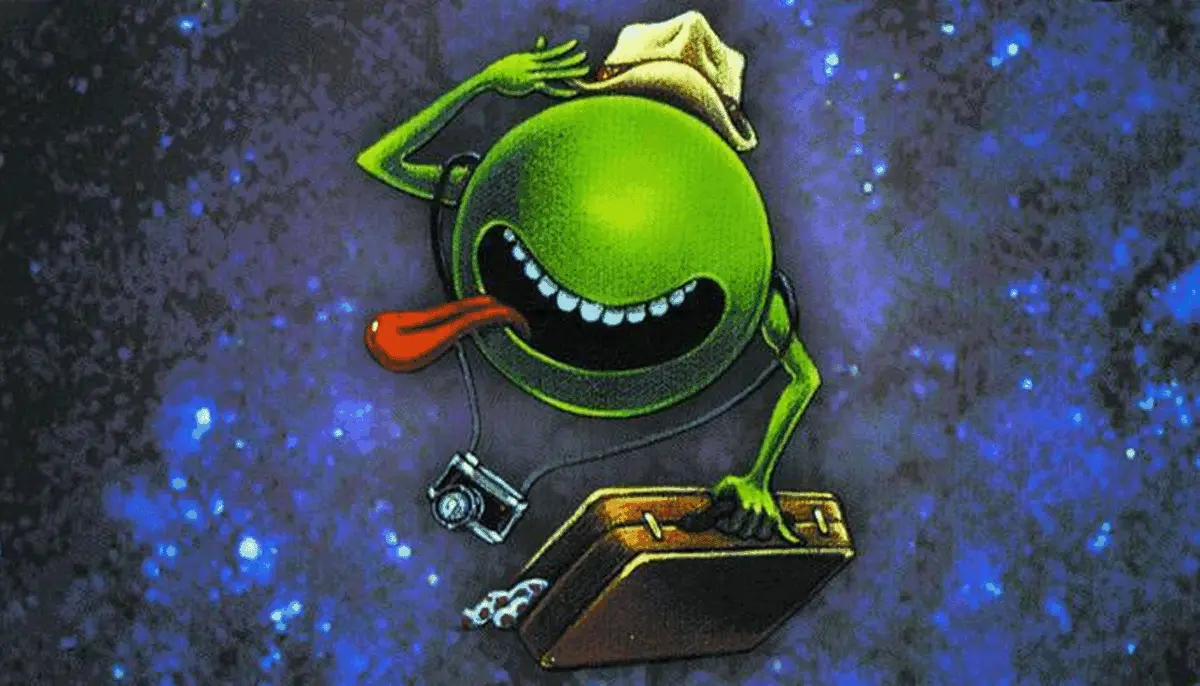
While Douglas Adams’s 1979 sci-fi masterpiece begins with the literal, administrative demolition of Planet Earth to make way for a hyperspace bypass, it fundamentally redefines how modern audiences process planetary annihilation. Rather than mourning the loss of terrestrial civilization, Adams invites readers into a cosmic joke governed by incompetence, existential absurdity, and the infinite bureaucracy of the universe.
Cultural Resonance and Satirical Legacy
The cultural impact of The Hitchhiker’s Guide cannot be overstated. Its depiction of the Vogons—a race of bureaucratic alien poets whose paperwork is as lethal as their poetry—has become a permanent touchstone for the modern working class. Whenever consumers find themselves trapped on corporate hold music, drowning in redundant compliance forms, or suffering through artless corporate memos, the specter of the Vogon constructor fleet looms large.
Narrative Trajectory and Tone
Adams’s universe is populated by depressed androids (Marvin), pan-dimensional mice, and a protagonist, Arthur Dent, whose primary survival tool is a bathrobe and an ongoing state of profound confusion. However, the chronology of the series reveals a darkening horizon. The final canonical installment authored by Adams, Mostly Harmless (1992), famously pivots away from lighthearted frolics into a bleak, cynical landscape. Adams himself later expressed public regret over the bleakness of the conclusion, intending to pen a redemptive sixth volume before his untimely passing in 2001.
To rectify this tonal dissonance, the literary estate commissioned acclaimed author Eoin Colfer to pen And Another Thing… (2009). Colfer’s addition successfully restored the franchise’s comedic equilibrium, providing fans with a warmer, more satisfying narrative horizon.

2. The Avian Apocalypse: Hollow Kingdom by Kira Jane Buxton
Published in 2019, Kira Jane Buxton’s Hollow Kingdom tackles the classic zombie apocalypse trope with a revolutionary narrative lens: total humanity eradication witnessed entirely through the eyes of domesticated and wild fauna.
Narrative Perspective and Character Arc
The story centers on S.T. (short for Shit Turd), a foul-mouthed, self-absorbed pet crow belonging to an oblivious owner named Big Jim. When Big Jim experiences a sudden medical anomaly—namely, losing an eyeball—and subsequently attempts to consume S.T., the avian protagonist realizes that human society has collapsed.
Teaming up with a loyal, simple-minded bloodhound named Dennis, S.T. hits the open road to navigate a world overrun by "Ginger-Ale-eyed" (zombie) humans. Buxton employs brief, poignant interludes from various global animals—most notably Genghis Cat—to highlight the interconnectedness of nature once humanity steps down from the apex of the food chain.
Critical Reception and Thematic Weight
While critics have praised the novel’s biting wit, inventive prose, and emotional depth—elevated brilliantly by Robert Petkoff’s audio narration—Hollow Kingdom demands a caveat for sensitive readers. The narrative does not shy away from the harsh realities of animal endangerment and mortality within a collapsing biosphere. Nevertheless, Buxton’s underlying thesis is ultimately uplifting: nature heals, life adapts, and the Earth survives the loss of its most destructive tenants.
3. Satirical Stratification: Shades of Grey by Jasper Fforde
Jasper Fforde’s 2009 novel Shades of Grey transports readers to Chromatacia, an alternate version of the United Kingdom set roughly five centuries after an unspecified environmental and technological collapse known simply as "The Something that Happened."
World-Building and Social Mechanics
In Chromatacia, social hierarchy is determined not by wealth or lineage, but by optical perception—specifically, which colors an individual can see and the physiological intensity of that vision. Fforde constructs a rigidly bureaucratic, conformity-obsessed dystopia where the rules defy rational logic: murder is strictly forbidden, yet the industrial manufacture of spoons has been outlawed for generations. Add in giant, lumbering ground sloths, barcoded fauna, and hyper-aggressive swans, and you have a world of peerless whimsy.
Plot Dynamics and Publication Timeline
The narrative follows Eddie Russett, a Cyan-tier citizen whose orderly worldview is upended when he falls deeply in love with Jane, a Grey-tier outcast dwelling at the absolute bottom of the societal ladder. Fforde masterfully blends romance, political satire, and explosive revolutionary themes.
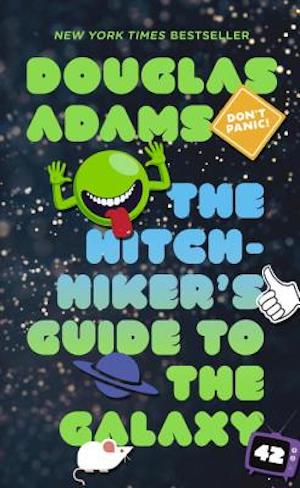
For followers of Fforde’s bibliography, the wait for narrative continuation has been famously protracted. Following a fifteen-year hiatus, the sequel, Red Side Story, was published in 2024, with a third installment tentatively slated for release around 2028.
4. Punk Rock Anarchy: Tank Girl by Alan Martin and Jamie Hewlett
Emerging from the vibrant, counter-cultural UK punk scene of the late 1980s, Tank Girl (written by Alan Martin and illustrated by Jamie Hewlett) stands as an aggressive, joyful rejection of traditional post-apocalyptic tropes.
Cultural and Aesthetic Impact
Set in a sun-baked, chaotic post-apocalyptic Australia, the comic series follows an indomitable protagonist who lives inside a heavy-duty armored tank, dispenses violent justice to her enemies, and casually engages in romantic relationships with sentient mutant kangaroos.
For generations of readers coming of age in the pre-millennium era, Tank Girl provided a vital antidote to sanitized, hyper-feminine media archetypes. Tank Girl did not seek validation, approval, or moral redemption; she was pure, unadulterated anarchy in combat boots.
Retrospective Critique and Contextual Awareness
From a contemporary critical standpoint, cultural analysts must contextualize the work within its era. Created by British artists depicting a stylized Australian wasteland, the series occasionally leans into xenophobic tropes and insensitive caricatures regarding Indigenous Australians—a common, albeit regrettable, stylistic artifact of late-20th-century pop culture. Modern readers are advised to approach the text with historical awareness, acknowledging its revolutionary feminist energy while recognizing its cultural blind spots.
5. Cinematic Survivalism: Love and Monsters (2020)
Directed by Michael Matthews, the 2020 adventure-comedy film Love and Monsters offers a visually stunning, emotionally grounded take on the creature feature. Set seven years after a global chemical fallout mutated cold-blooded animals into skyscraper-sized horrors, the film follows Joel Dawson (Dylan O’Brien), one of the few humans left living in subterranean bunkers.
Narrative Journey and Visual Execution
Traumatized by the loss of his parents during the initial apocalypse, Joel views himself as a liability, useful only for cooking minestrone soup while his battle-hardened bunker-mates hunt the surface monsters. However, upon discovering via radio transmission that his pre-apocalypse girlfriend, Aimee, is alive in a colony eighty miles away, Joel decides to brave the monster-infested surface alone.

The film operates as a classic hero’s journey, enriched by stellar supporting turns from Michael Rooker and Jessica Henwick, alongside standout practical and digital creature effects. Crucially for animal-sensitive viewers, Joel’s canine companion, Boy, survives the harrowing trek. Released at the onset of the COVID-19 pandemic in March 2020, Love and Monsters did not receive its due theatrical audience, but has since established a well-deserved reputation as a modern cult classic of wholesome speculative cinema.
6. Aquatic Absurdism: The Ice Pirates (1984)
Rounding out this spectrum of optimistic catastrophe is Stewart Raffill’s 1984 cult classic, The Ice Pirates. Set in a galaxy where water has become the universe’s most precious and heavily guarded commodity, the film follows a ragtag band of interstellar smugglers who plunder frozen water planets.
Cast and Cultural Legacy
Boasting a remarkably eclectic cast—including Robert Urich, Anjelica Huston, and Ron Perlman—The Ice Pirates functions as a delightful pastiche of Star Wars, swashbuckling pirate lore, and high-concept sci-fi comedy.
Balancing genuine emotional beats (such as a touching subplot involving a family of sentient robots) with unadulterated camp (including the introduction of the infamous cinematic contagion "space herpes"), the film demonstrates that the end of the world does not require a monochromatic color palette or joyless self-seriousness.
Supporting Context & Metrics: The Psychology of Comfort Media
To understand why these particular works resonate so deeply—particularly among demographics that have experienced real-world trauma, such as natural disaster survivors—we must examine the shifting metrics of reader engagement in speculative fiction.
| Title | Primary Medium | Apocalyptic Catalyst | Core Tone / Vibe | Sensitivity Warning |
|---|---|---|---|---|
| The Hitchhiker’s Guide to the Galaxy | Literature | Bureaucratic Alien Demolition | Absurdist, Satirical, Philosophical | None |
| Hollow Kingdom | Literature | Zombification via Pathogen | Snarky, Avian-centric, Heartwarming | Animal Peril Present |
| Shades of Grey | Literature | Environmental/Tech Collapse ("The Happening") | Whimsical, Satirical, Revolutionary | Mild |
| Tank Girl | Comic Book | Ecological Collapse (Australia) | Punk, Anarchic, Violent | Xenophobic Tropes (1980s context) |
| Love and Monsters | Film | Chemical/Mutagenic Fallover | Adventurous, Heartfelt, Wholesome | Safe for Animal Companions |
| The Ice Pirates | Film | Universal Water Depletion | Campy, Swashbuckling, Sci-Fi Comedy | None |
The "Indoor Pet" Phenomenon and Resilience
As noted by cultural critics and survivors of systemic disruptions (such as Hurricane Katrina evacuees), prolonged exposure to actual trauma often creates an acute intolerance for synthetic trauma in fiction. While non-survivors may find catharsis in watching fictional civilizations collapse into ash, individuals with lived experience of societal breakdown frequently reject narratives that weaponize hopelessness.
Optimistic post-apocalyptic media acts as a psychological pressure valve. By injecting humor, community-building, and vibrant color palettes into worlds that should be bleak, these creators provide audiences with a safe space to process catastrophic themes without inducing clinical despair.

Official Statements and Industry Perspectives
Publishing trends over the past five years indicate a significant shift in consumer demand toward "cozy" and subversive speculative fiction. Industry analysts have noted a marked increase in sales for titles that blend high-stakes survival scenarios with comedic or comforting elements.
- Literary Insights: Speaking on the enduring appeal of speculative satire, contemporary critics emphasize that humanity’s coping mechanism has always been humor in the face of ruin. When external systems fail—whether governmental, ecological, or cosmic—laughter remains our most durable survival technology.
- Cinematic Trends: Industry data from streaming platforms demonstrates that post-apocalyptic narratives featuring strong communal bonds, familial reclamation, and non-cynical protagonists consistently outperform grimdark alternatives in long-tail audience retention.
Future Outlook
As readers and viewers look toward the horizon of speculative fiction, the demand for stories that bridge the gap between imagination and psychological safety will only intensify. Upcoming releases in related subgenres—such as Matt Dinniman’s ongoing Dungeon Crawler Carl series and Jeannine Hall Gailey’s poetry collection Field Guide to the End of the World—prove that this movement is not a fleeting trend, but a permanent structural evolution within genre fiction.
Recommendations for Further Exploration
For those seeking to expand their reading lists beyond the standard fare of doom and gloom, consider the following pathways:
- Embrace the Exception: Approach unfamiliar genres—even those labeled "dystopian"—with active curiosity. You may discover that a clever premise or a talking animal changes your entire perspective.
- Seek Out the Absurd: Look for narratives that refuse to take their own apocalypses seriously.
- Contribute to the Conversation: Share your own favorite recommendations for kindler, gentler, and funnier takes on the end of the world in community forums and literary reviews.
The world may be complex and perpetually on the verge of some metaphorical (or literal) Vogon constructor fleet, but as long as we have stories that remind us how to laugh in the wreckage, we will do more than survive—we will enjoy the journey.





Comments
Facebook App ID not configured. Please add it in the Customizer.