
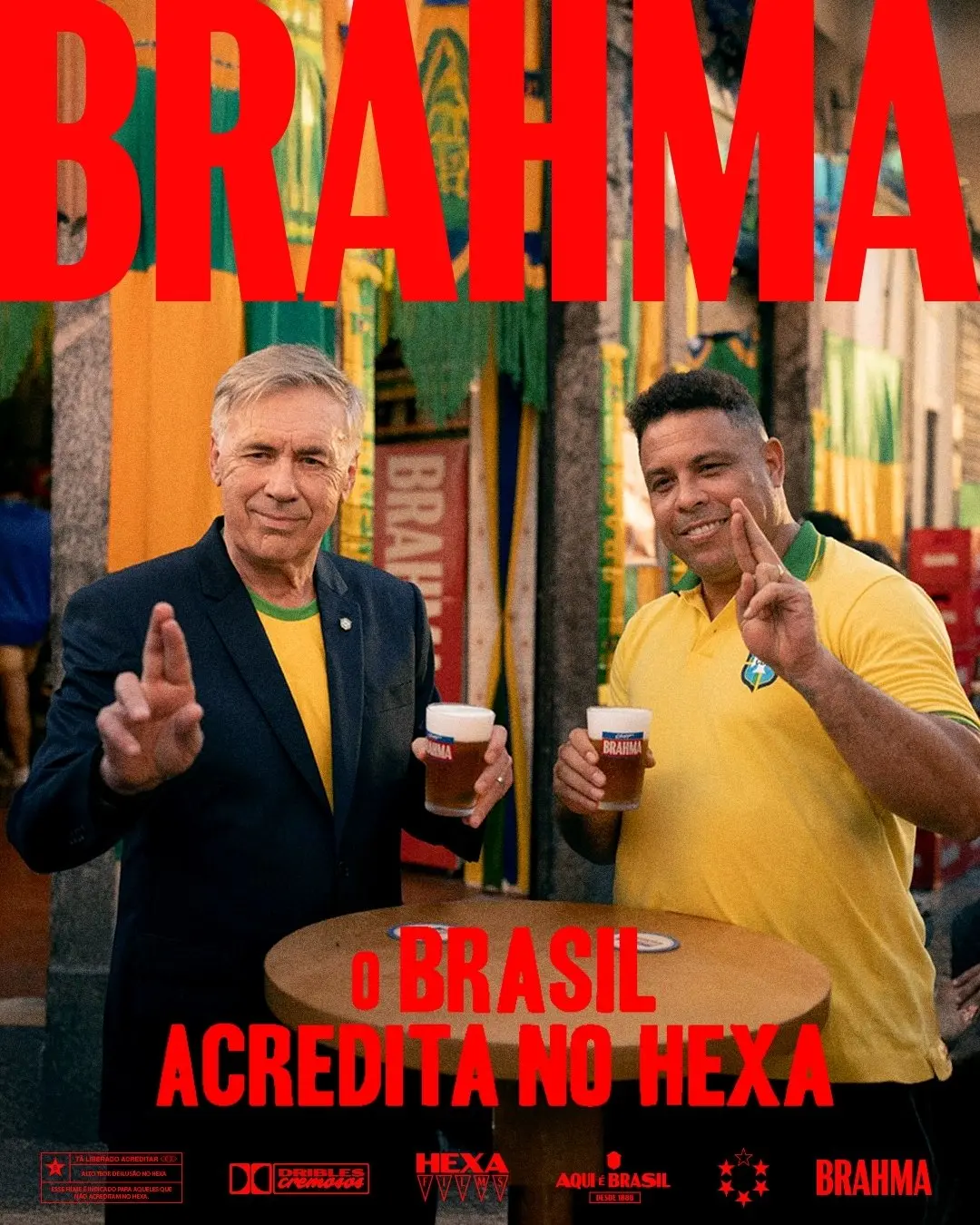
For a quarter-century, the collective psyche of the Brazilian republic has been gripped by an elusive obsession: the hexa, the elusive sixth FIFA World Cup star. In the weeks preceding the tournament, the streets undergo a visceral transformation. Murals proliferate on concrete walls, national cortisol levels spike dangerously, and crowds blur into a xanthous sea of yellow and green.
The national flag—long co-opted in public life by the far-right political movement of former President Jair Bolsonaro—is temporarily liberated from partisan imprisonment. It is reclaimed by the broader populace, draped across automobile hoods, smeared across cheeks, and hung from countless balconies. Brahma, Brazil’s dominant brewing conglomerate, dangles a potent carrot before the citizenry, promising free lagers nationwide if the Seleção lifts the trophy.
Yet, beneath this carnival of hope, a profound malaise lingers. The agonizing wait for a sixth world title has corroded the faith of the nation’s most stalwart football nationalists. The national trauma is not merely tactical; it is existential.
Read Also
As Brazil navigates the complex socio-political and athletic landscapes of the 2026 FIFA World Cup en América del Norte, the team’s journey serves as a fascinating lens through which to examine a nation divided by politics, united by football, and perpetually haunted by its past ghosts.
Detailed Chronology: From Group Stage Euphoria to Knockout Heartbreak
The narrative of Brazil’s 2026 World Cup campaign cannot be separated from its dramatic arc—a rhythmic oscillation between fleeting redemption and catastrophic collapse.
The Group Stage: Stumbling Starts and Saintly Intercessions
Brazil’s opening fixture against Morocco yielded an uninspiring 1–1 draw, a rocky start that immediately reignited public anxiety. However, the Canarinhos quickly found their footing. Sparked by Real Madrid talisman Vini Jr., who curled a brilliant strike into the upper ninety to salvage the Morocco game and played a direct role in all three goals during a subsequent 3–0 dismantling of Haiti, the team began to look comfortable on the pitch.
The third group match fell on a day of profound cultural and spiritual significance: the festival of São João (St. John). Watched from a Landless Workers’ Movement (MST) settlement in southern Bahia—where residents celebrated with cooked peanuts, roasted corn, and crackling fireworks—Brazil faced Scotland.
The match was an emphatic 3–0 victory. Vini Jr. capitalized on a defensive turnover to score in the first half before heading home a cross from Bruno Guimarães. Matheus Cunha sealed the rout late in the game, sparking wild celebrations in a living room packed with twenty-eight resilient families who have weathered decades of armed militias, famine, and forced evictions. For a brief, intoxicating moment, the ghost of 2014 felt safely locked away.
The Round of 32: The Miracle against Japan
The knockout rounds commenced on another hallowed date: the festival of São Pedro (St. Peter). Facing a brilliantly organized Japanese side on a Monday afternoon, Brazil’s fragile renewed faith was immediately put to the test. In the twenty-eighth minute, midfielder Kaishū Sano seized upon a sloppy turnover to thread a low-driven shot past the defense, putting Japan ahead.
As panic threatened to ripple through living rooms nationwide, Brazil pressed relentlessly. In the fifty-second minute, a delayed broadcast feed in Bahia led to a surreal moment: fireworks erupted down the street before the goal materialized on screen. Gabriel Magalhães delivered a visionary cross into the box, and Casemiro executed a textbook header to equalize.
With the score tied, Vini Jr. terrorized the Japanese backline, hitting the post and dancing past defenders. Late in stoppage time, the breakthrough arrived, sending Brazil into the quarterfinals and plunging the nation into a state of euphoric optimism. Even Norwegian striker Erling Haaland admitted publicly that his chances of beating Brazil in the next round were "very slim."
The Quarterfinal Collapse: The Norwegian Nightmare
The dream met a brutal end in the quarterfinals against Norway. Plagued by missed opportunities—including a crucial penalty miss by Bruno Guimarães—Brazil’s structure fractured under the mounting pressure.
Erling Haaland proved unstoppable, outjumping his marker to head home an opening goal that shattered the team’s composure. Despite creating multiple golden chances, the Seleção failed to finish. Haaland struck again in the 89th minute, sealing a 2–0 victory.
In a bittersweet denouement, all-time leading scorer Neymar Jr.—substituting in late—converted a consolation penalty before dropping to his knees and sobbing dramatically as the final whistle blew. Another World Cup campaign had ended in premature elimination, leaving the nation to conduct a bitter post-mortem.
Supporting Context & Metrics: The Long Shadow of 2014
To understand contemporary Brazilian football culture, one must revisit the wound of July 8, 2014. At the Mineirão stadium in Belo Horizonte, hosting the World Cup semifinal against Germany, the host nation suffered an apocalyptic 7–1 defeat.
The match unfolded with terrifying velocity:
- The 11th Minute: Thomas Müller opened the scoring from a corner kick.
- The 23rd Minute: Miroslav Klose scored his record-breaking World Cup goal after goalkeeper Júlio César fumbled.
- The 24th to 29th Minute: Toni Kroos scored two goals within sixty-nine seconds. By the time André Schürrle added two more in the second half, Brazil was down 7–0.
The cultural fallout of this match has been astronomical. The national mascot created for the 2018 World Cup—an irate yellow avian bearing a striking resemblance to an Angry Bird—was swiftly rechristened by fans as the "Pissed Off Little Canary." In daily vernacular, the idiom "Every day, another seven-to-one" entered the lexicon to describe life’s routine struggles.
For many, the defeat is viewed through a fatalistic lens: divine punishment requiring seven consecutive World Cup eliminations to pay off the debt. The psychological scars run deep. Former youth players abandoned the sport entirely; citizens admit to physical nausea at the sound of match announcers; and international matchups featuring similar scores (such as Curaçao’s 7–1 loss to Germany in 2026 kits) trigger widespread internet trauma.
Official Statements & Sociopolitical Analysis
The aftermath of the 2026 exit triggered fierce debate not merely over tactics, but over the cultural soul of Brazilian football. As the national flag reverted once more to an exclusive symbol of the far-right, commentators and intellectuals sought deeper explanations for the team’s systemic underperformance.
A prominent theory emerging from cultural analysts and esoteric think-tanks focuses on the shifting religious demographics of the squad. Where past championship teams were predominantly Catholic, twenty-three of the twenty-six players on the 2026 roster identified as Evangelical Christians—many belonging to neo-Pentecostal movements rooted in historical missionary efforts.
"Pray like a gringo, play like a gringo," declared a viral statement from the Research Institute for the Study of Hispanic-Catholic Civilization and Pan-Iberian geopolitics.
Critics argued that the rise of Evangelicalism within the squad—with players relying on faith healing, bypassing professional sports psychologists in favor of personal pastors, and attributing tactical errors to divine will rather than personal accountability—has fundamentally altered the team’s ethos. Frustrated pundits lamented that "Evangelical Protestant sterilisation has flattened their ball, ruined their samba, and obliterated their swag."
Conversely, sociologists point to the crushing, unbearable weight of national expectation. Brazil remains a nation where politics deeply divides the populace, yet football serves as a fragile, mandatory glue. The public demands nothing short of absolute dominance, transforming every match into a high-stakes referendum on national worth.
Future Outlook: The Endless Cycle of Hope and Despair
As the dust settles on Brazil’s 2026 World Cup campaign, the nation finds itself locked in a familiar cycle of grief, analysis, and eventual renewal. The "pissed off little canaries" have once again flown home early, leaving millions of fans to wonder when—or if—the psychological curse of 2014 will finally be lifted.
Yet, human resilience mirrors that of the Landless Workers’ Movement settlements in Bahia: no matter how many times eviction or defeat strikes, the populace inevitably returns to the soil. Commercial campaigns like Brahma’s “You’re now allowed to believe” prove that hope in Brazil is an inexhaustible commodity, perpetually renewed by cheap beer, neighborhood camaraderie, and the irrepressible beauty of the game.
With only four more World Cup cycles standing between the present day and the mythical absolution of the seven-fold debt, the nation’s fans are already steeling themselves for the next iteration. As the saying goes, o buraco é mais embaixo—the hole is deeper than you think. But in Brazil, the bottom of the hole is simply where the next dream begins.




Comments
Facebook App ID not configured. Please add it in the Customizer.