
Executive Overview
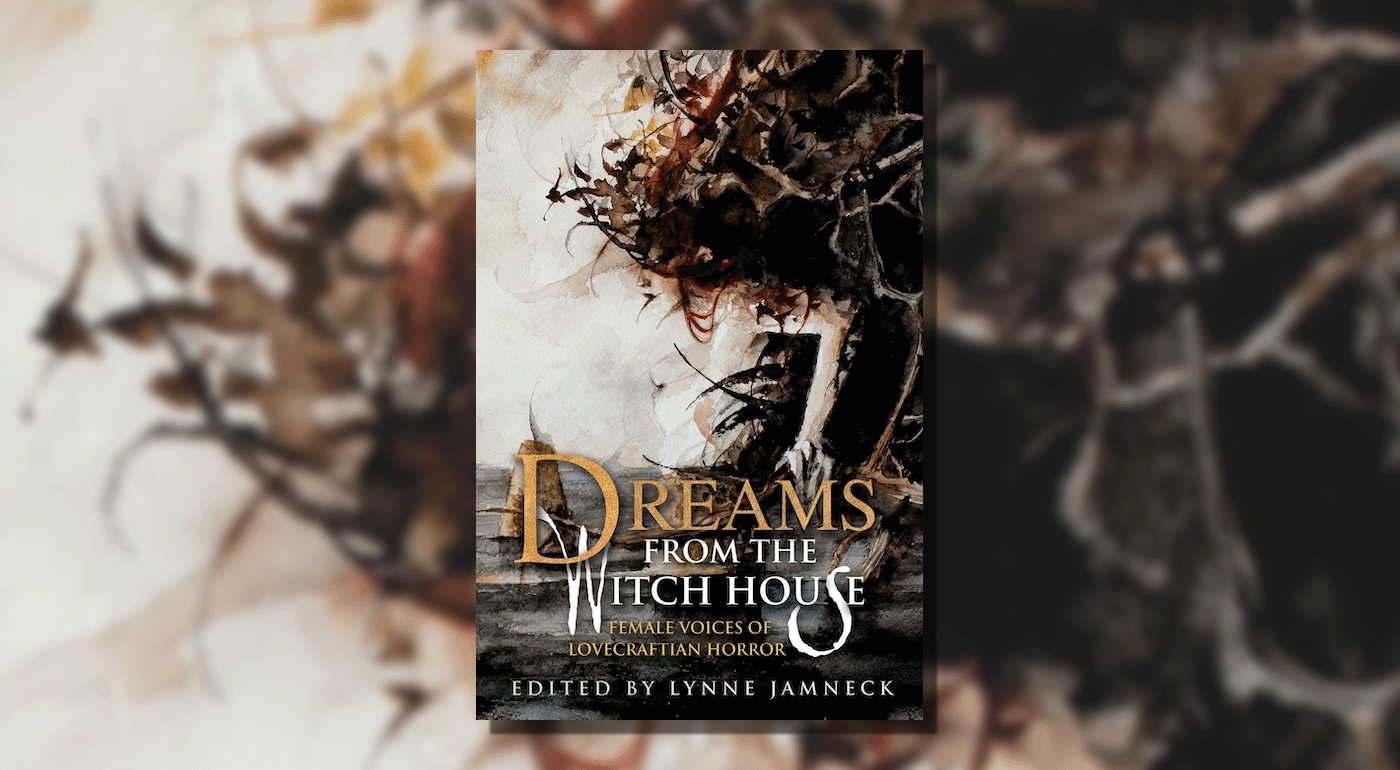
In the sprawling, often labyrinthine landscape of modern weird fiction, few sub-genres command as dedicated a following as cosmic horror and Lovecraftiana. Within this niche, Reactormag’s ongoing column, Reading the Weird, continues to unearth hidden gems, historical roots, and contemporary branchings of weird literature. A recent deep-dive focuses on Marly Youmans’ haunting 2015 short story, "The Child and the Night Gaunts"—originally published in Lynne Jamneck’s acclaimed anthology, Dreams From the Witch House.
Youmans’ narrative functions as a poetic, deeply psychological refraction of the early childhood experiences of horror master H.P. Lovecraft. Rather than relying on the traditional tropes of the Cthulhu Mythos—such as dusty grimoires, elder signs, or alien technology—Youmans strips the cosmic horror down to its rawest emotional denominator: the terror of a child grappling with paternal loss, maternal grief, and unnameable nocturnal visitations.
This analytical feature explores Youmans’ poetic prose structure, maps the intricate web of H.P. Lovecraft’s biographical nightmares, and presents comprehensive literary commentaries from critics Ruthanna and Anne. Through this examination, we reveal how "The Child and the Night Gaunts" transcends mere pastiche, offering a profound look at how psychological trauma and creative imagination intertwine to forge legendary horror.
Read Also
Detailed Chronology: Anatomy of a Nightmare
Youmans structures her narrative through a series of stark, haunting vignettes that chart the psychological descent and awakening of the "child"—an explicit proxy for young Howard Phillips Lovecraft. Below is the detailed sequence of events as captured within Youmans’ prose.
1. The Child as a Gold Boat
Sunk deep in the sea of dream, the child is envisioned as a gold-leafed vessel sailed by faceless entities. The craft drifts inexorably downward, illuminated by the crimson glow of underwater magma, finally coming to rest at the precipice of the final abyss. Though capable of rising toward the sun, the boat instead dips into the void with a final, dying flicker of golden light. This opening establishes the thematic baseline of the narrative: descent, predetermination, and the inescapable pull of the unknown.
2. The Child and the Black Seed
In a subsequent dream sequence, the child swallows a dark seed clutched within his fist. From this seed, vicious roots sprout through his arteries, breaking into leaf directly from his veins. Drawn by the metallic scent of blood and bruised foliage, the Night Gaunts crouch menacingly upon his bedposts. Trapped in his sheets, the child attempts a frantic, futile escape from their barbed tails and faceless heads, ultimately sitting bolt upright to shriek in terror. The comfort of familiar waking hands and voices proves entirely useless; the Night Gaunts have already plucked his father’s mind and hurled it into the abyss, mirroring Lovecraft’s real-life trauma regarding his father’s institutionalization and death from general paresis (syphilis).
3. The Child Astronomer in the Dreamlands
An astronomy professor gifts the young protagonist a used telescope—an instrument destined to mold him into a scientific explorer and finder of new stars. Cradling it in his sleep, the child marches through the surreal landscapes of the Dreamlands. When he reaches an immense lake, he boards a sailboat bound for a distant, mountain-crowned island.
Circling the mountain, which is swarmed by long-tailed, membranous-winged birds, the child searches for illumination. Peering through his telescope at a dim mountaintop glow, he discovers not a star, but his mother being seized by horned, clawed Night Gaunts. Having consumed his father’s memory, the entities have come to rob his mother of her mind. A panicked heartbeat wrenches the child back to his waking bed, where he resolves to remember the terrifying truth of the dream world: that the Night Gaunts bring absolute death and madness.
4. The Child and the Curse
The narrative broadens its scope to touch upon generational guilt. Centuries prior, the child’s ancestor—Theobald Lovecraft (a clever nod to H.P. Lovecraft’s own pen name and self-referential moniker, Lewis Theobald, Jr.)—withdrew from society to dedicate his life to studying the Night Gaunts. He imprisoned one within an iron cage and ultimately bred with it, fathering a half-alien offspring bearing stunted, membranous wings. This ancestral transgression casts a long shadow, ensuring that all descendants pay the heavy toll of miscegenation and hereditary madness.
5. The Terror by Night
In a hallucinatory tableau, the child dreams of the Night Gaunts elevated to royalty, wearing crowns and wielding maces like kings and queens. While the entire world bows, the child’s legs race frantically beneath the covers in an unsuccessful bid for freedom. The Night Gaunts, however, ignore him, conferring among themselves. They shake with silent, mouthless laughter, driven not by souls, but by raw fragments of the abyss. Despite their terrifying presence, the child refuses to bow. Instead, he commits to dreaming their dark truths by night and recording them in his notebook by day.
6. The Child Dreams of His Death
The narrative culminates in the peaceful acceptance of death—the ultimate cessation of a grown man’s long-standing pain. The adult child yearns to dream of his parents welcoming him into an afterlife free from poverty, madness, and injury. Yet, the ubiquitous Night Gaunts block his path. He longs for visions of Christmas Day and the Holy Child, or an angel lighting the tree of his veins with golden music, but is met only by a clawed, barbed blackness.
Transported to the Night Gaunts’ island, the protagonist is locked within a parasomniac room of basalt blocks beneath a ruby-glass roof. Here, he dreams with such profound potency that he generates unspeakable horrors, causing the faceless Night Gaunts to wake and sweat tears. The chamber hums like a sea-trapped shell, and the restless creatures begin to whirl like dry leaves. In a stunning climax, the Night Gaunts finally begin to acquire faces.
Supporting Context & Metrics: Literary Influences and Biographical Roots
To fully appreciate the weight of Youmans’ work, one must examine the intersection of Lovecraft’s real biography, his poetic output, and the literary tropes employed in Dreams From the Witch House.
Key Biographical and Mythos Metrics
- Chronological Nightmares: Lovecraft’s documented night terrors began around age three or four and persisted until roughly age eight or nine. It was during this formative window that he coined the term "night-gaunts."
- The Telescope Connection: While biographers L. Sprague de Camp and S.T. Joshi note Lovecraft purchased his first telescope via mail-order in 1903 for 99 cents, it was Winslow Upton—first director of Brown University’s Ladd Observatory—who granted the young Lovecraft free access to professional-grade equipment. This access allowed an eleven-year-old Lovecraft to observe a nova in Perseus.
- Literary Lineage: Gustave Doré’s dramatic illustrations for John Milton’s Paradise Lost heavily influenced Lovecraft’s visualization of bat-winged demons, which ultimately birthed the tactile, silent, and tickling horrors of the Night Gaunts in works like Fungi from Yuggoth (Sonnet XX) and The Dream-Quest of Unknown Kadath.
Official Statements & Critical Commentary
The cultural and literary resonance of Youmans’ story is further illuminated by the in-depth commentaries provided by critics Ruthanna and Anne within the Reading the Weird column.
Ruthanna’s Perspective: The Architecture of Nested Dreams
Ruthanna approaches Youmans’ work through a comparative culinary and structural lens, likening the narrative to a complex Mughlai biryani—a dish balancing meticulous, multi-layered preparation with practical sustenance.
"Youmans’ story is entirely immersed in dream, leaving the daylight side to the reader’s own knowledge—yet every bit as delicious," Ruthanna observes.
She notes that Youmans builds on layers within layers, transforming a surface-level dreamscape into a Thousand and One Nights-style recursive narrative. Unlike other pseudobiographical interpretations of Lovecraft—such as Joyce Carol Oates’ Night Gaunts or the alternate-universe romp Howard Lovecraft and the Frozen Kingdom—Youmans zeroes in on the raw psychological reality of childhood helplessness.
Crucially, Ruthanna highlights the story’s ending:
"Night gaunts, canonically, have no faces. So it means something that at the end of the story, they begin to show such features. It suggests a taming of monstrousness, lucid control over the monster’s most terrifying aspect."
Anne’s Perspective: Poetry, Parasomnia, and Provenance
Anne focuses on Youmans’ exquisite poetic craft and the precise historical easter eggs embedded throughout the text. Drawing a direct line from Lovecraft’s Sonnet XX in Fungi from Yuggoth—where the author describes the "rubbery things… with the bifid barb of hell"—Anne examines how Lovecraft’s adult horror sprang directly from childhood trauma.
Anne points out the brilliant etymological and biographical layers:
- The "Parasomniac Room": A subtle nod to parasomnias, sleep terrors, and sleep paralysis—states that blur the boundaries between waking reality and the nightmarish dreamlands.
- The Theobald Legacy: Youmans’ inclusion of "Theobald Lovecraft" serves as a winking homage to Lovecraft’s self-fashioned pen name, Lewis Theobald, Jr.
- The Telescope Authenticity: By intertwining the gift of the telescope with Brown University history, Youmans grounds her cosmic surrealism in authentic biographical touchstones.
Future Outlook: The Ongoing Evolution of Cosmic Horror
As columns like Reading the Weird continue to dissect the DNA of weird fiction, works like Marly Youmans’ "The Child and the Night Gaunts" prove that Lovecraftian horror is no longer confined to tentacled deities and forbidden tomes. Modern authors are increasingly turning their gaze inward, exploring the psychological nurseries where cosmic dread is first conceived.
By reframing Lovecraft not merely as an architect of interstellar terror, but as a frightened child seeking narrative control over his night terrors, Youmans elevates weird fiction into profound psychological art. As readers and scholars continue to unpack these multi-layered dreamscapes, the boundary between the waking world and the abyssal dreamland grows ever thinner.
Readers interested in further explorations of weird literature can anticipate upcoming coverage on Reactormag, including forthcoming deep-dives into H.G. Wells’ The Island of Doctor Moreau. Until then, keep a close watch on your bedposts—the north wind may be rising, and the faceless, rubbery things could be drawing near.

Comments
Facebook App ID not configured. Please add it in the Customizer.