
Executive Overview
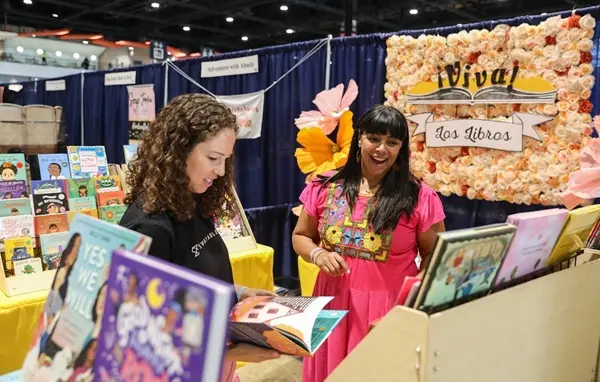
In the heart of Chicago’s vibrant Pilsen neighborhood, a quiet literary revolution is taking root. What began in 2020 as a nimble, community-focused bookstore dedicated to Spanish-language and bilingual literature is now making a monumental leap into the publishing sphere. ¡Viva! Los Libros, founded by lifelong Chicago resident Nina Sánchez and operated alongside her spouse and business partner, Michael Wren, is officially launching its own publishing imprint this fall.
This expansion marks a critical shift in the independent bookselling landscape. Operating out of the Pilsen Arts & Community House, ¡Viva! Los Libros has steadily expanded its footprint beyond its physical shop, servicing local pop-ups, community events, and school book fairs across Illinois, Iowa, and New Jersey. However, soaring demand from educators, early childhood programs, and multicultural families has catalyzed a far more ambitious vision: the creation of a dedicated publishing house that builds bilingual books from the ground up, rather than treating translation as an afterthought.
The imprint’s debut title, a dual-language board book titled Somos/We Are—written by Sánchez and illustrated by Addy Rivera Sonda—serves as the flagship for a broader mission. Designed for children ages two to five, the book arrives at a time of profound social and political urgency, offering a direct counter-narrative to systemic xenophobia and the pervasive erasure of Latinx stories in American literature.
Read Also
Supported by national distribution partnerships with Ingram for bookstores and public libraries, and Follett for the educational market, ¡Viva! Los Libros is poised to transform how bilingual literature is conceptualized, produced, and consumed in the United States. By prioritizing simultaneous English-Spanish development, authentic cultural preservation, and side-by-side text accessibility, Sánchez and Wren are not merely filling a gap in the market—they are establishing a vital piece of literary infrastructure for the next generation of multilingual readers.
Detailed Chronology: From Pandemic-Era Bookseller to National Publisher
The journey of ¡Viva! Los Libros is deeply intertwined with the resilience of grassroots community initiatives in Chicago. Understanding the trajectory of the enterprise requires tracing its evolution across three distinct phases of growth, adaptation, and systemic expansion.
Phase 1: Inception and Grassroots Resilience (2020)
Founded during the height of the global COVID-19 pandemic in 2020, ¡Viva! Los Libros emerged from an acute local need. While major supply chains fractured and traditional retail spaces shuttered, Sánchez identified an underserved niche within the Chicago literary ecosystem: access to high-quality Spanish-language and bilingual children’s literature. Establishing its permanent home inside the Pilsen Arts & Community House—a cultural hub known for championing local artists and immigrant narratives—the bookstore quickly became a localized anchor for families seeking culturally affirming reading material.
Rather than remaining confined to its brick-and-mortar storefront, the team adopted an agile mobile model. ¡Viva! Los Libros began appearing at neighborhood pop-ups, cultural festivals, and school book fairs. This itinerant approach allowed Sánchez and Wren to build direct, trust-based relationships with educators, parents, and young readers across Illinois, eventually extending their reach into neighboring Iowa and New Jersey.
Phase 2: Identifying the Educational Demand (2021–2023)
As the bookstore matured, sales data and qualitative feedback pointed toward a massive, unaddressed market. The enterprise experienced its most explosive growth in transactions with schools, early childhood education centers, and organized literacy programs. Educators working in multilingual classrooms expressed an overwhelming demand for books featuring side-by-side bilingual text options.
Sánchez noted that while the early reader market offered a modest selection of Spanish-English titles, the availability plummeted drastically past the earliest developmental milestones. Recognizing that traditional publishing houses were failing to keep pace with the demographic realities of U.S. classrooms, Sánchez and Wren began formulating a strategy to transition from curators of literature to creators of it.
Phase 3: The Birth of the Imprint and the 2024 Launch
The culmination of years of community listening sessions and market analysis resulted in the official launch of the ¡Viva! Los Libros publishing imprint. Eschewing the conventional industry practice of writing a manuscript in one language and commissioning a secondary translation later, the imprint committed to a rigorous development model: every title is conceived, written, and developed simultaneously in both English and Spanish.
The imprint’s inaugural rollout is structured for maximum impact. By the end of August, the debut title, Somos/We Are, will be released in digital format for Kickstarter donors who supported the press’s initial fundraising efforts. This digital release will be followed by a national hardcover release in October.
Looking forward, the founders have established an ambitious production schedule. Operating with a network of talented freelancers for its inaugural season, the press aims to publish five titles by the end of its first year. By year three, Sánchez and Wren plan to ramp up production to six releases per season, culminating in a robust catalog of 12 new books annually. This expanded pipeline will include board books, picture books, activity books, and an anticipated early reader series set against the backdrop of Chicago, featuring two Latinx protagonists navigating urban childhood.
Supporting Context & Metrics: The Crisis of Representation
To fully grasp the necessity of the ¡Viva! Los Libros imprint, one must examine the stark quantitative disparities defining the contemporary publishing landscape. Despite profound demographic shifts across the United States, children’s literature remains overwhelmingly monolingual and monocultural.
The Demographic Mismatch
According to recent reports from the Cooperative Children’s Book Center (CCBC) at the University of Wisconsin-Madison, Latinx children represent a staggering 25% of the total K–12 student population in the United States. Yet, this massive youth demographic is profoundly underserved by traditional publishing houses:
- Character Representation: Only 7% of traditionally published children’s books feature Latinx characters or central content.
- Bilingual Availability: Fewer than 1% of all traditionally published children’s books are published in bilingual formats (Spanish/English).
This disparity creates a steep precipice for young readers. While toddlers and preschoolers may find a modest array of Spanish-English board books, children aging into early reading milestones face an almost total drought of dual-language resources.
+--------------------------------------------------------------------------+
|                  U.S. K-12 DEMOGRAPHICS VS. PUBLISHING METRICS           |
+--------------------------------------------------------------------------+
|  Latinx K-12 Student Population in the U.S.  ████████████████████  25%   |
|  Books Featuring Latinx Characters/Content   ████                  7%    |
|  Traditionally Published Bilingual Books     █                     <1%   |
+--------------------------------------------------------------------------+
The Logistics of National Distribution
Bridging this representation gap requires not just creating books, but ensuring they reach the hands of children, librarians, and educators nationwide. To achieve this scale, ¡Viva! Los Libros has secured critical distribution infrastructure:
- Trade and Library Market: National distribution to public libraries and independent bookstores will be handled by Ingram Content Group, ensuring that books from the imprint can be ordered and shelved anywhere in the country.
- Educational Market: Distribution to K–12 schools, districts, and institutional programs will be managed by Follett, directly targeting the classrooms and libraries where multilingual educational demand is highest.
Official Statements & Philosophy: "Technology for Belonging"
At the core of ¡Viva! Los Libros is a deeply intentional socio-political and cultural philosophy. Nina Sánchez views the act of publishing not merely as a commercial enterprise, but as an intervention in cultural storytelling and an act of community care.
Challenging the Monolingual Norm
Reflecting on the motivations behind the imprint’s founding, Sánchez emphasizes the daily realities of multilingual families in America.
"When I think about the way we live our lives, the way we communicate with one another, and what our community is asking for, there’s a huge need that continues to go unmet. That was the starting point for thinking about why we need to launch our own bilingual imprint."
Rather than viewing bilingualism as an educational hurdle to be overcome, Sánchez frames it as a natural, vibrant mode of existence. By developing books with side-by-side Spanish and English text from inception, the press honors the cognitive and linguistic fluidity of children who navigate multiple cultural worlds daily.
Beyond Representation: Preserving Cultural Practices
Sánchez draws a sharp distinction between tokenistic representation and profound cultural preservation. Many commercial publishing initiatives satisfy diversity quotas by inserting Latinx characters into generalized, whitewashed narratives. ¡Viva! Los Libros rejects this superficial approach.
"I’m also interested in something much deeper than representation. What are the books that families will reach for again and again for generations? Those books that take a cultural practice, or tell a family story, or reflect our neighborhoods."
Sánchez coined a powerful phrase to describe these works: "technology for belonging." In her view, authentic books act as spiritual and cultural technologies that "represent and tell and preserve Latinx stories," shielding children from cultural erasure and offering them mirrors in which to see their lived realities validated.
An Act of Humanitarian Resistance
In an era marked by heightened xenophobic rhetoric and aggressive federal immigration enforcement, Sánchez positions the creation of bilingual children’s literature as a radical, humanitarian act. She explains:
"I think about it as a humanitarian act toward healing, an act against erasure, and an act of community care. How do we change a narrative that is pervasive around Latinx communities, to create a fundamental shift in how such communities are written about, represented, and learned about?"
This philosophy informs every creative decision at the press, ensuring that the books published do not shy away from the emotional and social realities of contemporary childhood in America.
Future Outlook: Somos/We Are and the Road Ahead
The immediate future of ¡Viva! Los Libros hinges on the August digital release and October hardcover launch of its debut title, Somos/We Are. Written by Sánchez and illustrated by acclaimed artist Addy Rivera Sonda, the dual-language board book is tailored specifically for toddlers aged two to five.
The Timely Message of Somos/We Are
The book was conceived as a direct response to the socio-political climate confronting children in immigrant families. Sánchez notes that the manuscript emerged from deep reflection on what message children need to hear most urgently in the current political landscape.
Operating on the front lines of rapid-response community efforts in Chicago, Sánchez remains acutely aware of the ongoing trauma inflicted by federal immigration policies. Referencing operations such as ICE’s Operation Midway Blitz—media coverage of which has fluctuated, though the systemic impacts remain unabated—Sánchez emphasizes that federal immigration enforcement continues to fracture families and terrify children.
Somos/We Are "came from thinking about the message our children need to hear right now," Sánchez explains. "Being involved in rapid response efforts here in Chicago… the timing of this book’s release is a powerful reminder that maybe media coverage has dissipated a little bit, but it’s still ongoing, and it’s impacting children, especially those who are caught up in the federal immigration system."
Scaling for the Future
As ¡Viva! Los Libros transitions from a two-person operation relying on freelance collaborators to a fully fledged publishing house, the founders remain committed to their foundational ethos. With a target of 12 books annually by their third year of publishing—including an upcoming early reader series set in Chicago with Latinx protagonists—Sánchez and Wren are laying the groundwork for a generational shift in children’s literature.
By fusing rigorous simultaneous bilingual development, national distribution muscle, and an uncompromising commitment to community-led storytelling, ¡Viva! Los Libros is proving that independent presses can lead the charge in reshaping the American literary canon. Through every board book, picture book, and early reader, the imprint is helping children claim their rightful place in the cultural fabric of the nation—one page, and two languages, at a time.





Comments
Facebook App ID not configured. Please add it in the Customizer.