
Executive Overview
In the mid-twentieth century, agricultural scientists operating under the pressure of a post-war Soviet regime looked to the rugged terrain of the Caucasus Mountains for a botanical savior. They found Heracleum sosnovskyi—Sosnovsky’s hogweed—a towering, resilient perennial plant capable of producing massive yields of green biomass. Envisioned as a miracle crop to feed livestock and stabilize a devastated rural economy, the plant was wrenched from its native ecosystem and introduced into experimental fields across Eastern Europe and the Soviet Union.
Decades later, that agrobiological intervention has devolved into a sprawling ecological crisis. Escaping cultivation, Sosnovsky’s hogweed embarked on an unmitigated territorial conquest. Today, its dense, umbrella-like flowerheads dominate landscapes from regional dachas to abandoned agricultural tracts, backed by a potent chemical defense mechanism: furanocoumarins that react violently with sunlight to inflict blistering chemical burns on human skin and mucous membranes.
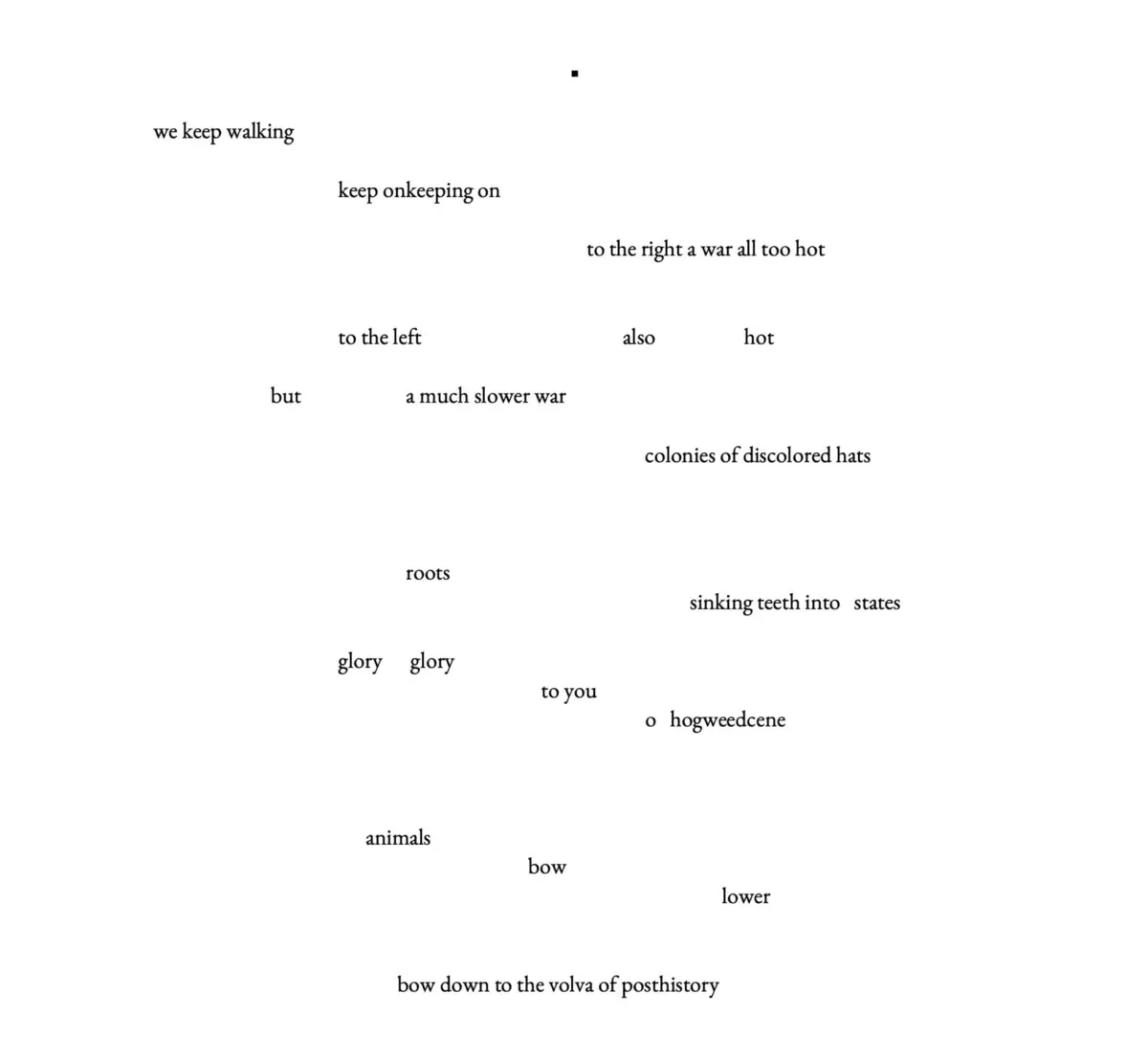
Beyond its immediate physical threat, the rise of Heracleum sosnovskyi has transcended botany to become a profound cultural and philosophical symbol. In contemporary literature and eco-poetry—most notably explored in the works of writer Tatiana Krasilnikova and translated by Venya Gushchin—the plant is examined not merely as an invasive weed, but as a living monument to totalitarian overreach, scientific hubris, and the monotony of industrial forms. This investigative feature explores the harrowing history of Sosnovsky’s hogweed, tracing its trajectory from a state-sanctioned agricultural experiment to the titular monarch of a hypothetical geological epoch: the Heracleocene.
Read Also
Detailed Chronology: From Caucasus Native to Totalitarian Flora
To understand how a single plant species came to threaten regional ecosystems and haunt the collective memory of generations raised in post-Soviet dachas, one must trace a timeline marked by wartime desperation, bureaucratic miscalculation, and botanical resilience.
[1940s] Discovery & Naming -> [Post-WWII] Agro-Experimentation -> [1960s-1980s] Widespread Cultivation -> [1990s] Collapse & Escape -> [21st Century] The Heracleocene1. The 1940s: Discovery and Taxonomic Baptism
In the shadow of global conflict, Soviet botanists scoured remote territories for resources to bolster domestic production. Among these discoveries was a formidable species native to the subalpine meadows of the Caucasus. Formally described in the 1940s, the plant was named Heracleum sosnovskyi by botanist Ida Mandenova in honor of her mentor, the prominent Russian botanist Dmitrij Sosnovsky. In its native habitat, the plant functioned as part of a complex, balanced ecosystem, constrained by local predators, diseases, and climatic checks.
2. The Post-War Era: The Silage Imperative
As the Soviet Union grappled with staggering agricultural deficits and the looming threat of famine, state planners sought high-yield silage crops to feed cattle. Sosnovsky’s hogweed appeared to be the ideal candidate: it grew with astonishing rapidity, reached heights of up to four meters, and produced immense volumes of green mass per hectare. Driven by an urgent mandate to feed livestock—which would, in turn, feed the populace and sustain the machinery of the state—agronomists transplanted the species out of its native mountainous enclave and into experimental fields across the plains.
3. The 1960s–1980s: Institutional Promotion and Textbook Indoctrination
During the mid-to-late twentieth century, the cultivation of hogweed was heavily promoted across state-run collective farms (kolkhozes). The optimism surrounding the plant even trickled down into civic life and educational curricula. Generations of school children reading Soviet-era textbooks were introduced to hogweed not as a biological hazard, but as a robust, utilitarian wonder of nature.

Texts of the era often romanticized the plant’s structural properties, encouraging children to craft makeshift toys—such as hollow pipes or telescopes—from its sturdy stalks. Some pedagogical materials even went so far as to compare the crisp, succulent texture of certain hogweed varieties to that of a cucumber, advising young readers to take a bite after play. This disconnect between institutional instruction and biological reality set the stage for widespread injury.
4. The 1990s: Structural Collapse and Ecological Jailbreak
With the dissolution of the Soviet Union in 1991, state-managed agricultural initiatives collapsed overnight. Vast fields cultivated with Sosnovsky’s hogweed were abandoned, left unattended by the administrative structures that had previously kept them contained. Deprived of management, Heracleum sosnovskyi demonstrated its true evolutionary capacity. Unshackled from agricultural controls, the plant broke containment, migrating along roadways, railway embankments, and abandoned pastures, establishing a self-sustaining foothold across millions of hectares.
Supporting Context & Metrics: The Anatomy of a Botanical Invader
The unchecked spread of Sosnovsky’s hogweed is facilitated by a combination of exceptional physiological traits and potent biochemical weaponry.
Biochemical Warfare: The Furanocoumarin Threat
The most dangerous attribute of Heracleum sosnovskyi lies in its sap, which is rich in organic chemical compounds known as furanocoumarins. When these compounds come into contact with human skin and are subsequently exposed to ultraviolet (UV) radiation from sunlight, they trigger a phototoxic reaction.
- Mechanism of Action: Furanocoumarins intercalate into cellular DNA upon UV activation, causing cellular apoptosis and acute inflammation.
- Clinical Manifestations: Victims experience painful second- and third-degree burns, deep blistering, hyperpigmentation that can persist for months or years, and, in severe cases involving contact with mucous membranes (such as the eyes or respiratory tract), permanent tissue damage and temporary or permanent blindness.
Ecological Dominance and Resilience
Unlike native flora that must compete within complex ecological webs, Sosnovsky’s hogweed operates with ruthless efficiency:
- Massive Seed Production: A single mature hogweed plant can produce up to 20,000 seeds, which remain viable in the soil for several years.
- Early Emergence: In early spring, hogweed sprouts long before most native perennial plants, monopolizing sunlight, soil nutrients, and moisture.
- Allelopathic Suppression: The dense canopy cast by its giant umbrella-like flowerheads (umbbels) blocks out virtually all competing vegetation, creating vast, monocultural wastelands devoid of biodiversity.
Cultural Resonance: From State-Sanctioned Utility to the "Heracleocene"
The legacy of Sosnovsky’s hogweed extends far beyond agronomy and public health; it has become a profound metaphor for systemic failure and ecological trauma. In contemporary artistic and literary reflections—exemplified by Tatiana Krasilnikova’s poetic explorations of the Heracleocene (or "hogweedcene")—the plant is recast as the ultimate monument to human arrogance.
The Flowerhead of Totalitarianism
Writers and cultural theorists draw direct parallels between the unchecked, monolithic spread of Heracleum sosnovskyi and the structural characteristics of totalitarian regimes:

- Monotony of Form: Just as authoritarian systems seek to erase individual diversity in favor of uniform compliance, a hogweed-dominated landscape eradicates ecological variety, replacing vibrant, complex ecosystems with a uniform forest of towering stalks.
- Scientific Ignorance and Hubris: The introduction of the plant represents a textbook failure of top-down planning, wherein complex natural systems are treated as infinite, malleable commodities to be exploited for short-term political or economic gains.
- Colonial Extraction: Wrenched from its native Caucasus home, the plant serves as an allegory for displacement, where indigenous elements are uprooted, weaponized by industrial apparatuses, and ultimately turned against the host civilization.
Poetic Resistance and the Search for Hope
Despite the bleakness implied by a planet conquered by toxic flora, contemporary literature seeks out spaces of resilience. In Krasilnikova’s verse, translated masterfully by Venya Gushchin, the narrative pivots from despair to an underground persistence:
lessons from the earth
under the lash
under the table
- from under the floorboards
from under the tomb
of authoritarian regimes
of totalitarian regimes
from under the mycelium*
This poetic imagery invokes the subterranean networks of life—mycelium, soil, and buried histories—that continue to endure beneath the weight of industrial toxicity, militarism, and systemic neglect. The juxtaposition of children peering through telescopes coated in furanocoumarins with the quiet endurance of a handful of soil underscores a vital truth: even within an era defined by ecological damage, the capacity for renewal persists underground.
Future Outlook: Managing the Monolith
As global temperatures shift due to climate change—a phenomenon that is simultaneously bleaching coral reefs and accelerating the northern migration of invasive plant species—governments and environmental agencies face an uphill battle against Heracleum sosnovskyi.
Mitigation Strategies
- Mechanical Removal: Excavating root crowns before seed production occurs, though this requires protective gear and constant monitoring to prevent secondary exposure.
- Chemical Control: Targeted herbicide application during early spring growth phases, balanced against the risk of chemical runoff into local watersheds.
- Biological Research: Ongoing investigations into natural insect predators and pathogens from the plant’s native Caucasus range to establish sustainable biocontrol protocols.
Conclusion
The narrative of Sosnovsky’s hogweed is a cautionary tale of ecological intervention stripped of foresight. Whether viewed through the lens of agricultural history, public health data, or the haunting artistic framework of the Heracleocene, the plant remains a stark reminder of the unintended consequences of human dominion over nature. Yet, as contemporary literature reminds us, survival is not solely defined by the forces that dominate the surface; it is equally sustained by what persists quietly from under the floorboards—awaiting the dawn of a repaired world.





Comments
Facebook App ID not configured. Please add it in the Customizer.