
Executive Overview
The rapid, disruptive advent of artificial intelligence (AI) has fundamentally altered the modern landscape, stretching far beyond the traditional frontiers of the digital age. It has forced society to confront profound, foundational questions concerning consciousness, the future of labor, and the very definition of what it means to be human. As algorithms evolve from simple computational tools into autonomous systems capable of complex reasoning, pattern recognition, and generative output, the global community finds itself standing at an unprecedented historical crossroads.
Such far-reaching, civilization-altering implications demand sustained, rigorous intellectual inquiry. The widespread public resonance and popularity of Pope Leo XIV’s encyclical Magnifica Humanitas clearly speaks to a collective cultural hunger for guiding voices that eschew both hysterical doomsaying and uncritical, utopian accelerationism. In an era dominated by hyperbole, society desperately needs steady, sober minds capable of parsing the intricate balance between the technological goods and moral hazards of AI.
To answer this pressing demand, a new publication is entering the media ecosystem: The Widening Gyre, a specialized newsletter authored by veteran technology writer and commentator Ned Desmond. Scheduled to launch its inaugural edition tomorrow, the publication aims to cut through the industry jargon and offer a deeply reflective, ethically grounded analysis of the technological shifts reshaping our world.
Read Also
Supported by the generous backing of the John Templeton Foundation, The Widening Gyre joins a growing suite of targeted newsletters designed to address the intersections of faith, culture, and modernity. By combining three decades of Silicon Valley insider experience with a committed Catholic worldview, Desmond’s new venture promises to provide readers with the intellectual tools necessary to maintain human agency in an increasingly automated age.
Detailed Chronology: The Evolution of the AI Discourse and the Birth of a Publication
Phase One: The Silicon Valley Boom and the Rise of Generative AI
For the past thirty years, Silicon Valley has operated as the undisputed engine of global technological transformation. Throughout this period, Ned Desmond bore witness to its evolution from the inside, working variously as a journalist, venture investor, corporate executive, and startup founder. For decades, the prevailing narrative of the tech sector was one of unbridled optimism—a techno-utopian belief that software would inevitably eat the world and render human existence more efficient, connected, and prosperous.
However, the public release of advanced generative artificial intelligence models marked a definitive turning point in this trajectory. Technologies that were once confined to academic laboratories suddenly became accessible to billions, sparking immediate concerns regarding labor market displacement, deepfakes, cognitive atrophy, and the erosion of epistemic trust. As tech giants raced to scale infrastructure, construct massive data centers, and outpace one another in a high-stakes artificial general intelligence (AGI) arms race, observers began to realize that society was no longer merely adopting tools; it was actively midwifing entities whose behaviors and long-term trajectories were increasingly difficult to predict or contain.
Phase Two: The Search for Sober Voices and Moral Frameworks
As anxieties mounted, cultural and religious institutions began to weigh in on the ethical dimensions of the digital revolution. The publication of papal and theological writings, most notably Pope Leo XIV’s Magnifica Humanitas, highlighted a desperate need for a measured, human-centric approach to technological development. The global conversation began to pivot away from simplistic binaries—such as the dichotomy between radical techno-optimism and neo-Luddite panic—toward a more nuanced ethical framework.
It was within this intellectual climate that Desmond began contributing a series of incisive essays to publications like First Things, exploring the intersections of faith, technology, and human dignity. These writings resonated deeply with readers who felt alienated by both Silicon Valley’s uncritical evangelism and mainstream media’s sensationalist alarmism.
Phase Three: The Conception of The Widening Gyre
Recognizing that essays and intermittent op-eds were insufficient to track the breakneck speed of technological development, Desmond and his collaborators conceived of a dedicated recurring platform. The Widening Gyre was established to provide continuous, bi-monthly analysis of the frontier. Drawing on its namesake—W. B. Yeats’s iconic 1919 poem "The Second Coming"—the newsletter was built on the premise that while contemporary technological dynamics carry profound centrifugal risks, human destiny is never pre-ordained. The project officially transitioned from concept to reality through funding from the John Templeton Foundation, paving the way for its imminent launch.
Supporting Context & Metrics: The Philosophy and Mechanics of the Newsletter
Understanding the Metaphor: Why The Widening Gyre?
To fully grasp the mission of the new publication, one must understand the literary and philosophical underpinnings of its title. In his launch prospectus, Ned Desmond elaborates on why he borrowed his newsletter’s name from the opening stanza of W. B. Yeats’s 1919 masterpiece, "The Second Coming":
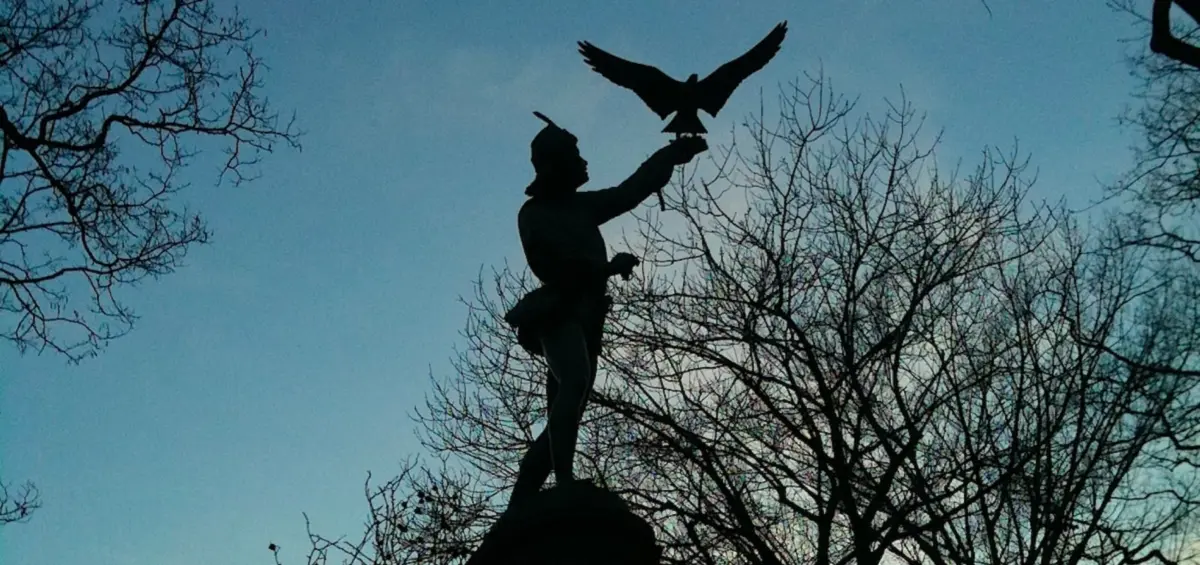
"Turning and turning in the widening gyre / The falcon cannot hear the falconer . . ."
Writing in the immediate aftermath of the First World War and the collapse of the European empires, Yeats had ample reason for profound gloom. He subscribed to an esoteric, cyclical view of human history, believing that civilizations moved in two-thousand-year epochs and that his era marked the violent end of one, characterized by the chilling realization that "Things fall apart; the centre cannot hold."
For Desmond, the imagery of widening gyres and falcons growing deaf to the calls of their trainers serves as a striking, cautionary metaphor for the technology-driven times we inhabit today. Modern technological acceleration—marked by algorithmic feedback loops, opaque neural networks, and systems growing increasingly autonomous from their human creators—echoes the panic of the falcon losing touch with the falconer.
Yet, Desmond diverges sharply from Yeats’s fatalism:
"Unlike Yeats, however, I don’t hold that any future is inevitable or pre-ordained. I believe God gave us tremendous capacity and the freedom to shape our lives and the world. We can choose to think and act, for good or ill, or to be passive, and let events sweep us away."
Editorial Focus and Core Themes
The Widening Gyre is explicitly engineered to bridge the gap between high-level technological developments and everyday human life. Each bi-monthly issue will feature Desmond’s sharp, insider commentary on the latest developments across the tech sphere, covering a wide array of pressing topics:
- AI Containment and Alignment: Tracking efforts—and potential failures—in keeping advanced artificial intelligence systems safe, bounded, and aligned with human values.
- The Data Center Boom: Analyzing the staggering infrastructure demands of modern AI, including its massive energy consumption, geopolitical implications, and environmental footprint.
- Labor and Human Agency: Examining how automation is reshaping the workforce, intellectual property, and the psychological health of societies increasingly mediated by screens.
- Translation of Technical Garble: Utilizing Desmond’s three decades of industry experience to distill dense, highly technical announcements from Silicon Valley into clear, accessible narratives for the layman.
Institutional Support and Sister Publications
The launch of The Widening Gyre is part of a broader, well-funded initiative made possible through the generous support of the John Templeton Foundation. This philanthropic partnership has enabled First Things to expand its intellectual footprint by launching a curated series of specialized newsletters addressing the most vital questions of our time.
The Widening Gyre joins an elite roster of intellectual newsletters hosted within the broader network:
- The Fourth Watch: A dedicated newsletter examining contemporary Catholicism, written by James F. Keating.
- The Protestant Mind: An exploratory newsletter focusing on Protestant theology, history, and culture, written by Dale Coulter.
- The Jew From Nowhere: A specialized publication exploring Jewish history, identity, and thought, written by J. J. Kimche.
By supporting these distinct voices, the John Templeton Foundation and its publishing partners are fostering a robust, pluralistic ecosystem of deep-dive journalism that treats faith, intellect, and technological progress not as mutually exclusive silos, but as deeply intertwined facets of modern civilization.
Official Statements and Perspectives
The launch of The Widening Gyre has drawn praise from cultural commentators, theologians, and technology analysts alike, who view the newsletter as a vital corrective to the superficial discourse currently dominating mainstream media.
In internal editorial briefings, project coordinators emphasized the unique synthesis that Desmond brings to the table. "You rarely find an individual who has spent thirty years in the trenches of Silicon Valley—launching startups, evaluating venture investments, and reporting on the inner workings of tech giants—who simultaneously possesses the theological depth and philosophical grounding to question the telos of these technologies," noted one editorial associate. "Ned does not write from a place of reactionary fear, nor does he regurgitate corporate press releases. He writes as a seasoned insider who understands that technology must serve man, not man technology."
Scholars focusing on the ethical implications of artificial intelligence have similarly underscored the timeliness of the publication. As governments worldwide scramble to draft regulatory frameworks for artificial intelligence—such as the European Union’s Artificial Intelligence Act and executive orders in the United States—policymakers and civil society leaders are searching for frameworks that transcend pure economic utility or compliance metrics.
By grounding the discussion in human freedom, moral responsibility, and the capacity for deliberate choice, The Widening Gyre provides a necessary counter-narrative. As Desmond notes in his manifesto:
"This newsletter’s aim is to help thoughtful readers shape their perspective on technology so they can exert authority and control over technology’s advances, whether at home or in the world at large. Both matter a lot."
Future Outlook: Navigating the Road Ahead
As artificial intelligence systems continue to scale exponentially, the coming decade will likely determine whether humanity successfully steers this powerful technology or finds itself swept away by its momentum. The challenges ahead are vast, ranging from the destabilization of labor markets and the proliferation of synthetic media to profound philosophical questions concerning artificial sentience and human dignity.
In this high-stakes environment, passive observation is no longer a viable option. Navigating the widening gyre requires vigilance, critical literacy, and a steadfast commitment to moral agency. Publications like The Widening Gyre aim to serve as navigational beacons for readers striving to maintain clarity amidst the digital noise.
Subscription and Access Details
The Widening Gyre will officially launch its first edition tomorrow. Delivered directly to subscribers’ inboxes twice a month, the newsletter offers exclusive analysis that will not be available anywhere else on the web.
Readers interested in cultivating a deeper, more grounded understanding of the digital age are invited to subscribe for free. Subscriptions can be secured immediately by visiting wideninggyrenewsletter.com.
In an age where the center threatens to fall apart, reclaiming our intellectual and moral authority over the tools we create has never been more urgent. The Widening Gyre invites thoughtful readers to join the conversation, steady the falcon, and reclaim the center.




Comments
Facebook App ID not configured. Please add it in the Customizer.