
Executive Overview
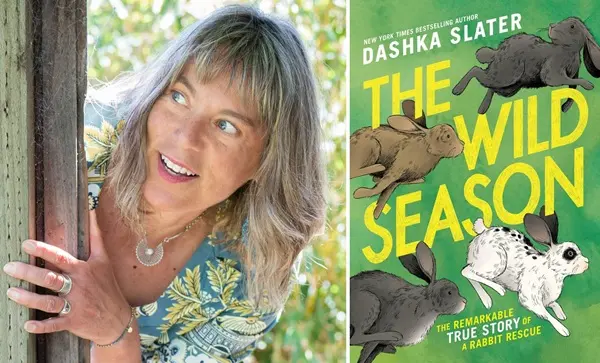
Following the critical success of her harrowing, intensely researched young adult narratives—including the Stonewall Book Award–winning and highly challenging Accountable—acclaimed author Dashka Slater has pivoted toward a dramatically different literary landscape. On September 8, Little, Brown will publish Slater’s middle-grade nonfiction debut, The Wild Season. The book chronicles a true story of grassroots animal rescue in San Francisco’s picturesque Golden Gate Heights Park, examining the heartwarming and extraordinary lengths to which ordinary neighbors will go when vulnerable lives hang in the balance.
Written with a distinctive, multi-perspectives narrative style, The Wild Season bridges the gap between factual reporting and immersive storytelling. Slater weaves together the viewpoints of the diverse human rescue team and the perspectives of the rabbits themselves, manufacturing high-stakes narrative tension out of a local headline. In doing so, she constructs a compelling exploration of intergenerational cooperation, the unexpected power of community-led conservation, and the often-misunderstood plight of abandoned domestic animals.
In this exclusive interview, Slater discusses the creative exhaustion that led her to seek out a hopeful story about bunnies, the real-life heroes who drove the Golden Gate Heights Park rescue effort, and the surprising lessons she learned about rabbit behavior, matchmaking, and ecology along the way.
Read Also
Detailed Chronology: How a Neighborhood Rally Saved the Golden Gate Heights Park Rabbits
The genesis of The Wild Season can be traced back to a brief, unassuming human-interest piece in the San Francisco Chronicle. The article highlighted a neighborhood award given to a local coalition of residents who had banded together to resolve a sudden, escalating crisis: a population of abandoned domestic rabbits struggling to survive in the rugged terrain of Golden Gate Heights Park.
For Slater, who was deep into a grueling book tour for Accountable—a heavy narrative focused on teenagers in peril and hate crimes—reading that small newspaper clipping felt like a lightning strike.
"I wrote two very intense, pretty dark YA narratives that were about teenagers in peril and hate crimes and everything awful. I was exhausted at the end of the second one," Slater explains.
While navigating the physical and emotional toll of touring her previous work, interviewers repeatedly asked what project she planned to tackle next. Although she jokingly deflected by saying her next book would likely be about "puppies or bunnies," the casual remark unlocked a deeper creative instinct. When she encountered the San Francisco story, her journalistic intuition recognized a narrative goldmine.
The story possessed all the classic hallmarks of a beloved middle-grade adventure: an ensemble cast of ordinary people thrust into extraordinary circumstances, an intergenerational team of collaborators, and a palpable sense of wonder. Slater notes that as a middle-grade reader, she was perpetually drawn to animal stories and narratives where extraordinary things happened to ordinary kids. Though The Wild Season remains strictly rooted in nonfiction, it captures that exact brand of real-world magic.
Assembling the Cast of Characters
To capture the true scope of the Golden Gate Heights Park rescue, Slater had to carefully select the human subjects whose leadership and unique skills drove the operation forward.
At the heart of the community response was 77-year-old dog walker Jean Kind. Recognized widely as the catalyst for the entire endeavor, Kind was the first to spot the abandoned rabbits and understand the existential threat they faced. Armed with deep-seated community-building skills and an abiding love for animals, Kind successfully galvanized her neighborhood, transforming isolated residents into a cohesive, mobilized rescue unit.
Naturally, any compelling middle-grade narrative requires young protagonists. Slater found two standout youth figures:
- Sam: Nine years old at the time of the rescue, Sam channeled his youthful energy and passion into founding the neighborhood "Bunny Club."
- Allison: A 16-year-old teenager whose unexpected, preternatural talent for safely catching agile, frightened rabbits proved critical to the physical rescue operations.
Recognizing the logistical hurdles of safely capturing abandoned domestic animals, Kind directed Slater toward a vital professional resource: Jessica, a seasoned professional rabbit catcher. Upon their first phone call, Slater realized Jessica was an indispensable character for the book. Running a household completely overrun with rescued rabbits and other animals, Jessica provided both technical rescue expertise and an entertaining, larger-than-life narrative voice.
Supporting Context & Metrics: The Perils of Abandoned Domestic Rabbits
Beyond its engaging narrative arc, The Wild Season serves as an educational vehicle, shedding light on critical ecological and animal-welfare concepts that are frequently misunderstood by the general public.
Domestic vs. Wild Rabbits: A Dangerous Misconception
One of the most vital takeaways Slater hopes young readers glean from the book is the stark biological and behavioral divide between domestic rabbits (Oryctolagus cuniculus) and native wild rabbit species, such as cottontails and jackrabbits.
A widespread societal blind spot exists regarding rabbits. While the average person easily recognizes that a stray dog cannot survive independently in a park or forest, many assume rabbits belong strictly to the outdoors and can easily fend for themselves. Consequently, owners frequently dump unwanted domestic rabbits into public parks, nature reserves, and urban green spaces, laboring under the compassionate yet entirely false assumption that the animals are simply "returning to nature."
Slater emphasizes the severe real-world consequences of this practice:
- Lack of Survival Instincts: Domestic rabbits have been bred for centuries to rely on humans for food, shelter, and protection. They lack the camouflage, speed, and defensive instincts required to evade urban predators like hawks, raccoons, and domestic cats.
- Nutritional Vulnerability: They do not possess the knowledge required to forage safely for native plants and often ingest toxic flora or garbage.
- Ecosystem Disruption: Releasing non-native domestic species into delicate local ecosystems can introduce diseases or place undue competition pressures on native wildlife populations.
By weaving these factual realities directly into the narrative tension of the rescue, Slater equips her young readers with practical environmental science literacy disguised as an adventure story.
Official Statements and Insider Insights: Behind the Scenes with Dashka Slater
Writing a definitive nonfiction book about rabbit rescue required Slater to immerse herself completely in the subculture of rabbit advocacy—an immersion that occasionally spilled directly into her domestic life.
Despite writing an entire book centered on the species, Slater admits she has never actually owned a pet rabbit. However, her primary subject matter expert, Jessica the professional rabbit catcher, has made it her personal mission to change that.
"Jessica lobbies me constantly to at least foster rabbits," Slater laughs. "She’s always looking for people to take rabbits, even temporarily, because her house is overrun with them. She said, ‘Look, I don’t think you can really write about rabbits until you’ve lived with them.’"
The Secret World of Rabbit "Speed Dating"
While much of the book focuses on the gritty, boots-on-the-ground reality of rescuing abandoned animals from park terrain, Slater uncovered fascinating subcultural practices that ultimately remained off the final page due to space limitations. Among the most eccentric and delightful discoveries was the concept of "rabbit bonding" and "rabbit dating."
Jessica firmly believes that rabbits—being highly social creatures—should never be forced to live solitary lives. Instead, they thrive on romantic, lifelong pairings. However, because rabbits are famously selective and territorial, matching two strangers can be a volatile endeavor.
To solve this, Jessica orchestrates specialized "rabbit speed-dating" events. To prevent the animals from entering into violent altercations—a phenomenon known among rabbit rescuers as "the tornado"—Jessica uses a precise technique, holding one rabbit in each hand while introducing potential matches.
This subculture eventually came straight to Slater’s doorstep. To help with fostering logistics, Jessica temporarily converted Slater’s home into a staging ground for rabbit matchmaking.
"She did all of this at my house; there were 20 rabbits, all in separate little pens," Slater recalls. "So even though I’ve never had my own rabbit, I did have a lot of rabbits in my house."
Future Outlook: The Impact of The Wild Season on Middle-Grade Nonfiction
As the September 8 release date from Little, Brown approaches, The Wild Season is poised to carve out a unique space within children’s literature. By stepping away from the heavy, emotionally grueling reporting of institutional failures and youth violence that defined her previous work, Slater has demonstrated a remarkable range as a journalist and storyteller.
The book arrives at a critical juncture when educators and librarians are increasingly searching for narrative nonfiction that balances emotional resonance with actionable civic lessons. The Wild Season does not merely tell a story about animal rescue; it provides a blueprint for youth empowerment. It illustrates how an intergenerational coalition—spanning a 77-year-old dog walker, a 16-year-old animal handler, and a nine-year-old club founder—can leverage cooperation, empathy, and collective action to solve local environmental crises.
For readers young and old, Slater’s middle-grade debut promises to be an inspiring reminder that big changes often begin with small, compassionate acts—and that sometimes, rescuing a few abandoned bunnies can help heal a community in the process.





Comments
Facebook App ID not configured. Please add it in the Customizer.