
Executive Overview
In the grand theater of political philosophy, few figures command as much enduring controversy or incite as much intellectual polarization as Niccolò Machiavelli. More than five centuries after the scribbling of The Prince in 1513—a text famously described by English Cardinal Reginald Pole as having been "written by an enemy of the human race"—the Florentine thinker’s specter continues to haunt the corridors of power, academic seminar rooms, and cultural institutions alike.
A significant new contribution to this ongoing discourse is Michael Anton’s Studies in Machiavellian Political Philosophy (Encounter Books). In this incisive, 466-page volume, Anton, a former White House official and seasoned political theorist, argues that Machiavelli did far more than provide a ruthless manual for Renaissance statecraft. Instead, Anton posits that Machiavelli successfully laid the intellectual groundwork for post-religious modernity, deliberately engineering a spiritual weapon aimed at dismantling and replacing both classical philosophy and the Judeo-Christian worldview.
Anton’s work arrives at a critical juncture in contemporary sociopolitical life. As Western institutions experience a crisis of legitimacy, marked by secularization, cultural fragmentation, and deep ideological polarization, the debate over Machiavelli’s legacy has shifted from dusty academic libraries to the front lines of the culture wars. By contending that today’s corporate media, elite universities, and entertainment complexes function as the secular monasteries and pulpits of a desacralized Machiavellian order, Anton forces a sobering question upon modern observers: Has the adoption of Machiavellian pragmatism poisoned the well of public virtue, and can a society built on cynical power dynamics ever reclaim a higher moral horizon?
Read Also
Detailed Chronology: From the Tudor Court to the Modern Age
To understand the trajectory of Machiavellianism in the Anglo-American political tradition, one must trace its historical roots back to the turbulent backdrop of 16th-century Tudor England. The intersection of Machiavelli’s thought and English statecraft highlights a lineage of realpolitik that has fascinated historians for generations.
The 16th-Century Reception and Henry VIII
In his Apologia ad Carolum Quintum, Cardinal Reginald Pole asserted that Thomas Cromwell confided in him during the autumn of 1529 that Machiavelli’s The Prince had served as the primary ideological catalyst for King Henry VIII’s fateful break with the Roman Catholic Church. While historians have long debated the precise timeline—given that Machiavelli’s seminal work was published posthumously in 1532—the conceptual alignment remains striking.
Pole characterized The Prince as a manual designed to systematically dismantle "religion, justice, and any inclination toward virtue." Yet, despite such ecclesiastical condemnation, figures within the English court quickly recognized the utility of the text. Later that decade, Henry Parker, 10th Baron Morley, transmitted a copy of the treatise to Cromwell, explicitly noting, "this Boke off Machiavelle de Principe ys surely a very speciall good thing for youre Lordschip."
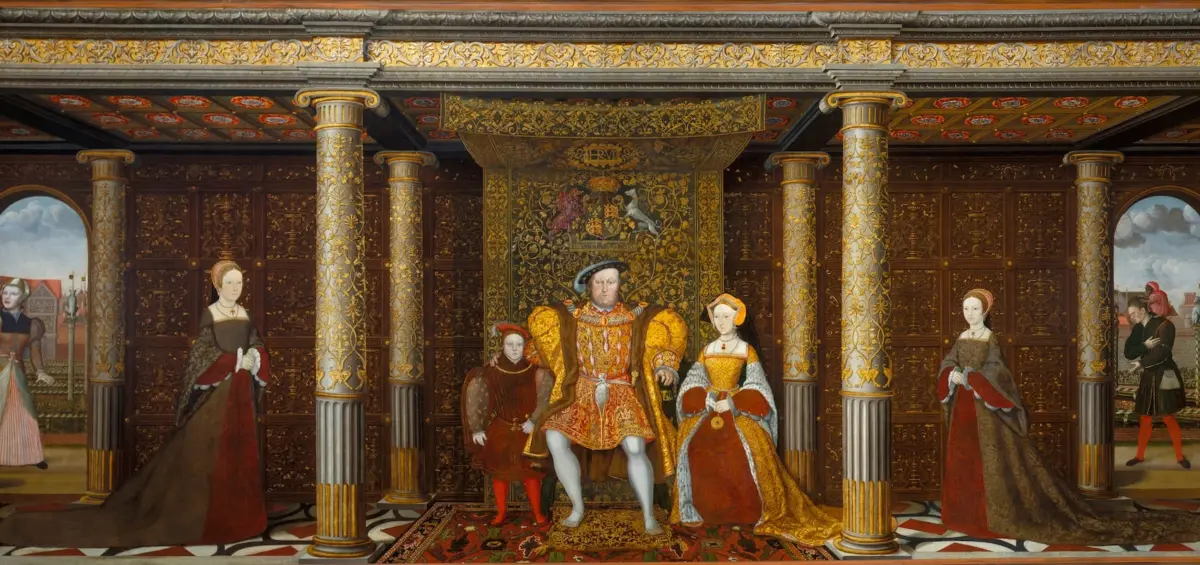
Prominent historian A. F. Pollard famously described Henry VIII as "Machiavelli’s Prince in action." The king’s systemic elimination of political rivals, his instrumentalization of religion for dynastic and fiscal gain, and his obsessive cultivation of a public persona defined by raw power and immense wealth present an uncanny mirror image of the Florentine’s ideal ruler.
The Intellectual Pivot: Strauss and Anton
Fast-forwarding to the 20th and 21st centuries, the philosophical critique of Machiavelli was profoundly shaped by thinkers like Leo Strauss, who accused the Florentine of effecting an "enormous simplification" of human nature and drastically contracting humanity’s metaphysical horizon.
Michael Anton’s Studies in Machiavellian Political Philosophy directly inherits this Straussian framework while expanding it to diagnose the pathologies of 21st-century techno-modernity. In recent essays, such as a widely discussed op-ed for The Washington Post, Anton argues that Machiavelli’s ultimate ambition was nothing short of posthumous divinity—to rule over humanity through his writings as a "new prince" who successfully overthrew the spiritual authority of scripture and classical metaphysics.
Supporting Context & Metrics: The Mechanics of Modern Disenchantment
To fully grasp the weight of Anton’s thesis, one must examine the specific mechanics by which Machiavelli sought to subvert the established order, particularly his calculated assault on Christianity.
The Critique of Christian "Weakness"
According to Anton’s analysis, Machiavelli viewed Christianity not merely as intellectually flawed, but as actively pernicious to the vitality of the state. The Florentine maintained that Christian doctrines engender systemic weakness by encouraging individuals to place their trust in transcendent, external forces rather than their own terrestrial agency.
Furthermore, Machiavelli argued that Christianity democratized a form of spiritual serenity and psychological immunity to fortune that classical philosophers like Plato and Aristotle believed was reserved exclusively for the most exceptional, disciplined minds—and even then, only after arduous effort. Anton underscores this dynamic, writing:
"Worst of all, Christianity promises all believers a serenity of mind or superiority to fortune that classical philosophers considered the possession of only the best of men, acquired through much effort. . . . Christianity attempts to make a simplified version of this state of mind available to all, arguably without any effort. After all, how hard is it to die when you are promised an eternity in Paradise?"
By lowering the barrier to ultimate peace and decoupling it from rigorous moral or intellectual excellence, Christianity allegedly promotes what Machiavelli termed "ambitious idleness"—a state of being where human beings retreat from the demands of civic glory into passive prayer and contemplation. Moreover, Machiavelli diagnosed the institutional Church’s reliance on the threat of eternal damnation as a form of "pious cruelty" that subjugated human will through existential terror.
The Secular Metamorphosis: From Monasteries to Media
While the institutional Church held a monopoly on power during the Renaissance, Anton argues that the contemporary manifestation of Machiavelli’s vision has migrated into secular institutions. Today, the functions once performed by religious authorities have been co-opted by modern sociocultural power centers.
- Universities: Serving as the new "monasteries," elite academic institutions maintain orthodoxies, shape ideological formation, and credential the ruling administrative class.
- Corporate Media and Entertainment: Functioning as the new "church," these industries disseminate narratives to the masses, establishing cultural norms, enforcing behavioral expectations, and replacing traditional eschatological hope with secularized forms of victimology and identity politics.
This desacralized ecosystem, Anton contends, is directly responsible for a cascade of modern ills—ranging from the atomization of communities and the epidemic of digital addiction (smartphones and social media) to pornography and the intellectual sterility of a hyper-politicized academia.
Official Statements & Theoretical Perspectives: The Dilemma of Resistance
Faced with a contemporary landscape dominated by Machiavellian power dynamics, public intellectuals and political philosophers remain deeply divided on how principled actors should respond.
Michael Anton’s Strategic Paradox
In Studies in Machiavellian Political Philosophy, Anton poses a provocative challenge to modern conservatives and traditionalists: If the prevailing socio-political architecture is unabashedly Machiavellian, how can those defending traditional goods hope to survive, let alone prevail?
Anton suggests that modern defenders of the Good face a mirror-image challenge to Machiavelli’s original project. "Our challenge is then in a sense the reverse of Machiavelli’s: to reacquaint the people with God and an intellectual elite with the Good," he writes. Yet, to achieve this anti-Machiavellian objective, Anton provocatively flirts with adopting Machiavellian tactical methods.
For instance, he suggests that modern statesmen and cultural warriors should be willing to "accept the charge of being a sinner so long as it is seen that one sins in defense of the patria." In the context of the contemporary culture wars, if fighting against ideological frameworks perceived as dehumanizing requires "sinning" against polite elite consensus, then individuals must be willing to do so in defense of truth and beauty. Operating from the premise that "our enemy cannot be converted but must be defeated," Anton advocates for a hard-nosed, clearsighted realism over naive moralism.
The Counter-Voice: St. Thomas More’s Principled Humanism
Standing in stark opposition to this pragmatic calculus is the historical and philosophical legacy of St. Thomas More, Machiavelli’s great humanist contemporary. While Machiavelli drafted The Prince, More composed Utopia (1516), a complex critique of corrupted European Christendom that sparred with the political orthodoxies of the age.
However, More’s personal life and martyrdom ultimately established an uncompromising philosophical standard: principles must permanently supersede raw power, and a statesman’s true success must be measured by the synthesis of political effectiveness and moral virtue. As More famously observed in his Epigrams, "Not a henchman but virtue renders a king safe."
The materialist perspective often dismisses More’s trajectory as a tragic failure. When More refused in 1534 to sign the Oath of Succession—which affirmed Henry VIII’s marriage to Anne Boleyn and acknowledged the king as the supreme head of the English Church—he lost his freedom, his career, and ultimately his head. Henry VIII, meanwhile, consolidated his absolute power, dissolved the monastic estates, and enriched his loyal retainers. Modern England bears the unmistakable institutional footprint of Henry, not More.
Yet, as critics of pure Machiavellianism point out, More’s moral luminosity has endured through the centuries. While ruthless operators may secure temporary earthly dominance, their legacies are frequently stained by the resentment of those they exploited. More’s steadfast courage, epitomized by his legendary declaration upon the scaffold in 1535—"I die the King’s good servant, but God’s first"—continues to inspire generations seeking an alternative to cynical power politics.
Future Outlook: Navigating the Post-Christian Polis
As the West navigates an increasingly unstable 21st century, the dialogue sparked by Michael Anton’s exploration of Machiavelli strikes at the very heart of civilizational survival. The fundamental tension of our era is clear: Do we succumb entirely to the cold calculus of realpolitik, treating politics as an unvarnished struggle for dominance where any ethical compromise is justified by the end goal? Or do we insist, with Thomas More, that the preservation of the soul and the adherence to transcendent moral principles must supersede temporal victory?
Anton’s work issues a timely warning that attempting to fight Machiavellian forces with purely naive idealism is a recipe for perpetual defeat. However, his suggestion that defenders of the Good should adopt the tactical weaponry of the Florentine introduces profound moral hazards. If those who seek to restore a culture of virtue become indistinguishable from the cynical operators they oppose, the victory achieved may prove hollow, having hollowed out the moral fabric of the victors in the process.
Ultimately, the enduring relevance of Studies in Machiavellian Political Philosophy lies not in offering an easy roadmap for political restoration, but in forcing a rigorous, unsparing examination of the spiritual foundations of modern power. Whether modern societies choose the path of the pragmatic Prince or the principled Martyr will determine not only the health of our political institutions, but the ultimate character of the human soul in the decades to come.





Comments
Facebook App ID not configured. Please add it in the Customizer.