
Executive Overview
Ten years ago, the landscape of independent literature was defined by quiet isolation. While massive corporate conglomerates—the monolithic "Big Five"—dominated the financial oxygen, commercial shelf space, and mainstream media attention, smaller literary houses operated in the shadows. For many indie publishers, the daily routine meant endless labor, minimal industry coordination, and fighting an uphill battle just to get books onto bookstore shelves.
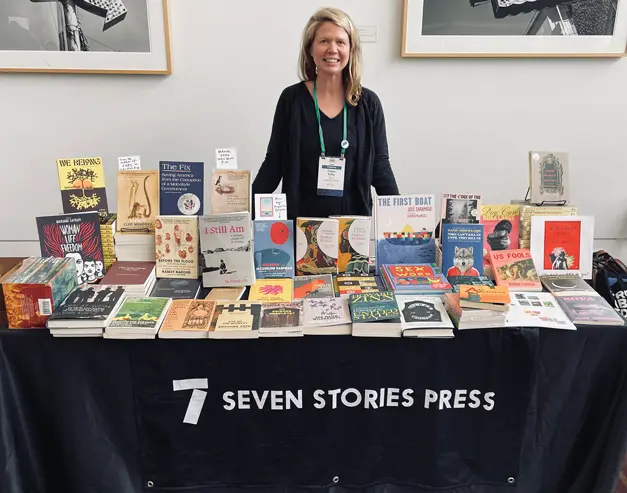
That narrative changed a decade ago at the American Booksellers Association’s Winter Institute in Denver. There, Seven Stories Press publisher Dan Simon and former Beacon Press associate publisher Tom Halleck sparked an initiative that would alter the trajectory of the literary world: the creation of the Independent Publishers Caucus (IPC).
Today, the IPC stands as a powerful, unified voice for the independent publishing community. Boasting 107 member publishers—up from 69 at its five-year milestone—the organization features a robust steering committee and a full-time executive director, Daniel O’Brien, who also leads the Association of American Literary Agents. Marking its tenth anniversary with its most aggressive strategic play yet, the IPC launched its own weekly bestseller lists earlier this year, directly spotlighting top-selling indie titles sold within independent bookstores.
Read Also
Yet, the IPC’s success is measured by far more than membership metrics. By fostering cross-publisher solidarity, creating shared educational frameworks, and bridging the gap between independent presses and the physical and digital hubs where books are sold, the caucus has transformed isolation into a vibrant, collective ecosystem. As the independent bookstore sector experiences a post-pandemic renaissance—with roughly 600 new indie shops opening nationwide—the IPC is stepping up to ensure that mission-driven publishers remain a foundational pillar of modern literary culture.
Detailed Chronology: From Denver Conception to a National Movement
The Genesis: Breaking the Isolation (2014–2016)
The spark for the IPC was born out of shared frustration. In the mid-2010s, independent publishers found themselves competing against one another while collectively losing ground to the distribution networks and marketing budgets of corporate publishing giants. Dan Simon and Tom Halleck recognized that individual presses—many operating with fewer than a dozen employees—lacked the structural leverage needed to negotiate effectively with distributors, libraries, and major bookselling chains.
When the IPC formally organized, its founding ethos was simple: independent presses needed a collective identity. They needed a vehicle to share resources, advocate for policy changes, and articulate the unique cultural value of books that prioritize intellectual exploration and artistic risk over immediate corporate profit.
Scaling Up and Institutionalizing (2016–2021)
During its first five years, the IPC focused on laying structural foundations. Membership grew steadily from its infancy to 69 publishers. Crucially, the organization began shifting from an informal networking group to an operational powerhouse.
Rather than relying purely on volunteer labor from exhausted publishing executives, the caucus eventually secured dedicated leadership. The appointment of Daniel O’Brien as full-time executive director professionalized the organization’s operations, enabling it to coordinate complex advocacy and educational initiatives. During this period, the IPC began establishing regular digital touchpoints, including biweekly virtual town halls, a dedicated members’ newsletter, and cooperative educational programming.
The Bestseller Breakthrough and Modern Expansion (2021–Present)
The post-pandemic era presented both unprecedented challenges and unique opportunities for independent publishing. Driven by a surge in community-focused retail—evidenced by the opening of approximately 600 new independent bookstores across the United States—the IPC accelerated its outreach.
Earlier this year, the caucus executed its most ambitious initiative to date: the launch of the IPC Top 40 bestseller lists. Tabulated directly by the American Booksellers Association using sales data from independent bookstores, these weekly lists (split into adult fiction and nonfiction categories, with a children’s list forthcoming) provided immediate, verifiable market visibility for presses that historically struggled to break through mainstream data aggregation models. Today, with 107 member publishers firmly integrated into its network, the IPC has evolved from a fledgling advocacy group into a definitive economic and cultural force.
Supporting Context & Metrics: Defining "Independence" in the Modern Market
Strict Criteria and Shared Philosophy
In an era where corporate imprints frequently brand themselves as "independent" or "boutique" to capture authentic literary audiences, the IPC maintains strict, transparent criteria for membership. To join the caucus, a publisher must:
- Have at least 10 books in print.
- Feature works by at least three distinct authors.
- Employ no more than 60 staff members.
These parameters intentionally disqualify massive independent operations like W.W. Norton or Bloomsbury, ensuring that the caucus remains anchored to genuinely small- and mid-sized enterprises. An explicit exception is made for University Presses, which are eligible regardless of staff size due to their shared non-corporate, mission-driven publishing models.
This structural boundary reinforces a shared ideological core. As Christie Henry, director of Princeton University Press—the IPC’s largest member organization—notes, the unifying philosophy of the caucus can be summarized succinctly: publishers who put purpose before profit.
Quantifying the Impact: By the Numbers
- 107: Current active member publishers within the IPC, representing a dramatic increase from the 69 members recorded at the five-year mark.
- 600+: The estimated number of new independent bookstores that have opened across the United States since the onset of the COVID-19 pandemic, providing a fresh retail landscape for IPC frontlists and backlists.
- Top 40: The newly minted weekly bestseller lists tracking adult fiction and nonfiction sales exclusively from independent bookstores, offering a direct counterweight to corporate-dominated charts.
- 3: Minimum author count required for membership, ensuring a diverse and active publishing catalog.
Official Statements & Industry Perspectives
The true impact of the Independent Publishers Caucus is best understood through the voices of the publishing professionals who build, sustain, and navigate its network every day.
Combating Industry Isolation
For many small press leaders, the daily workload is relentless. Emily Saer Cook, founder of Cursor Literary and a member of the IPC’s education committee, describes the pre-caucus era using stark imagery. She credits the organization with pulling publishers out of "the darkness"—the crushing isolation of operating alone in an industry where "the work is endless, and it’s hard to come up for air."
"The IPC has given us language for how strong independent publishing is," Saer Cook explains. That shared language has allowed small presses to stop viewing one another strictly as competitors and start operating as allies in a cultural ecosystem.
Challenging Mainstream Metrics
Mainstream industry metrics, such as The New York Times bestseller list, have long been criticized by independent publishers for reflecting corporate marketing budgets and algorithmic trends rather than genuine cultural impact. Dan Simon pulls no punches when comparing the mainstream charts to the newly minted IPC rankings:
"Go look at the New York Times bestseller list—mostly it’s things that are selling but aren’t really changing hearts and minds. Now, go look at the IPC Top 40 fiction or nonfiction list, and there’s all this dynamism."
Navigating Distribution Complexities
One of the primary historical hurdles for independent presses has been visibility at the retail level. Sanj Kharbanda, associate publisher and director of sales and marketing at Beacon Press and a member of the IPC steering committee, points out a structural quirk in modern publishing logistics that makes the IPC’s bestseller list indispensable:
"The list is important to the industry because booksellers, especially new ones, often can’t tell which titles come from independent presses, since so many are distributed through the same channels as the Big Five."
Because independent presses often utilize the same major distribution pipelines as corporate conglomerates, new booksellers frequently struggle to identify authentic indie titles. The IPC Top 40 acts as an essential roadmap, cutting through distribution noise to spotlight mission-driven literature.
Cultivating Talent Through Collaboration
Beyond marketing and distribution, the IPC has proven that collective action can yield dramatic operational efficiencies. A prime example is the caucus’s virtual intern training program. Rather than forcing individual presses—many with tiny administrative teams—to build training curricula from scratch, the IPC pooled its resources to run joint virtual training sessions for interns across multiple member presses.
"Our interns loved it," notes Christie Henry of Princeton University Press, praising the initiative as one of the "clearest cases of the caucus creating value that smaller members couldn’t produce alone."
Future Outlook: Strategic Horizons for the Next Decade
As the Independent Publishers Caucus enters its second decade, its leadership is focused on targeted, sustainable growth rather than rapid, uncontrolled expansion.
Reaching New Bookstores and Libraries
With hundreds of new independent bookstores emerging nationwide, Executive Director Daniel O’Brien emphasizes that the IPC’s immediate priority is proactive outreach. The goal is to establish contact with newly minted booksellers before they default exclusively to ordering from massive corporate conglomerates, ensuring that independent press frontlists and backlists are firmly on their radars.
A parallel strategy is underway for the library sector. Through its biennial in-person IndieLib Forum—held in conjunction with the Public Library Association’s conference—the IPC is actively forging connections with librarians. To combat tightening municipal and educational budgets, O’Brien notes that the forum may soon expand into virtual formats to maximize accessibility for librarians nationwide.
Technological Integration and Direct-to-Consumer Sales
Looking ahead, the IPC is exploring advanced technological integrations. Key initiatives include developing better direct-to-consumer sales pathways and improving integration with bookstore point-of-sale (POS) systems. By leveraging shared tech infrastructure, member presses hope to streamline purchasing friction for readers who wish to support independent literature directly.
Quality Over Quantity: The Ethos of "Sweat Equity"
Significantly, the IPC has no ambition to scale into an unwieldy bureaucratic entity. According to Sanj Kharbanda, there are no targets to inflate membership to 150 or 200 presses.
"We’re happy where we are," Kharbanda affirms. Instead of chasing numbers, the caucus prioritizes member engagement. The primary requirement for joining and remaining in the IPC is a willingness to show up, roll up one’s sleeves, and contribute to collaborative problem-solving.
"We just want to make sure that everybody who’s in it is in it for the right reasons," Kharbanda concludes. "And the right reasons include putting in sweat equity alongside everybody else."
As the corporate consolidation of media and literature continues to press down on cultural diversity, the Independent Publishers Caucus stands resilient. By pairing uncompromising intellectual purpose with practical solidarity, the organization has proven that when independent voices stand together, they are far too loud to be ignored.





Comments
Facebook App ID not configured. Please add it in the Customizer.