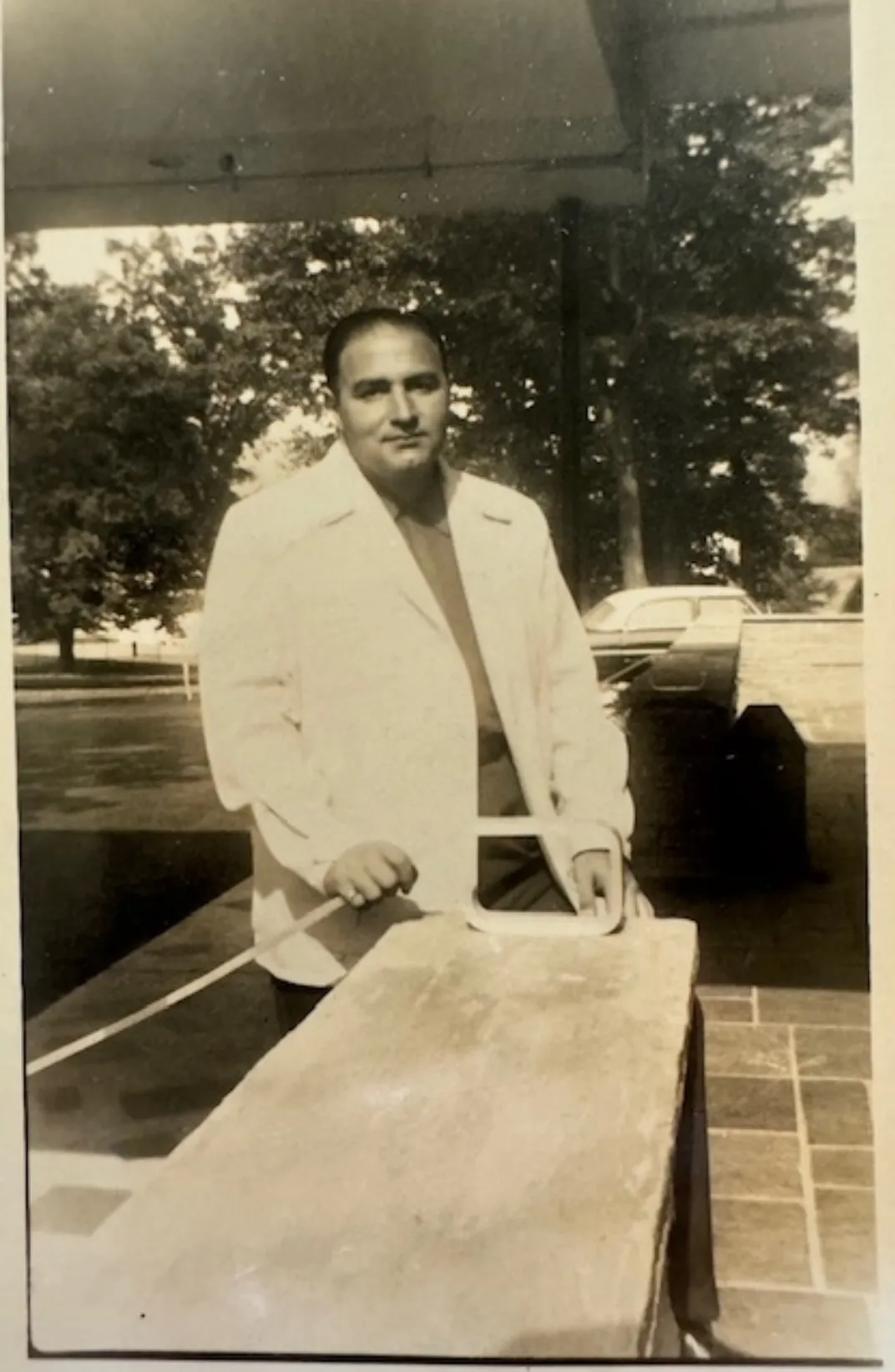
In the winter of 2022, an anonymous cardboard box arrived at a United Service Organizations (USO) office in New York City. Containing more than 300 handwritten letters, postcards, and V-Mail sketches, the cache represented a deeply personal, remarkably intact archive from the heart of World War II. The author of these missives was Louis "Speedy" Weber, a 23-year-old soldier from the Bronx who had shipped off to Europe shortly after marrying his wife, Frances, in 1941.
For years, the origin of the donation remained completely unknown. Neither the donor nor the identity of the couple’s descendants could be established, turning the box into a historical orphan. The collection eventually migrated to the USO’s national headquarters in Virginia, landing on the desk of archivist and historian Michael Case. Recognizing the profound historical value of these everyday dispatches from the front lines, Case launched an exhaustive, multi-year investigative effort to contextualize the letters and find living relatives.
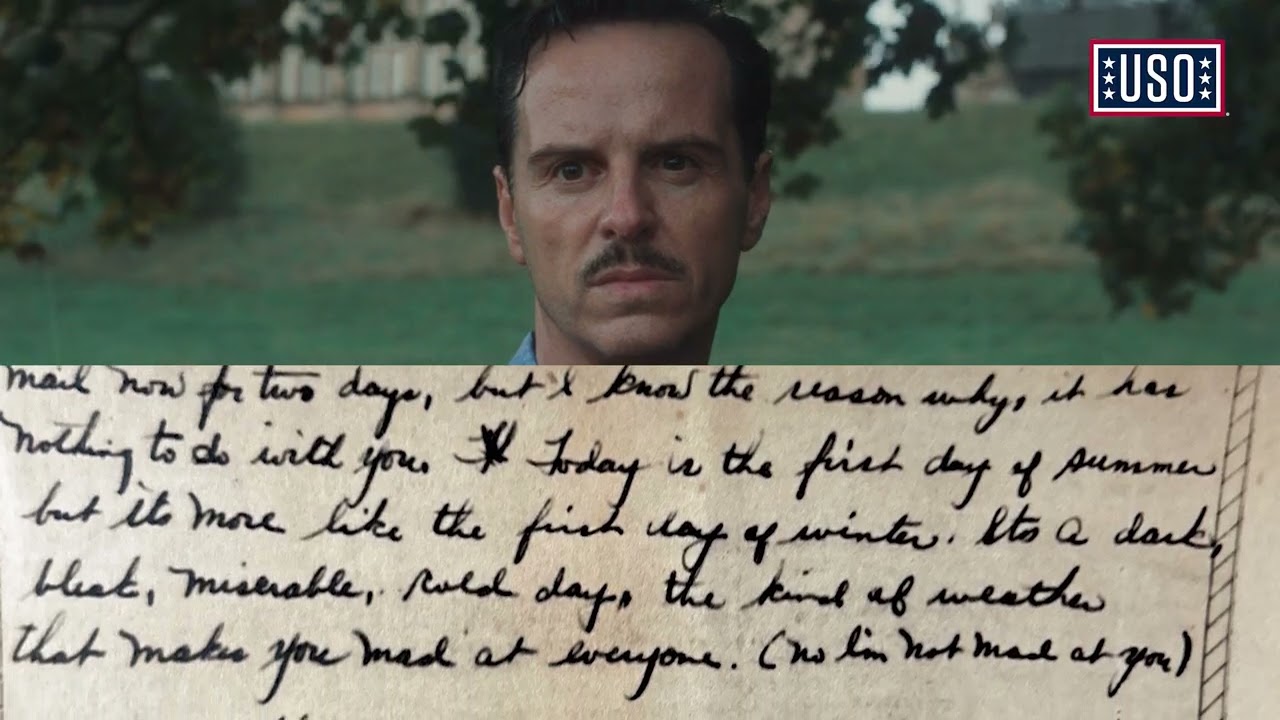
Following a public awareness campaign—which included partnerships with major media outlets and dramatic readings by actor Andrew Scott—an amateur genealogist successfully traced the lineage to Speedy’s surviving nephew, Arthur Serota, and niece, Karen Weber Figilis. This breakthrough transformed an anonymous pile of sentimental paper into a vivid chronicle of human endurance, offering an unvarnished window into the psychological toll of global conflict, the mechanics of wartime postal systems, and the quiet resilience of those who waited at home.
Detailed Chronology: From the Bronx to the Front Lines and Back
1. The Newlyweds of 1941
Before the cataclysm of global war entirely consumed their lives, Louis "Speedy" Weber and Frances lived ordinary lives in the Bronx. According to federal census records, both sets of their parents were immigrants who spoke Hebrew at home, sharing the working-class, tight-knit immigrant experiences typical of New York boroughs in the era. Speedy and Frances married in approximately 1941, just as the United States stood on the precipice of entry into World War II following the attack on Pearl Harbor.
By early 1942, Speedy was inducted into the U.S. Army. Suddenly thrust into a world of predawn wake-up calls, grueling kitchen duty, and mandatory 1.5-inch military haircuts, the 23-year-old found himself desperately trying to adapt. On June 17, 1942, he penned a letter to Frances that captured the jarring transition:
"I don’t feel as blue as I did yesterday. They don’t give me a minute to think about anything but Army life, and in a way that’s the best thing for me, because if I stopped to think about home I’d go nuts."
2. The Transatlantic Correspondence (1942–1945)
Over the next several years, Speedy crossed the Atlantic, serving in North Africa, Sicily, England, France, Belgium, Germany, and Czechoslovakia. As he moved through the European Theater of Operations, writing became his primary anchor to reality.
Despite never advancing far in formal education, Speedy possessed an expressive, natural literary style that Michael Case describes as "everyday elegant." He regularly dated his letters with evocative, deliberately vague location headers—"somewhere in England," "somewhere in France," "somewhere in Luxembourg"—and signed off with a steadfast refrain: "You are always in my heart."
His affectionate names for Frances underscored an enduring, playful intimacy that persisted despite the miles and the danger. He addressed her variously as "Dearest," "Legs," "Darling," "Knucklehead," "Shape," "the girl I care for most," and famously, "Meatball." In an October 1942 letter, he leveraged this wit to cope with his physical absence:
"In your letter, you asked me if there was anything I want that I can’t get out here. Well, there most certainly is. I want you. So if you wrap yourself into a package and mark it fragile, I’m pretty sure it will come down to me in good order."
3. D-Day and the Escalation of Conflict
Speedy likely arrived in France shortly after the historic Allied landings on June 6, 1944. On June 14, he detailed the awe-inspiring and terrifying scale of the invasion across the English Channel:
"It was quite thrilling and exciting to be able to be there when the curtain went up on the biggest show in the world… When I was on my way across the channel, I felt just as safe as if I were in your arms, because as far as the eye could see, there was nothing but ships of every description."
Yet, as the war dragged on, the initial thrill gave way to bitter exhaustion. By early 1944, his tone often swung between brooding angst and wistful nostalgia. Just before Valentine’s Day, he fantasized about a grand second honeymoon at a luxury resort, only to pivot abruptly to the psychological weight of prolonged separation: "Until this is over, we will both exist, not live."
His letters also reflected the lighter, absurd moments of military life. In early 1945, he wrote to break the news that he had been demoted from private first class to private:
"I suppose you want to know why I was reduced. So do I. I must admit that a reason was given, but I think, and so does everyone else, that the reason is pretty flimsy." He quickly reassured Frances not to worry about him sinking any lower, "because there is no smaller grade than private."
4. Postwar Normalization and Silence
Following the unconditional surrender of Axis forces, Speedy returned stateside. He and Frances reestablished a quiet, normal domestic life, settling eventually in Florida. Speedy worked as a truck driver, while Frances forged a successful career as a manager at the U.S. Post Office. Though they never had children, they remained devoted partners until Speedy passed away at age 78, followed by Frances at 87. They are buried side-by-side in a Jewish cemetery.
Crucially, despite his hyper-communicative nature during the war, Speedy never brought his combat experiences home. Arthur Serota, his nephew, noted that his uncle’s warm presence was unmistakable during family gatherings, but he never uttered a single war story. The trauma and tension of the European Theater remained locked inside the faded ink of his letters.
Supporting Context & Metrics: The Lifeline of Wartime Mail
Speedy Weber’s prolific output was part of a massive, government-backed logistical effort designed to sustain the morale of millions of deployed troops.
Mail Volume: According to historical data curated by the Smithsonian’s National Postal Museum, service members during World War II sent mail—ranging from detailed multi-page letters to concise postcards and photostats—at an average rate of six times per week.
Speedy’s Output: Disregarding missing correspondence, Speedy averaged roughly 100 letters per year (one every three to four days), producing an extraordinary textual archive that outpaced standard wartime communication benchmarks.
Logistical Infrastructure: The U.S. government actively encouraged this communication channel, waiving postage fees for active-duty personnel and introducing innovations like V-Mail (Victory Mail). V-Mail utilized microfilm to photograph letters stateside, reduce their physical weight, and transport them across the ocean before printing facsimile copies for delivery, thereby preserving critical cargo space for munitions and supplies.
Asymmetry of Survival: Archivists note that letters sent from soldiers to civilian homes survived at far higher rates than those sent in reverse. Families at home could securely file away missives in boxes, attics, and closets, whereas soldiers on the move faced constant relocations, combat hazards, and strict weight limits on personal gear.
Official Statements and Archival Discovery
The miraculous recovery of the Weber archive highlights the dedication of modern cultural institutions to preserving oral and written history.
Michael Case, the USO archivist who first processed the collection, marveled at the unvarnished humanity captured within the pages:
"We get a lot of donations, but usually it’ll be a photo or two, or a postcard, or a pin, or a button… Reading through the box, I really felt like I started to know Speedy Weber. It’s an everyday guy—not a general, no one famous—just doing his job and loving and being emotional and screwing up occasionally."
Case coined the term "everyday elegant" to describe Speedy’s prose, noting his ability to articulate complex emotional states using plain, accessible language.
Jennifer Passey, Vice President of Communications at the USO, emphasized the organization’s deliberate strategy to use contemporary cultural touchstones to unearth history. Ahead of the theatrical release of the World War II drama Pressure, the USO enlisted actor Andrew Scott to read excerpts of Speedy’s D-Day letters:
"We’re putting the letters back out there as people are talking about this movie. We would love for anyone who may know more about Speedy or his wife, Frances, to reach out to us."
That public plea ultimately caught the eye of Matthew Brown, an amateur genealogist in California. Utilizing digital ancestry databases, Brown connected the dots to Arthur Serota. Speaking with the Washington Post, the 84-year-old Serota recalled his uncle with profound fondness:
"He was generous and just had this natural warmth that emanated from him."
Karen Weber Figilis, the couple’s niece, added personal color to their postwar life in New York, remembering her aunt Frances as a classy, gravelly-voiced manager who wore sharp pencil skirts while Frank Sinatra records played in the background.
Future Outlook: Unanswered Questions and Permanent Legacy
Despite the remarkable breakthrough achieved by genealogist Matthew Brown and historical reporters, several enduring mysteries surround the Speedy Weber archive:
The Donor Identity: It remains entirely unknown who dropped the cardboard box of 300 letters at the New York USO office in 2022. Archivists theorize that a cleaner or distant relative may have uncovered the stash while clearing out an estate, recognizing the USO letterhead but failing to realize the historical and emotional weight of the contents.
Frances’s Perspective: While Speedy’s voice echoes powerfully across hundreds of pages, Frances’s side of the dialogue is largely missing; only two of her letters survive in the collection. Furthermore, historians remain puzzled as to why some of Speedy’s letters appeared to have remained unopened by his wife—a testament to the complex, overwhelming emotional states experienced by war brides.
Institutional Preservation: The digitized selection of the letters, now hosted permanently on the USO’s "Letters Home" archive, guarantees that Speedy and Frances’s story will serve as an educational resource for generations to come.
Ultimately, the Weber archive transcends the standard military history of troop movements and tactical deployments. It stands as a timeless monument to the endurance of ordinary human connection amidst extraordinary geopolitical chaos, proving that even eighty years later, the ink of a Bronx soldier can bridge the gap between forgotten history and living memory.

/https://tf-cmsv2-smithsonianmag-media.s3.amazonaws.com/filer_public/fe/a4/fea4733a-0d55-495d-8871-35601a376f66/gettyimages-2186736524.jpg)
/https://tf-cmsv2-smithsonianmag-media.s3.amazonaws.com/accounts/headshot/Ellen_Wexler.png)
:focal(1500x1000:1501x1001)/https://tf-cmsv2-smithsonianmag-media.s3.amazonaws.com/filer_public/fe/a4/fea4733a-0d55-495d-8871-35601a376f66/gettyimages-2186736524.jpg)
/https://tf-cmsv2-smithsonianmag-media.s3.amazonaws.com/filer_public/94/0d/940dfb2b-7f54-4ad0-8162-d1b5b15d54bc/gettyimages-2186736369.jpg)
/https://tf-cmsv2-smithsonianmag-media.s3.amazonaws.com/filer_public/cc/06/cc0606eb-e5e8-41a8-842c-d31e30c1c266/gettyimages-2287835789.jpg)
/https://tf-cmsv2-smithsonianmag-media.s3.amazonaws.com/filer_public/95/2a/952a9cc4-a2ba-4d8c-ae2e-c7c7a0e4a418/louis_speey_weber_20260608_104427_gmail.jpg)

Comments
Facebook App ID not configured. Please add it in the Customizer.