
Executive Overview
The publishing landscape is undergoing a profound structural metamorphosis, defined by the rapid convergence of digital-first self-publishing platforms, hyper-engaged podcasting fandoms, urgent sociopolitical discourse, and deeply entrenched retail loyalty. In the dynamic ecosystem of contemporary book sales, traditional gatekeeping models are increasingly sharing space—and occasionally losing ground—to viral internet phenomena.
An analysis of the latest hardcover fiction and nonfiction lists reveals a clear narrative: creators who leverage built-in, highly digitized communities are commanding the upper echelons of the market. From the dizzying trajectory of "Romantasy" breakout star Sheila Masterson, whose TikTok-propelled success landed her a coveted Hulu development deal, to the sports-comedy juggernaut of Pardon My Book, which shattered recent nonfiction debut records, today’s bestsellers are forged in the crucible of social media engagement.
Simultaneously, the nonfiction market continues to pulse with urgent investigative reporting, exemplified by Gil Durán’s searing critique of tech-billionaire radicalism in The Nerd Reich. Yet, even amidst this digital and political turbulence, traditional literary infrastructure—typified by William Kent Krueger’s steadfast two-decade partnership with independent booksellers like Arizona’s Poisoned Pen—proves that enduring, loyal readerships remain the bedrock of long-term publishing stability. This report provides an exhaustive, granular examination of these tectonic shifts, charting the financial, cultural, and strategic implications of the season’s defining literary hits.
Read Also
Detailed Chronology: From Digital Sparks to Print Dominance
The journey of a modern bestseller rarely begins on a traditional printing press. Instead, it frequently traces a circuitous route through algorithmic feeds, indie platforms, digital audio waves, and localized launch events before culminating in commercial print dominance.
Phase One: The Indie and Algorithmic Incubator
The contemporary fiction market has been fundamentally disrupted by the rise of author-entrepreneurs who bypass traditional acquisition models during their formative stages. Sheila Masterson’s entry into the publishing sphere exemplifies this new paradigm. Having self-published her inaugural romantasy novel, The Lost God, in 2023, Masterson spent the subsequent two years rapidly building a dedicated readership through consistent output and direct digital engagement.
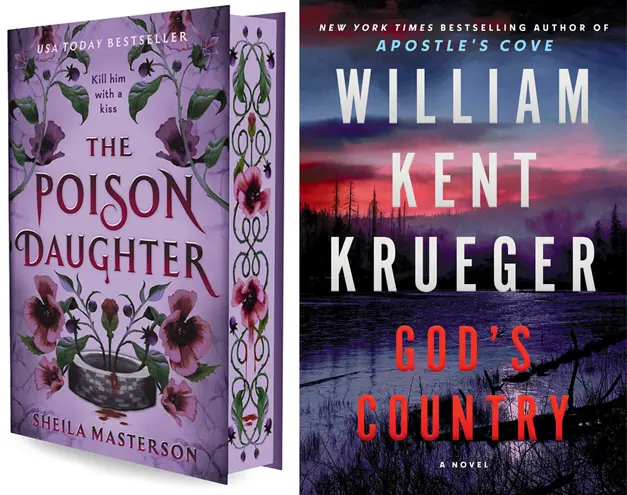
However, it was her 2025 standalone release, The Poison Daughter, that served as the catalyst for mainstream institutional capture. The novel generated an extraordinary volume of organic social media buzz—a phenomenon increasingly monitored by traditional publishing scouts and independent imprints alike. By April, the burgeoning hype caught the attention of Slowburn, an imprint known for capitalizing on crossover commercial fiction, which quickly acquired the title. The velocity of the book’s ascent accelerated dramatically in early August when Hulu announced a major series development deal, transforming a digital darling into a multi-platform intellectual property. This week, the trajectory reached its apex as the Slowburn edition of The Poison Daughter debuted firmly at the summit of the hardcover fiction bestseller list.
Phase Two: The Audio-to-Print Pipeline
While fiction relies heavily on aesthetic community-building, the nonfiction sector is increasingly dominated by personality-driven media brands. A clear parallel can be drawn to the dominance of Barstool Sports founder Dave Portnoy, whose memoir Cancel Me If You Can debuted at #1 on the hardcover nonfiction list just a couple of months prior with a formidable 35,000 print copies sold.
Yet, that record has already been eclipsed by his stablemates. Dan “Big Cat” Katz and Eric “PFT Commenter” Sollenberger—the creative duo behind Pardon My Take, the flagship podcast of the Barstool network—unveiled Pardon My Book. Marking the 10-year anniversary of their irreverent, sports-skewing program, the book immediately seized the #1 spot on the hardcover nonfiction list, outperforming Portnoy’s initial print run by an impressive margin of 14,000 copies. This milestone underscores a vital industry truth: deeply entrenched, fiercely loyal podcast audiences convert into hard-copy book buyers at an unprecedented rate, provided the product preserves the unfiltered voice of the original medium.
Phase Three: The Ground-Level Launch and Institutional Anchors
In sharp contrast to algorithmically driven viral hits and podcast tie-ins, traditional literary milestones continue to rely on time-tested physical infrastructure. William Kent Krueger’s release of God’s Country—the 22nd installment in his acclaimed Cork O’Connor mystery series, which debuted at #6 on the hardcover fiction list—highlights the power of sustained author-bookseller relationships.
Krueger inaugurated the release with a high-profile event at the Poisoned Pen Bookstore in Scottsdale, Arizona. Notably, Krueger has maintained this exact tradition for every single book he has published since his 1998 debut, Iron Lake. Even during the height of the COVID-19 pandemic, when physical gatherings were impossible, Krueger maintained his unbroken streak by conducting virtual discussions with store owner Barbara Peters. This meticulous cultivation of brick-and-mortar loyalty provides a masterclass in how legacy authors insulate themselves against shifting digital trends.
Supporting Context & Metrics
To fully comprehend the mechanics driving these literary movements, one must examine the hard metrics and cultural contexts underpinning each success story. The modern publishing economy is no longer dictated solely by advance reviews or shelf-space negotiation; it is propelled by conversion rates, print run economics, and the monetization of cultural anxiety.
Quantitative Breakdown of Recent List Toppers
| Title | Author(s) | Genre | Format | Debut Position | Key Sales/Performance Metric |
|---|---|---|---|---|---|
| The Poison Daughter | Sheila Masterson | Romantasy / Fiction | Hardcover (Slowburn) | #1 (Fiction) | Rapid acquisition post-TikTok buzz; Hulu series development deal secured ahead of print debut. |
| Pardon My Book | Dan Katz & Eric Sollenberger | Humor / Nonfiction | Hardcover | #1 (Nonfiction) | Outsold recent stablemate Dave Portnoy’s #1 debut by 14,000 print copies. |
| The Nerd Reich | Gil Durán | Investigative Nonfiction | Hardcover | #6 (Nonfiction) | Earned a Publishers Weekly starred review; addresses 3,000 billionaires vs. 8.5 billion global citizens. |
| God’s Country | William Kent Krueger | Mystery / Fiction | Hardcover | #6 (Fiction) | 22nd book in the Cork O’Connor series; 26-year unbroken launch tradition at Poisoned Pen. |
The Economics of Anti-Editorial Authenticity
The commercial triumph of Pardon My Book challenges traditional editorial assumptions regarding polish and syntax. Written by Katz and Sollenberger to commemorate a decade of broadcasting, the book deliberately rejects conventional literary standards in favor of the hyper-casual, self-deprecating tone that built their podcast empire.
Industry analysts note that modern consumers—particularly younger demographic cohorts—exhibit a profound skepticism toward hyper-polished corporate media products. By leaning into openly flawed writing and prioritizing raw conversational cadence over grammatical perfection, the authors manufactured an authentic artifact that resonates far more deeply with their base than a ghostwritten, sanitized celebrity memoir could ever hope to achieve.
Geopolitical Anxiety as a Nonfiction Driver
On the other end of the nonfiction spectrum, the commercial success of Gil Durán’s The Nerd Reich (#6, hardcover nonfiction) proves that intellectual urgency remains a potent market force. Durán’s transfixing debut investigates the intersection of advanced technology, unchecked capital, and antidemocratic governance. In a literary climate frequently saturated by escapism, The Nerd Reich succeeds by tapping directly into public anxieties surrounding the concentration of unprecedented political and economic power within a vanishingly small technocratic elite.
Official Statements and Industry Insights
The human element behind these publishing milestones offers critical insight into the mindset of contemporary creators navigating a rapidly transforming industry.
The Antiestablishment Ethos of Modern Comedy
Addressing the unconventional stylistic choices of Pardon My Book, Eric Sollenberger offered a succinct manifesto for modern media creators during a recent podcast appearance:
"We care more about telling than spelling."
Echoing this sentiment with characteristic self-deprecation, co-author Dan Katz candidly acknowledged the literary risks taken in the project:
"Some god-awful writing" is deliberately embedded within the pages, a feature that their readership has embraced as an authentic extension of the broadcast product rather than a defect.
The Existential Stakes of Technocracy
In a pre-publication interview with Publishers Weekly, journalist Gil Durán articulated the core philosophical and political thesis driving The Nerd Reich. Warning against the encroaching influence of radicalized billionaires linked to political administrations, Durán remarked:
"People have been slow to realize how radicalized these guys have have become and how much power they’re seizing. The good news is that there are 8.5 billion people in the world and only 3,000 or so billionaires. We have to figure out how to create a world where we don’t become servants of their power. We have to make a choice: billionaires or democracy? Because it will not be both."
This stark framing has not only driven critical acclaim—including a coveted starred review from trade publications—but has galvanized a readership eager for substantive, investigative counter-narratives to Silicon Valley triumphalism.
Future Outlook
As the publishing industry looks toward the horizon of late 2026 and beyond, the trajectories established by these current bestsellers point toward several defining trends that will shape the commercial and creative contours of the book trade.
1. The Institutionalization of Self-Published Talent
The path blazed by Sheila Masterson—from indie self-publishing to TikTok virality, corporate acquisition, and major Hollywood development deals—is no longer an outlier; it is becoming a blueprint. Traditional publishing houses are increasingly restructuring their scouting operations to monitor algorithmic incubation spaces, transforming social media platforms into low-risk, pre-tested farm systems for new literary talent. Expect to see major publishers forge tighter, more agile pipelines for acquiring digital-first breakout authors before grassroots momentum peaks.
2. The Maturation of Multi-Platform Audiences
The massive print sales achieved by Pardon My Book signal that podcasting and digital media brands have permanently matured into premier literary launchpads. As audio-first creators continue to command massive, highly organized consumer bases, publishers will increasingly view books not merely as standalone literary works, but as physical extensions of continuous digital ecosystems. The willingness of readers to forgive—and actively celebrate—"anti-editorial" approaches suggests that authenticity will continue to outperform traditional literary polish in commercial nonfiction.
3. The Dual Imperative of Advocacy and Infrastructure
While digital innovation dominates market acceleration, the enduring success of veterans like William Kent Krueger and the robust reception of investigative journalism like Gil Durán’s The Nerd Reich demonstrate that the reading public demands both substantive discourse and trusted physical spaces. Independent bookstores will remain vital cultural hubs, anchoring community engagement even as digital algorithms dictate macro-trends.
Ultimately, the contemporary bestseller list is a reflection of a fractured yet vibrant reading public—one that splits its allegiance between viral digital romance, unfiltered comedic camaraderie, urgent sociopolitical warnings, and the comforting continuity of lifelong literary traditions. Publishers that successfully navigate this multifaceted terrain will define the next era of commercial and cultural storytelling.



Comments
Facebook App ID not configured. Please add it in the Customizer.