
Executive Overview
The global art landscape is experiencing a profound period of physical and institutional transformation. From the grand reopening of Renaissance-era masterpieces at Spain’s El Escorial to comprehensive security overhauls at the world’s most visited cultural institutions in Paris, institutional leaders are aggressively rethinking how art is displayed, protected, and experienced.
At the same time, the broader cultural ecosystem is witnessing dramatic shifts across multiple continents. Important Latin American institutions are re-emerging after years of painstaking modernizations; European leadership is trading hands among top-tier curators; and accidental art discoveries continue to capture the public imagination. Yet, perhaps no single event symbolizes the resilience of cultural heritage quite like the long-awaited reunification of an American masterpiece in the heart of the United States capital.
This report provides a comprehensive, investigative look at the major developments shaking the international art market and museum sector, spanning royal Spanish collections, high-stakes Louvre security measures, high-profile bankruptcy asset liquidations, and the triumphant return of an Alexander Calder icon.
Read Also
Detailed Chronology & Major Developments
1. The Royal Paintings Museum at El Escorial Reopens After a Decade
After more than ten years of shuttered doors, meticulous restoration, and behind-the-scenes scholarly debate, the Royal Paintings Museum at El Escorial has officially reopened to the public. Housed within the Monastery of San Lorenzo de El Escorial—widely regarded as the largest Renaissance building in the world, originally commissioned by Spain’s 16th-century monarch King Philip II—the venue now offers visitors an unprecedented look into the royal collecting habits of Europe’s golden age.
According to exclusive reports from the Times of London, the reopened galleries showcase nearly 100 newly unveiled paintings by legendary European masters. Among these are pivotal works by Titian, Tintoretto, and Veronese. More than 20 artworks have been freshly integrated into the permanent exhibition space, many of which underwent extensive conservation treatments to reverse centuries of environmental degradation and varnish discoloration.
Curator Carmen Garcia-Frías emphasized the scholarly weight of the reopening, describing the installation as an entirely new intellectual and visual discourse.
"It is a complete vision of the collecting of our kings, the formation of those collections, and the history of El Escorial," Garcia-Frías noted during an exclusive walkthrough. She further underscored the historic importance of the site, asserting that the curatorial vision successfully re-establishes the building’s legacy "into one of the great artistic centers of Europe."
2. Reinventing Louvre Security in the Wake of National Theft
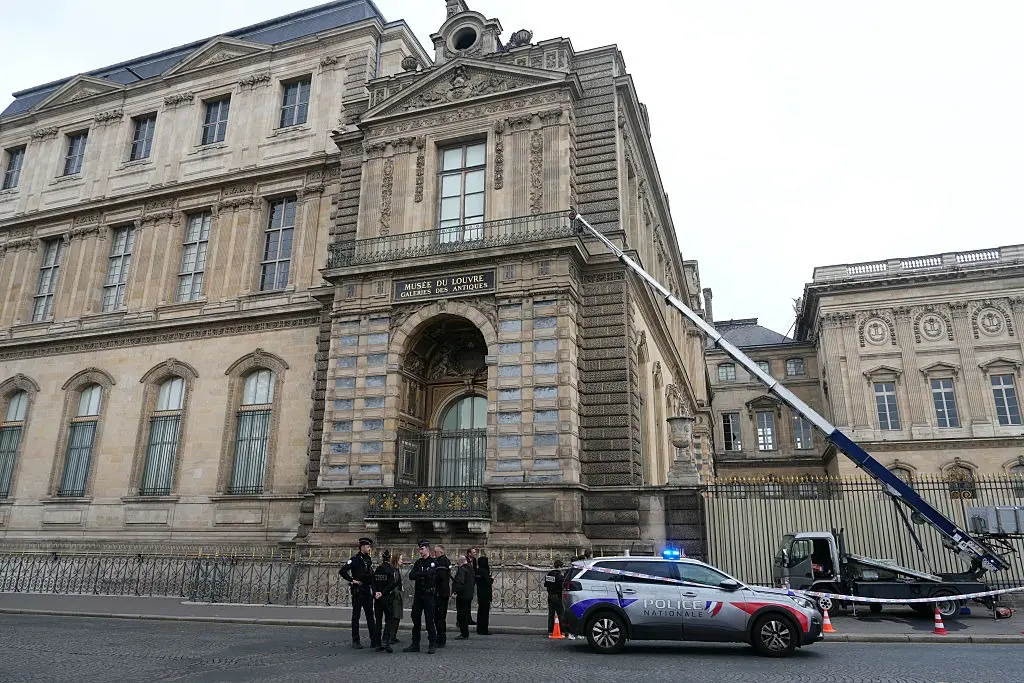
In Paris, the Louvre is undergoing a profound cultural and structural reckoning. Following the shocking theft of France’s crown jewels roughly a year ago—an incident that exposed significant vulnerabilities in the museum’s legacy infrastructure—Louvre President Christophe Leribault is spearheading a sweeping initiative to embed a permanent "culture of security" into the institution’s daily operations.
Leribault succeeded former president Laurence des Cars, who stepped down in the wake of the scandal. The theft laid bare an outdated, faulty security apparatus that relied on mid-to-late 20th-century assumptions about institutional safety.
Reflecting on the paradigm shift required in the 21st century, Leribault remarked:
"Museums once assumed that the most famous works of our heritage were essentially unsellable and untouchable. Now, we know we must be extremely vigilant. Urgent renovations have begun and continue. Security must be integrated from the outset into all our choices."
As part of this aggressive modernization strategy, Leribault has appointed a senior police officer to oversee and overhaul the museum’s security architecture. Concurrently, the administration is pushing forward with fundraising efforts for a massive, multi-tiered €1.1 billion ($1.24 billion) capital campaign originally initiated by Des Cars. This project encompasses comprehensive infrastructural upgrades, heightened security perimeters, and the construction of a dedicated, highly secure gallery space specifically designed to house Leonardo da Vinci’s Mona Lisa.
To prevent sensationalized voyeurism, the remaining royal jewels normally housed in the Galerie d’Apollon—the site of the historic heist—have been relocated to secure, undisclosed areas. "We did not want a morbid type of tourism where people come to the gallery only to see the scene of the crime," Leribault explained.
3. The Calder Rebuilding: Mountains and Clouds Gets Its Clouds Back
In Washington, D.C., a monumental chapter in American public art concluded on Saturday with the triumphant return of the upper elements of Alexander Calder’s two-part masterpiece, Mountains and Clouds, located inside the Hart Senate Office Building.
As ARTnews and The New York Times have documented over the years, the 51-foot steel and aluminum sculpture had been artificially bisected for roughly 12 years. Following seismic safety evaluations and engineering concerns regarding the ceiling anchorages, the four suspended black aluminum clouds—which hovered dynamically above the massive triangular mountainous base—were abruptly removed.
Christian Quilici, an advocate who fought tirelessly for the sculpture’s restoration, described the prolonged separation bluntly to the Times: "It was a mutilation of his final masterpiece" before Calder’s death in 1976.
The reunification was made possible by a rare display of bipartisan legislative support combined with vital philanthropic funding. Collectors Jon and Kim Shirley spearheaded donations that contributed significantly to the $12 million price tag required to engineer, fabricate, and install the new cloud structure.
Crucially, the replacement clouds were constructed not from the original heavy aluminum, but from an advanced carbon fiber composite. This modern material is roughly half the thickness of the original metal, drastically reducing structural weight while ensuring long-term seismic safety.
For those who lived with the altered installation for over a decade, the transformation is staggering. Kim Shirley, a retired attorney and trustee at the Seattle Art Museum, captured the sentiment of art lovers nationwide: "Now that you see it together, you realize how incomplete it was and, really, fundamentally so disappointing."
Supporting Context & Market Metrics
Beyond the monumental headlines in Spain, France, and the United States, several notable developments across the international art market and institutional sphere underscore broader financial, curatorial, and biographical trends:
- The $400 Salvage Yard Masterpiece: In the United Kingdom, an anonymous buyer who acquired a nondescript marble sculpture for approximately $400 at a local salvage yard received a life-changing authentication. Experts confirmed the piece is a rare 18th-century terracotta or marble maquette by master sculptor Pietro Bracci for his celebrated statue of Pope Clement XII. The piece’s market value is now estimated at an impressive $13,000 (Artnet News).
- Hedge Fund Bankruptcy and Blue-Chip Liquidations: Financial distress in the private equity sector continues to ripple into the fine art market. Hedge fund founder George Weiss—following personal bankruptcy filings last year—has reached an agreement to auction 16 blue-chip artworks from his private collection. The portfolio features masterworks by modern titans including Pablo Picasso, Paul Cézanne, and Francis Bacon, and the liquidation is intended to satisfy loans secured against the collection (Bloomberg).
- São Paulo’s MAM Reopens: After an extensive, two-year infrastructural overhaul, the Museu de Arte Moderna (MAM) in São Paulo has triumphantly reopened its doors. The institution inaugurated its renewed spaces with the 39th edition of the Panorama of Brazilian Art, provocatively titled "Depois Que Tudo Foi Dito (After It’s All Said)." The exhibition will remain on view through January 24, 2027 (The Art Newspaper).
- Leadership Transition at Boijmans Van Beuningen: In European museum leadership news, Stephanie Rosenthal—former director of Berlin’s renowned Gropius Bau and the current director of the Guggenheim Abu Dhabi Project—has been named the next artistic director of the Museum Boijmans Van Beuningen in Rotterdam (Monopol Magazine).
- Pop Culture Meets Fine Art: In Surrey, contemporary art circles are taking note of Tatia Starkey, granddaughter of legendary Beatles drummer Ringo Starr. Starkey is currently presenting a bold new body of work at Kaizen Fine Art gallery (running through October 10). Her paintings utilize her own physical body as a direct drawing and painting tool on canvas, bridging performance art and abstract expressionism (BBC).
Official Statements & Institutional Perspectives
The intersection of institutional governance, public heritage, and private philanthropy has rarely been more pronounced. The statements issued by key figures this week highlight the delicate balance museum directors must strike between accessibility, historical preservation, and ironclad security:
- On Heritage and Vigilance: Louvre President Christophe Leribault’s insistence on a "culture of security" signals the end of an era where world-class museums could rely solely on goodwill and prestige to safeguard priceless cultural artifacts. His proactive engagement with state law enforcement and aggressive fundraising for infrastructural overhauls establish a new baseline for global museum administration.
- On Historical Continuity: Curatorial voices at El Escorial, led by Carmen Garcia-Frías, emphasize that the re-presentation of royal collections is not merely an aesthetic exercise, but a vital act of historical education. By recontextualizing works by Titian and Tintoretto within their original dynastic architecture, the museum invites contemporary audiences to understand the geopolitical and cultural ambitions of 16th-century Europe.
- On Public Trust and Civic Art: The successful restoration of Alexander Calder’s Mountains and Clouds proves that public-private partnerships can successfully overcome bureaucratic inertia. Through the tenacity of civic advocates and the philanthropic generosity of donors like Jon and Kim Shirley, federal architecture in Washington has been dynamically re-enlivened.
Future Outlook
As the art world looks toward the remainder of the decade, several key trajectories are crystallizing:
- Tightening Security Frameworks: Following the Louvre’s blueprint, major international galleries are expected to conduct rigorous audits of their security protocols. Expect increased capital allocation toward biometric access controls, advanced sensor networks, and discreet structural fortifications that do not impede the visitor experience.
- The Evolution of Mega-Renovations: With institutions like the Louvre advancing billion-dollar master plans and regional spaces like São Paulo’s MAM successfully concluding multi-year closures, museums are increasingly viewing comprehensive overhauls as existential necessities rather than optional upgrades.
- The Interplay of Private Wealth and Public Collections: As demonstrated by the liquidation of George Weiss’s collection to satisfy debt obligations, high-end art remains deeply intertwined with global finance. Market analysts will be watching closely to see how the impending auction of Picasso, Cézanne, and Bacon works impacts seasonal valuation benchmarks.
Ultimately, whether through the quiet contemplation of Renaissance canvases in a Spanish monastery, the high-security vigilance of Parisian galleries, or the soaring, carbon-fiber clouds of an American senate building, art remains a resilient testament to human history, demanding both our utmost protection and our deepest admiration.



Comments
Facebook App ID not configured. Please add it in the Customizer.