
Executive Overview
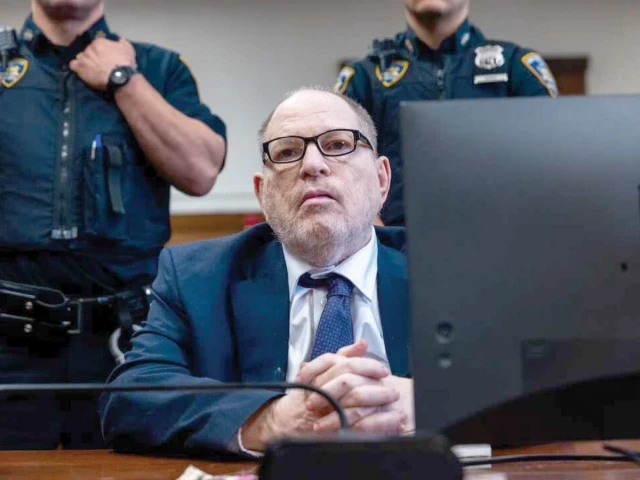
Disgraced Hollywood titan Harvey Weinstein stands on the precipice of a defining legal milestone, facing a resentencing hearing in a New York court that threatens to keep him behind bars for at least two decades. At 74 years old, once the undisputed kingmaker of independent cinema whose films shaped cultural landscapes and swept Academy Awards, Weinstein is a diminished figure. Confined to a wheelchair and battling severe health complications—including a recent hospitalization following a prison-induced heart failure—he continues to assert his innocence. Yet, his legal architecture has steadily collapsed under the weight of corroborated testimonies, appellate decisions, and a transformed cultural paradigm.
Weinstein’s impending New York sentencing stems from his 2025 retrial conviction for the 2006 forcible oral copulation of former production assistant Miriam Haley. This legal battle is the epicenter of a sprawling web of litigation spanning both American coasts. Originally convicted in New York in 2020 and sentenced to 23 years, that foundational verdict was dramatically upended in 2024 when an appellate court ruled that the trial judge erred by permitting testimony on uncharged allegations. Rather than securing his freedom, the reversal triggered a high-stakes retrial, culminating in a 2025 guilty verdict that re-established his criminal liability.
Concurrently, Weinstein faces imminent resentencing in California, where an appellate court upheld his 2023 conviction for the rape and assault of an actress in a Los Angeles hotel room, while vacating his initial 16-year sentence for procedural adjustments. These parallel proceedings highlight an unprecedented chapter in American jurisprudence, where the legal system struggles to balance procedural integrity with the gravity of widespread systemic abuse.
Read Also
Beyond the courtroom, Weinstein’s trajectory remains inextricably linked to the birth of the global #MeToo movement. Investigations published by The New Yorker and The New York Times in late 2017 shattered a decades-long code of silence, unmasking a predator who leveraged his immense professional authority to coerce, silence, and assault aspiring artists and employees. As Weinstein prepares to learn his definitive fate, the legal proceedings serve as both a retrospective on an industry-wide reckoning and a barometer for how modern courts handle historic sexual violence.
Detailed Chronology: The Rise, Fall, and Legal Odyssey of a Mogul
To understand the gravity of Harvey Weinstein’s current legal standing, one must examine the timeline of his corporate dominance, his catastrophic public unmasking, and the labyrinthine judicial battles that followed.
The Era of Impunity: Building the Miramax Empire
For nearly three decades, Harvey Weinstein, alongside his brother Bob, ruled independent cinema. Through Miramax and later The Weinstein Company, he transformed art-house and indie films into mainstream commercial powerhouses. Movies like Pulp Fiction, Shakespeare in Love, Good Will Hunting, and The English Patient redefined Hollywood, earning dozens of Oscars and cementing Weinstein’s reputation as an unassailable industry titan.
Beneath the gloss of the red carpets and Academy Awards, however, operated a shadow ecosystem. Operating with impunity, Weinstein cultivated a network of enforcers, publicists, legal fixers, and corporate boards that suppressed internal complaints. Non-disclosure agreements (NDAs) and lucrative settlements were routinely deployed to buy the silence of victims, shielding a predator who wielded the power to launch or obliterate careers with a single phone call.
The Dam Breaks: October 2017
The architecture of silence collapsed in October 2017, when exhaustive investigative reports by Jodi Kantor and Megan Twohey in The New York Times, followed swiftly by Ronan Farrow’s expose in The New Yorker, blew the lid off decades of predatory behavior. The reports cataloged harrowing accounts from prominent actresses and subordinate staffers alike, detailing patterns of sexual harassment, attempted rape, and quid pro quo coercion.
The cascading fallout was instantaneous. Fired by his own board of directors, expelled from the Academy of Motion Picture Arts and Sciences, and abandoned by his high-powered legal counsel and PR teams, Weinstein became an international pariah. Within weeks, the trickle of disclosures turned into a tidal wave, with more than 80 women publicly stepping forward with allegations.
The 2020 Landmark Trial and 2024 Appellate Reversal
The criminal justice system caught up with Weinstein in early 2020. Tried in a Manhattan courtroom, prosecutors focused heavily on the accounts of Miriam Haley and former aspiring actor Jessica Mann. On February 24, 2020, a New York jury convicted Weinstein of criminal sexual act in the first degree (regarding Haley) and third-degree rape (regarding Mann). The following March, Justice James Burke sentenced Weinstein to 23 years in state prison.
For victims and advocates, the verdict was a monumental victory—a symbolic breaking of the glass ceiling that traditionally shielded powerful men from criminal accountability. However, Weinstein’s defense attorneys immediately launched an aggressive appellate strategy.
On April 25, 2024, the New York Court of Appeals delivered a stunning setback to prosecutors, voting 4-3 to overturn the 2020 conviction. The high court ruled that Justice Burke had committed a reversible error by allowing women whose allegations were not part of the formal charges to testify about unrelated bad acts. This decision, the court argued, improperly prejudiced the jury against the defendant. The verdict was vacated, and a new trial was ordered.
The 2025 Retrial and California Conviction
Rather than crumbling, the prosecution regrouped. In 2025, a New York grand jury and trial team mounted a rigorous retrial focused tightly on the legal parameters set by the appellate court. Stripped of extraneous testimony, prosecutors relied heavily on the forensic and direct evidence surrounding Miriam Haley’s 2006 assault. The strategy succeeded: a new New York jury found Weinstein guilty once more.
Meanwhile, Weinstein faced concurrent legal jeopardy on the West Coast. In December 2022, a Los Angeles jury convicted him of rape and sexual assault against an anonymous Italian actress stemming from a 2013 incident at a Beverly Hills hotel. In February 2023, he was sentenced to an additional 16 years in prison. Although a California appeals court in June 2024 upheld the core conviction, it vacated the specific 16-year sentence, necessitating a separate California resentencing proceeding alongside his New York legal reckonings.
Supporting Context & Metrics: The Anatomy of an Industry Reckoning
The prosecution of Harvey Weinstein cannot be viewed in a vacuum; it is the cornerstone of a cultural and legal watershed. The quantitative and qualitative metrics surrounding the case illustrate its profound societal footprint.
Scale of the Allegations
- Total Accusers: Over 80 women publicly came forward with accusations spanning three decades, ranging from professional harassment to forcible rape.
- Geographic Scope: Allegations crossed international borders, implicating incidents at prestigious film festivals (such as Cannes and Venice), corporate offices in New York and Los Angeles, and upscale hotels worldwide.
- Civil Settlements: Prior to the criminal trials, civil litigation involving The Weinstein Company bankruptcy estate and insurance carriers established a multi-million-dollar victims’ compensation fund, settling claims with dozens of claimants.
The Legal and Procedural Toll
The sheer cost and duration of the litigation highlight the complexities of prosecuting historic sexual assault:
- Multiple Juries: Weinstein has faced multiple juries across two states, enduring a 2020 trial, a 2024 appellate reversal, a 2025 New York retrial, and multiple mistrials—most notably the May mistrial concerning Jessica Mann’s allegations after a deadlocked jury and internal jury-room conflicts.
- Health and Incarceration Costs: Now 74, Weinstein’s imprisonment has been repeatedly interrupted by acute medical emergencies. Wheelchair-bound and suffering from chronic cardiac and spinal issues, his incarceration at New York’s Rikers Island (and associated medical facilities) has fueled ongoing debates regarding the humane treatment of elderly, infirm inmates versus the severity of their crimes.
The #MeToo Economic and Cultural Shift
The public disclosure of Weinstein’s abuses catalyzed the global #MeToo movement, permanently altering corporate and entertainment landscapes:
- Legislative Reform: Numerous U.S. states, including California and New York, passed legislation banning or restricting the use of mandatory non-disclosure agreements (NDAs) in sexual harassment settlements and extending or eliminating statutes of limitations for sex crimes.
- Corporate Governance: Hollywood studios, major talent agencies, and media corporations overhauled human resources departments, instituted mandatory compliance training, and established independent reporting mechanisms to root out workplace predators.
Official Statements and Courtroom Perspectives
The psychological and emotional toll of the protracted legal battles was laid bare through statements from victims, prosecutors, and the defense throughout the proceedings.
Miriam Haley: Defeating the "Perfect Victim" Myth
Miriam Haley, whose courage served as the bedrock for the New York convictions, spoke candidly to reporters following the 2025 retrial verdict. Her words underscored the exhausting nature of participating in high-profile criminal litigation:
"The defense’s victim shaming and deliberate attempts to distort the truth was exhausting and at times dehumanising. But today’s verdict gives me hope, hope that there is new awareness around sexual violence and that the myth of the ‘perfect victim’ is fading."
Haley’s reference to the "perfect victim" addresses a pervasive historical bias in sexual assault jurisprudence, wherein jurors and legal systems frequently penalize survivors who do not exhibit immediate, flawless compliance or timely reporting.
The Prosecution’s Stance
Manhattan prosecutors and their California counterparts maintained a unified front, arguing that the passage of time does not diminish the gravity of predatory actions. In trial briefs and oral arguments, district attorneys emphasized that Weinstein’s systematic exploitation of power structures constituted a distinct pattern of criminal behavior that demanded maximum penal consequences to deter future abuses of authority within the entertainment industry.
The Defense Position
Throughout the trials, Weinstein’s legal team mounted aggressive defenses, arguing that sexual encounters were consensual and that accusers altered historical narratives to capitalize on the cultural momentum of the #MeToo movement. Following the 2024 appellate victory, defense attorneys expressed vindication, characterizing the original 2020 proceedings as tainted by judicial overreach. Despite the subsequent 2025 retrial conviction, Weinstein’s legal representatives have consistently maintained his total innocence and signaled intentions to appeal every adverse ruling.
Future Outlook: The Final Legal Chapter and Institutional Legacy
As Harvey Weinstein faces his impending New York resentencing—alongside parallel proceedings in California—the immediate legal horizon appears all but certain to keep him incarcerated for the remainder of his natural life. Even if defense appeals manage to shave years off specific counts, the convergence of multiple convictions across two major jurisdictions ensures that the former mogul will not walk free.
Implications for Sexual Assault Jurisprudence
The legal saga surrounding Weinstein has left an indelible mark on American criminal law:
- The Scrutiny of Uncharged Bad-Act Testimony: The New York Court of Appeals’ 2024 ruling established a stringent precedent regarding the limits of introducing "Molineux" or uncharged-crime evidence. Prosecutors nationwide must navigate these evidentiary guardrails with extreme precision to avoid post-conviction appellate reversals in high-profile sex crime cases.
- Handling Historic Evidence: The trials demonstrated the immense logistical challenges of prosecuting crimes committed decades prior, where physical evidence may have degraded, but digital communications, contemporaneous diary entries, and corroborating witness statements have taken on heightened evidentiary weight.
The Entertainment Industry Post-Weinstein
In the broader cultural sphere, the institutional landscape of Hollywood has undergone a structural transformation. While industry watchdogs caution that power imbalances and exploitation remain persistent challenges, the era of unchecked executive immunity has effectively ended. Independent production companies, major studios, and streaming giants now operate under heightened scrutiny, where internal complaints trigger immediate independent investigations rather than suppressed settlements.
Ultimately, the impending resentencing of Harvey Weinstein closes a turbulent, defining chapter in contemporary cultural history. It stands as a testament to the perseverance of survivors who challenged a seemingly impregnable institutional power, permanently redrawing the boundaries of accountability in modern society.





Comments
Facebook App ID not configured. Please add it in the Customizer.