
Executive Overview
Contemporary cultural commentary frequently asserts that Western society is finally moving past the exhausting friction of the "culture wars." Across the political spectrum, both left and right increasingly share a mutual consensus that political liberalism has hit an intellectual and spiritual dead end, paving the way for something entirely new.
Yet, this perceived transition may be an illusion born of pure fatigue. The weariness enveloping our public square is palpable, and while enervating exhaustion can sometimes spark genuine developments, it rarely yields constructive progress when applied to long-standing debates over human sexuality—the very nucleus of modern culture wars.
Many traditionalists, exhausted by years of bitter ecclesiastical infighting, are ready to draw a line under debates concerning same-sex blessings and marriage. Having watched their congregations fracture, denominations shrink, and seminary faculties collapse under the weight of these controversies, they cry out for relief: "Enough!" With same-sex marriage now firmly embedded in civil law and widely accepted by the broader public, some church leaders view this stability as a pragmatic stopping point. They note that many gay Christians hold fast to traditional creedal orthodoxy without embracing radical theological revisions, suggesting that shared creedal commitments should serve as a sufficient foundation for unity.
Read Also
However, this analysis argues that such an approach is fundamentally flawed. Is "creedal orthodoxy" truly sufficient to sustain the Christian faith? Absolutely not. While undoubtedly necessary, it is entirely insufficient.
To heal the deep fractures within both the church and modern civic life, we must move beyond abstract formulas and embrace what can be termed "genetic orthodoxy"—an approach that roots the faith in the generative narrative of Genesis, engaging directly with the messy, vital, and continuous reality of human creation and redemption.
Detailed Chronology: The Evolution of Modern Church Divides
To understand how the church arrived at its current state of exhaustion, it is necessary to examine the historical trajectory of theological and cultural fragmentation over the past several decades.
Phase 1: The Theological Liberalization of Mainline Protestantism (Late 20th Century)
- The Shift: Throughout the latter half of the 20th century, mainline Protestant denominations began re-evaluating traditional doctrines surrounding marriage, gender, and human sexuality.
- The Friction: This reassessment sparked fierce internal debates, pitting revisionist theologians against traditionalists who viewed biblical anthropology as non-negotiable.
Phase 2: Institutional Decimation and Liturgical Schisms (2000s–2010s)
- Congregational Fractures: As civil recognition of same-sex relationships gained momentum, the debate moved from the theoretical to the juridical and pastoral realms.
- Institutional Casualties: Denominational bodies split, property disputes erupted in civil courts, and theological seminaries saw faculties dissolve amid ideological purges and administrative crises. The human toll was measured in pastoral burnout and a "pool of tears" among believers caught in the crossfire.
Phase 3: The Search for a Minimalist Peace (Present Day)
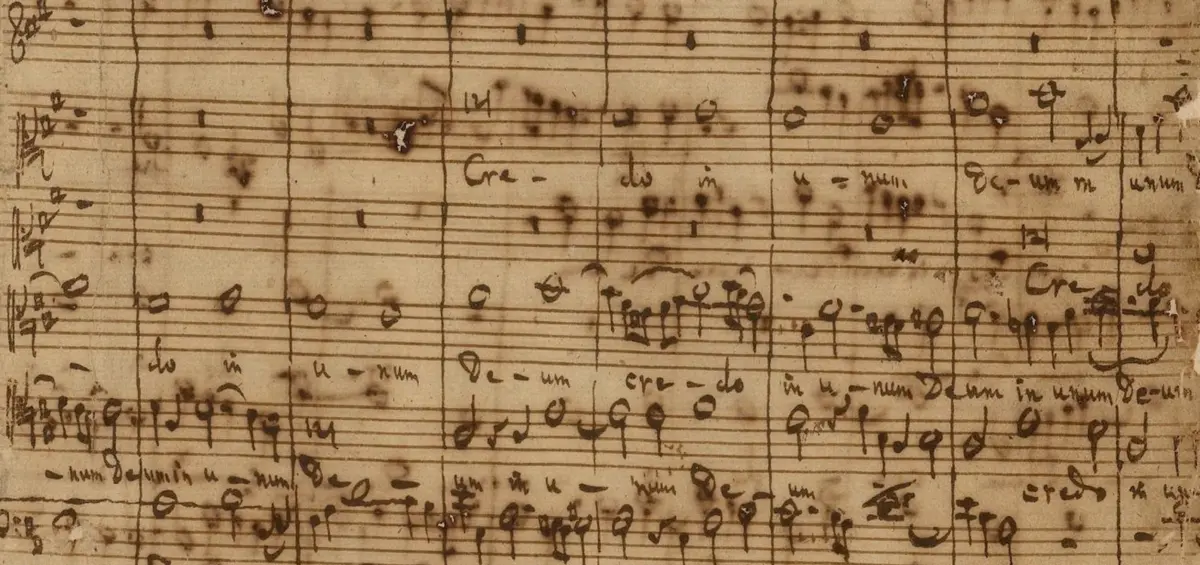
- The "Creedal" Truce: Weary of perpetual conflict, various factions now seek refuge in minimal doctrinal commonalities. By emphasizing historical creeds—such as the Apostles’ or Nicene Creeds—leaders hope to bypass divisive ethical debates and forge a unified front based solely on abstract, transcendent theological formulas.
Supporting Context & Metrics: The Illusion of "Aesthetic Orthodoxy"
The desire to lean exclusively on historic creeds as a calming balm for societal wounds is understandable, but it rests on a fundamental misunderstanding of what theology is meant to achieve.
The Legacy of Scholasticism
Scholasticism was undeniably a marvelous intellectual achievement. However, one of its unfortunate legacies has been to condition people into viewing theological knowledge as a mechanical exercise: a matter of skillfully mixing the right doctrinal ingredients in the precise order and quantity to yield a well-formed "divine cake."
When modern thinkers advocate for "creedal orthodoxy" as a cure-all for cultural division, they are frequently promoting what can best be described as "aesthetic orthodoxy."
- Definition: An abstract contraption of Christian claims that looks and sounds impeccably beautiful.
- Structure: The Father, Son, and Holy Spirit; the Virgin Mary; Pontius Pilate; the Church; the resurrection; and apostolic continuity are neatly intertwined into a tidy package, wrapped in solemn hymns and traditional prayers, and offered to a warring society as a soothing balm.
Why Aesthetic Orthodoxy Fails
Aesthetic orthodoxy—doctrines that hang together as elegantly as a conceptual mobile—ultimately fails to heal the rifts in our churches and common life. Why? Because such a conceptual construct is not sufficiently true to the dynamic, turbulent reality of God’s actual life, gifts, and calling.
Creeds are essential for Christian confession and praise; they are neither secondary nor optional. Yet acknowledging and cleaving to the Creed can never serve as a substitute for the "whole duty of man," which Scripture summarizes simply: "Fear God and keep his commandments" (Ecclesiastes 12:13). This double-barreled commandment is deep and broad, encompassing an entire life and heart, the world and the Church, Israel, the Law, the Prophets, the Psalms, the Gospels, and the Epistles.
Official Perspectives: Shifting from Creedal to "Genetic" Orthodoxy
To move beyond superficial truces, theologians and believers must re-examine how Scripture frames faith, history, and human existence.
The Blind Spot of Creedal Minimalism
A critical flaw of taking the Creed in absolute isolation is its striking omission of foundational biblical realities.
- The Absence of Israel: Israel is entirely unmentioned in the great historical creeds. If creeds alone were sufficient for the gospel, this massive omission should serve as a flagrant warning sign. While defenders argue that Israel is "implicated" in the creeds through figures like the Virgin Mary and the New Testament narratives, creedal orthodoxy routinely bypasses these complex historical elaborations.
- The Erasure of Struggle: The Creed presents a calm, solemn, and stable confession centered on the passion, cross, and resurrection of Jesus. Yet the truth of God, as revealed throughout salvation history, is a life of striving, pushing, being pressed, coming to be, disappearing, and being revived. How did a faith centered on a brutal cross come to be viewed as merely static and serene?
The Necessity of "Genetic Orthodoxy"
Rather than settling for a sanitized, creedal abstraction, the church needs "genetic orthodoxy."
- Definition: An approach that makes the Book of Genesis foundational to our faith—a faith that arises directly from the generative life given to us by God in creation and redemption.
- The Call: Progressive and conservative combatants alike should place Genesis between them and, in the classic words of Thomas Cranmer’s prayer, "hear, read, mark, learn, and inwardly digest" its pages. Only then can believers "embrace, and ever hold fast, the blessed hope of everlasting life."
Genesis does not offer a clean, abstract blueprint. Instead, it details:
- Divine creative work alongside human material flesh and vital breath.
- Sexual difference, intercourse, marriage, and generational continuity.
- Covetousness, anger, murder, sorrow, love, longing, trickery, and lies.
- Divine leading, judgment, tribes, peoples, and the ultimate realization that "you meant it for evil, but God meant it for good" (Genesis 50:20).
While humans continually attempt to reduce faith to a clean conceptual architecture, Scripture presents the living, messy fabric of human life ordered by the Creator. St. Paul explicitly urges believers to present their bodies as living sacrifices (Romans 12:1), prioritizing embodied, physical obedience over abstract conceptualization.
Future Outlook: Navigating the Household of Hope
If genetic orthodoxy is not a static border checkpoint requiring secret handshakes and ideological passports, what posture does it demand of those who claim to be "orthodox"?
Embracing the Current
Genetic orthodoxy is a current—a dynamic movement through the waters of real life. To inhabit it, one must learn to swim, maintain strength, get wet, endure being tossed about, crash against rocks, and keep moving forward. These very capacities fill the pages of Scripture, exemplified by figures like Abraham and the Apostle Paul.
The Apostles’ Creed bids us acclaim the "communion of saints." This is the powerful, turbulent current into which baptism plunges every believer—a force we must allow to press upon us rather than seeking shelter in sterile intellectual enclaves.
A Call to Profound Patience
In an era that views any form of traditional orthodoxy as a form of cruel rigidity, accepting the unvarnished reality of biblical narrative requires profound patience.
- The Example of Joseph: The Book of Genesis concludes with the extensive, detailed narrative of Joseph. His life epitomizes a profound patience that is inextricably bound to the generative destiny of his family, holding together a father’s death, human betrayal, and the glimmering, unyielding divine possibilities of the future.
Conclusion
If the church must be exhausted, let that exhaustion be spent within the household of this enduring hope. Building a house and sustaining a household is inherently tiring work—all the more so when building the household of God. Yet as believers push forward through the inevitable trials of cultural friction, it is the Creator who lifts them up from the ground.



Comments
Facebook App ID not configured. Please add it in the Customizer.