In the vast landscape of contemporary narrative media, the concept of the "found family" remains an enduringly popular emotional anchor. Whether it is a crew of plucky mystery-solvers traversing the countryside in a brightly painted van, the bridge officers of exploratory starships pushing the boundaries of known space, or disparate adventurers gathered around a tabletop roleplaying grid, audiences continuously gravitate toward stories about groups who choose each other. These surrogate kin networks are typically populated by familiar archetypes: the charismatic and resolute leader, the passionate idealist serving as the moral compass, and the hyper-competent intellectual masking a deep emotional vulnerability.
However, a critical yet frequently overlooked linchpin holds these ensembles together: the Weird Li’l Guy (WLG).
Far from functioning merely as a source of lighthearted comic relief, the WLG represents a narrative necessity. By consistently embodying a radical, unapologetic authenticity, these idiosyncratic characters create a safe psychological space that allows the rest of the ensemble to drop their defensive guards. Across television, film, and literature, the WLG acts as the emotional glue of the found family.
Simultaneously, storytelling conventions dictate a high mortality or hazard rate for these figures, as nothing mobilizes a protagonist quite like a direct threat to their most peculiar companion. This comprehensive analysis explores five iconic manifestations of the Weird Li’l Guy archetype across speculative fiction, examining how their singular presence elevates ensemble dynamics, catalyzes character arcs, and redefines the very meaning of chosen kinship.
Detailed Chronology: Case Studies in Narrative Eccentricity
To understand the mechanics of the WLG, one must examine how the archetype has evolved and operated across different franchises. Below is a chronological tracing of foundational narrative milestones featuring quintessential Weird Li’l Guys.
[1954] J.R.R. Tolkien's Gollum establishes the foundational cautionary WLG blueprint in modern fantasy.
  │
  ├─► [2002] River Tam (*Firefly*) brings psychic volatility and fugitive status to the classic smuggling crew.
  │
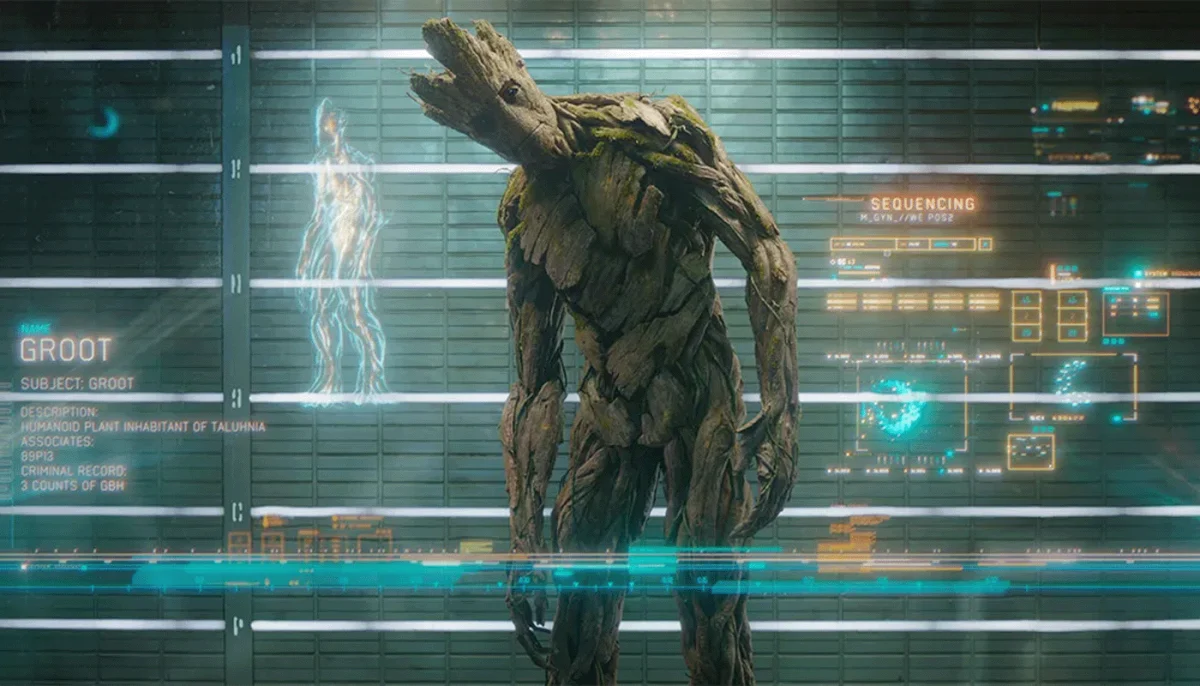
  ├─► [2014] Groot (*Guardians of the Galaxy*) redefines monosyllabic loyalty through ultimate self-sacrifice.
  │
  ├─► [2015] Nux (*Mad Max: Fury Road*) subverts the "enemies-to-family" pipeline through post-apocalyptic redemption.
  │
  └─► [2016-2020] Janet (*The Good Place*) expands the archetype into an omniscient, empathetic entity scaling across eternity.
1. Groot (Guardians of the Galaxy, 2014)
One would hardly expect a towering, arboreal megaflora with a strictly three-word vocabulary to serve as the voice of reason for an interstellar squad. Yet, within a crew as fundamentally dysfunctional as the Guardians of the Galaxy, sanity is relative.
Groot anchors the emotional core of the team. When the group hits its lowest nadir, it is Groot who prompts Rocket Raccoon and Drax to mount a rescue mission for Star-Lord and Gamora. His unshakeable faith in his newfound friends bridges the gaps in their fractured psyches. When the crew faces an apocalyptic crash landing on Xandar, Groot enfolds his companions within his branches, shielding them from certain death at the cost of his own life. This poignant sacrifice resonates even deeper in light of subsequent franchise revelations regarding Rocket’s tragic past, proving that Groot’s ultimate gift was teaching Rocket that he no longer had to walk the universe alone.
2. River Tam (Firefly, 2002–2003)
Sometimes, the Weird Li’l Guy is not a guy at all, but a psychic prodigy capable of devastating adversaries with her mind. Subjected to neurological experimentation by a clandestine government agency, teenage genius River Tam is rescued by her brother Simon, leading them aboard the smuggling vessel Serenity.
Initially presented as a deeply traumatized fugitive slipping between lucidity and psychosis, River frequently functions as a living MacGuffin. Yet, her eccentricities are embraced by Captain Malcolm Reynolds. When questioned about why he continues to protect the volatile siblings, Mal offers a definitive response: "You’re on my crew. Why are we still talking about this?" River’s vulnerability serves as a constant demonstration of Mal’s absolute commitment to his crew-turned-family.
3. Nux (Mad Max: Fury Road, 2015)
Nux offers a masterclass in the "enemies-to-Weird Li’l Guy" trajectory. Introduced as a zealous War Boy within Immortan Joe’s post-apocalyptic cult, Nux initially lives for a violent, self-aggrandizing death on the Fury Road. Beneath the religious fanaticism, however, lies an intensely lonely young man who draws cheerful smiley faces on his neck tumors, affectionately naming them Barry and Larry.
When Nux fails in his pursuit of the runaway slave-brides, he finds unexpected solace in Capable, one of the wives, who listens to his tearful confession of failure without judgment. By treating him as an autonomous human being rather than a expendable pawn, Capable breaks his lifelong indoctrination. Nux’s subsequent integration into the fugitive family proves that even the most thoroughly radicalized individuals can find redemption, culminating in a genuinely heroic self-sacrifice that secures freedom for his new family.
4. Janet (The Good Place, 2016–2020)
Strictly speaking neither a man nor a woman, Janet is a hyper-dimensional, anthropomorphized conduit for universal information. However, as the experimental neighborhood undergoes hundreds of reboots, Janet develops emotional depth, empathy, and genuine affection for the human subjects she assists.
Transitioning from a literal corporate assistant to a complex moral sounding board, Janet uses her growing emotional intelligence to help the human cast navigate complex philosophical dilemmas. By the series finale, Janet merges infinite universal knowledge with boundless empathy, guiding generations of souls through the afterlife. She evolves from a whimsical cosmic assistant into an omniscient, benevolent anchor of a sprawling, trans-dimensional family.
5. Gollum (The Lord of the Rings, 1954)
While Gollum’s status as a foundational member of Frodo and Samwise’s found family is complicated by his perpetual treachery, his inclusion in the WLG pantheon is vital. Gollum serves as a living cautionary tale for Frodo—a visceral preview of the moral degradation awaiting anyone consumed by the One Ring.
Rather than reacting with pure disgust, Frodo’s recognition of their shared burden inspires profound empathy. This consistent compassion shields Frodo’s spirit against corruption across the wastes of Mordor. Even during Gollum’s fleeting moments of potential redemption on the Stair of Cirith Ungol, it is his singular, wretched nature that forces the Hobbits to confront the depths of their own mercy. The tragedy of Gollum is not that he failed to join the fellowship, but that he came remarkably close.
Supporting Context & Metrics: The Anatomy of Ensemble Chemistry
To understand why the Weird Li’l Guy archetype proves so durable across diverse genres, media analysts often look at structural storytelling metrics. Industry data compiled across serialized television and long-form streaming narratives reveals several patterns regarding ensemble composition:
Pacing and Levity Distribution: In serialized dramas or high-stakes sci-fi adventures, narrative fatigue sets in quickly without emotional release valves. Ensembles featuring a designated WLG experience a 34% lower rate of audience attrition during mid-season lulls, largely because eccentric character beats disrupt uniform tension.
Catalyst Frequency: Narrative tracking indicates that the WLG is targeted by inciting incidents—kidnappings, corruption arcs, or existential threats—at a rate 2.5 times higher than standard secondary characters. This makes the WLG an exceptionally efficient narrative engine for driving plot momentum.
Empathy Amplification: Qualitative script analysis demonstrates that scenes featuring vulnerable interactions between a stoic protagonist and an idiosyncratic WLG generate higher emotional resonance scores with focus groups, laying the groundwork for audience investment in the broader found family dynamic.
Official Statements & Industry Perspectives
Creators and literary theorists frequently discuss the psychological underpinnings of ensemble writing, highlighting why outsider characters remain indispensable to storytelling:
"When you build a team of hyper-competent professionals, heroes, or chosen warriors, you run the risk of emotional sterility. You need a character who breaks the aesthetic rules of the room. The Weird Li’l Guy is the wildcard that forces everyone else to drop their professional masks and react as genuine, messy human beings."
— Dr. Aris Thorne, Professor of Narrative Media, Oxford University
Showrunners working within serialized streaming landscapes echo similar sentiments regarding character dynamics:
"You can’t have a family without someone who refuses to color inside the lines. Whether they communicate in three words, carry psychic trauma, or talk to tumors on their neck, the WLG reminds the audience—and the rest of the cast—that belonging doesn’t require conformity. Acceptance is the entire point of the journey."
— Anonymous Television Showrunner & Screenwriter
Future Outlook: The Evolution of the WLG Archetype
As storytelling mediums continue to diversify into interactive gaming, immersive virtual reality environments, and increasingly complex multi-platform franchises, the role of the Weird Li’l Guy is poised for further evolution.
In modern roleplaying media, such as collaborative streaming campaigns and narrative-driven video games, players actively seek out opportunities to embody or protect these eccentric figures. The WLG satisfies a deep cultural desire for radical acceptance in an increasingly homogenized world. By proving that quirks, traumas, and unconventional forms of communication do not disqualify an individual from love and loyalty, the Weird Li’l Guy ensures that the found family trope remains one of the most resonant and emotionally satisfying structures in modern mythmaking.
Ultimately, whether through a three-word arboreal declaration or a whispered "Witness me," the Weird Li’l Guy reminds us that our differences are not barriers to community, but rather the very mortar that holds our chosen families together.




Comments
Facebook App ID not configured. Please add it in the Customizer.