
Executive Overview
Months into an escalating and protracted military conflict with Iran, the Trump administration’s foreign policy and defense strategies are facing mounting internal and external pressures. What began as a targeted projection of American hard power in the Middle East has steadily transformed into a grinding war of attrition, exposing critical vulnerabilities in both military readiness and supply chain sustainability.
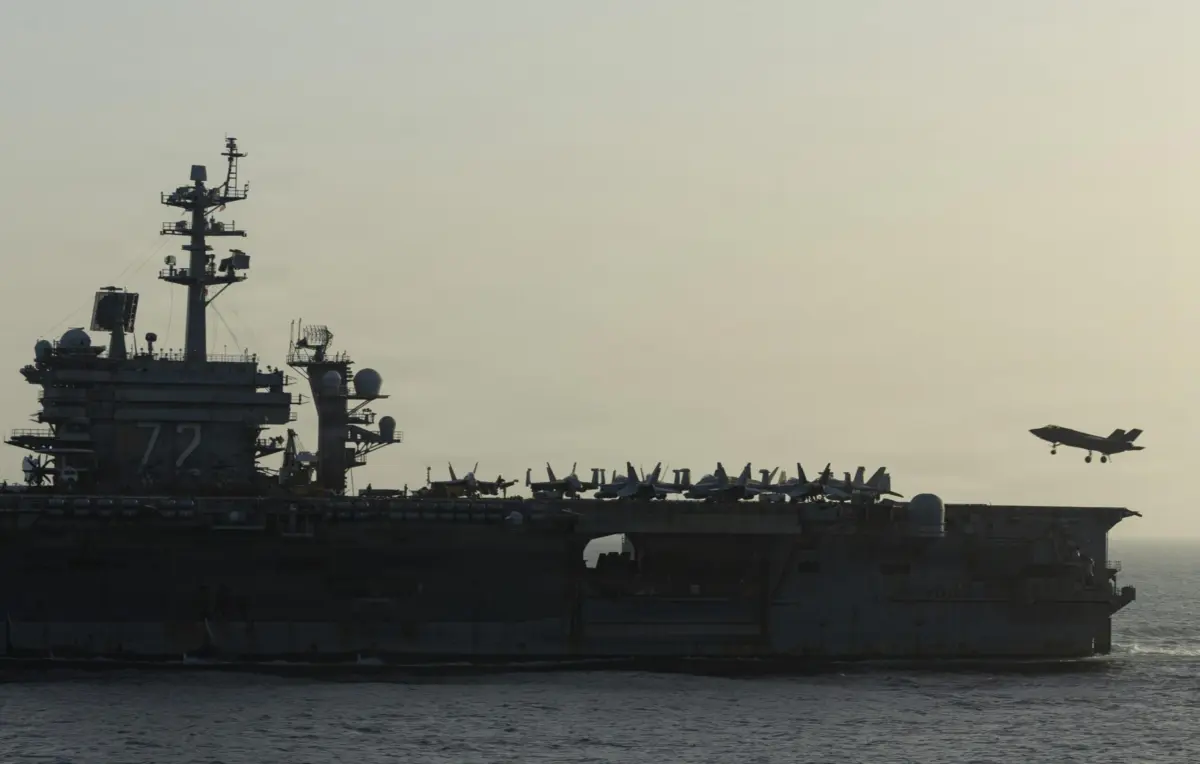
At the center of this gathering storm is the USS Abraham Lincoln (CVN-72), a Nimitz-class nuclear-powered aircraft carrier whose deployment has stretched far beyond standard operational limits. Plagued by severe sanitation issues, critical shortages of food and basic supplies, and a catastrophic degradation of crew morale, the vessel has become a floating symbol of the human toll exacted by prolonged, open-ended engagements. Reports of multiple sailors attempting to go overboard amid the grueling conditions have galvanized families to appeal directly to lawmakers, piercing the administration’s carefully curated narrative of operational readiness.
Simultaneously, the broader strategic architecture of the campaign is showing severe strain. U.S. military stockpiles are being depleted at an unsustainable rate. Defense analysts point to critical shortages of high-end defensive and offensive munitions—including THAAD and Patriot missile interceptors—alongside the loss of roughly a quarter of the military’s advanced Reaper drone inventory.
Read Also
This stark mathematical imbalance highlights a fundamental asymmetry at the heart of the conflict: Washington is expending multi-million-dollar precision assets to counter low-cost, mass-produced asymmetric threats developed by Tehran. While Defense Secretary Pete Hegseth has dismissed reports of deteriorating conditions aboard the Lincoln as "completely misrepresented," the compounding crises of personnel fatigue, logistical strain, and materiel depletion suggest that the structural math of the campaign is rapidly shifting against the United States.
Detailed Chronology: The Extended Deployment of the USS Abraham Lincoln
The operational timeline of the USS Abraham Lincoln illustrates the compounding nature of modern naval strain. The carrier’s deployment began in November, setting the stage for what would become an unprecedented test of endurance for both sailors and machinery.
A Historic and Grueling Tour at Sea
- November: The USS Abraham Lincoln departs port, heading for the Middle East as tensions between Washington and Tehran rapidly escalate into active hostilities. The deployment is initially slated to follow standard rotation lengths, with a scheduled return home expected by May.
- May (Original Return Window Passes): As the U.S. military campaign against Iran stretches past its initial milestones, strategic imperatives and ongoing combat operations force the Pentagon to repeatedly extend the Lincoln’s tour. The carrier remains anchored in the theater of operations, bypassing its scheduled relief window.
- Late Summer (Surpassing Modern Records): The carrier crosses the threshold of 250 total days deployed, including an unbroken stretch of more than 200 consecutive days at sea—shattering modern records for continuous carrier operations.
Mounting Crises Below Deck
As the calendar rolled deep into the summer months, the cumulative effects of isolation, broken routines, and extended combat operations manifested in acute crises aboard the ship:
- Logistical and Sanitation Breakdowns: Prolonged deployment far exceeding engineered maintenance and resupply cycles led to critical shortages. Families and naval advocacy groups reported severe supply chain bottlenecks resulting in shortages of fresh food, clean water, and basic hygiene products. Sanitation systems aboard the aging hull began to fail under the weight of continuous, uninterrupted use.
- Mental Health Emergencies: The psychological toll on the nearly 5,000-person crew intensified exponentially. Cut off from predictable communication with loved ones and enduring high-tempo combat stress without a clear horizon for return, sailors experienced acute psychological distress.
- Overboard Incidents: The crisis reached a harrowing apex when multiple sailors reportedly attempted to go overboard during the extended deployment. While immediate intervention by shipmates successfully rescued at least one sailor, the incidents exposed a profound failure in onboard welfare and welfare monitoring systems, triggering immediate alarms among naval families back home.
Unable to secure direct, transparent answers from the chain of command, distressed family members bypassed traditional military channels, taking their concerns directly to Democratic lawmakers and investigative journalists. The resulting public disclosures pierced the operational secrecy of the deployment, transforming the USS Abraham Lincoln from a symbol of American military might into a focal point for debates over military welfare and strategic overextension.
Supporting Context & Metrics: The Cost of Attrition
While the human cost aboard the Lincoln has captured public attention, parallel logistical crises are unfolding across the wider theater of operations. The U.S. military’s campaign against Iran has evolved into a high-intensity conflict defined by severe materiel consumption rates that outpace domestic manufacturing capacity.
The Missile and Interceptor Crunch
Earlier in the month, classified assessments and defense reports revealed an increasingly alarming reality: the United States is running low on its most critical offensive and defensive missile inventory.
- Air Defense Strains: The demand for Terminal High Altitude Area Defense (THAAD) and Patriot missile batteries has skyrocketed as U.S. forces and regional allies face persistent ballistic missile and rocket barrages.
- Replenishment Lags: Because these sophisticated interceptors require highly specialized components and complex manufacturing processes, the military’s current burn rate far exceeds the industrial base’s ability to restock inventories. This leaves U.S. forces vulnerable to potential subsequent escalations in the Middle East or other global theaters, such as the Indo-Pacific or Eastern Europe.
The Reaper Drone Drain
Compounding the missile shortage is the rapid depletion of the military’s unmanned aerial vehicle (UAV) fleet. According to a comprehensive assessment published by The Washington Post, the U.S. military has lost roughly 25 percent of its MQ-9 Reaper drone fleet since the onset of the conflict with Iran.
Each Reaper drone represents an investment of tens of millions of dollars, packed with advanced surveillance, reconnaissance, and strike capabilities. Their rapid attrition underscores the lethality of Iran’s integrated air defense networks and electronic warfare capabilities.
The Asymmetric Cost Trap
This high rate of attrition highlights a deep strategic vulnerability:
- The American Expense: U.S. operations rely heavily on exquisite, highly expensive platforms. A single Patriot interceptor or Reaper drone costs millions, straining federal defense budgets.
- The Iranian Advantage: Conversely, Tehran has successfully cultivated and weaponized asymmetrical warfare, relying on cheap, mass-produced loitering munitions—such as the Shahed-136 drone series.
By forcing the United States to expend multi-million-dollar interceptors and advanced UAVs to counter inexpensive, proliferated drone swarms, Iran has engineered a war of economic attrition. In this mathematical equation, time heavily favors the adversary, as the financial and material cost of maintaining the status quo becomes increasingly disproportionate for Washington.
Official Statements and Administration Defense
Faced with mounting scrutiny from lawmakers, families, and the international press, the Trump administration has mounted a vigorous defense of its operations, pushing back against characterizations of systemic failure.
Secretary Hegseth’s Response
Addressing reporters regarding the deteriorating conditions aboard the USS Abraham Lincoln, Defense Secretary Pete Hegseth forcefully rejected the unfolding narrative. Categorizing the media reports and family accounts as "completely misrepresented," Hegseth maintained that the carrier’s command structure was maintaining high standards of care and operational readiness despite the undeniable friction of a combat deployment.
"Our service members undertake difficult, historic missions in defense of our national security," administration officials echoed, emphasizing that the U.S. military remains fully capable of projecting overwhelming force in the region regardless of external criticisms.
The Relief Fleet Dynamics
Addressing the logistical crisis of the Lincoln, defense authorities confirmed that operational relief is en route. Another U.S. aircraft carrier has been dispatched to the Middle East to relieve the exhausted crew and assume regional deterrence duties.
However, defense analysts and reporting from outlets like The Wall Street Journal have clarified a critical nuance: the deployment of the replacement carrier was part of a pre-planned rotational schedule rather than an emergency pivot engineered to rescue the Lincoln. While this deployment will provide much-needed relief to the beleaguered crew of the Lincoln, it underscores a broader systemic strain: the constant, high-tempo rotation of carrier strike groups required to sustain the Iran campaign is rapidly wearing down the Navy’s total force structure, leaving fewer vessels available for global contingency planning.
Future Outlook: Strategic Crossroads
As the campaign against Iran continues without a clear diplomatic off-ramp or decisive military resolution, the United States stands at a critical strategic crossroads. The convergence of personnel burnout, materiel shortages, and unsustainable cost asymmetries poses fundamental questions about the long-term viability of the administration’s current posture.
- Force Sustainability: Without a significant de-escalation or a transformation in how regional deterrence is maintained, the Pentagon will face agonizing choices regarding force rotations. Pushing sailors and naval assets past historic thresholds risks compounding mental health crises and mechanical failures.
- Industrial Base Limitations: The rapid depletion of Patriot, THAAD, and Reaper drone inventories signals an urgent need to revitalize the domestic defense industrial base. However, manufacturing pipelines cannot be scaled up overnight, leaving a dangerous window of vulnerability.
- Strategic Reevaluation: Ultimately, the mathematical realities of the conflict—where low-cost asymmetric threats drain high-end U.S. stockpiles—demand a strategic reassessment.
Unless the administration can pivot toward a sustainable framework that balances regional containment with resource preservation, the cracks currently visible in the hull of the USS Abraham Lincoln and the nation’s missile silos may well expand into systemic fractures across America’s global military posture.





Comments
Facebook App ID not configured. Please add it in the Customizer.